Kneeling Torso Rotation Chest And Shoulder Stretch
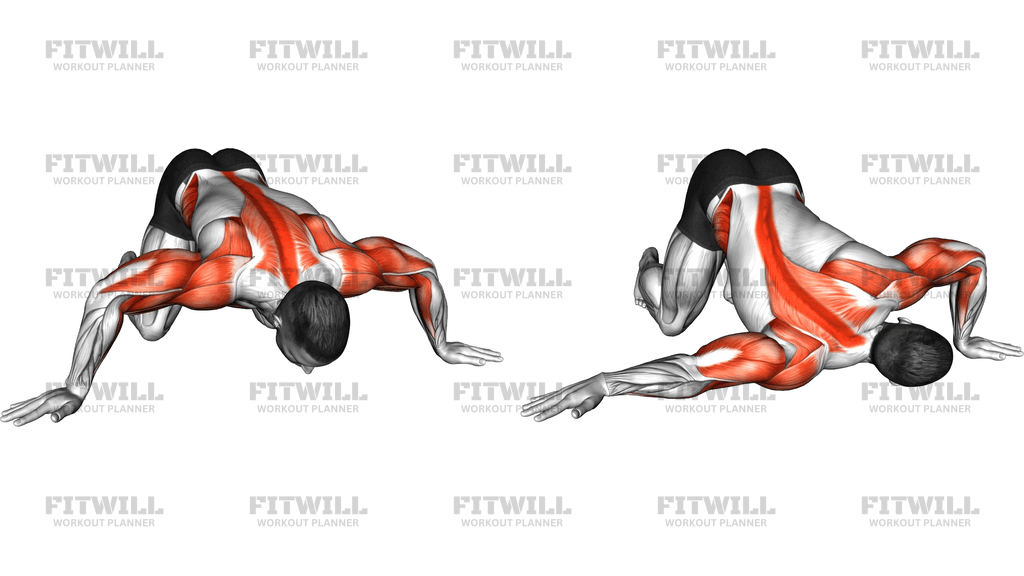
The Kneeling Torso Rotation Chest And Shoulder Stretch is a floor-based mobility drill performed from an all-fours position. From quadruped, you slide or reach one arm out to the side and across the floor while your chest and ribs rotate toward that side, letting your shoulder drop toward the ground. The result is a combined stretch across the chest, the front of the shoulder, and the side of the torso, followed by rotation back through the center to switch sides.
This movement earns its place in warm-ups and cooldowns because it hits several tight areas at once. The kneeling setup pins your hips in a flexed, stable position, which forces the rotation to come from your thoracic spine and shoulder rather than from your pelvis swinging around. That makes it especially useful for people who sit a lot, lift with stiff upper backs, or feel locked up in pressing movements like bench presses, push-ups, and overhead work.
The primary target is the pectoral group, particularly as the arm reaches out and the chest rotates open. The front delts and lats assist and lengthen along the same line, while the obliques and deep spinal rotators work on the mobility side of the equation as they control the turn. Because one forearm or hand stays grounded, the supporting shoulder also gets gentle stabilizing work without any load.
Setup matters more here than in most stretches. Your knees sit directly under your hips, your working hand starts under your shoulder, and your head stays neutral and relaxed. If your knees drift back or your hips rock sideways, the rotation leaks into the lower back and the stretch quality drops. Keep the movement slow enough that you can feel the chest and shoulder lengthen rather than just sliding your arm around.
Common use cases include pre-workout upper body preparation, desk-break mobility routines, and cooldown work after pressing or pulling sessions. It is also a staple in rehab-adjacent settings because the floor supports your spine and the range is entirely self-selected. Athletes in throwing, racquet, and combat sports use it to maintain the rotational range their sports demand.
Move within a comfortable stretch, never into pinching at the front of the shoulder or the neck. The goal is repeated, relaxed rotations with steady breathing, not forcing your shoulder flat against the floor. Two or three rounds of five to eight rotations per side is a practical dose for most people.
[ Workout Log & Planner ]
Put your next workout in Fitwill
Keep your plan and training log ready when you are.


Instructions
- Kneel on an exercise mat and place your hands and knees on the floor in a quadruped position, with your knees directly under your hips and your hands directly under your shoulders.
- Keep your spine long and neutral, relax your neck so your head hangs in line with your back, and shift your weight slightly onto your left hand if you are starting with the right arm.
- Slide or reach your right arm out along the floor to the side, palm down, letting your chest and ribs begin to rotate toward the right.
- Continue rotating until your right arm is extended out to the side and your chest and right shoulder are dropping down toward the floor, feeling the stretch across your chest and the front of your shoulder.
- Pause for one to two breaths in the end position, letting gravity deepen the rotation without pushing your shoulder into the ground.
- Reverse the path slowly, rotating your torso back toward the center as you draw your arm back under your shoulder to the starting quadruped position.
- Exhale as you rotate open and inhale as you return to center, keeping your breathing slow and continuous throughout.
- Complete five to eight controlled rotations on one side, then switch arms and repeat on the opposite side.
- Between sets, reset your hand and knee alignment so your joints stay stacked before the next round.
Tips & Tricks
- A frequent mistake is letting the hips sway toward the reaching arm, which turns this into a lower back rotation. Brace your trunk lightly and imagine your pelvis glued over your knees.
- If your shoulder pinches at the front as you rotate, shorten the reach slightly and keep the rotation smaller; the stretch should sit in the chest and side of the torso, not in the joint itself.
- Keep your head relaxed and looking down at the floor. Lifting it to watch your arm twists the neck and steals range from the upper back.
- Think of leading the turn with your chest and ribs, not with your hand. The arm is the anchor; the rotation drives the stretch.
- Sliding your palm along the mat, rather than lifting and swinging the arm, keeps the shoulder in a safer path and makes the end range easier to control.
- If the floor is hard on your knees, fold a towel under them. Discomfort there will make you hold tension through the whole trunk.
- Ease into the first rotation of each set. The tissue tolerates more range after a couple of gentle reps than it does cold.
- Match the range on both sides instead of chasing your most mobile side. A noticeable difference usually points to a stiff thoracic spine on the tighter side.
- For a deeper chest stretch at the end position, let more of your upper body weight settle toward the reaching arm while keeping the elbow soft.
Frequently Asked Questions
Which muscles does the Kneeling Torso Rotation Chest And Shoulder Stretch target?
The main targets are the chest muscles along with the front of the shoulders, which lengthen as you rotate open. The lats, obliques, and thoracic rotators are also involved as they control and receive the rotation.
Why is this stretch done kneeling on all fours instead of standing?
The quadruped position locks your hips in place so the rotation has to come from your thoracic spine and shoulder. Standing versions often let the pelvis twist, which reduces the stretch on the chest and upper back.
Is the Kneeling Torso Rotation Chest And Shoulder Stretch good for beginners?
Yes. The floor supports your spine and the range is entirely self-selected, so beginners can start with small rotations and progress as their mobility allows. It is one of the safer ways to work on upper body rotation.
Should my shoulder touch the floor in the end position?
Not necessarily. Some people will get close, others will not, and both are fine. Stop at the point where you feel a solid stretch across the chest without any pinching at the front of the shoulder.
What is the most common mistake in this movement?
Rocking the hips sideways to fake extra rotation. That shifts the work into the lower back and takes it away from the chest, shoulders, and upper back. Keep your knees under your hips and let the ribs do the turning.
Can I use this stretch before bench pressing or push-ups?
Yes, it works well as part of an upper body warm-up because it opens the chest and shoulders and takes the thoracic spine through rotation. Keep the reps smooth and avoid long static holds before heavy pressing.
What can I do if kneeling is uncomfortable?
Place a folded towel or pad under your knees, or kneel with a slightly wider base. If knee flexion itself is a problem, a standing or seated rotation drill is a reasonable substitute, though it is harder to keep the hips still.
How many reps and how long should I hold each rotation?
Five to eight rotations per side with a one to two breath pause at the end range is a solid starting dose. For a cooldown, you can hold the open position for fifteen to twenty seconds per side.
Is it normal for one side to rotate further than the other?
Yes, most people have a side-to-side difference, often from handedness, sport, or desk posture. Work both sides evenly and let the tighter side catch up rather than forcing extra range on the mobile one.
Should I feel this stretch anywhere besides the chest?
A pull along the side of the torso and into the lat is normal because the arm reaches out as you rotate. Sharp pain in the shoulder joint, neck, or lower back is not, so reduce the range if that shows up.