Barbell Zercher Back Extension
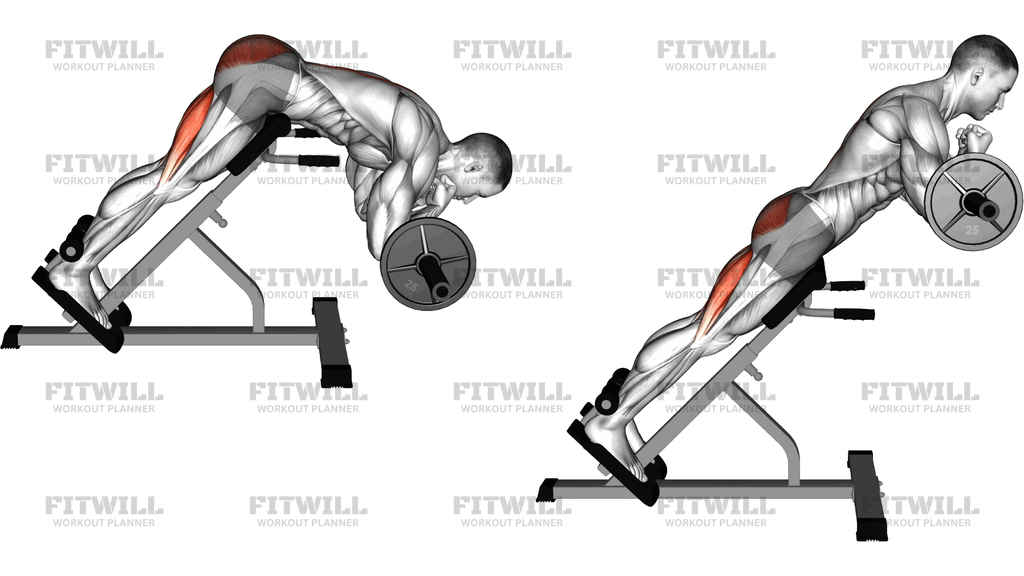
The Barbell Zercher Back Extension is a loaded version of the classic 45-degree hyperextension in which the barbell is cradled in the crooks of your elbows rather than held on your back or at your chest. Your feet are anchored on the platform of a back extension bench, your hips rest on the pad, and you hinge down against gravity before driving back up to a strong, straight line from head to heels. The Zercher cradle shifts the load forward and forces you to fight both spinal flexion and unwanted torso movement, which makes the lower back, glutes, and hamstrings work harder than they do in a bodyweight version.
This movement suits lifters who have already built a base with bodyweight back extensions and want progressive overload without placing a bar on their spine. It is popular with powerlifters preparing for heavy deadlifts and squats, and with anyone who wants thick, resilient spinal erectors and strong hip extensors. Because the bar sits against the forearms and upper chest, it also demands real work from the biceps, forearms, and upper back simply to hold position.
Setup matters more here than in almost any other back extension variation. If the pad sits too high, your hips cannot hinge freely; if it sits too low, the movement becomes harder to control and your lower back takes on more of the load at the bottom. The bar must stay snug in the elbow creases for the whole set, because once it slides toward the forearms or rolls toward the chest, the leverage changes and the set falls apart.
To execute it well, hinge at the hips with a braced, neutral spine, lowering until you feel a solid stretch through the hamstrings without letting the lower back round. Rise by squeezing the glutes and pushing the hips into the pad until your body forms one straight line. Avoid hyperextending and throwing the chest past neutral at the top; the rep ends when you are tall and tight, not when you lean back. Start light, even unloaded or with a bare bar, until the Zercher position feels stable.
Use this exercise as a main posterior chain builder for moderate reps, or as an accessory after deadlifts and squats for higher-rep endurance work in the erectors. Keep in mind that the position is demanding on the elbows and forearms; padding the bar or building up gradually will keep the set comfortable so your back, not your arms, limits the work.
[ Workout Log & Planner ]
Put your next workout in Fitwill
Keep your plan and training log ready when you are.


Instructions
- Set the hip pad of the 45-degree back extension bench so it sits just below your hip crease, and adjust the ankle pads so your feet are secure with your knees slightly bent or nearly straight.
- Step onto the platform and hook your feet under the ankle pads, then lift a barbell into a Zercher position, resting it in the crooks of both elbows with your fists together under your chin or at your upper chest.
- Pull the bar tight against your forearms and chest, squeeze your elbows inward so the bar cannot slide, and pull your shoulder blades back and down.
- Brace your core as if bracing for a punch and set your spine in a neutral, chest-proud position before you start the descent.
- Hinge at the hips and lower your torso toward the floor in a controlled arc, keeping the bar glued to your elbows and letting the hamstrings load at the bottom.
- Descend until your torso reaches roughly 90 degrees to your legs or you feel a firm hamstring stretch, without letting your lower back round.
- Drive your hips down into the pad and squeeze your glutes to lift your torso back up along the same path.
- Finish each rep with your head, spine, and hips in one straight line; do not arch past neutral at the top.
- Exhale as you rise and inhale at the top before each descent, keeping the brace steady throughout.
- Complete the set, then step back off the platform carefully and rack or set the bar down before releasing your feet.
Tips & Tricks
- If the bar digs into your elbow creases, wrap a bar pad or folded towel around the bar; discomfort in the forearms is the most common reason this variation gets abandoned too early.
- Squeeze your elbows together the entire set. When the elbows drift apart, the bar rolls toward the chest and turns the exercise into an awkward front-loaded good morning.
- Do not chase depth. If your hips have lifted off the pad or your lower back rounds at the bottom, you have gone too far and lost the hinge.
- Keep your neck in line with your spine. Craning up at the bottom or dropping the chin during the descent both disturb the braced position.
- Start with an empty bar or even a bodyweight set. The Zercher cradle changes your balance point, and the weight that feels right on day one is usually less than you expect.
- If your hamstrings cramp at the bottom, bend your knees slightly or reduce the range; cramping usually means the muscle is being loaded in a stretched position it is not used to.
- Pause for one to two seconds at the top of each rep and actively squeeze the glutes. This prevents the common habit of bouncing out of the stretch and hyperextending at the top.
- Set the pad height so the pad sits under your hip crease, not your stomach. Pad placement determines whether this is a hip hinge or a lower-back-dominant pull.
- Skip the temptation to hug the bar against your neck. Keeping it at the elbow creases and upper chest preserves the intended lever length and keeps the load on the posterior chain.
Frequently Asked Questions
What muscles does the Barbell Zercher Back Extension work?
It primarily targets the spinal erectors of the lower back, with strong contributions from the glutes and hamstrings as hip extensors. Holding the bar in the Zercher position also recruits the biceps, forearms, and upper back to keep the bar stable.
Why hold the barbell in the crook of the elbows instead of at the chest?
The Zercher cradle places the load further from the hips than a chest-held plate or bar, which increases the demand on the erectors and hip extensors. It also removes pressure from the spine and shoulders compared with a back-loaded version.
Is the Barbell Zercher Back Extension suitable for beginners?
Beginners should first master the bodyweight back extension with a solid hip hinge and neutral spine. Once that is comfortable, starting with an empty barbell is a sensible way to learn the cradle position before adding plates.
How far down should I lower my torso on the Barbell Zercher Back Extension?
Lower until your torso approaches a right angle with your legs and you feel a loaded stretch in the hamstrings. Stop before your hips lift off the pad or your lower back rounds, whichever comes first.
My elbows hurt when cradling the bar. What should I do?
Add a bar pad or wrap a towel around the bar, and make sure the bar rests in the elbow creases rather than on bare forearm bone. Reducing the load and building tolerance gradually also helps.
What is the most common mistake in this exercise?
The most common mistakes are going too heavy too soon, letting the bar slide out of the elbow creases, and hyperextending the back at the top. Fix all three by using a lighter bar, squeezing the elbows together, and finishing each rep in a straight line instead of leaning back.
Can I use a dumbbell or plate instead of a barbell?
Yes, hugging a plate or dumbbell to your chest is a good substitute that mimics the loading pattern. It will not challenge the arms and upper back in the Zercher cradle, but it still trains the same posterior chain pattern.
How many reps and sets of the Barbell Zercher Back Extension should I do?
Three to four sets of 8 to 12 controlled reps works well for strength and size in the erectors and glutes. For endurance-focused accessory work, lighter loads for 12 to 15 reps are effective.
Is it safe to do this exercise with a history of lower back issues?
If you have a history of lower back problems, get clearance from a qualified professional first and start with bodyweight reps. Keep the range short, the load light, and never round the spine under the bar.