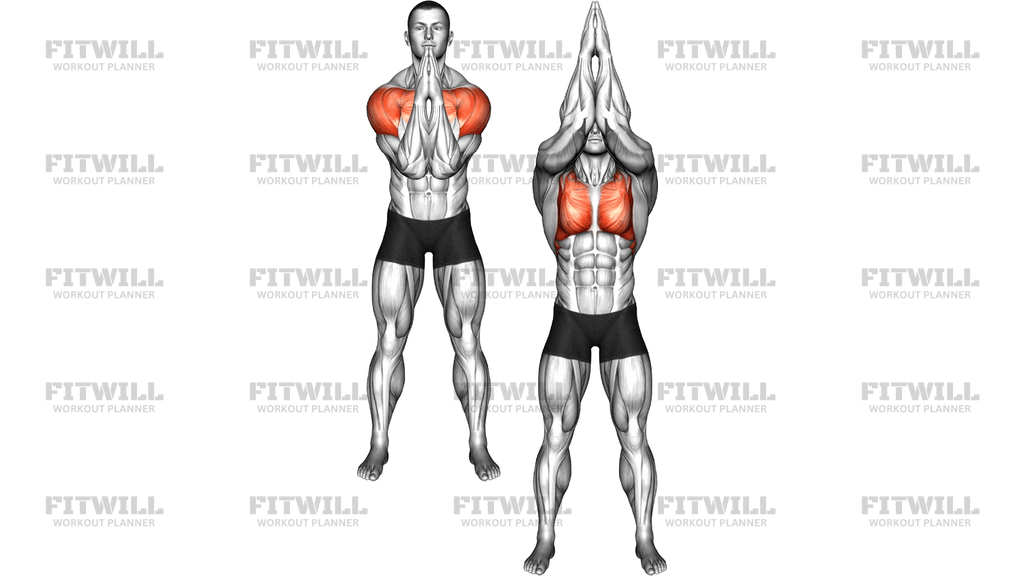
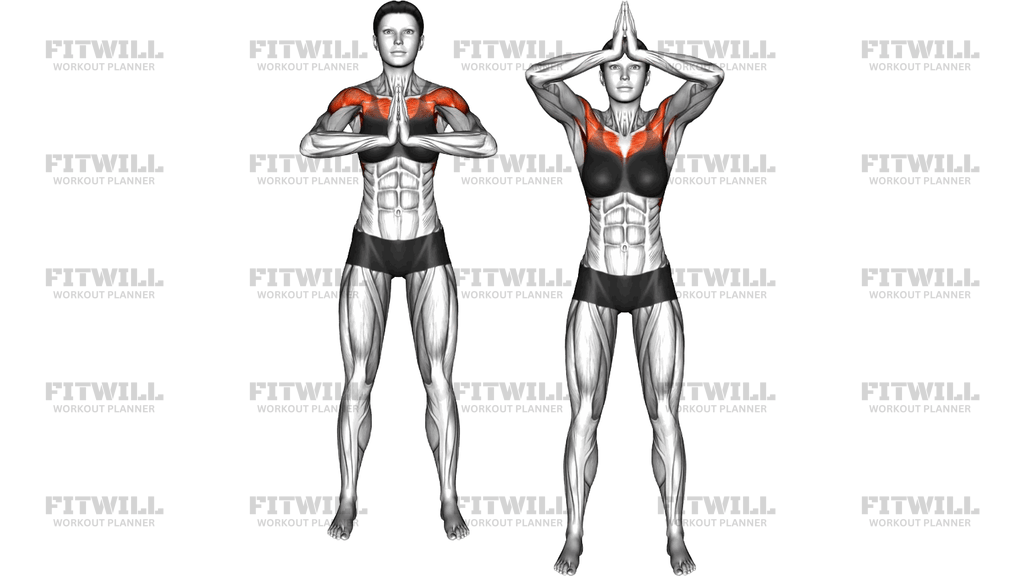
Coner Wall Chest Stretch (Version 2)
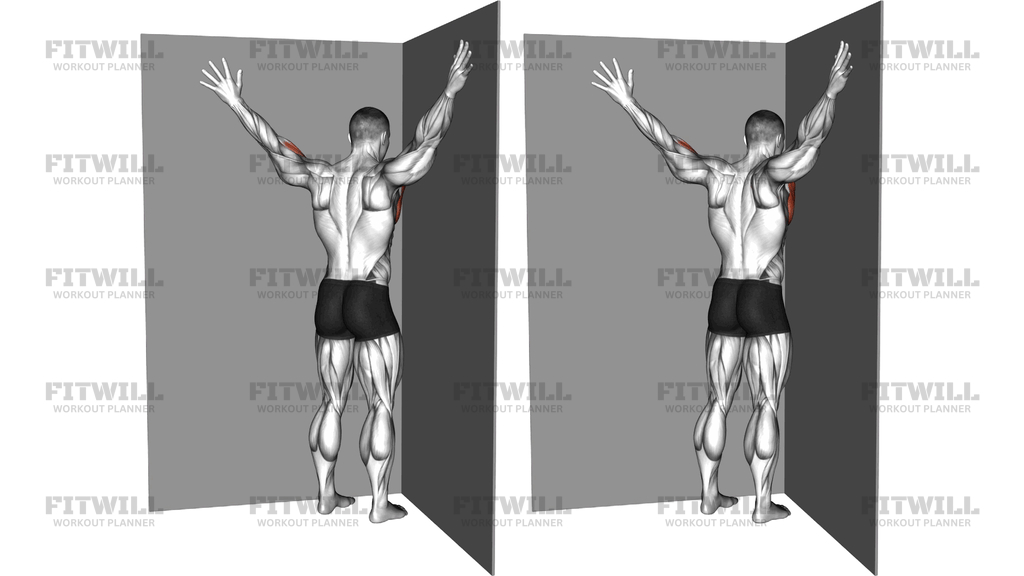
The Coner Wall Chest Stretch (Version 2) is a static stretch performed in the corner of a room, where two walls meet. You stand facing the corner with your feet together a step or two back, place your forearms or upper arms flat against each wall, and raise your arms so they form a wide V above shoulder height. From there you lean your body gently forward into the corner until you feel a deep, even stretch across the upper chest and the front of the shoulders.
This version differs from the standard corner stretch by the height of the arms. With the hands positioned well above shoulder level and the elbows roughly in line with the ears, the emphasis shifts toward the clavicular (upper) fibers of the pectoralis major and the pectoralis minor, the small muscle that sits underneath and tends to get tight from desk work and rounded posture. The front deltoids assist the position and receive a secondary stretch.
This stretch is especially useful for people who spend long hours sitting at a computer, lifters who press frequently with bench presses and push-ups, and anyone whose shoulders have drifted forward over time. Regularly opening the front of the shoulders and chest helps counter that rounded position and can make overhead movements feel freer.
The corner setup matters because the two walls give each arm its own flat reference surface. That means both sides of your chest are stretched at the same time and you can immediately feel if one side is higher, wider, or taking more load than the other. The walls also let you dial in the intensity simply by moving your feet closer to or further from the corner.
To perform it well, keep your body in one straight line from head to heels as you lean in, brace your trunk lightly, and let the chest travel toward the corner rather than sagging at the hips or arching the lower back. The stretch should feel like a broad pull across the upper chest, never a sharp pinch in the shoulder joint itself.
Use this stretch after upper-body pressing sessions, at the end of a long workday, or as part of a posture-focused routine. Hold each repetition for twenty to thirty seconds, breathe steadily, and ease out of the position rather than bouncing or forcing depth.
Fitwill
Log Workouts, Track Progress & Build Strength.
Achieve more with Fitwill: explore over 9600 exercises with images and videos, access built-in and custom workouts, perfect for both gym and home sessions, and see real results.
Start your journey. Download today!




Instructions
- Stand facing the corner of a room with your feet together, positioned one to two steps back from where the two walls meet.
- Raise both arms out to the sides and up so your forearms and hands rest flat against the walls, elbows slightly above shoulder height to form a wide V.
- Keep your palms and inner forearms in full contact with each wall and check that both arms are at the same height.
- Engage your abdominal muscles lightly so your lower back does not arch as you move.
- Keeping your body straight from head to heels, step or lean forward so your chest travels toward the corner until you feel a stretch across the upper chest and front of the shoulders.
- Hold the end position for 20-30 seconds, breathing slowly and letting the stretch settle in with each exhale.
- If one side feels tighter, shift your torso a few degrees toward that side to bias the stretch there.
- To release, push gently through your forearms and step back away from the corner in a controlled motion.
- Lower your arms slowly, roll your shoulders a couple of times, and repeat for a second hold if needed.
Tips & Tricks
- Adjust intensity with foot placement, not by arching your back: moving your feet closer to the corner deepens the stretch, while standing further back keeps it milder.
- A common mistake is letting the lower back hinge and the hips fall forward. Squeeze your glutes lightly and keep your ribs stacked over your pelvis so the stretch stays in the chest.
- If you feel a pinching sensation at the front of the shoulder instead of a chest stretch, lower your arms a few inches on the walls and reduce how far you lean.
- Keep your neck relaxed and look slightly down at the floor rather than craning your head up toward the corner.
- Because both arms are fixed against the walls, use them as feedback: if one forearm is slipping or sitting lower, correct it before leaning deeper.
- Breathe out slowly as you move into the lean; holding your breath tends to make the shoulders tense up and fight the stretch.
- Warm the area first with a few arm circles or light pressing movements if you are stretching cold, especially first thing in the morning.
- Do not bounce at the end range. A steady static hold gives the chest tissue time to lengthen without provoking a protective tightening response.
- If a corner is unavailable, the same arm position can be done in a doorway with each forearm on one side of the frame, though the corner usually allows a more natural V angle.
Frequently Asked Questions
Which muscles does the Coner Wall Chest Stretch (Version 2) target?
It primarily stretches the pectoralis major with extra emphasis on the upper chest fibers because the arms are held high in a V. The pectoralis minor and front deltoids also receive a meaningful stretch in this position.
How is Version 2 different from the standard corner chest stretch?
In this version the arms are raised above shoulder height so the elbows sit near ear level, shifting the stretch toward the clavicular, or upper, portion of the chest. The standard version keeps the forearms lower and biases the mid-chest.
How far should I lean into the corner?
Lean only until you feel a broad, comfortable pull across the upper chest and front of the shoulders. The exact distance depends on your flexibility, so let the sensation, not a target depth, set the range.
Is this stretch suitable for beginners?
Yes. The corner setup is very forgiving because the walls support your arms and you control the intensity entirely with your foot position and how far you lean. Beginners should start with a mild stretch and shorter holds of about 15-20 seconds.
Why do my shoulders pinch when I raise my arms this high?
A pinching sensation at the front of the shoulder usually means the arm angle does not suit your current mobility. Lower your hands a few inches on the walls, lean in less, and rebuild gradually; if the pinch persists, skip the high version and use a lower-arm variation.
How long should I hold the Coner Wall Chest Stretch (Version 2)?
Hold for 20-30 seconds per repetition and complete two to three reps. For posture work throughout the day, shorter frequent holds of 15 seconds also work well.
What can I use instead of a corner if my room has none?
A doorway works well: place one forearm on each side of the frame with the arms high and lean through the opening. A single flat wall also works if you stretch one side at a time with the arm raised and rotated against it.
When is the best time to do this stretch?
It is most useful after bench press, push-up, or overhead pressing sessions, and after long periods of sitting with rounded shoulders. Avoid aggressive stretching immediately before heavy pressing, since long-held static stretches can temporarily reduce force output.
Can this stretch help with rounded posture from desk work?
Regularly lengthening the tight chest muscles that pull the shoulders forward supports a more open resting shoulder position. Pair it with strengthening work for the upper back for the best effect, rather than relying on stretching alone.