Resistance Band Glute Bridge Side Tap
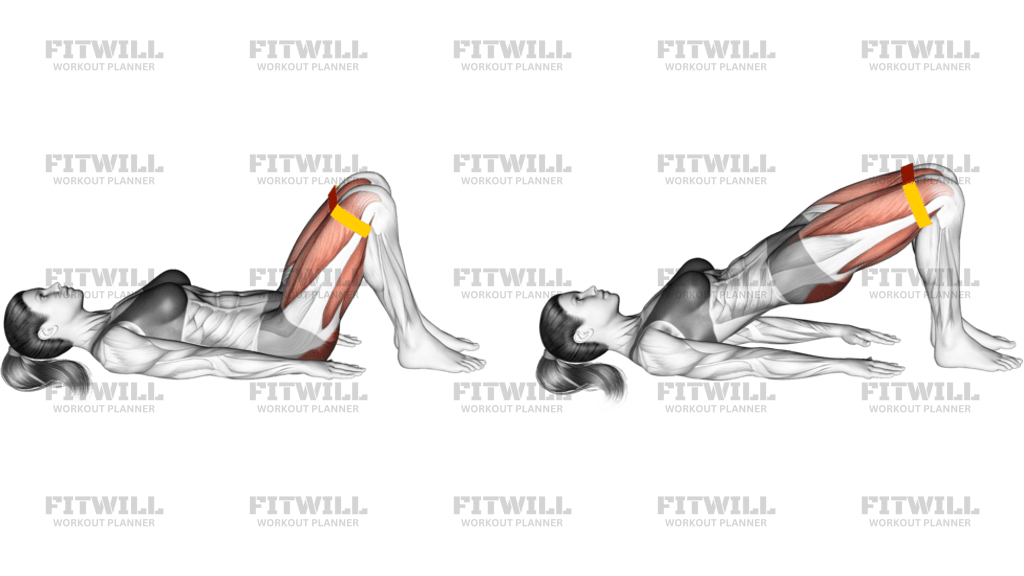
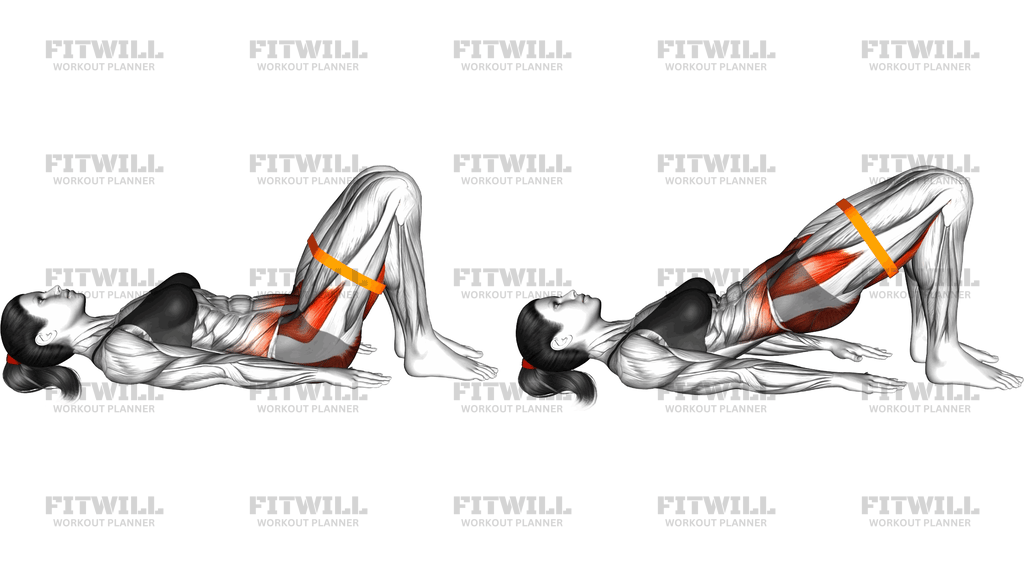
The Resistance Band Glute Bridge Side Tap is a floor-based glute exercise that combines two jobs at once: holding a bridge against a band pulling your knees inward, and tapping one foot out to the side while your hips stay lifted. You lie on your back with knees bent, a loop band placed around your thighs just above the knees, and drive up into a bridge. From that lifted position, you press your knees out against the band and alternately tap each foot out wide to the side, then bring it back in, all without letting your hips drop or tilt.
This movement is especially useful for people whose glutes go quiet during normal bridges or squats. The band forces your outer glutes to work just to keep your knees from caving in, and the side tap adds a single-leg stability demand on top of that. While one foot taps out, the other leg and your glutes have to hold your pelvis level, which is exactly the kind of control that carries over to walking, running, climbing stairs, and single-leg strength work.
The main muscles working here are the glutes, with the gluteus maximus driving the bridge and the gluteus medius and other outer hip muscles fighting the band and controlling each tap. Your hamstrings assist the hip extension, and your core works to keep your ribs down and pelvis steady as your feet move. Because one side is always loaded while the other moves, you also get a gentle anti-rotation challenge through the trunk.
Setup matters more than it looks. The band position above the knees determines how much outward pressure you need to apply, and your foot placement determines whether the bridge feels like a glute exercise or a lower back one. Keep your feet about hip-width and close enough to your hips that you can lift without arching. If your feet are too far forward, your hamstrings and lower back take over; too close, and the bridge can feel cramped and quad-dominant.
To execute it well, lift into the bridge by pushing the floor away through your heels and squeezing your glutes, then create steady outward tension in the band with your knees before you start tapping. Each tap should be slow and deliberate, a few inches out to the side, with the foot staying close to the floor. The most common breakdown is the hips sagging or swiveling toward the tapping side, so treat the tap as a test of how still you can keep your pelvis.
This exercise fits well as an activation drill before lower body training, as a standalone glute set in home workouts, or as a burnout finisher after squats or hip thrusts. Because the load is just the band and your body weight, it is easy to scale and gentle on the knees and lower back when done with control. Stop the set when your hips start dropping between taps, since holding a clean bridge is the whole point of the exercise.
[ Workout Log & Planner ]
Put your next workout in Fitwill
Keep your plan and training log ready when you are.


Instructions
- Lie on your back on the floor with your knees bent and feet flat, about hip-width apart and close enough that your heels sit roughly under your knees.
- Loop a resistance band around both thighs just above your knees and let it sit with light tension before you lift.
- Place your arms at your sides with palms facing down, and press them lightly into the floor for balance and support.
- Brace your core gently by drawing your ribs down, then push through your heels and squeeze your glutes to lift your hips into a bridge.
- Press both knees outward against the band so you feel steady tension in your outer hips, and hold that lifted bridge position.
- Keeping your hips level and lifted, tap one foot out to the side a few inches, keeping it close to the floor.
- Bring that foot back to its starting spot under your knee, then tap the other foot out the same way, alternating sides for each rep.
- Breathe steadily throughout, exhaling as you lift into the bridge and tapping out on a controlled exhale or inhale without holding your breath.
- Complete all your taps, then lower your hips back down one vertebra at a time, relax the band tension, and reset your feet before the next set.
Tips & Tricks
- If your knees keep drifting inward, the band is too light or your attention is on the tap instead of the knees, so add outward knee pressure first and treat the tap as secondary.
- A common mistake is dropping the hips every time a foot moves out. Slow the tap down and think about pushing the working heel into the floor to keep the bridge height constant.
- Avoid pushing through your toes during the tap. Keep the tapping heel near the floor so the movement comes from the hip, not from a leg lift or kick.
- If you feel it in your lower back, your feet are probably too far forward or you are arching at the top. Walk your heels closer and re-lift with ribs down and glutes doing the lifting.
- Keep the tap small, a few inches is enough. A wide tap usually pulls the pelvis out of position and shifts work away from the glutes.
- Do not let your torso roll toward the tapping leg. Press both shoulders and arms evenly into the floor to stay square.
- Place the band above the knees rather than at the ankles. Ankle placement changes the leverage and makes the bridge position much harder to hold cleanly.
- If your hamstrings cramp, that usually means they are compensating for lazy glutes. Lift slightly lower, squeeze the glutes harder at the top, and shorten the set.
- Rest 30 to 45 seconds between sets. Because this is a hold-and-tap drill, form fades fast when the outer hips fatigue, and sloppy reps teach the wrong pattern.
Frequently Asked Questions
What muscles does the Resistance Band Glute Bridge Side Tap work?
The glutes are the primary movers, with the gluteus maximus holding the bridge and the gluteus medius and outer hips working against the band. Your hamstrings assist the lift and your core stabilizes the pelvis while each foot taps out.
Where should the resistance band sit during the Resistance Band Glute Bridge Side Tap?
Place the loop band around both thighs just above the knees. This position gives your outer glutes the best leverage to press out and keeps the bridge position manageable while you tap.
Is the Resistance Band Glute Bridge Side Tap good for beginners?
Yes, it is a low-load body weight exercise, but beginners should master a plain glute bridge first. Once you can hold a bridge for 20 to 30 seconds with level hips, start adding the taps with a light band.
Why do my hips drop when I tap my foot to the side?
The supporting glute is fatiguing or the tap is too wide and fast. Slow the tempo, reduce the tap distance to a couple of inches, and consciously push the planted heel into the floor to hold the bridge height.
How far out should I tap my foot during the Resistance Band Glute Bridge Side Tap?
A few inches to the side is enough to feel the outer hip working. A bigger tap adds range but usually costs you pelvic control, which defeats the purpose of holding the bridge.
Can I do the Resistance Band Glute Bridge Side Tap without a band?
Yes, the movement works with just body weight, though you lose the outward knee pressure that targets the outer glutes. Without a band, deliberately keep your knees pressed slightly apart to preserve that element.
Should I use a loop band or a long band for this exercise?
A small closed loop band, sometimes called a mini band, works best because it stays snug above the knees. A long band would need to be tied into a loop and is more likely to slide during the taps.
When should I do the Resistance Band Glute Bridge Side Tap in my workout?
It works well as an activation drill before squats, deadlifts, or running, or as a finisher after heavier glute work. Either way, keep the sets crisp and stop when your hips start sagging between taps.
Is the Resistance Band Glute Bridge Side Tap safe for the lower back?
When done with ribs down and glutes lifting the hips rather than the lower back arching, it is generally a joint-friendly movement. If you feel spinal discomfort, lower the bridge height slightly and check that your heels are close to your hips.
How many reps and sets should I do of the Resistance Band Glute Bridge Side Tap?
Two to three sets of 8 to 12 taps per side is a solid starting range. Prioritize holding a level, lifted bridge the entire time over hitting a rep number.