Standing Iron Eagle
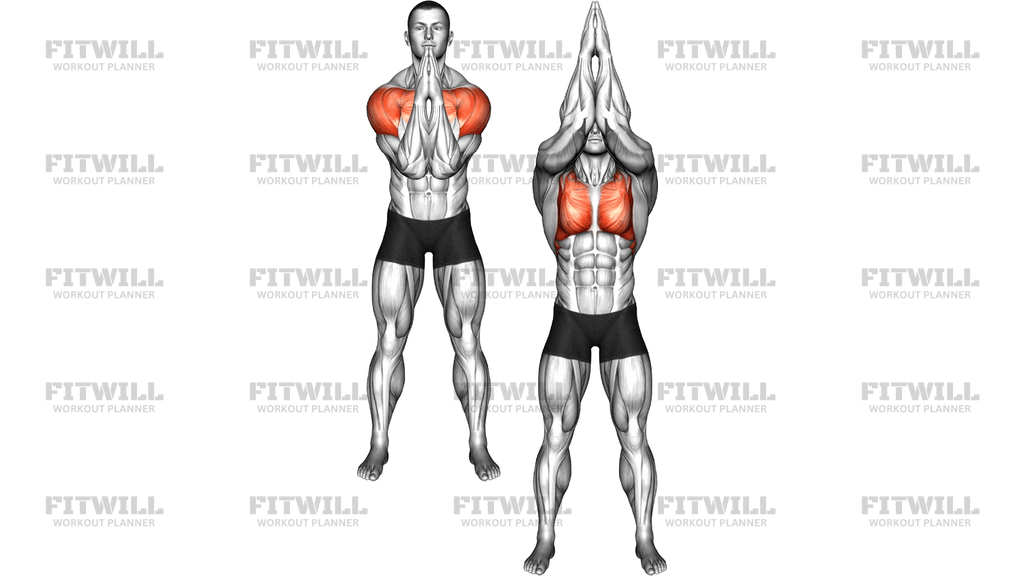
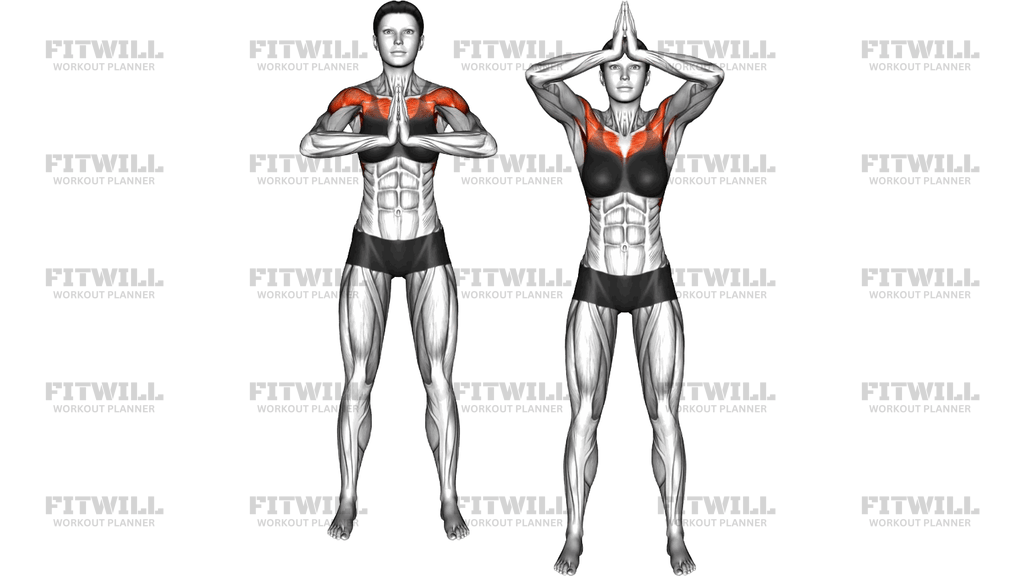
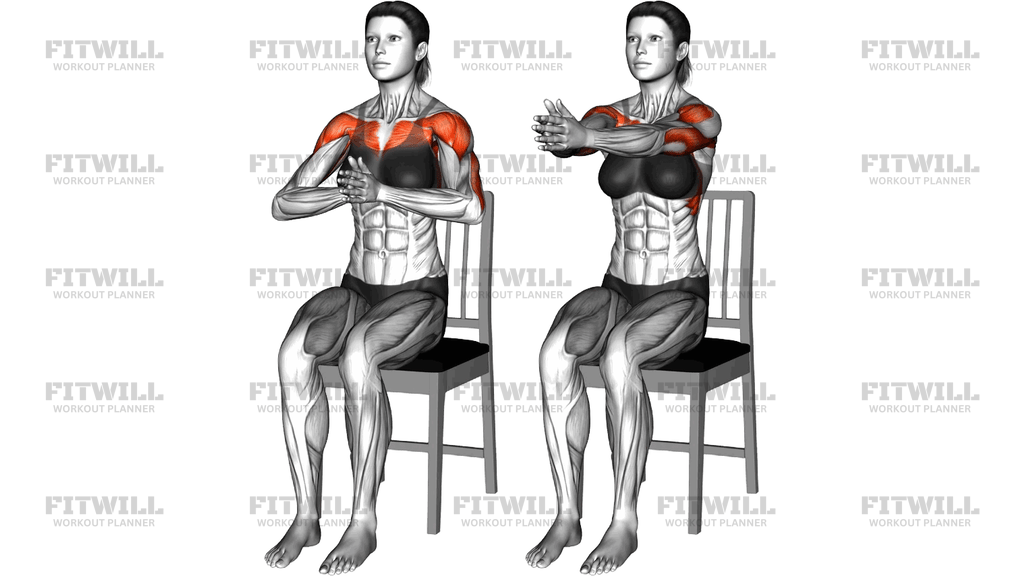
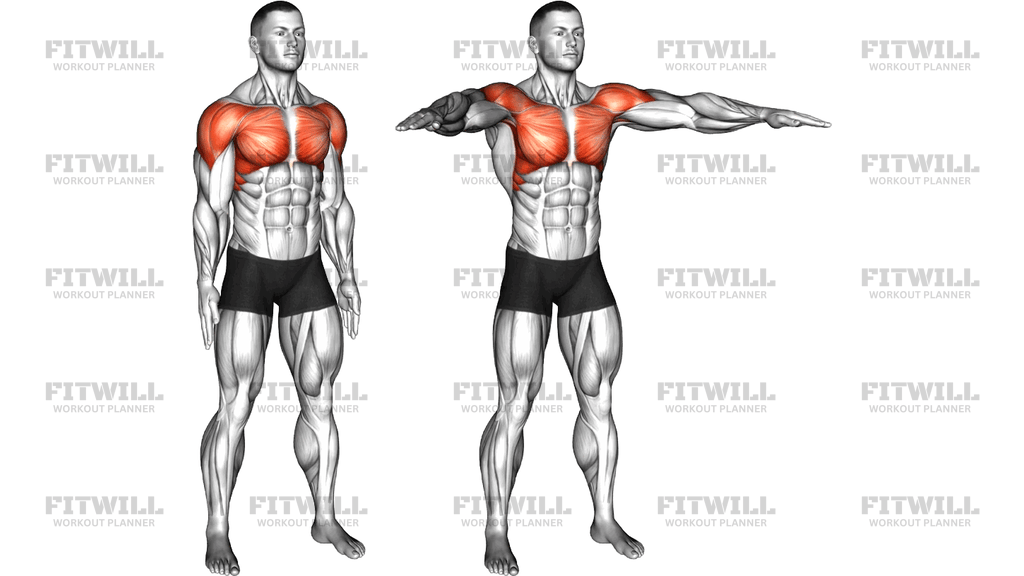
The Standing Iron Eagle is a bodyweight chest exercise performed from a tall standing position. You start with your arms relaxed at your sides, then sweep both arms out and up in a wide arc until they reach shoulder height, actively squeezing your chest as the arms rise. Think of a bird spreading its wings — that wide, sweeping path is exactly what gives the movement its name and its training effect.
Because there is no external load, this movement relies entirely on deliberate muscle tension. Your chest, particularly the pectoralis major, works hard to draw the arms inward and upward against gravity, while the front shoulders assist the lift and the biceps and forearms keep the arms straight. The trick to making it effective is pressing your palms inward or holding a firm squeeze throughout the arc so the chest stays engaged from start to finish, rather than letting the arms float up passively.
This exercise suits several groups. Beginners who cannot yet perform push-ups with good control can use it to learn what chest activation feels like. Lifters use it as a warm-up before bench pressing or pressing work to blood-flow the chest and shoulders. It is also a practical option when you have no equipment at all — at home, traveling, or between sets — and it is gentle enough for older trainees or anyone returning from time away from training who wants low-stress upper body work.
Setup matters more than it looks. Stand with feet about hip-width apart, a tall spine, ribs stacked over the pelvis, and shoulders pulled gently back and down. If you slouch or shrug as the arms rise, the upper traps take over and the chest loses tension. Keeping the movement at or slightly below shoulder height, with the palms facing forward or slightly up, keeps the emphasis where it belongs.
To execute it well, sweep the arms out to the sides in a smooth arc, leading with the elbows and keeping a soft bend in the arms. Pause briefly at shoulder height with a strong chest squeeze, then lower the arms under control rather than letting them drop. Breathing should be steady: inhale on the way down, exhale as the arms rise.
The most common fault is rushing. Fast repetitions with loose arms turn this into a shoulder swing and remove most of the work from the chest. Slow, deliberate reps with a visible pause at the top will make a bodyweight-only movement feel surprisingly demanding within ten to fifteen repetitions.
[ Workout Log & Planner ]
Put your next workout in Fitwill
Keep your plan and training log ready when you are.


Instructions
- Stand upright with your feet hip-width apart, arms hanging naturally at your sides and palms facing your thighs.
- Roll your shoulders back and down, lift your chest, and brace your core lightly so your torso stays tall.
- Turn your palms slightly forward and keep a soft, almost-straight bend in both elbows.
- Inhale, then sweep both arms out to the sides in a wide arc, leading with the elbows rather than the hands.
- Raise the arms until they are level with your shoulders, forming a straight line from fingertip to fingertip.
- At the top, press your arms slightly inward and squeeze your chest hard for one to two seconds.
- Exhale as you slowly lower your arms back down along the same arc until they rest at your sides.
- Reset your posture between repetitions — avoid shrugging or leaning back as fatigue builds.
- Repeat for the desired number of reps, keeping the tempo slow enough that you feel the chest working on every sweep.
Tips & Tricks
- If you feel this only in your shoulders, turn your palms slightly upward and focus on pressing the arms toward each other as they rise — that inward intent is what recruits the chest.
- A common mistake is shrugging the shoulders as the arms reach shoulder height; keep space between your ears and shoulders throughout the sweep.
- Do not let the arms travel above shoulder height. Lifting higher shifts work to the upper traps and reduces the chest squeeze.
- Keep the elbows soft but visible — fully locked elbows make the sweep feel loose, while a slight bend keeps tension on the arms and chest.
- Avoid arching your lower back to help the arms up. If you catch yourself leaning back, slow the tempo and reduce the range slightly.
- Add a two-second hold at the top of each rep instead of adding speed; time under tension is what makes this loaded-free movement effective.
- Use it as a pre-workout activation for two or three easy sets of 12–15 reps before pressing exercises like push-ups or bench presses.
- If one arm tends to drift higher than the other, slow down and watch your hands, or perform the sweep near a mirror to even out the arc.
- Breathe out on the way up, not at the very top — holding your breath through the squeeze is a common habit that builds unnecessary tension in the neck.
Frequently Asked Questions
Which muscles does the Standing Iron Eagle work?
The chest is the primary muscle, with the front shoulders assisting the upward sweep. The biceps and forearms work to keep the arms straight and maintained under tension throughout the arc.
Can the Standing Iron Eagle build muscle without any equipment?
It can contribute to muscle endurance and improve chest activation, but bodyweight tension alone is limited for building significant strength. It works best as a warm-up, finisher, or activation drill alongside loaded pressing movements.
Is the Standing Iron Eagle suitable for beginners?
Yes. It is one of the safest ways to learn how to contract the chest, since there is no external load and no joint compression. Beginners should focus on slow tempo and a clear squeeze at shoulder height.
Why do my shoulders take over instead of my chest?
This usually happens when the arms are lifted passively or above shoulder height. Lead with the elbows, keep the movement at shoulder level, and consciously press the arms inward as if trying to bring your hands together.
How can I make the Standing Iron Eagle harder?
Slow the lowering phase to three or four seconds, add a longer pause at the top, or hold light objects like water bottles to add minimal load. Increasing time under tension matters more than adding speed or reps.
What is the correct arm position at the top of the movement?
The arms should be extended out to the sides, level with the shoulders, forming a straight line across the body like a bird spreading its wings. Palms face forward or slightly up, with a soft bend in the elbows.
Can I use the Standing Iron Eagle as a warm-up before bench pressing?
Yes, two or three sets of 12–15 controlled reps are a good way to raise blood flow and establish chest awareness before pressing. Keep the intensity low so the warm-up does not fatigue the chest.
How many reps and sets should I do?
For activation or endurance, perform 2–3 sets of 12–20 reps with a brief squeeze at the top. If you want it to feel more demanding, slow the tempo and stop each set when the chest squeeze becomes hard to maintain.
Is it safe for people with shoulder discomfort?
The movement is generally low-stress because there is no load, but anyone with a current or recent shoulder issue should reduce the range to whatever is pain-free and consult a qualified professional before continuing.
What is the most common mistake with the Standing Iron Eagle?
Rushing the reps and swinging the arms up without tension. Fast, loose repetitions shift the work away from the chest, so keep the tempo controlled and make the top-position squeeze the focus of every rep.