Hanging Front Lever Hold
The Hanging Front Lever Hold is one of the most demanding isometric bodyweight skills in calisthenics. From a dead hang on a pull-up bar, you pull your straightened body up and over until it sits horizontally, facing the ceiling, with your shoulders, hips, knees, and ankles forming one rigid line parallel to the floor. Every second in that position is a full-body fight against gravity, driven almost entirely by your midsection.
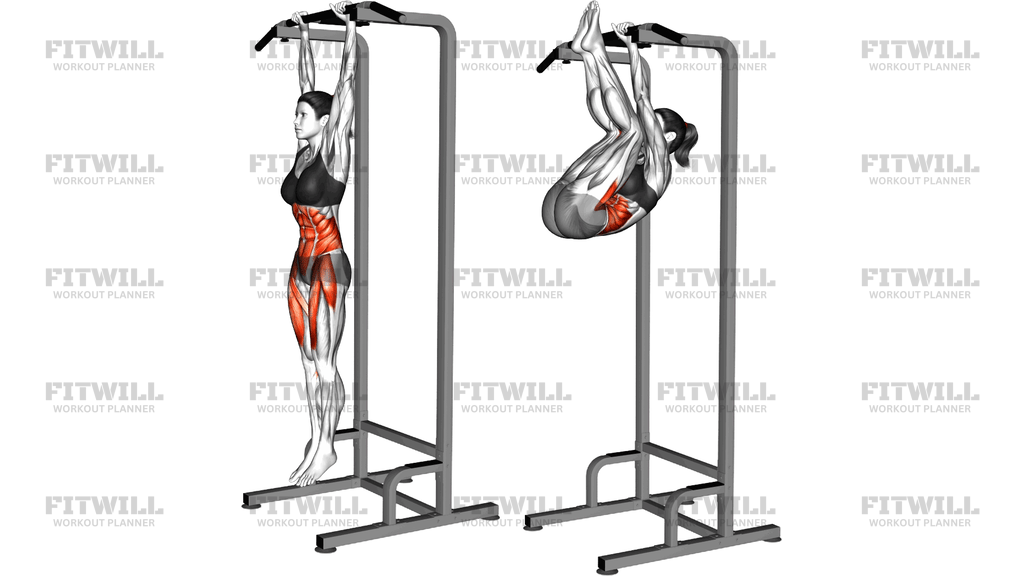
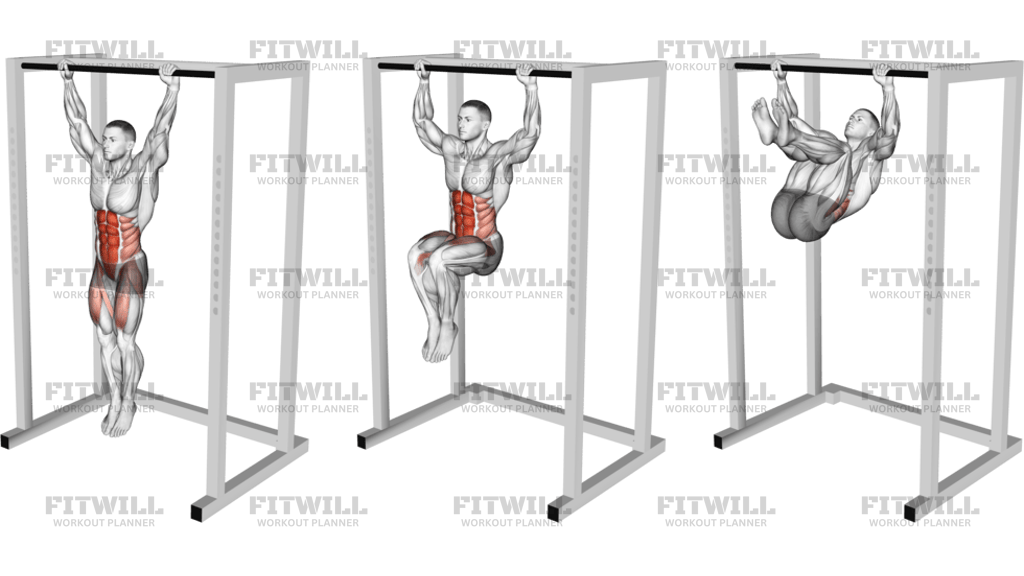
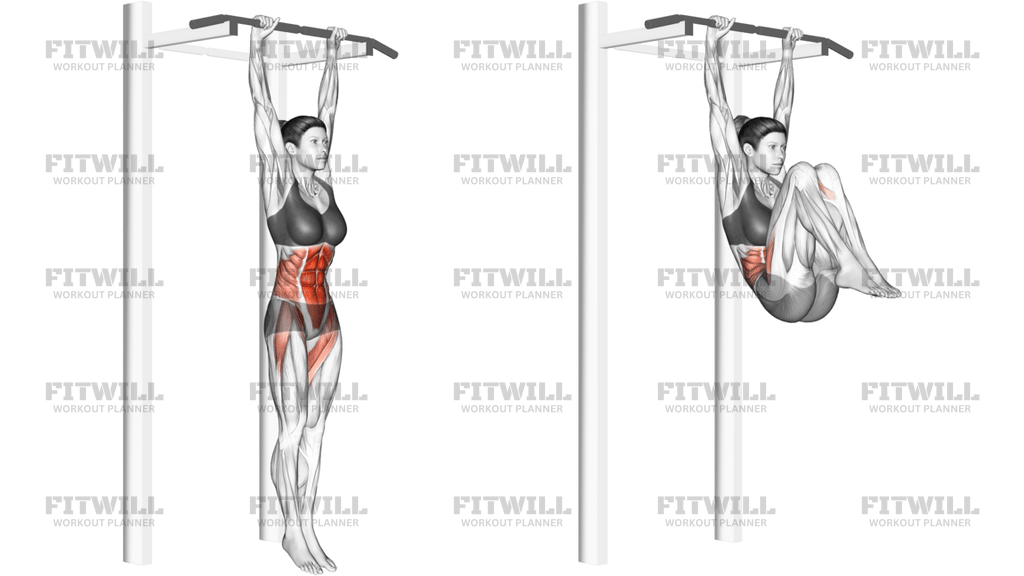
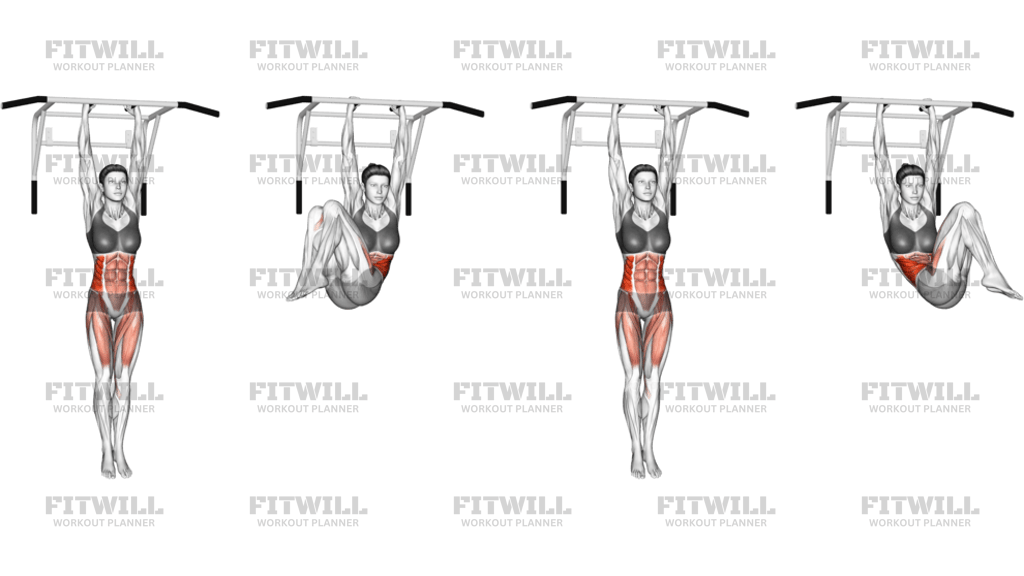
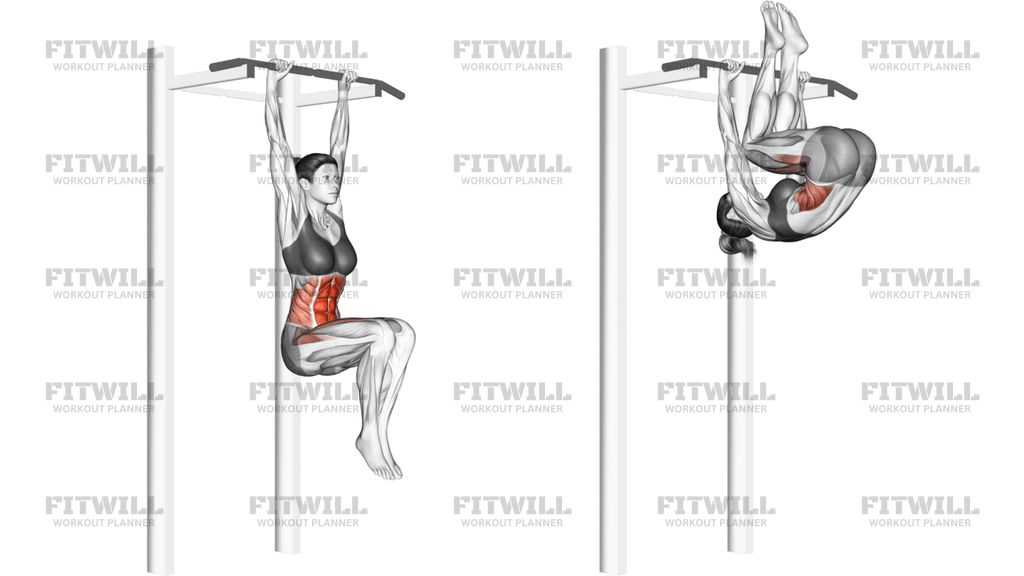
What makes this hold so effective is the way it forces your abs, hip flexors, and lower back to brace together while your lats and shoulders anchor your torso to the bar. The image highlights the two key phases: the vertical hang, where your body stays tall and controlled, and the held position, where your whole posterior chain and anterior core fire at once to keep the body from folding or sagging. Because nothing moves, the tension never lets up, which is exactly why the front lever builds such dense, usable core strength.
This hold suits intermediate and advanced trainees who already own strict hanging leg raises, solid pull-ups, and reasonable shoulder health. Gymnasts, calisthenics athletes, climbers, and anyone chasing serious straight-arm strength will get the most from it. If you are newer to hanging work, the front lever still belongs in your plan, but through easier variations such as tuck or one-leg-extended holds rather than the full position.
Setup quality decides everything here. Grip the bar roughly shoulder-width with a full overhand grip, and before you lift a single inch, pull your shoulder blades down and pin your arms into their sockets. If you start from a loose, passive hang, your shoulders sit in a weak position and your lower back takes stress it should not. A clean setup means the lift comes from your lats and torso, not from swinging momentum.
To execute well, lower your legs slowly and with control as your body rotates backward under the bar, keeping your knees locked and toes pointed. Fight the temptation to arch your hips or let your head drop. In the top position, think about pushing the bar down behind you while pulling your heels toward it — that internal cue keeps the line straight and the tension constant. Breathe shallowly but continuously; holding your breath for long isometric holds drains you fast.
Safety-wise, this is a hold that punishes ego. Progress it in small steps, exit the position under control rather than dropping, and stop if your shoulders feel pinched rather than worked. Used consistently, the Hanging Front Lever Hold builds a midsection and upper-body pulling system that transfers to nearly every bar-based skill you will ever attempt.
[ Workout Log & Planner ]
Put your next workout in Fitwill
Keep your plan and training log ready when you are.


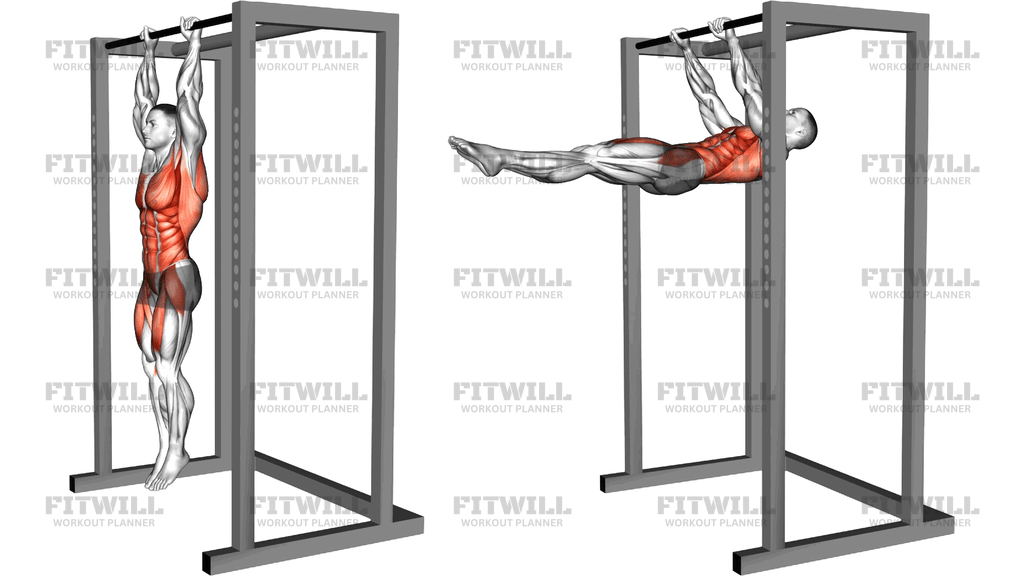
Instructions
- Grip a pull-up bar with an overhand grip about shoulder-width apart, arms fully extended, and set a dead hang with your feet off the floor.
- Before lifting, pull your shoulder blades down and together so your shoulders settle firmly into their sockets and your body stops swinging.
- Brace your abs and squeeze your glutes to lock your ribs down over your pelvis before any rotation begins.
- Keeping your elbows locked and arms straight, raise your straight legs and rotate your entire body backward under the bar in one smooth, controlled motion.
- Continue the rotation until your body is horizontal, facing the ceiling, with hips fully open and knees locked.
- Hold that top position with your shoulders, hips, knees, and ankles aligned in one straight line parallel to the floor.
- Push the bar down toward your hips while pulling your heels toward the bar to maintain constant tension throughout the hold.
- Breathe in steady, shallow breaths through the hold instead of holding your breath.
- To finish, lower your legs under control back to the vertical hang rather than collapsing or dropping out of the position.
- Reset your grip, shake out your forearms, and rest fully before attempting another hold.
Tips & Tricks
- Hips sagging toward the floor in the hold usually means your glutes are switched off — squeeze them hard and think about tucking your pelvis slightly to straighten the line.
- If your body keeps folding at the hips, the problem is often weak hip flexors or abs, not grip; build the position with a tucked-knee front lever before attempting full legs.
- Bend your arms mid-hold and the movement turns into a pull-up row; lock your elbows and drive through your lats to keep it a front lever.
- Starting from a passive hang with loose shoulders is the most common setup mistake — always depress your shoulder blades first, or the rotation will feel unstable and strain your shoulder joints.
- Use a false grip or slightly wider grip if your wrists collapse when your body tips back over the bar.
- Time your holds rather than guessing; even adding two to three seconds per set is real progress on this skill.
- Lower your legs under control on every exit — dropping out of the hold wastes eccentric strength that directly builds your lever.
- Film yourself from the side occasionally; a straight line feels level but often sits noticeably piked or arched.
- Keep your head neutral and eyes toward your feet; craning your neck up breaks the torso line and adds unnecessary tension.
Frequently Asked Questions
Which muscles does the Hanging Front Lever Hold work the most?
The primary work comes from your core, especially the rectus abdominis and deep stabilizers, supported strongly by the hip flexors. Your lats, front shoulders, lower back, and forearms also work hard to hold the body line and anchor you to the bar.
Is the Hanging Front Lever Hold suitable for beginners?
Not in its full form — most people need months of hanging leg raises, pull-ups, and tucked front lever holds first. Beginners can practice the position with knees tucked or one leg extended to build the required strength safely.
How long should I hold the Hanging Front Lever Hold?
Aim for sets of three to ten seconds with full rest between attempts, since quality of the straight-body line matters far more than total time. Once you can hold a clean full lever for around ten seconds, progress to longer holds or harder variations.
Why do my hips drop when I try to hold the front lever?
Dropping hips usually mean your glutes and lower abs are not bracing hard enough, or the hold is simply beyond your current strength. Squeeze your glutes, tuck your pelvis slightly, and regress to a easier variation until the straight line holds.
Should my arms be bent or straight during the Hanging Front Lever Hold?
Your arms must stay completely straight with elbows locked. Bending the arms shifts the work from your core and lats into a pulling movement and breaks the front lever position.
What can I substitute if I cannot yet do a full Hanging Front Lever Hold?
Tuck front lever holds, single-leg extended holds, and front lever raises with knees bent all train the same pattern with less leverage demand. Resistance-band assisted front levers are another useful stepping stone.
How high should I grip on the bar, and does grip width matter?
A shoulder-width overhand grip works best; too narrow crowds your shoulders and too wide weakens your lat control. Make sure the bar is high enough that your body clears the floor horizontally with room to spare.
How often should I train the Hanging Front Lever Hold?
Two to three focused sessions per week works well, because isometric skill holds respond to frequent, high-quality, low-volume practice. Keep attempts fresh and stop the set as soon as your body line breaks.
Is the Hanging Front Lever Hold safe for the shoulders?
It is safe when you set up with depressed shoulder blades, keep your elbows locked, and only use a range your shoulders can control without pinching. If you feel sharp shoulder pain rather than muscular effort, stop and build strength with easier progressions first.