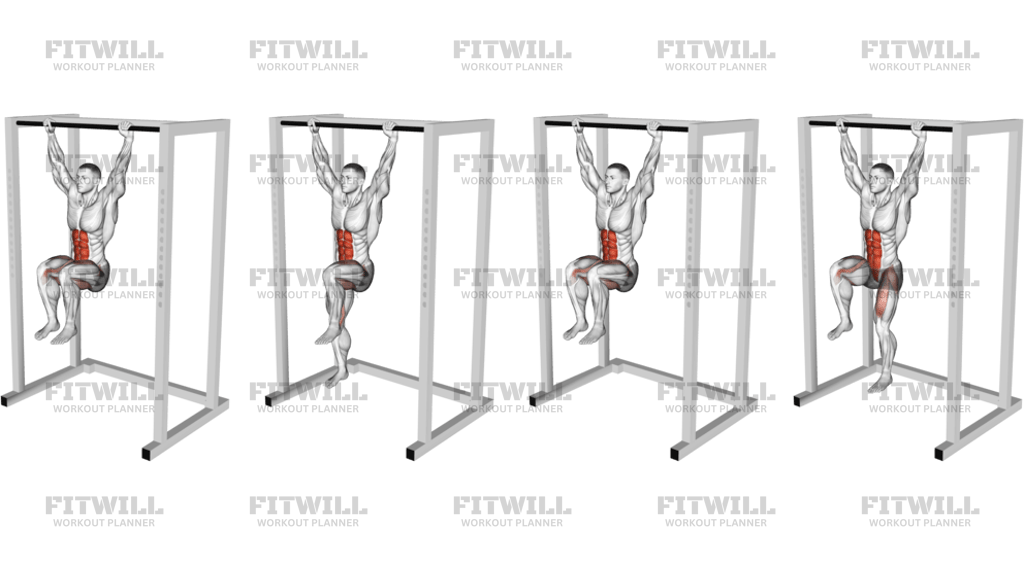
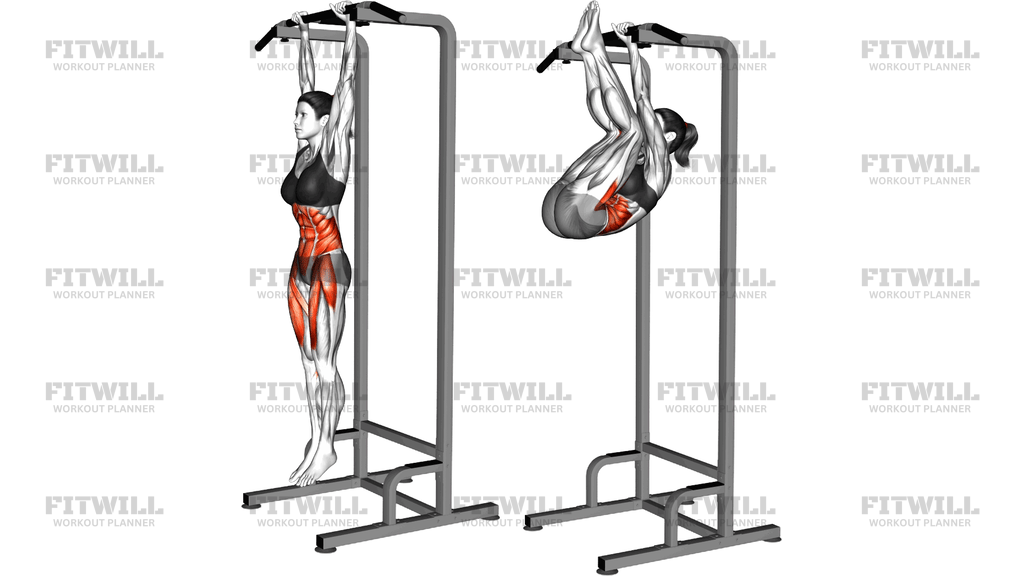
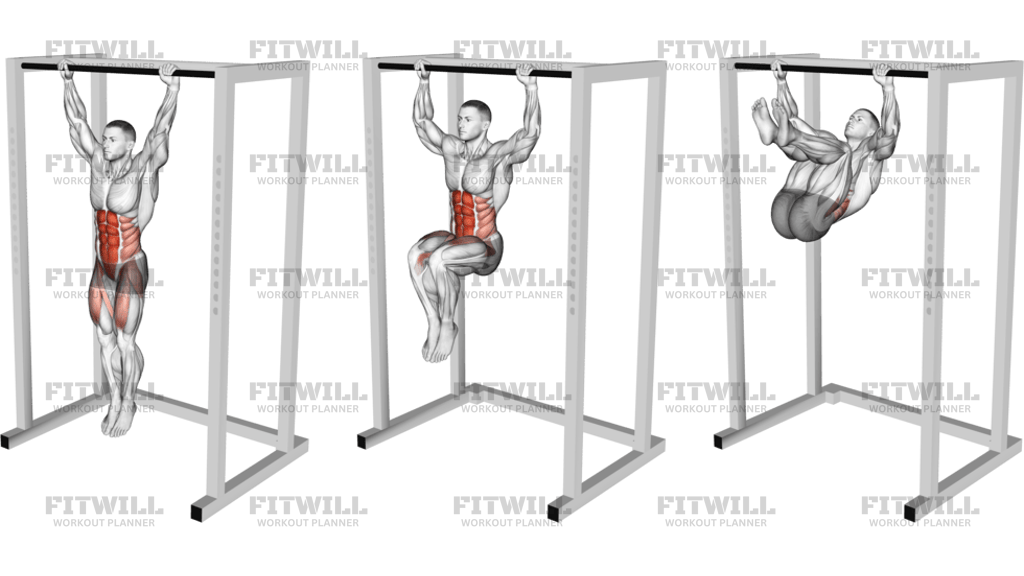
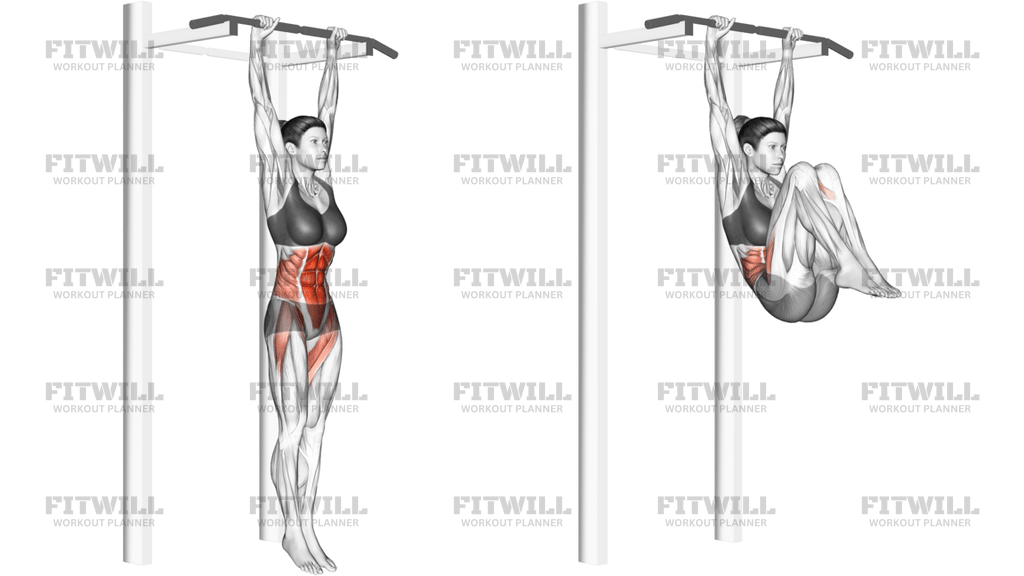
Hanging Alternating Knee Raise
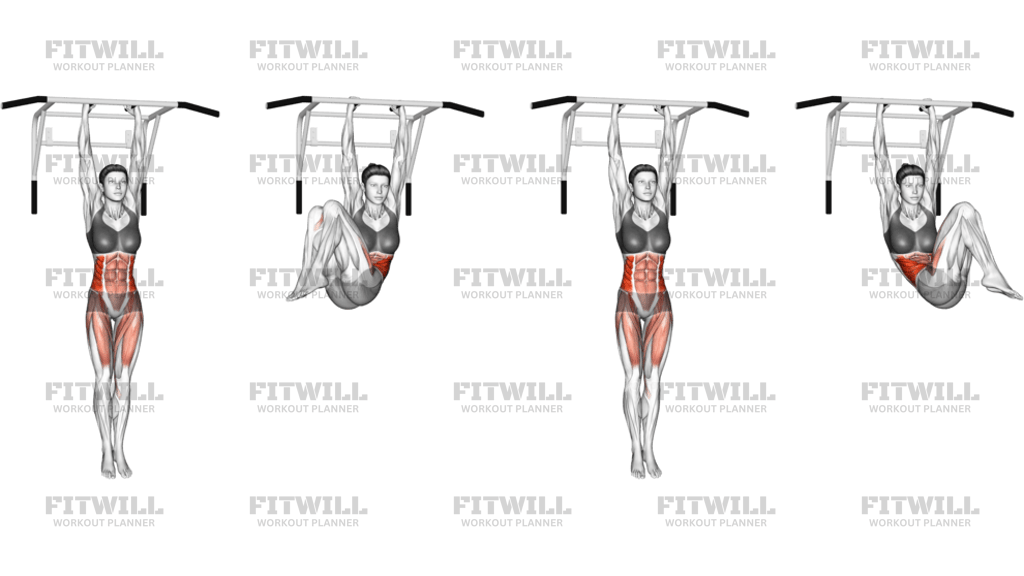
The Hanging Alternating Knee Raise is a hanging core exercise performed from a pull-up bar or the overhead handles of a raise station. You hang with a shoulder-width grip, then lift one knee toward your chest at a time, lower it, and repeat with the opposite side in a steady, alternating rhythm. Because each rep is driven by one leg, the movement adds a subtle rotational demand that asks your obliques to help control your pelvis while the lower abs and hip flexors do the lifting.
This exercise suits anyone who finds full hanging leg raises too demanding but has outgrown lying leg raises. The hanging position lengthens the abdominal wall under load and removes the floor as a back support, so your trunk has to stabilize itself the entire time. It is a common stepping stone in calisthenics and general strength training, and it carries over well to sports that involve running, kicking, or changing direction, where the hip flexors and abs work together one side at a time.
The main muscles at work are the lower portion of the rectus abdominis and the hip flexors, especially the iliopsoas, which pulls the thigh upward. The obliques brace against the slight twist created by single-leg lifting, while the forearms, grip, lats, and shoulder stabilizers hold you on the bar. That means you are training far more than the abs: every rep is also a grip and shoulder endurance exercise.
Setup matters more than most people expect. A dead hang with relaxed shoulders makes the reps harder to control and can leave your lower back swinging. Instead, pull your shoulder blades down slightly, keep your arms long but active, and brace your trunk before the first knee comes up. Your body should stay close to vertical, with the knees tracking up in front of you rather than out to the side.
To execute it well, lift one knee until the thigh is at or above parallel to the floor, pause briefly at the top, then lower it under control before the other knee starts. Swinging is the most common fault, and it usually comes from rushing the lowering phase. Slow the descent, exhale as each knee rises, and reset your hang whenever you feel momentum taking over.
You will see this exercise in core circuits, warm-ups for bar work, and conditioning finishers. It is also a practical choice in busy gyms because it needs only a bar and your body weight. If your grip gives out before your abs do, wrist straps or a raise station with back and arm pads can let you keep training the intended muscles safely.
[ Workout Log & Planner ]
Put your next workout in Fitwill
Keep your plan and training log ready when you are.


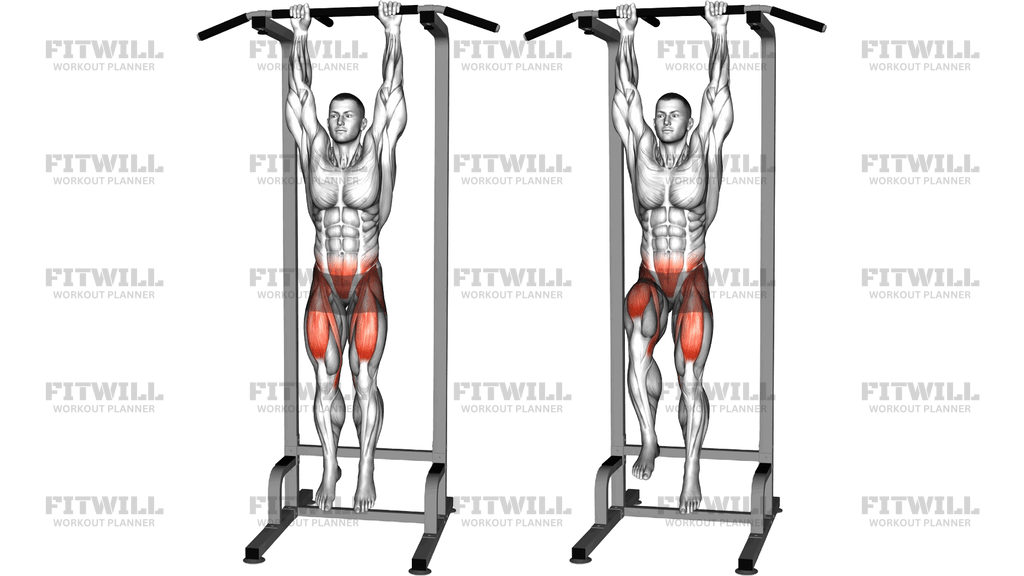
Instructions
- Take a shoulder-width overhand grip on a pull-up bar or the overhead handles of a raise station and let your body hang with your feet clear of the floor.
- Pull your shoulder blades down slightly so your shoulders sit away from your ears, and keep your arms long but active rather than fully slack.
- Brace your abdominal wall and squeeze your glutes lightly to set a neutral pelvis before you start moving.
- Keeping your body close to vertical, lift one knee up in front of you until the thigh is at least parallel to the floor, letting the lower leg hang relaxed.
- Pause for a beat at the top and feel your lower abs pull the thigh up rather than just swinging the leg.
- Lower that knee back to the dead hang under control, stopping any backward swing before the next rep.
- Raise the opposite knee with the same controlled path, then continue alternating sides for the desired number of reps.
- Exhale as each knee rises and inhale as it lowers, keeping your breathing steady instead of holding your breath.
- Between sets, step down carefully rather than dropping, and reset your grip and brace at the start of every set.
Tips & Tricks
- If you start swinging, your lowering phase is too fast. Pause at the bottom of each rep until your body is completely still before lifting the next knee.
- Lift the knee, not just the foot. Bending at the ankle or flicking the lower leg turns the rep into a hip flick and takes work away from the abs.
- Keep your torso from leaning back as each knee rises. If your chest drops toward the bar, you are using momentum instead of hip flexion.
- A thumbless grip around the bar can make your forearms burn out early. Wrap your thumbs fully and grip hard to protect your hang.
- If your lower back arches as the knee lowers, tighten your brace and shorten the range slightly rather than letting the pelvis tip forward.
- Chalk or lifting straps are worth using once grip becomes the limiting factor, so your abs fail before your hands do.
- Aim to raise the thigh above parallel as you get stronger; a higher knee increases abdominal involvement compared with a short hip flexion.
- Avoid shrugging up toward the bar during the rep. The shoulders should stay depressed and packed while the arms stay straight.
- Slow, quieter reps with no swing beat fast, noisy ones for building the lower abs, even if it means getting fewer total reps.
Frequently Asked Questions
What muscles does the Hanging Alternating Knee Raise work?
The primary movers are the lower abs and the hip flexors, particularly the iliopsoas. The obliques stabilize against the slight twist of single-leg lifting, while the grip, forearms, lats, and shoulder stabilizers hold you on the bar.
Is the Hanging Alternating Knee Raise good for beginners?
It is one of the more approachable hanging core exercises because lifting one knee at a time keeps the load manageable. If even this feels too hard, start with a supported knee raise on a captain's chair or lying leg raises to build base strength first.
Why do my forearms fail before my abs during the Hanging Alternating Knee Raise?
Hanging endurance is often the weak link early on. Use lifting straps, shorten your sets, or practice dead hangs separately so grip strength catches up to your core.
How high should I raise each knee in the Hanging Alternating Knee Raise?
Aim to bring the thigh at least parallel to the floor, and higher as you progress. Lifting the knee toward the chest increases abdominal involvement, while a short lift mostly trains the hip flexors.
How do I stop swinging during the Hanging Alternating Knee Raise?
Slow the lowering phase, pause with your body still at the bottom of each rep, and keep your shoulder blades pulled down. If momentum still builds, stop the set, reset your hang, and resume with a slower tempo.
Can the Hanging Alternating Knee Raise replace hanging leg raises?
It can serve as a progression or a lower-stress alternative, since bent knees shorten the lever and reduce the load on the abs and hip flexors. Once you can perform controlled sets, straight-leg raises are a natural next step.
Should my back stay straight during the Hanging Alternating Knee Raise?
Keep your pelvis in a neutral position and avoid letting your lower back arch as each knee lowers. Excessive arching plus swinging is what usually causes discomfort in the lumbar area during hanging core work.
What can I use instead of a pull-up bar for the Hanging Alternating Knee Raise?
A captain's chair or raise station with back support works the same knee-raising pattern without the grip demand. Ab straps looped over a bar are another option if your hands fatigue quickly.
How many reps and sets of the Hanging Alternating Knee Raise should I do?
Two to four sets of 8 to 16 alternating reps is a practical range for strength and control. Count one full left-and-right cycle as two reps, and prioritize a controlled tempo over hitting a high number.