Hanging Pike
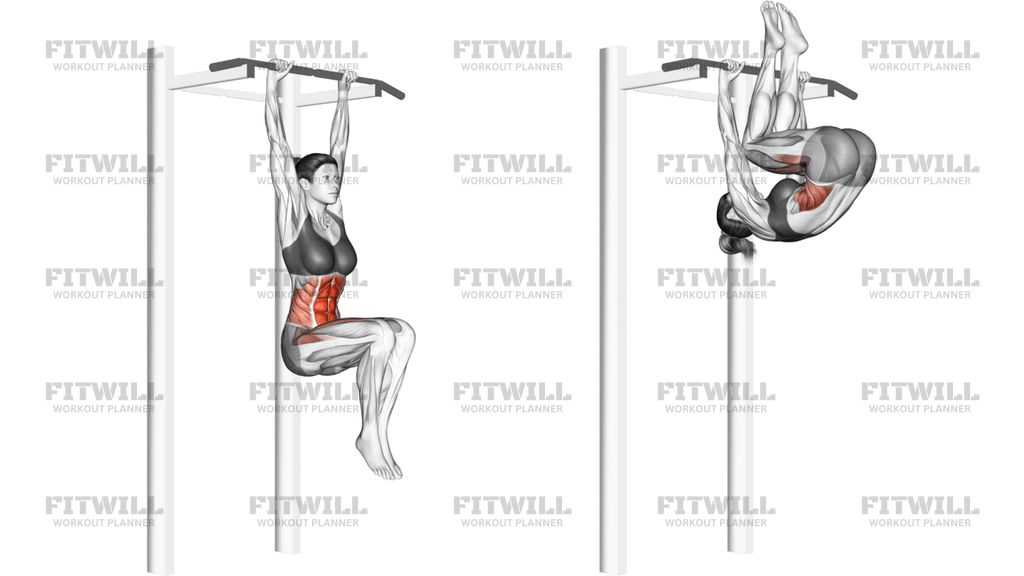
Hanging Pike is a strict hanging core exercise performed from a pull-up bar. You start from a controlled dead hang, then fold the pelvis and trunk so the knees travel upward and the hips close into a pike position. The movement is driven by the abs and hip flexors, while the shoulders, lats, and grip stabilize the body so the set does not turn into a swing.
This exercise is useful when you want direct abdominal work with a strong bodyweight demand. Compared with a simple knee raise, the pike-style finish asks for more trunk compression and better control through the lower half of the rep. That makes setup important: if the grip is loose, the shoulders are shrugged, or the body is already swinging, the hips and ribcage lose position before the core does any real work.
A clean rep begins with stillness. From the hang, set the shoulders down, keep the ribs stacked over the pelvis as much as possible, and use a small exhale to start the curl. The knees come up because the pelvis rolls and the torso shortens, not because you kick the legs. At the top, the thighs should be close to the torso with the trunk tightly folded, then the body lowers under control back to a quiet hang.
Hanging Pike fits well in core sessions, accessory work, gymnastics-style strength training, or as a finishing movement after larger lifts. It can also be regressed to hanging knee raises if you need a shorter lever, or progressed by slowing the lowering phase and reducing momentum. The main safety priority is control: if the shoulders ache, the swing becomes hard to stop, or the lower back starts arching to fake height, reduce the difficulty and keep the rep strict.
[ Workout Log & Planner ]
Put your next workout in Fitwill
Keep your plan and training log ready when you are.


Instructions
- Grip the pull-up bar slightly wider than shoulder width and hang with both arms straight, palms facing away, and the shoulders set down away from your ears.
- Hold your legs together with the feet relaxed, then find a dead-hang position with almost no swing before the first rep.
- Brace your core and lightly tuck the pelvis so your ribs and hips stay organized before you start moving.
- Exhale and begin curling the knees upward by folding at the hips, not by kicking the legs or rocking the torso.
- Keep the thighs together as the knees travel toward the chest and the trunk shortens into a pike.
- Lift until the hips are deeply flexed and the knees are as high as you can control without losing the hang position.
- Pause for a beat at the top if you can stay still, keeping the grip and shoulders active.
- Lower slowly until your body returns to a controlled hang, then reset the swing before the next repetition.
Tips & Tricks
- If your shoulders creep toward your ears, the set is too hard or the bar is too slippery for strict control.
- Think about rolling the pelvis upward first; that small curl usually starts the rep better than trying to lift the knees fast.
- Keep the feet together so the lower body behaves like one lever instead of two separate legs swinging around.
- A brief pause at the bottom helps more than extra speed if the bar starts to swing from rep to rep.
- Exhale as the knees rise so the ribcage can fold instead of flaring open at the top.
- Do not let the lower back arch to fake a bigger range; the rep should get shorter, not looser.
- If straight-leg piking breaks your form, bend the knees slightly and own the hanging tuck first.
- Stop one or two reps before your grip gives out, because a tired grip usually turns the last reps into body swing.
Frequently Asked Questions
What muscles does Hanging Pike work most?
It mainly trains the abs and hip flexors, with the obliques, lats, shoulders, and grip working to keep the hang stable.
Is Hanging Pike harder than a hanging knee raise?
Usually yes. The pike-style fold asks for more trunk compression and more control through the lower abs and hip flexors.
How do I keep from swinging on the bar?
Start from a quiet dead hang, lower slowly, and reset if you lose control. Straightening the legs and rushing the descent usually makes the swing worse.
Should my legs stay straight the whole time?
They can stay mostly straight if you have the strength, but a slight knee bend is fine as long as the movement still comes from the hips and abs.
Where should I feel the exercise?
Most of the effort should be in the abdominal wall and hip flexors, with the shoulders and forearms working harder than in a floor-based core drill.
Can a beginner do Hanging Pike?
Yes, but many beginners should start with hanging knee raises or a shorter tuck so they can control the bar without swinging.
What is the most common form mistake?
Using momentum to yank the knees up instead of curling the pelvis and trunk under control.
How many reps should I use?
Strict sets of about 6 to 12 reps work well for most people, but stop earlier if the hang turns into a swing.