Smith High Pull
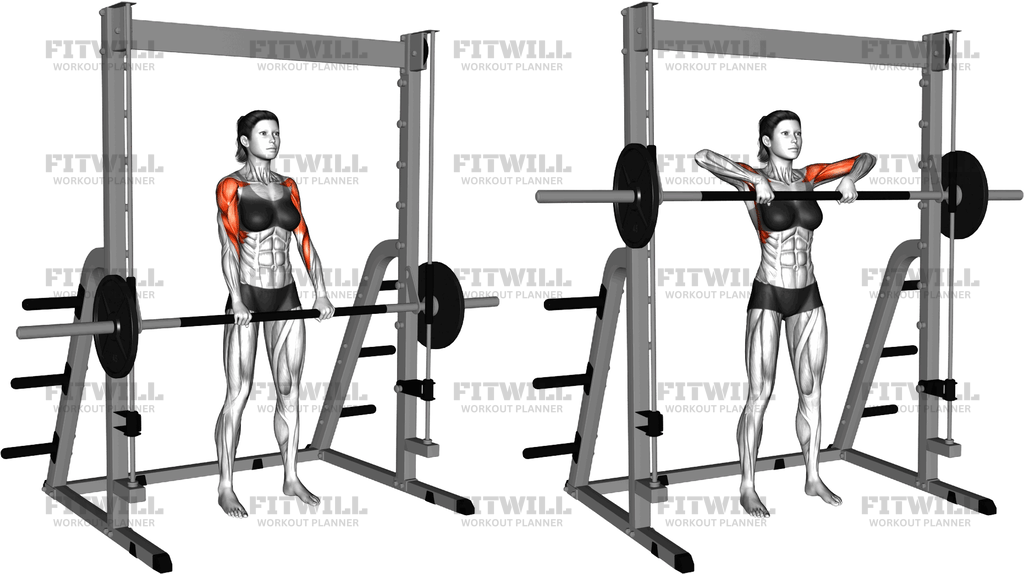
The Smith High Pull is a vertical pull performed on a Smith machine, where you drive the fixed bar from thigh height up to your upper chest with your elbows leading high and wide. It sits somewhere between an upright row and an explosive high pull, but the Smith machine's fixed bar path removes the balance and stabilization demands of a free barbell, letting you concentrate purely on driving the elbows up and squeezing the shoulders and traps at the top.
This movement is useful for lifters who want to build the side delts and upper traps without the wrist and shoulder strain that a barbell upright row can sometimes cause. Because the bar is locked into its rails, you can adjust your hand position slightly wider than shoulder width, keep your torso upright, and pull without the bar drifting forward or backward. That makes it a solid choice for people with cranky shoulders who still want heavy vertical pulling work, as well as for bodybuilders chasing that capped-shoulder, thick-trap look.
The primary work comes from the lateral deltoids, which lift the upper arms out to the sides, with strong assistance from the upper traps as the shoulder girdle elevates at the top of the pull. The front delts, biceps, and forearms contribute as synergists and grippers, especially near the sticking point just below the chest. Unlike a power high pull, this version is not meant to be explosive from the hips; the legs stay mostly still with a soft knee bend, so the shoulders and traps do the lifting.
Setup matters more than people expect. Set the bar so it hangs at roughly mid-thigh when your arms are extended, stand with feet about hip width and weight evenly through midfoot, and take an overhand grip slightly wider than your shoulders. If the bar starts too low, you will be tempted to lean forward and turn it into a row; too high, and you lose the bottom half of the range. A slight forward foot position relative to the bar helps the fixed path travel comfortably along the front of your body.
Execution is simple but easy to get wrong. Keep your chest up and core braced, then pull the bar up along your torso by driving your elbows up and out, letting the wrists stay relaxed so the hands hang as hooks rather than curling the bar with the arms. Stop when your elbows reach roughly upper-chest height, pause briefly, then lower under control to full arm extension before the next rep. If you feel a pinch at the front of the shoulder at the top, shorten the range rather than forcing the bar higher.
You will see the Smith High Pull used as a hypertrophy accessory on shoulder days, as a shoulder-friendly substitute for barbell upright rows, and as a teaching tool for lifters progressing toward explosive Olympic-style pulls, since it grooves the elbows-high bar path with zero balance requirement. Keep loads moderate, prioritize elbow height and a smooth tempo, and treat it as a quality movement rather than an ego lift.
[ Workout Log & Planner ]
Put your next workout in Fitwill
Keep your plan and training log ready when you are.


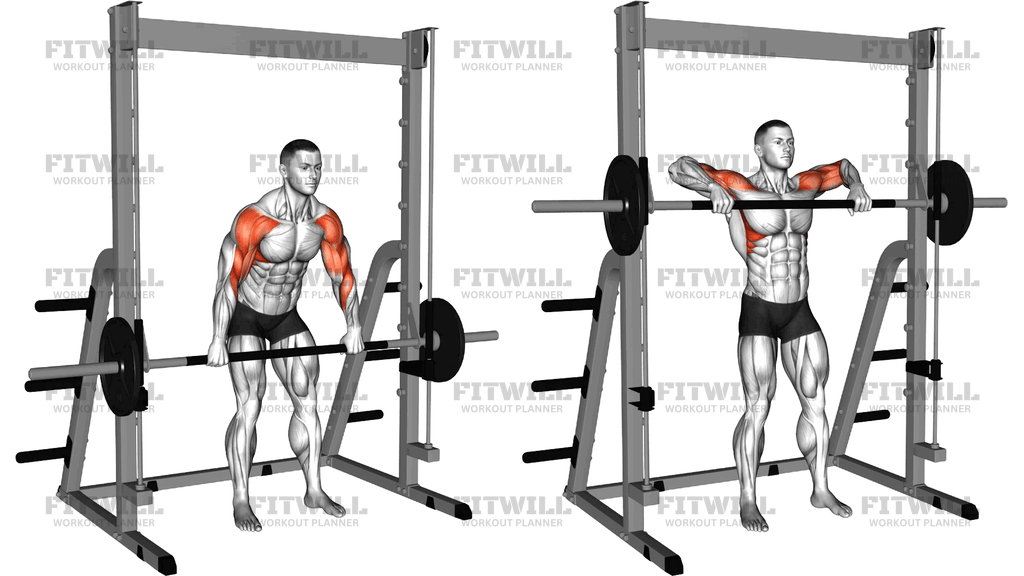
Instructions
- Set the Smith machine bar so it rests at about mid-thigh height with your arms fully extended, and load plates evenly on both sides.
- Stand facing the bar with feet hip-width apart, toes pointing forward, and position yourself so the bar path runs close to the front of your body.
- Take an overhand grip slightly wider than shoulder width, thumbs wrapped around the bar, and let the bar hang with your arms straight.
- Soften your knees slightly, brace your core, lift your chest, and pull your shoulder blades back and down before initiating the pull.
- Exhale and drive your elbows up and out to the sides, keeping the bar tracking close along your torso as it rises.
- Let your wrists stay loose so the hands act as hooks, and stop the pull when your elbows reach about upper-chest height with the bar near your collarbone.
- Hold the top position for a brief moment and feel the contraction in your side delts and upper traps.
- Inhale as you lower the bar under control back to full arm extension at mid-thigh, resisting the descent rather than dropping it.
- Reset your brace and stance between reps if you feel your torso leaning back, then repeat for your target reps.
- When finished, rotate the bar to engage the Smith machine hooks and rack it securely before letting go.
Tips & Tricks
- If your wrists ache at the top, widen your grip a hand-width or two; a wider grip keeps the elbows higher than the hands and eases the angle at the shoulder.
- The most common mistake is turning this into a biceps curl by pulling with the hands. Focus on the cue 'elbows to the ceiling' and let the arms follow.
- Do not lean back as the bar gets heavy. If your torso starts rocking toward the machine rails, the weight has outgrown your delts, so reduce the load.
- Stop the pull at upper-chest height rather than yanking the bar to your chin. Forcing the end range is where most shoulder pinching happens on high pulls.
- Keep the bar within a few centimeters of your body throughout. If it swings away from your torso, your elbows are drifting behind you instead of out to the sides.
- Use a false grip only if your hands are secure; with a fixed Smith bar, a full thumb wrap is safer because you cannot bail the bar forward like a free barbell.
- Tempo beats load here. A one-second pause at the top with a two-second lowering builds more visible delt work than bouncing heavy reps.
- Check that both feet carry weight evenly. Shifting onto one leg as you fatigue changes the bar path and loads the shoulders unevenly.
- Because the Smith bar is fixed, a slight forward lean of the shins toward the bar at the bottom can make the path feel more natural on the shoulders.
Frequently Asked Questions
What muscles does the Smith High Pull work?
The side delts are the primary movers, lifting the upper arms out and up, with the upper and middle traps taking over as the bar approaches the chest. The front delts, biceps, and forearm flexors assist, and your grip works to hold the bar throughout.
Is the Smith High Pull safer for shoulders than a barbell upright row?
For many lifters, yes, because the fixed bar path and slightly wider grip make it easier to keep the elbows high and control how high the pull goes. Still, stop the pull at upper-chest height and cut the range short if you feel any pinching at the front of the shoulder.
How high should I set the Smith machine bar before starting?
Set it so the bar hangs at roughly mid-thigh with your arms fully extended. This gives you a full but manageable range without forcing you to lean forward at the start of each rep.
Should my knees and hips move during the pull?
Keep a soft, fixed knee bend and stay upright. Unlike an Olympic-style high pull, this version has no hip drive; if your torso or legs start moving the weight, the load is too heavy for the shoulders.
How wide should my grip be on the Smith High Pull?
Start slightly wider than shoulder width with an overhand grip. If your wrists feel jammed at the top or your elbows cannot get above the bar, widen your grip by a hand-width.
Can beginners do this exercise?
Yes, it is actually a good first vertical pull for beginners because the Smith machine stabilizes the bar and teaches the elbows-lead bar path. Start light, learn to keep the bar close to the body, and add weight only when the movement feels smooth.
Why do my biceps fatigue before my shoulders?
That usually means you are pulling with the hands instead of driving the elbows up. Relax your wrists, treat the hands as hooks, and concentrate on lifting your elbows out and up so the delts and traps do the work.
What can I substitute if my gym has no Smith machine?
A cable upright row with a straight bar, a dumbbell high pull, or a barbell upright row with a wide grip all hit similar muscles. The cable version is the closest match because it keeps constant tension on a guided vertical path.
How many reps and sets work best for the Smith High Pull?
It responds well to moderate hypertrophy work, typically 3 to 4 sets of 8 to 12 reps with a controlled tempo. Because it is a joint-sensitive movement, favor clean reps and modest loads over heavy grinding sets.
How do I rack the bar safely after my last rep?
Lower the bar to full arm extension, rotate the sleeve to engage the Smith machine hooks at a racking notch, and confirm it is seated before releasing your grip. Never loosen your hands while the bar is still moving.