Seated Figure 4 Stretch
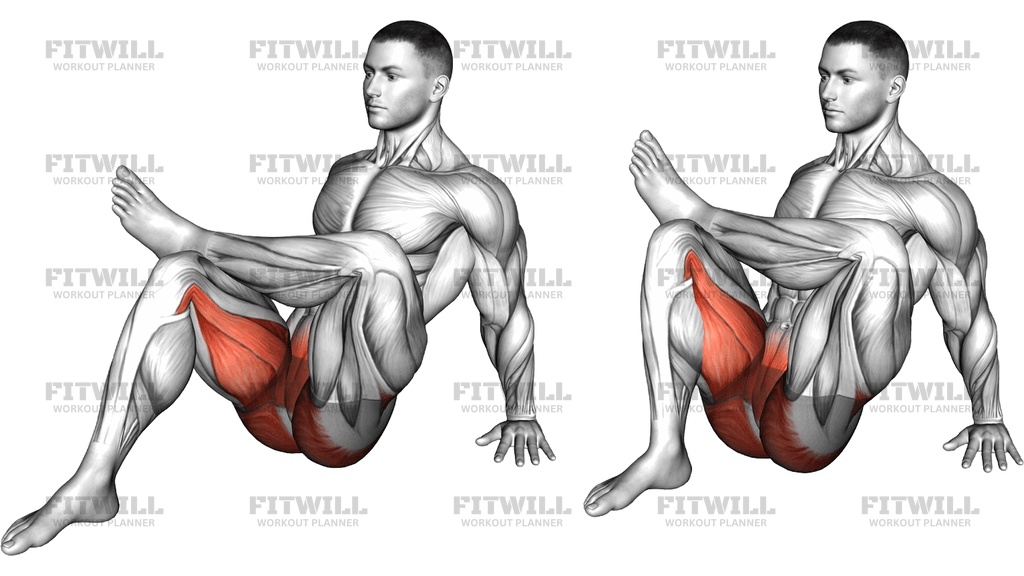
The Seated Figure 4 Stretch is a body-weight mobility exercise that targets the glutes and outer hip muscles by combining a cross-legged hip position with a gentle forward lean. You sit on the floor with one ankle resting on the opposite knee, forming a figure-four shape with your legs, then hinge your chest toward the crossed shin while supporting yourself with your hands behind you. The illustration shows the two key phases: the upright setup with the ankle stacked over the standing knee, and the leaned position where the hip of the crossed leg opens and the stretch deepens.
This stretch is especially useful for anyone who spends long hours sitting, since prolonged chair time tends to leave the glutes and deep hip rotators tight and dormant. Runners, cyclists, and lifters who squat or hinge heavily also benefit, because those activities load the glutes and outer hips repeatedly and can leave the tissue feeling stiff between sessions. People with occasional tightness around the outside of the hip or a feeling of restriction deep in the buttock often find this position hits the spot that a standard hamstring or quad stretch misses.
The primary muscles being lengthened are the gluteus maximus of the crossed leg along with the deeper outer-hip muscles such as the gluteus medius and the small rotators beneath it. The adductors and hip flexors of the bottom leg assist by stabilizing the position. Because the stretch is passive and self-regulated by how far you lean, it can be scaled from very gentle to fairly intense without any equipment.
Setup matters more than most people expect. Sitting tall with your weight supported on your hands keeps your lower back neutral, which forces the stretch into the hip instead of letting the spine round and absorb the movement. The crossed ankle should sit on the thigh just above the knee, not directly on the kneecap, so pressure stays on the muscles rather than the knee joint itself.
To execute it well, keep the crossed foot flexed to brace the ankle, hinge forward from the hips with a long spine, and stop at the first strong stretch sensation rather than forcing depth. Breathe slowly and let the hip relax into the position over 20 to 60 seconds. For most people, one to two rounds per side after training or in the evening is enough to notice a difference in hip comfort and range of motion.
[ Workout Log & Planner ]
Put your next workout in Fitwill
Keep your plan and training log ready when you are.


Instructions
- Sit on the floor with both knees bent and your feet flat, then place your hands on the floor slightly behind your hips with your fingers pointing outward for support.
- Cross your right ankle over your left thigh so it rests just above the left knee, letting the right knee drop open to the side, and flex the right foot.
- Sit up tall through your spine, roll your shoulders back, and engage your core lightly so your lower back stays long instead of rounding.
- Keeping your back straight, hinge forward from the hips toward the crossed shin until you feel a stretch deep in the right glute and outer hip.
- Hold the end position for 20 to 60 seconds, staying tall through the chest rather than collapsing your upper back toward the floor.
- To increase the stretch slightly, press the right knee gently away with your hand or deepen the forward lean by a small amount; to ease off, sit back upright.
- Exhale slowly as you lean in and keep breathing steadily through the hold, letting each exhale soften the hip a little more.
- Reverse the motion with control by pushing through your hands and hinging back to the upright seated position, keeping the ankle crossed until you are fully upright.
- Uncross the right leg, shake it out briefly, then switch sides and repeat the same sequence on the left hip.
- Complete one to two holds per side, especially after lower-body training or long periods of sitting.
Tips & Tricks
- Place the crossed ankle on the thigh just above the knee rather than on the kneecap; stacking it directly on the knee joint transfers pressure into the knee and takes it away from the glute.
- If your bottom leg wants to slide or the position feels unstable, press the heel of the bottom foot firmly into the floor to anchor the base.
- Rounding your lower back to reach your chest closer to your shin is a common cheat; the stretch should deepen through the hip, so hinge from the hips and keep the spine long even if that means less depth.
- Keep the crossed foot flexed the entire time; a relaxed or pointed foot leaves the ankle and knee less supported while the hip rotates.
- If you feel pinching at the front of the crossed hip instead of a stretch in the buttock, reduce the lean and focus on letting the knee drop open slowly rather than pushing it down.
- Tight hips may need a warm-up first; try a few slow hip circles or a short walk before holding this stretch so the tissue is more receptive.
- Do not bounce or force the knee toward the floor; sustained steady pressure lets the outer hip release better than pulsing ever will.
- Support yourself actively through the hands behind you; letting your torso sag forward without hand support usually collapses the spine and blurs where the stretch is actually coming from.
- If your hands cannot comfortably reach the floor behind you, sit on a low cushion or folded towel to raise your hips and give your arms more room.
Frequently Asked Questions
Which muscles does the Seated Figure 4 Stretch target?
It primarily lengthens the gluteus maximus of the crossed leg along with the deeper outer-hip muscles such as the gluteus medius and the small hip rotators. The bottom leg's hip stabilizers work to hold the position rather than being stretched.
Is the Seated Figure 4 Stretch safe for the knee?
Yes, when the crossed ankle rests on the thigh above the knee and the crossed foot stays flexed. If you feel sharp or pinching pain in the knee rather than a stretch in the hip, back off the lean and reduce how far the knee drops open.
How long should I hold the Seated Figure 4 Stretch?
Hold each side for 20 to 60 seconds and repeat once or twice per leg. Longer, calmer holds tend to work better for the glutes and outer hips than short quick stretches.
Why do I feel the stretch in my lower back instead of my glutes?
That usually means your torso is rounding as you lean forward, letting the spine take over the movement. Sit taller, keep your hands supporting you behind your hips, and hinge from the hip joints while keeping your chest up.
Can beginners do the Seated Figure 4 Stretch?
Yes, it is one of the more accessible hip stretches because you fully control the intensity with your lean. Stiff beginners can start upright with a shallow lean and even sit on a cushion to make the position more comfortable.
What can I use instead of the Seated Figure 4 Stretch if sitting on the floor is uncomfortable?
The same figure-four position works well performed on your back with the ankle crossed over the opposite knee, or while seated in a sturdy chair with the ankle on the opposite thigh. Both versions target the same glute and outer-hip area.
Should I do the Seated Figure 4 Stretch before or after a workout?
A shorter, gentler hold works before training to free up the hips for squats and hinges, while longer holds of 30 to 60 seconds fit better after training or in the evening when the goal is relaxing the tissue.
My crossed knee sits very high and will not drop toward the floor. Is that a problem?
Not necessarily; it often reflects naturally tight outer-hip muscles. Support the knee with your hand, keep the stretch at a tolerable intensity, and let the range improve gradually rather than pushing the knee down hard.
How often should I perform the Seated Figure 4 Stretch?
Daily use is reasonable, especially if you sit for long stretches of the day or train your lower body frequently. Consistency with moderate holds produces better hip mobility over time than occasional aggressive sessions.
What is the most common mistake with the Seated Figure 4 Stretch?
Placing the crossed ankle directly on the kneecap and forcing the forward lean. Both errors shift stress into the knee joint and the lower back, so keep the ankle above the knee, the foot flexed, and the spine long throughout.