Kneeling Elbow Mobilisation
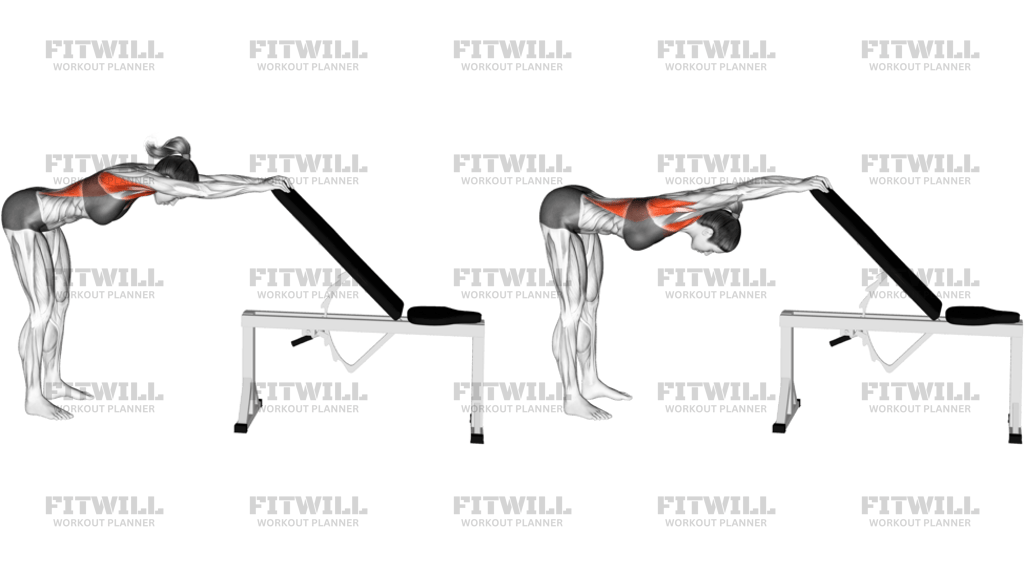
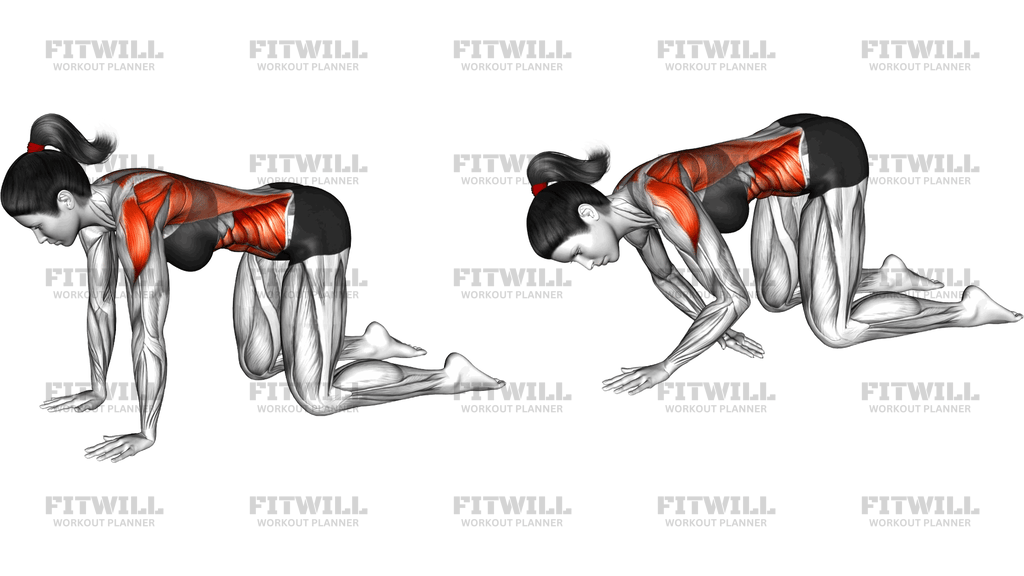
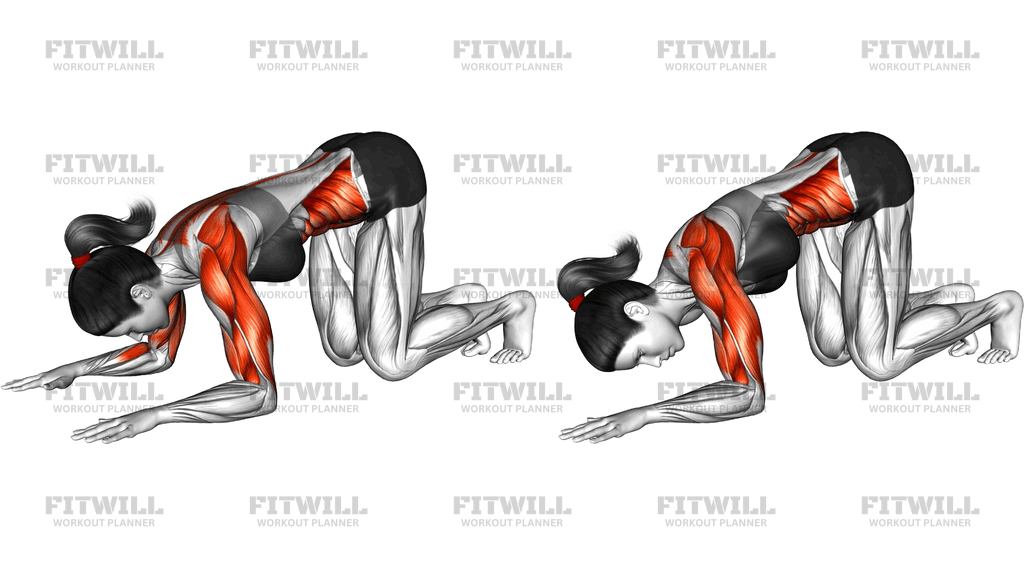
Kneeling Elbow Mobilisation is a bodyweight mobility drill performed from a kneeling, all-fours position with the forearms resting flat on the floor. From there, you let the chest sink toward the ground while the hips stay high, sending the stretch through the lats, the backs of the shoulders, and the upper back. It sits somewhere between a stretch and a joint prep exercise, which is why it shows up so often in warm-ups for pressing days, overhead work, and general shoulder health routines.
The main value of this drill is that it takes shoulder flexion to its end range while the knee and forearm position pins the lower body in place. That pinning matters: because the hips stay back and the forearms stay planted, the lats and teres major cannot cheat by shrugging or arching, so the range you gain is range the shoulder actually has to produce. People who spend long hours sitting or who feel a persistent tightness across the upper back when they raise their arms overhead tend to notice the difference quickly.
Setup is simple but not arbitrary. Kneeling with the knees roughly under the hips gives you a stable base and keeps the pelvis in a posterior-friendly position. Placing the elbows about shoulder-width apart with the forearms parallel to each other gives the shoulder a consistent, repeatable track. From there the movement is small and deliberate: let the chest drop, breathe into it, and ease back out rather than forcing depth.
Common use cases include pre-workout shoulder prep, between-set mobility resets, and cooldowns after bench pressing, pull-ups, or any overhead activity. Desk workers often use it mid-day as well, since the position also opens the thoracic spine in a way that counteracts rounded posture. Because it requires no equipment beyond a floor surface, it fits easily into home routines and gym warm-ups alike.
Form-wise, the main coaching points are to keep the lower back from sagging, keep the head relaxed rather than jammed toward the floor, and work within a range where you feel a stretch rather than a pinch. The drill should feel like a broad pull across the sides of the back and the rear of the shoulders. If it feels sharp in the shoulder joint itself, reduce the depth and re-set the elbow position before continuing.
Fitwill
Log Workouts, Track Progress & Build Strength.
Achieve more with Fitwill: explore over 9600 exercises with images and videos, access built-in and custom workouts, perfect for both gym and home sessions, and see real results.
Start your journey. Download today!




Instructions
- Kneel on an exercise mat with your knees under your hips and the tops of your feet on the floor.
- Place both forearms flat on the floor in front of you, elbows about shoulder-width apart and roughly under or slightly ahead of your shoulders.
- Let your hips drift back slightly so your weight settles onto the knees and forearms, and keep a soft but stable brace through your trunk.
- Relax your neck and let your head hang naturally between your arms rather than pushing your forehead toward the floor.
- Slowly sink your chest down and forward between your upper arms until you feel a stretch across your lats, rear shoulders, and upper back.
- Pause at your deepest comfortable position for one to two full breaths, letting the exhale settle you slightly deeper.
- Gently press through the forearms to lift the chest back to the starting height without letting the lower back arch.
- Breathe steadily throughout, inhaling as you prepare to move and exhaling as you sink into the stretch.
- Repeat the sink-and-return cycle for the desired number of repetitions, keeping the tempo slow and even.
- To finish, walk the hands back under the shoulders and sit upright, or transition into your next mobility drill.
Tips & Tricks
- If your lower back starts dipping to create extra depth, tuck the tailbone slightly and think about pulling the ribs down, then re-sink the chest.
- Elbows that slide wide as you sink reduce the lat stretch and load the shoulder awkwardly, so check that the forearms stay parallel throughout.
- A tight neck usually means you are leading with the forehead; let the head follow the chest instead of pushing toward the floor.
- If the floor is hard on the elbows, fold a towel under each forearm rather than shortening the range.
- Move in small increments. Sinking halfway with a broad, even stretch beats collapsing all the way down and feeling it only in the shoulder joint.
- Wider knees can give the hips more room to travel back, which often helps people with tight hip flexors get a fuller shoulder position.
- Pair this with slow exhales rather than holding your breath; the rib cage position directly affects how much shoulder range you can access.
- Use it before pressing or pulling rather than after heavy fatigue, when you can still actively control the end range.
Frequently Asked Questions
What does Kneeling Elbow Mobilisation target?
It primarily works the lats and the rear of the shoulders through a deep shoulder-flexion stretch, with the upper back and the long head of the triceps contributing as secondary areas. The kneeling position also gently loads the hips and knees.
Is Kneeling Elbow Mobilisation suitable for beginners?
Yes. The floor-supported position makes it one of the safer ways to explore overhead shoulder range, and beginners can simply reduce the depth of the chest sink until the stretch feels moderate rather than intense.
How is this different from Child's Pose or a puppy stretch?
In Child's Pose the hips sit back on the heels and the arms are usually straight, whereas here the forearms stay planted and the hips stay lifted, which isolates the shoulder and lat range more directly. The forearm position also removes the wrists from the equation.
Why do my wrists matter less in this drill?
Because the forearms rest flat on the floor, the wrists stay in a neutral, unloaded position, making the drill a good option for people whose wrists complain in traditional quadruped or downward-dog style mobilisations.
Should my hips stay up or drop back onto my heels during Kneeling Elbow Mobilisation?
Keep the hips drifting back but not resting on the heels, so the stretch stays in the lats and shoulders. Once the hips fully settle on the heels, the shoulder loses tension and the drill becomes more of a lower back and hip stretch.
Can I do Kneeling Elbow Mobilisation every day?
For most people, yes, since it is a low-load mobility drill with no external resistance. Daily use before or after training, or as a break from sitting, is common and generally well tolerated.
What should I do if I feel a pinch in the front of my shoulder?
Reduce the depth, check that your elbows are not drifting wider than shoulder width, and make sure your lower back is not arching to fake extra range. If the pinch persists, shorten the range to a comfortable stretch and build up gradually.
When is the best time to program this drill?
It works well as part of a warm-up before benching, overhead pressing, or pull-ups, and it also fits cooldowns. Many people also use it as a standalone reset after long periods of sitting.
Do I need any equipment for Kneeling Elbow Mobilisation?
An exercise mat is enough. A folded towel under the knees or elbows is a useful addition on hard floors, but no weights, bands, or machines are involved.
How many reps and how long should I hold each rep?
A common approach is 8 to 10 slow repetitions, each sinking into a one-to-two breath hold, or three sustained holds of 20 to 30 seconds. Choose whichever keeps the stretch controlled and comfortable.