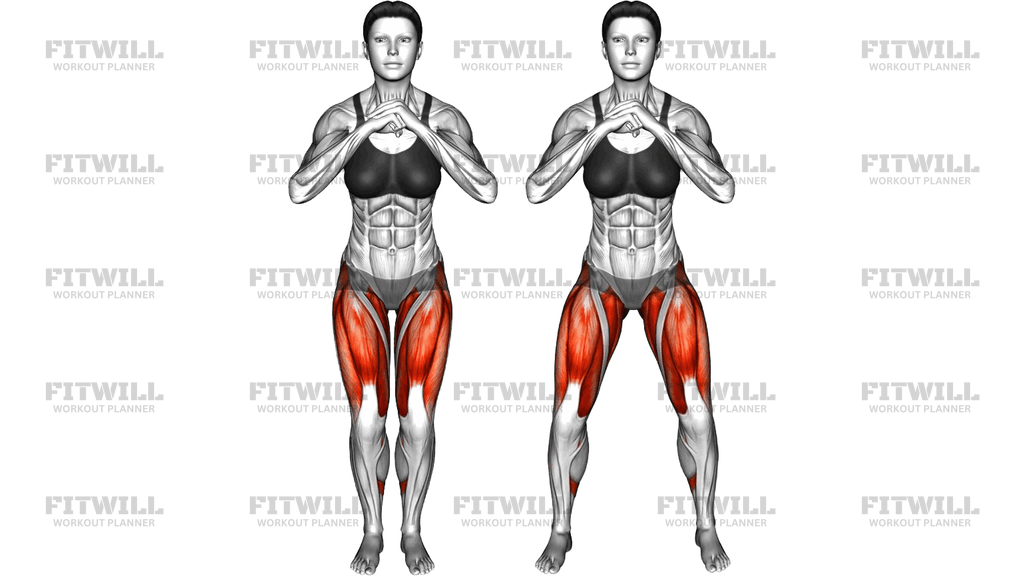
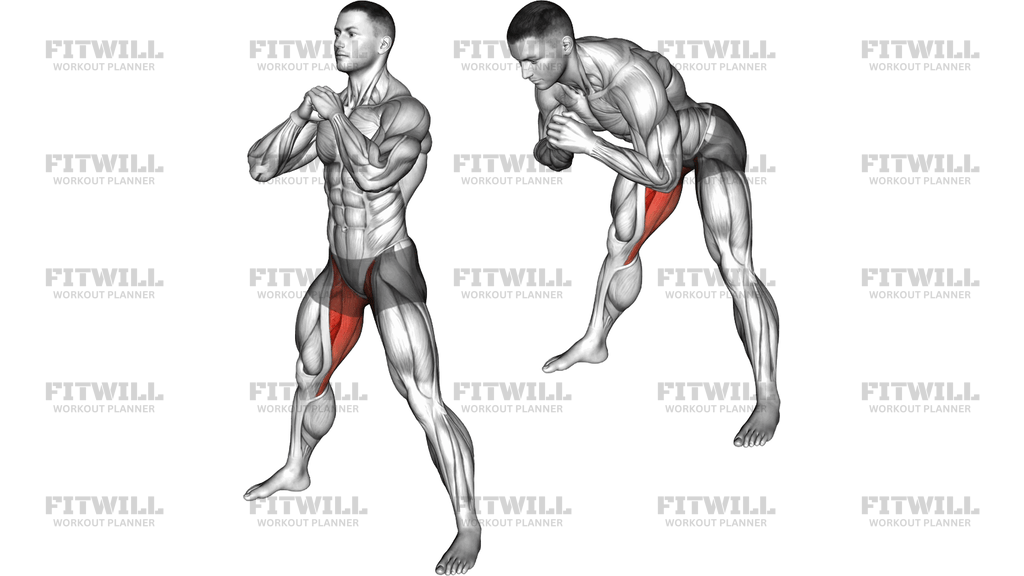
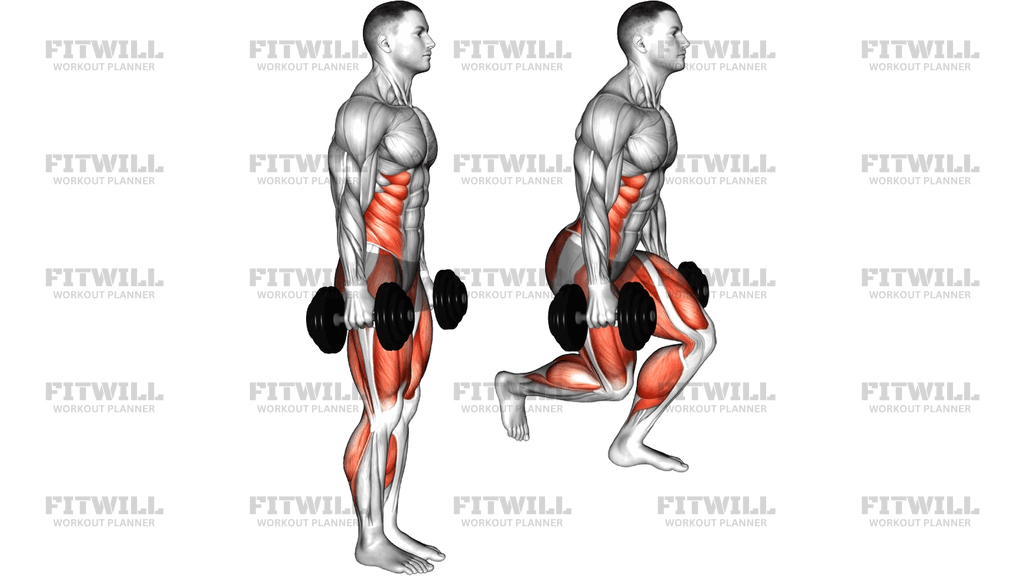
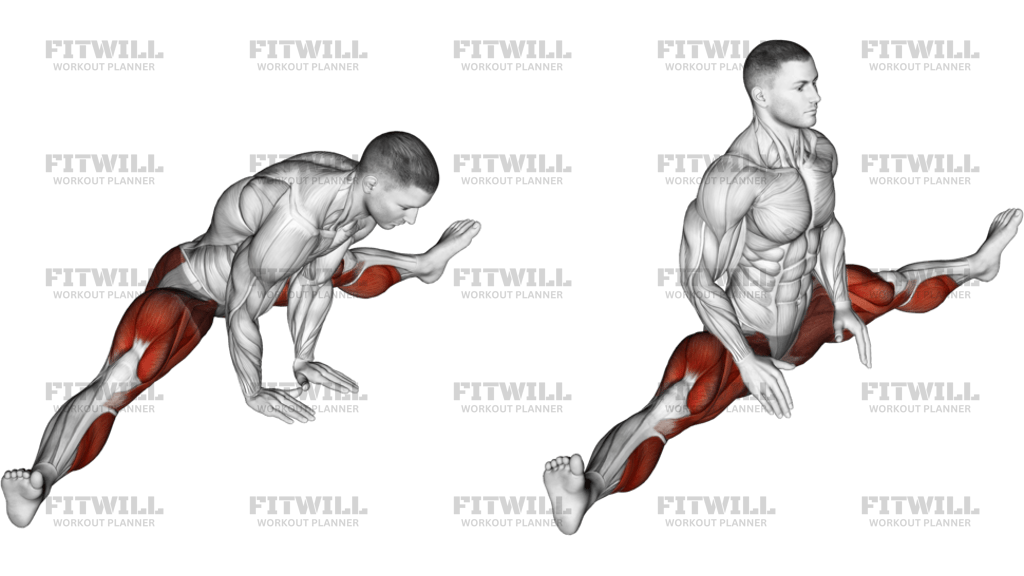
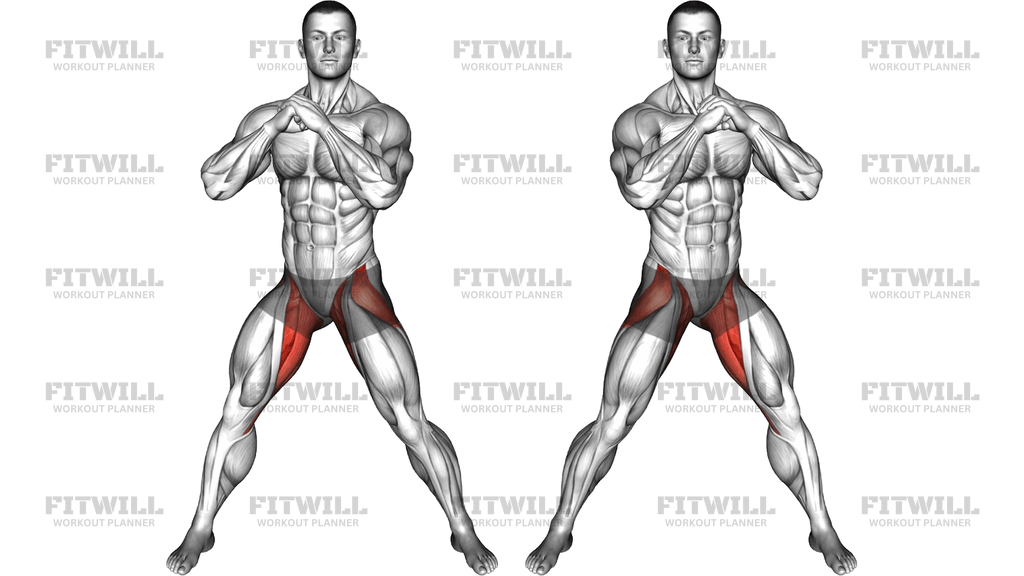
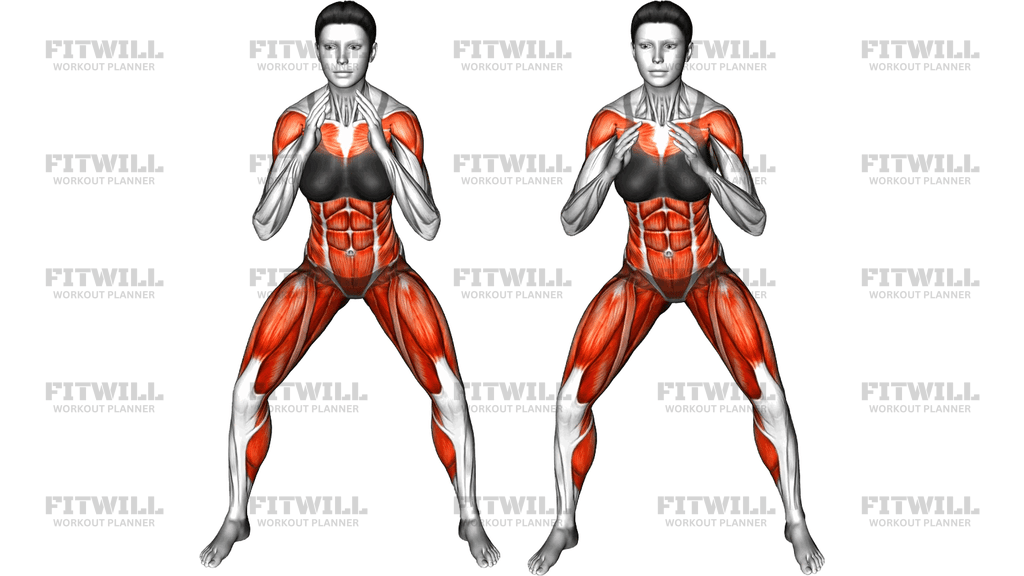
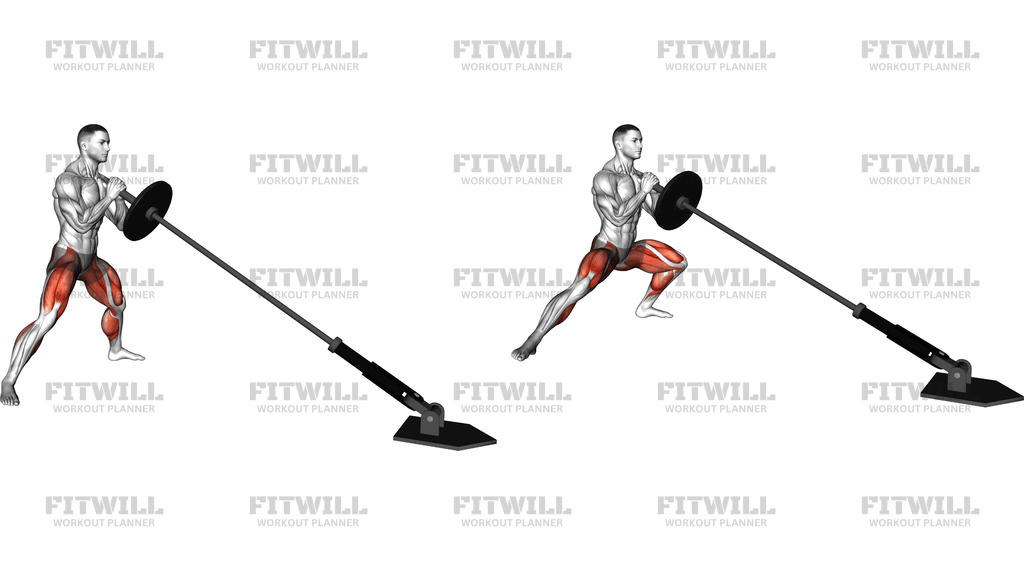
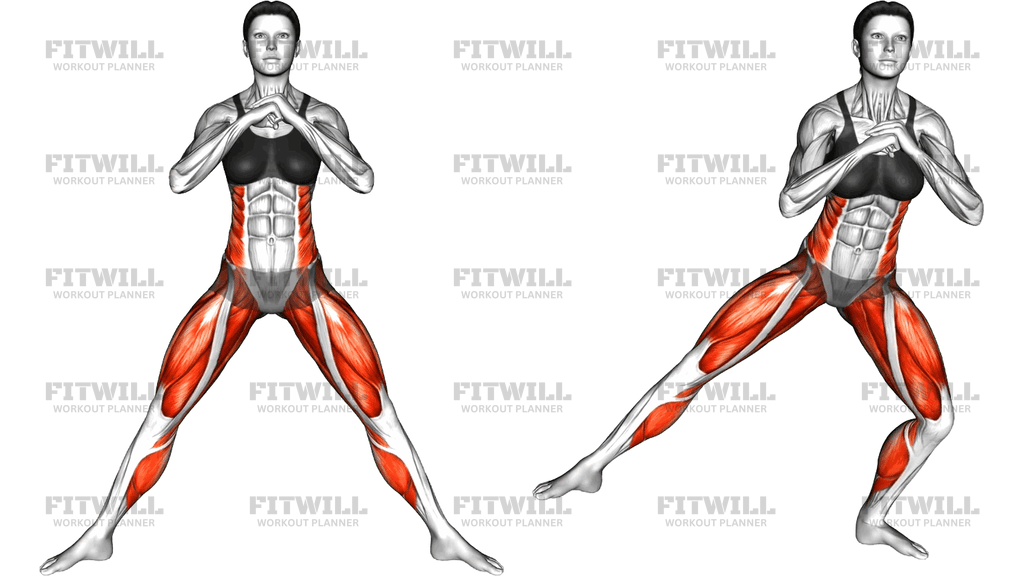
Leaning Forward Side Lunge
The Leaning Forward Side Lunge is a bodyweight lower-body exercise that takes the familiar side lunge and tips the torso forward toward the floor, with both hands planted for support. From a very wide straddle stance, you shift your weight sideways over one leg while your hands stay on the ground, letting the working knee bend as the opposite leg stays long and extended. This forward-leaning, hand-supported position changes the loading compared to an upright side lunge: more of your weight moves through the bent leg and the inner thigh of the extended leg gets a long, loaded stretch.
This movement is especially useful for anyone whose inner thighs and hips feel tight or undertrained. Side-to-side hip strength is often the missing piece in routines built around squats, lunges forward, and deadlifts, all of which mostly work the sagittal plane. The Leaning Forward Side Lunge trains the adductors, quads, and glutes through hip abduction and lateral movement, while the extended leg holds an active stretch along the inner thigh and hamstring line. Because the hands are on the floor, you can adjust how much weight you load onto the working leg, which makes it approachable if balance is a limiting factor.
The setup matters more than it might seem. A wide enough stance gives your hips room to shift sideways, and planting the hands shoulder-width or slightly wider gives you a stable three- or four-point base. The forward hinge is not a collapse — your back stays relatively long and flat as you lean, and your weight shifts deliberately from center to one side. Rushing this transition is where most people lose the shape of the movement and end up just rocking side to side without loading anything.
To execute it well, think of the shift as one continuous motion: push your hips back and to the side, let the working knee track over your toes, and sink until you feel a strong but tolerable pull along the straight leg's inner thigh. Press through the whole foot of the bent leg and through the heel of the straight leg's heel-side edge to return to center. Keep your hands honestly supporting you rather than letting your shoulders dump into the floor — the arms should share the load, not carry all of it.
You will see this movement used in dynamic warm-ups before leg days, in mobility blocks for squat and lunge depth, and as a standalone strength set for hip and inner-thigh development. It is a common fixture in martial arts, soccer, and tennis conditioning, where lateral changes of direction demand strong, flexible adductors. Start with a modest range and fewer repetitions, and let flexibility and strength improve together — depth earned gradually holds up far better than depth forced on day one.
Fitwill
Log Workouts, Track Progress & Build Strength.
Achieve more with Fitwill: explore over 9600 exercises with images and videos, access built-in and custom workouts, perfect for both gym and home sessions, and see real results.
Start your journey. Download today!




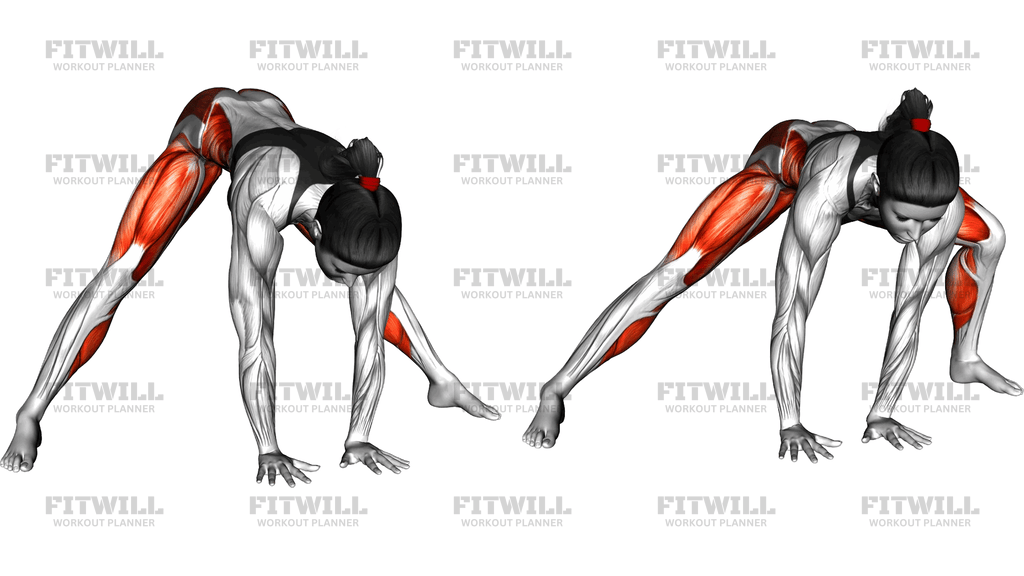
Instructions
- Stand with your feet roughly two shoulder-widths apart or wider, toes pointing forward or turned out very slightly, and let your weight sit in the middle of your feet.
- Hinge forward from the hips and place both palms flat on the floor inside your stance, arms straight and shoulders stacked over your wrists, keeping your back as long as you can.
- Brace your core lightly and settle your weight evenly between both legs and your hands before moving.
- Shift your hips sideways toward your left leg, letting the left knee bend while the right leg stays straight with the foot flat and the toes still facing forward.
- Sink into the bent-knee side until you feel a firm stretch along the inner thigh of the extended leg, keeping your chest low and your back flat rather than rounded.
- Hold the bottom position for a brief moment, making sure the bent knee tracks in the same direction as its toes and does not cave inward.
- Press through the bent leg's whole foot and gently push your hips back toward center, straightening the working knee as you return.
- Breathe in as you shift into the lunge and exhale as you drive back to the middle, keeping the rhythm steady.
- Repeat the shift to the same side for your planned repetitions, or alternate sides each rep, re-centering your weight and re-setting your hand position if it has drifted.
Tips & Tricks
- If your hands cannot reach the floor comfortably, bend your knees slightly more in the start position or place your palms on a low step — do not round your upper back just to touch down.
- The most common mistake is letting the straight leg's foot roll onto its outer edge; keep the whole sole of that foot down so the inner-thigh stretch stays loaded instead of twisting the knee.
- Watch the bent knee closely: if it collapses toward the inside, cue yourself to push it out over the pinky side of that foot as you sink.
- Keep weight in your hands throughout the set. If your shoulders start to sink or your arms tremble, your stance is probably too wide or you are sinking too deep for your current mobility.
- Move sideways rather than downward — the hips should travel horizontally toward the working leg, not straight toward the floor between your feet.
- If the inner-thigh pull feels sharp rather than like a working stretch, shorten the range and narrow your stance a little until it eases into a muscular sensation.
- Keep your neck relaxed and your gaze a foot or two ahead of your hands rather than craning up, which helps preserve the neutral back position.
- Warm up with gentle standing leg swings or shallow side lunges first; going into a wide straddle cold is the fastest way to feel restricted and compensate with poor form.
Frequently Asked Questions
Which muscles does the Leaning Forward Side Lunge work?
It primarily targets the adductors of the extended leg and the quads and glutes of the bent leg, with the hamstrings and hip stabilizers assisting. The forward-lean position also keeps the core and shoulder girdle engaged for support.
Why do my hands need to be on the floor for the Leaning Forward Side Lunge?
Planting your hands shifts some of your body weight into your arms, which reduces the balance demand and lets you control how deeply you load the lunge. It also hinges your torso forward, which lengthens the inner thigh of the straight leg more than an upright side lunge does.
Is the Leaning Forward Side Lunge suitable for beginners?
Yes, as long as the range is built up gradually. Because the hands support part of your weight, beginners can regulate the depth easily and stop at whatever depth still feels controlled.
Should I alternate legs or complete all reps on one side?
Both work. Alternating sides each rep keeps the body warm and symmetric, while completing all reps on one side before switching makes it easier to notice and correct side-to-side differences in mobility.
My knee collapses inward when I sink — how do I fix that?
Cue the knee to track out over the toes of the bent leg and make sure your foot stays fully planted. Reducing your depth until you can hold the knee position is better than sinking deep with poor alignment.
Can I do the Leaning Forward Side Lunge if I cannot touch the floor?
Place your hands on a low step, yoga blocks, or a sturdy bench instead. The mechanics of the shift stay the same; only the height of your support changes.
How is this different from a regular side lunge?
In a regular side lunge you stay upright with hands free or held at your chest, which loads the working leg more directly. The Leaning Forward Side Lunge shares the load with your arms and puts a longer stretch on the inner thigh of the extended leg, making it both a strength and mobility drill.
How wide should my stance be?
Wide enough that you can shift your hips sideways and sink without the straight leg's foot lifting or rolling. If you feel jammed or pinched at the bottom, narrow the stance slightly; if the movement feels too easy, widen it.
Is it safe if I have knee or inner-thigh discomfort?
Reduce the depth, keep both feet fully flat, and stop well short of any sharp pull or joint pain. Lateral lunges place rotational demands on the knee, so progress gradually and skip the movement on days when the area feels irritated.