Sitting Front Slam On A Chair
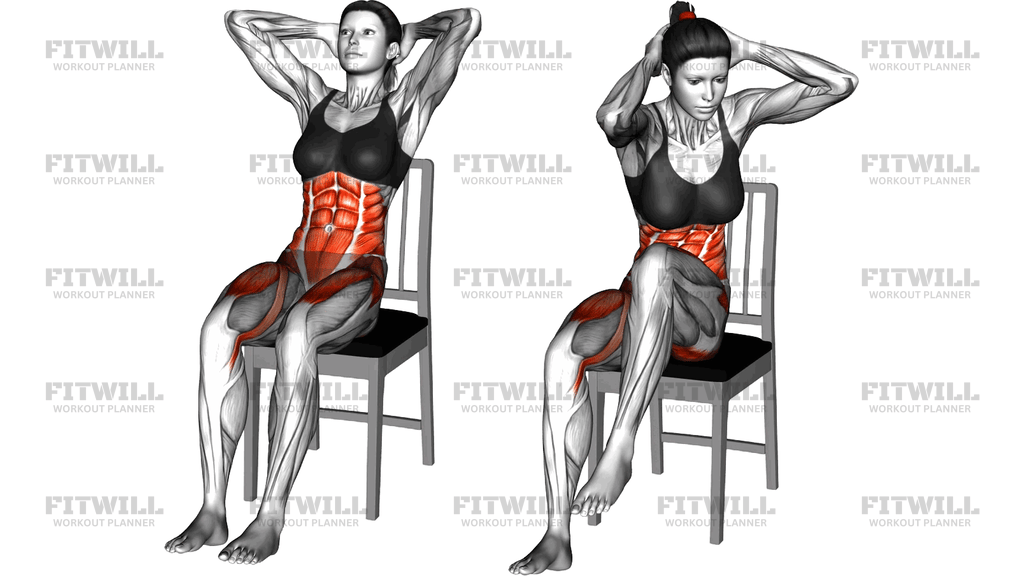
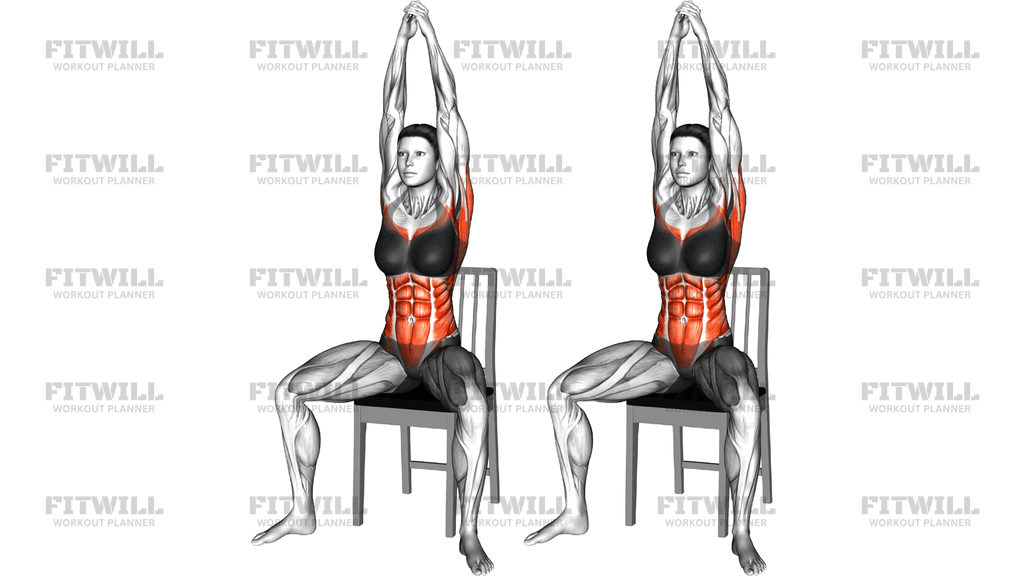
The Sitting Front Slam On A Chair is a seated, bodyweight version of the classic overhead slam. You sit on a sturdy chair with your legs spread wide for a stable base, clasp your hands together, and drive your arms straight up overhead before forcefully swinging them down in front of your body, as if slamming an invisible ball into the floor between your feet. Because you are seated, your legs cannot help you, so your trunk has to do the work of stopping and controlling the downward swing.
This movement is especially useful for people who need low-impact power work: office workers breaking up long sitting periods, beginners who are not ready for standing slams, older trainees who want to keep their trunk quick and responsive, or anyone rehabilitating toward more dynamic floor work. It also fits well into seated workout circuits and chair-based classes where standing equipment is not available.
The main work comes from your abs and obliques, which brace hard to decelerate your arms as they come down. Your front shoulders and triceps drive the press overhead and the fast downward swing, while your lats and chest assist on the pull down. Your hips and inner thighs stay busy isometrically because the wide-legged seat position demands constant stability from your lower body.
Setup matters more than it looks. A stable, non-rolling chair with your feet planted wide and your sit bones squarely on the seat gives you the base you need. If your feet drift or the chair wobbles, your trunk will leak force and your lower back will try to compensate. Sit tall through the spine before each rep so the slam comes from your trunk and arms rather than from rounding and collapsing forward.
To execute it well, think of the rhythm as explosive up, explosive down, controlled reset. Reach tall at the top, then snap your clasped hands down toward the floor in front of you, letting your abs crunch slightly as your arms pass your chest. Do not let your shoulders shrug into your ears, and do not let your ribcage flare as you reach overhead. Exhale sharply on the slam to reinforce the brace.
A practical safety note: choose a chair that will not tip and position it on a non-slip surface. Because the arms travel fast through a large range, a brief warm-up of slow overhead reaches and gentle trunk rotations is worthwhile, and anyone with shoulder or lower back irritation should keep the range shorter and the effort moderate.
[ Workout Log & Planner ]
Put your next workout in Fitwill
Keep your plan and training log ready when you are.


Instructions
- Place a sturdy, non-rolling chair on a non-slip surface and sit squarely on the seat with your sit bones fully supported.
- Spread your legs wide apart, plant both feet flat on the floor, and let your knees track out over your ankles to build a stable base.
- Sit tall, clasp your hands together in front of your chest, and brace your abs as if preparing to absorb a light push.
- Inhale, then drive your clasped hands straight up overhead until your arms are fully extended beside your ears.
- At the top, reach a little taller through the crown of your head and keep your ribs stacked over your pelvis instead of arching your lower back.
- Exhale sharply and swing your clasped hands forcefully down in front of you, aiming toward the floor between your feet.
- Let your abs crunch slightly and your shoulders pull down as your arms finish low, stopping the swing with your trunk rather than your lower back.
- Keep your feet flat and your knees wide throughout so the chair stays steady and your hips stay anchored.
- With control, raise your clasped hands back overhead along the same path to start the next repetition.
- Complete your set with smooth, rhythmic reps, then rest with your hands on your thighs and your shoulders relaxed before the next set.
Tips & Tricks
- The most common mistake is collapsing your chest and rounding your whole spine on the way down; think of crunching only your upper abs while your坐 bones stay planted on the seat.
- If the chair slides or rocks, widen your feet and grip the sides of the seat lightly with your thighs by pressing your knees outward against your own leg position.
- Do not let your shoulders shrug up as your arms pass overhead; reach long instead of reaching high to keep tension in your lats and protect your neck.
- Speed on the slam should come from your trunk snapping down, not just your arms flicking at the wrists; keep your elbows mostly straight so the abs do the braking.
- Keep your lower back neutral at the top of the reach; if you feel it arch and your ribs flare, shorten the overhead range slightly and re-brace before each rep.
- Breathe out forcefully on every slam; holding your breath through the fast downward swing is a common fault that makes the brace less effective.
- Start with slow, half-speed reps to rehearse the path before adding full intensity, since the seated position removes the momentum your legs would normally provide.
- If your shoulders feel pinched at full overhead extension, turn your clasp slightly so your palms face each other more and use a slightly narrower arm path.
Frequently Asked Questions
What muscles does the Sitting Front Slam On A Chair work?
The primary work comes from your abs, which brace and crunch to power and stop the downward swing. Your front shoulders and triceps drive the arms overhead and down, while your obliques and lats assist and your hips and inner thighs stabilize the wide-seated position.
Why is the Sitting Front Slam On A Chair done with legs spread wide?
The wide stance widens your base of support, which keeps the chair steady during the fast arm swing. It also turns on your hips and inner thighs, so the rest of your body stays quiet while your trunk does the work.
Can beginners do the Sitting Front Slam On A Chair?
Yes, and it is actually a good entry point to slamming movements because the seat removes the balance and leg-coordination demands of a standing slam. Beginners should start at half speed with a modest range and build intensity once the pattern feels natural.
Is this exercise performed with a medicine ball?
No, this version uses clasped hands and bodyweight only, so no ball is needed. The movement mimics the slam pattern, and adding a light ball is only appropriate if you have a soft surface and a very stable seat.
What kind of chair should I use for the Sitting Front Slam On A Chair?
Use a sturdy chair without wheels, with a flat seat and no armrests, placed on a non-slip floor. A chair that tips easily or slides will force you to slow down and rob the movement of its purpose.
How fast should the slam be?
The upward reach and the downward slam should both be quick and purposeful, while the return overhead stays controlled. If every rep looks identical and smooth rather than explosive, you are likely moving too slowly to challenge your abs.
Why does my lower back feel this instead of my abs?
That usually means you are rounding or arching from the lumbar spine instead of crunching your upper abs on the slam. Sit taller at the start, exhale sharply as the arms come down, and shorten the range until the tension shifts into your stomach.
Can the Sitting Front Slam On A Chair replace standing medicine ball slams?
It trains a similar trunk-braking pattern but produces less total power because your hips and legs are removed from the sequence. Treat it as a seated alternative or a stepping stone rather than a full substitute for standing slams.
Who should be cautious with this exercise?
Anyone with an irritated shoulder or lower back should use a shorter range and moderate effort, and stop if symptoms sharpen. Also check that the chair will not tip before committing to fast reps.