Sitting Tip Toe Clap On A Chair
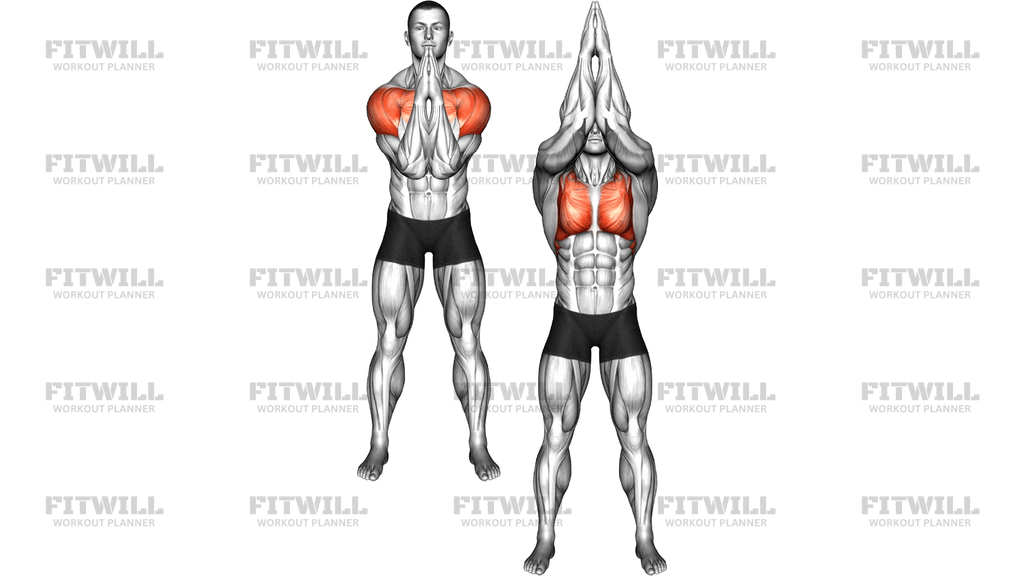
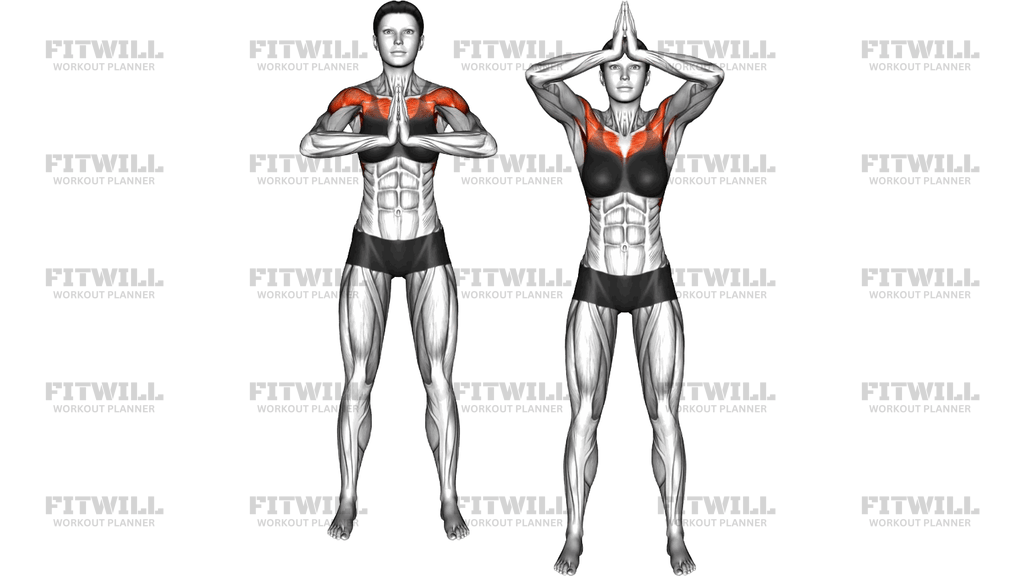
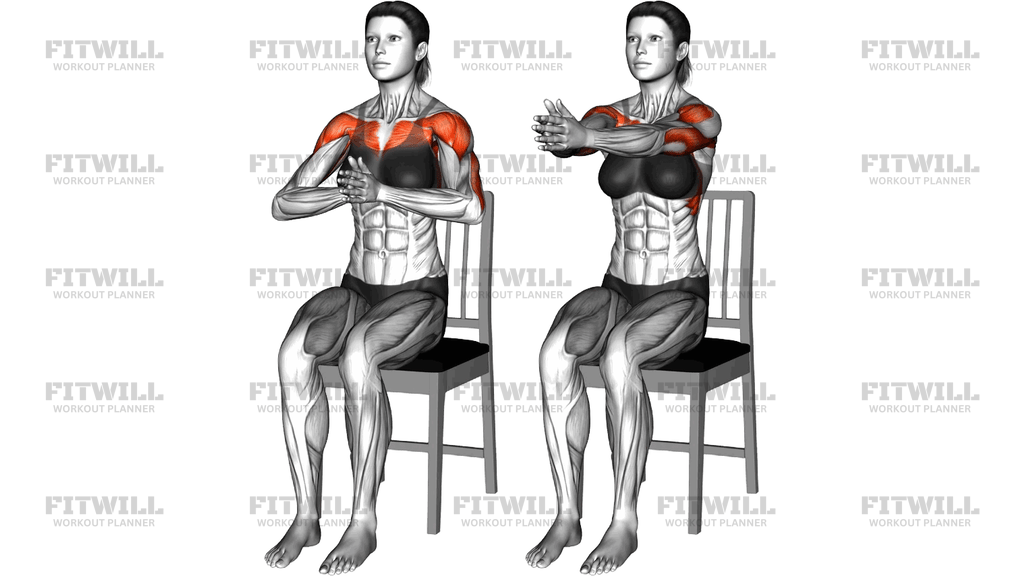
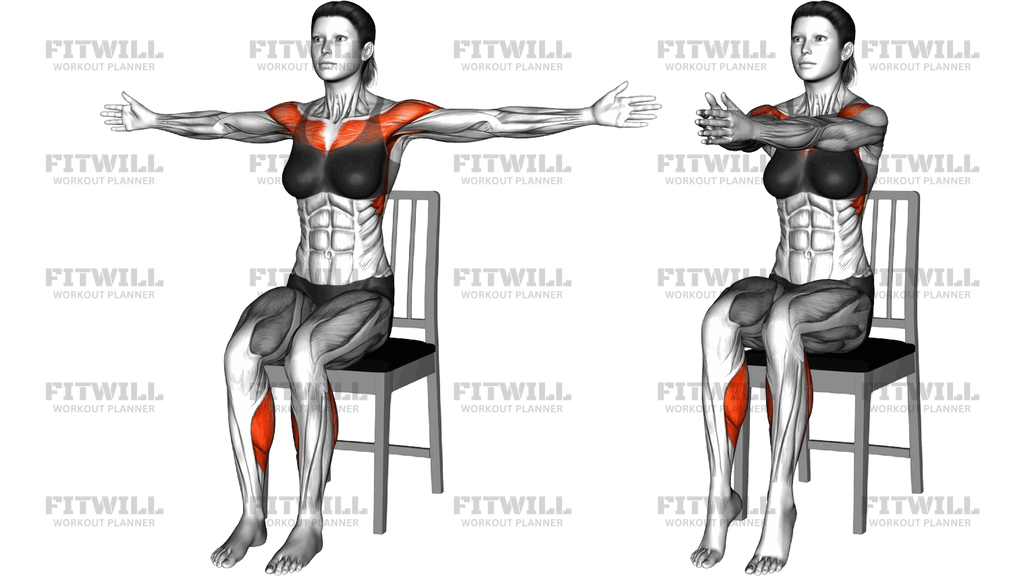
Sitting Tip Toe Clap On A Chair is a seated bodyweight movement that pairs a horizontal chest fly-and-clap with a heel raise. You sit upright on a chair with your arms extended straight out to your sides at shoulder height, then sweep both arms forward as you rise onto the balls of your feet, clapping your hands together in front of your chest before opening back out and lowering your heels. It looks simple, but the combination forces your upper body and lower legs to work at the same time.
The main muscles involved are the chest, which pulls the arms forward and across the body, and the front of the shoulders, which helps hold the arms up against gravity through the whole arc. The calf raise is what makes this version distinct: lifting the heels loads the calves, especially the gastrocnemius, and also challenges the ankle stabilizers as you balance on the balls of your feet. Your core stays quietly engaged the entire time to keep your torso upright while your arms move.
This exercise is a good fit for anyone who trains at home with minimal equipment, for older adults who want a low-impact way to wake up the chest and calves together, and for office workers who only have a chair and a few minutes. Because you are seated, there is very little load on the knees, hips, or lower back, and the chair provides a stable base so balance is only lightly challenged at the top of each toe raise.
Setup matters more than it might seem. Sit tall at the front half of the seat with your feet flat on the floor about hip-width apart, and keep your spine long rather than slumped back against the chair. Sitting too far back or slouching shortens the arc of your arms and makes the chest work less, while letting the knees drift inward or the heels roll sideways steals work from the calves during the toe raise.
To perform it well, keep the arms nearly straight but not locked, and move them in a smooth, controlled arc at shoulder height. Rise onto your toes as the hands come together so the clap and the heel lift finish at the same moment, then reverse both at the same steady pace. The hands should meet gently rather than slapping hard, and the elbows should stay around shoulder height rather than dropping toward your lap.
A typical session might use 15 to 25 repetitions, either as a warm-up before upper body work, as a filler movement in a home circuit, or repeated for a few sets as a standalone micro-workout. Stop the set when you notice your shoulders shrugging up toward your ears or your heels wobbling side to side, since both are signs the working muscles are tiring and form is slipping.
[ Workout Log & Planner ]
Put your next workout in Fitwill
Keep your plan and training log ready when you are.


Instructions
- Sit tall on a sturdy chair with your hips at the front half of the seat, your back upright, and your feet flat on the floor about hip-width apart.
- Extend both arms straight out to your sides at shoulder height, palms facing forward, with a soft bend in the elbows.
- Brace your core lightly and keep your shoulders pulled down away from your ears so your neck stays relaxed.
- From the open position, sweep both arms forward and across your chest at the same time.
- As your hands come together, press through the balls of your feet and lift your heels as high as you can, rising onto your toes.
- Clap your hands gently together in front of your chest with your elbows just below shoulder height, and hold that top position for a brief moment.
- Reverse the movement in one controlled motion: open your arms back out to the sides while slowly lowering your heels back to the floor.
- Exhale as you rise onto your toes and bring the hands together, and inhale as you open your arms and return your heels down.
- Keep your feet parallel and your knees tracking over your toes throughout every repetition.
- Complete your target repetitions, then rest with your hands on your thighs and your heels flat before starting the next set.
Tips & Tricks
- Clap softly. Slapping the hands together hard at speed turns this into a momentum exercise and the chest stops working by the end of the set.
- Time the two halves of the movement so the clap and the top of the heel raise happen together. If your heels drop before your hands meet, slow the arms down rather than rushing the calves.
- If your shoulders shrug as the arms fatigue, lower the arm path slightly or do fewer reps. Shrugging shifts work to the upper traps and tightens the neck.
- Keep your sit bones planted on the chair. Leaning your torso forward to help the hands meet removes tension from the chest, so stay upright even if the last few reps get harder.
- Press evenly through the ball of each foot. Letting the ankles roll outward or inward during the toe raise is the most common failure point in the lower half of this movement.
- Start each rep from a true open position with hands wide of your shoulders. Cutting the range short and moving from a narrow start turns this into a small squeeze instead of a full chest arc.
- If your calves cramp, do the exercise with shoes on or stretch the calves between sets, since seated heel raises with a full lift can be demanding when the calf is tight.
- Move at a steady two-count in and two-count out rhythm rather than bouncing quickly, which keeps both the chest and calves under tension for the whole repetition.
Frequently Asked Questions
Which muscles does Sitting Tip Toe Clap On A Chair work the most?
The chest and the front of the shoulders drive the arm sweep and clap, while the calves do the bulk of the work during the heel raise. The ankle stabilizers and core contribute as supporting muscles to keep you balanced and upright.
Why do I rise onto my toes during the clap instead of keeping my feet flat?
The heel raise adds the calves and ankle stabilizers to what would otherwise be an arms-only movement, making it a more complete seated exercise. It also adds a mild balance demand that keeps the movement engaging.
Is Sitting Tip Toe Clap On A Chair suitable for beginners?
Yes, it is a low-impact bodyweight exercise with a short, easy-to-learn range of motion. Beginners can start with 10 to 15 slow repetitions and reduce the height of the heel raise if balancing on the toes feels shaky.
What kind of chair should I use for this exercise?
Use a stable chair without wheels that does not tip or slide, ideally one where your feet rest flat on the floor and your knees bend roughly 90 degrees. Avoid soft couches or swivel chairs, which make it hard to sit tall and control the movement.
My calves cramp when I lift my heels, what should I do?
Calf cramping is common in seated heel raises because the muscle works through a shortened range. Lower the height of the toe raise, slow the tempo, wear shoes, and stretch your calves between sets until they adapt.
How many repetitions and sets should I do?
Fifteen to twenty-five controlled repetitions for two to three sets works well, whether as a warm-up or as a standalone home set. If your shoulders start shrugging or your heels wobble, end the set there and rest.
Can I do this exercise if I have knee or hip discomfort?
Because you stay seated and there is no load on the knees or hips, this movement is generally gentle on the lower body. Still, get clearance from a healthcare professional before adding any new exercise if you have an existing injury.
What can I substitute if I do not have a chair available?
You can perform the same clap and heel-raise pattern sitting on a bench, an exercise ball, or the edge of a sturdy bed, or do a standing chest fly with a heel raise if balance is not an issue. The key is keeping the arms at shoulder height and lifting the heels on every clap.
Should my arms stay straight the whole time?
Keep them nearly straight with only a soft bend in the elbows so the chest does the sweeping work. Fully locked elbows can stress the joint, and heavily bent elbows turn the movement into a small squeeze with less chest involvement.
How is this different from a regular seated clap exercise?
The toe raise is the difference: adding the heel lift on every clap turns a simple chest and shoulder movement into one that also trains the calves and ankle stability. It also increases the coordination demand since the upper and lower body must finish together.