Sitting Windmill On Chair
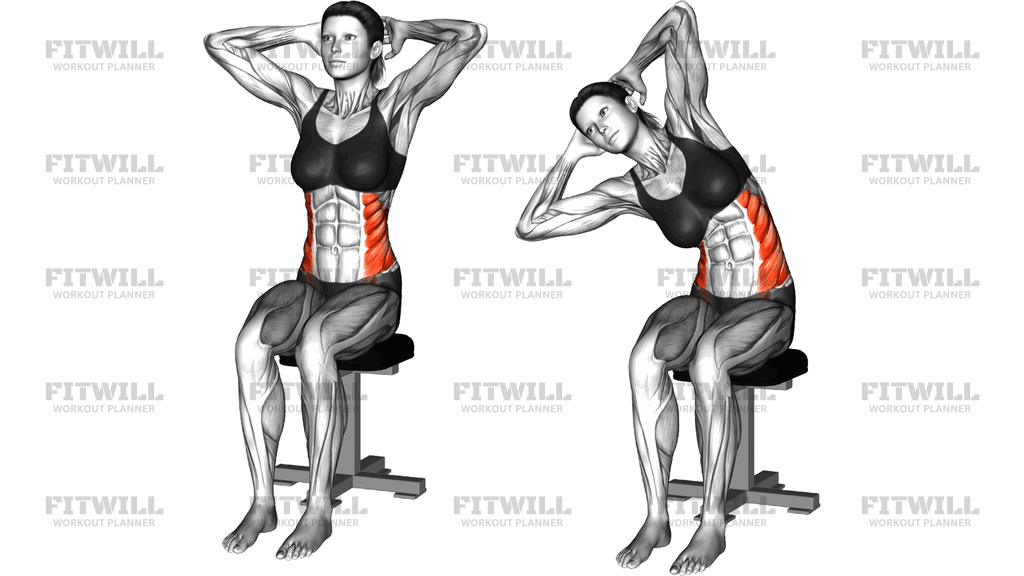
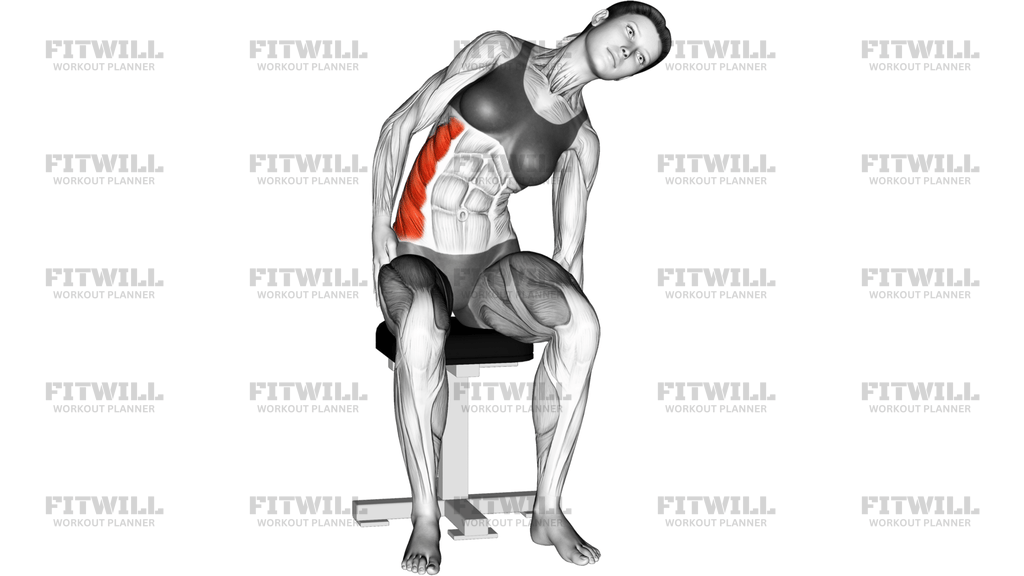
The Sitting Windmill On Chair is a seated rotational core exercise performed with nothing more than a sturdy chair. You sit tall with your legs spread wide and feet flat on the floor, raise both arms into a wide V overhead, then hinge slightly forward and sweep one hand down toward the opposite foot while the other arm reaches up and back, alternating sides in a windmill pattern. The wide leg position anchors your lower body so the rotation has to come from your waist rather than your hips sliding around on the seat.
This movement mainly trains the obliques along the sides of your waist, with the deep abdominal wall working to keep your trunk controlled through every sweep. Because one arm travels high while the other travels low, you also get a lengthening stretch through the side of the body on the reaching side and a strong contraction through the opposite waist as you fold down. The seated position removes the balance demands of a standing windmill, which makes it a good fit for beginners, older adults, anyone rehabbing confidence after a layoff, or desk workers who want to wake up stiff sides and hips without getting on the floor.
Setup matters more than speed here. Sit near the front half of the chair with your sit bones firmly planted, feet wider than your shoulders, and knees tracking out over your ankles. A chair without wheels and without armrests gives you a stable base and a clear path for your arms. If the seat is too high and your feet barely touch the floor, the whole pattern loses stability, so choose a chair that lets you press both heels down firmly.
To execute it well, think of the motion as a diagonal fold, not a simple side bend. Your chest rotates toward the working thigh as your hand travels down the inside of the opposite leg, and your eyes follow the lifting hand. Keep both sit bones glued to the seat the entire time; the moment one hip lifts, you are cheating the waist out of the work. Move at a pace you could repeat for slow, even breaths, and treat the top position as an active reach rather than a rest.
A practical safety point: keep the movement in a range where your lower back stays long rather than rounded into a slump. If you feel pinching in the hip or a strain in the low back, reduce how far you fold and shorten the reach. Eight to twelve controlled sweeps per side works well as a warm-up primer or as a light core finisher, and doing it for two to three rounds leaves the sides of your waist and mid back feeling noticeably looser.
[ Workout Log & Planner ]
Put your next workout in Fitwill
Keep your plan and training log ready when you are.


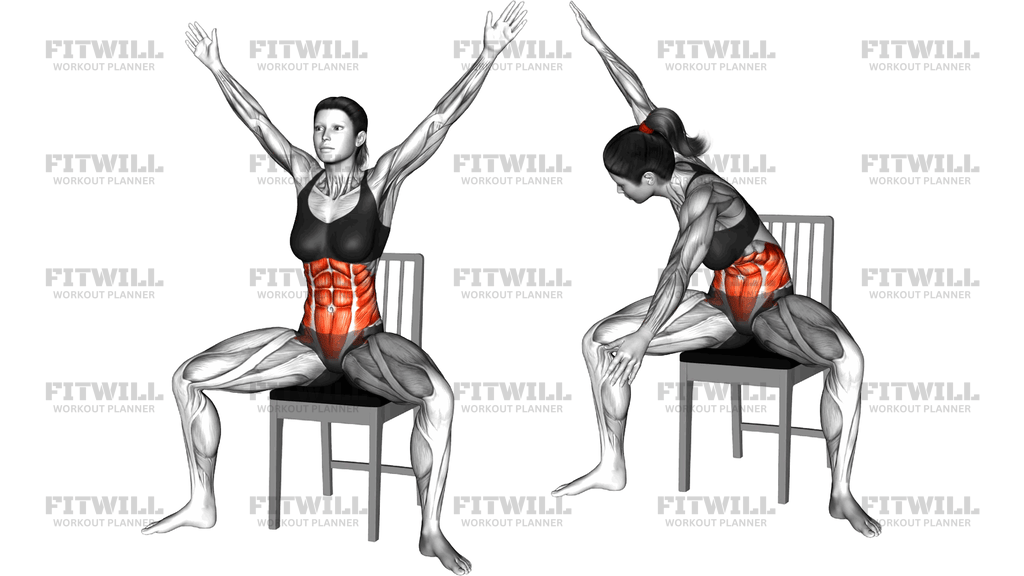
Instructions
- Sit sideways-free on a sturdy armless chair, positioned on the front half of the seat with your sit bones planted and spine tall.
- Spread your feet wide, wider than your shoulders, with both heels pressing into the floor and knees turned slightly outward.
- Raise both arms straight up into a wide V, palms facing forward, shoulders relaxed away from your ears.
- Brace your abdominals lightly and hinge your chest forward a few degrees over your hips without rounding your lower back.
- Rotate your torso and sweep your right hand down toward the inside of your left foot or lower leg, letting your chest turn toward your left thigh.
- Allow your left arm to reach up and back overhead as you fold, keeping your eyes on the lifting hand.
- Pause briefly at the bottom of the reach, feeling the contraction in the left side of your waist and the stretch along your right side.
- Reverse the motion under control, returning both arms to the wide V overhead with both sit bones still flat on the seat.
- Repeat the sweep on the other side, reaching the left hand toward the inside of your right foot, and continue alternating.
- Breathe steadily throughout, exhaling as you fold down and inhaling as you rise back to the tall seated position, then stand up slowly when finished.
Tips & Tricks
- The most common mistake is letting one hip peel off the chair as you reach. If your right glute lifts when you reach left, narrow your leg stance slightly and shorten the reach until both sit bones stay planted.
- Do not rush the arms and leave the trunk behind. If your shoulders are doing all the work, your waist gets almost nothing. Lead with the rotation of your chest and let the arm follow.
- Keep your neck long by tracking the lifting hand with your eyes instead of craning your head backward to chase it.
- If the inside of your thighs or hips feel tight in the wide stance, slide your feet in a little. The exercise still works as long as your feet stay firmly grounded.
- Avoid slumping into the chair at the bottom of the fold. Imagine lengthening your spine toward the opposite wall as you reach, which keeps the load on your obliques rather than your lower back.
- Resting a light hand on the same-side thigh for a small amount of guidance is fine, but do not push off your leg to force a deeper fold.
- If a chair with wheels is your only option, push it against a wall so it cannot slide out from under you mid-reach.
- Match your range on both sides rather than forcing the tighter side to match the looser one; most people find one direction noticeably easier.
- Slower is better for this pattern. Count roughly two seconds down and two seconds up so the waist stays under tension instead of swinging through momentum.
Frequently Asked Questions
What muscles does the Sitting Windmill On Chair work?
The obliques on the sides of your waist are the primary movers, with the deeper abdominal muscles stabilizing your trunk. The wide overhead arm path also lightly involves the shoulders and gives the hips' outer muscles a passive stretch in the wide stance.
Is the Sitting Windmill On Chair good for beginners?
Yes. The chair removes the balance requirement of a standing windmill, so beginners can focus purely on rotating from the waist. Start with a smaller reach and a narrower leg stance, then expand your range as the pattern feels comfortable.
Why are my legs spread so wide during the Sitting Windmill On Chair?
The wide, grounded stance locks your lower body in place so your hips cannot twist on the seat. That forces the rotation to come from your waist, which is exactly what the exercise is meant to train.
Should I touch my foot at the bottom of the reach?
Touching the foot or lower leg is a useful target but not a requirement. Reach only as far as you can while keeping both sit bones on the chair and your lower back long; forcing the touch usually collapses your form.
Can I do the Sitting Windmill On Chair every day?
Because it uses only your body weight in a slow, controlled range, daily practice is reasonable for most people. Treat it like gentle core work and mobility rather than a maximum-effort training session.
What kind of chair should I use?
Use a stable, armless chair without wheels so your arms have a clear path and the base cannot shift. A padded dining-style chair at a height where both feet rest flat on the floor works best.
My lower back feels strained when I fold down. What should I change?
Reduce how far you hinge forward and shorten the reach of your hand, keeping the fold higher on your thigh. Also check that you are rotating your chest toward the working thigh rather than simply bending sideways at the waist.
How does the Sitting Windmill On Chair differ from a standing windmill?
The seated version trades balance and leg work for controlled trunk rotation. The standing version challenges stability and hip positioning, while the seated setup isolates the oblique pattern, making it easier to learn the movement cleanly.
How many repetitions should I do per side?
Eight to twelve slow alternating sweeps per side for two to three rounds is a solid starting dose. If your form breaks down or your hips start sliding on the seat, stop the set rather than pushing through.