Sitting Arm Circle On A Chair
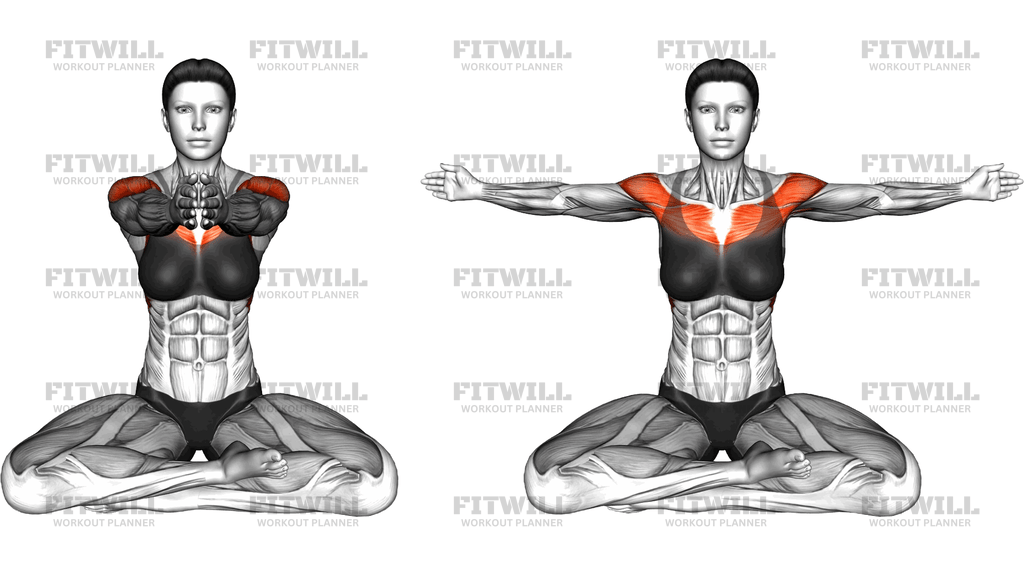
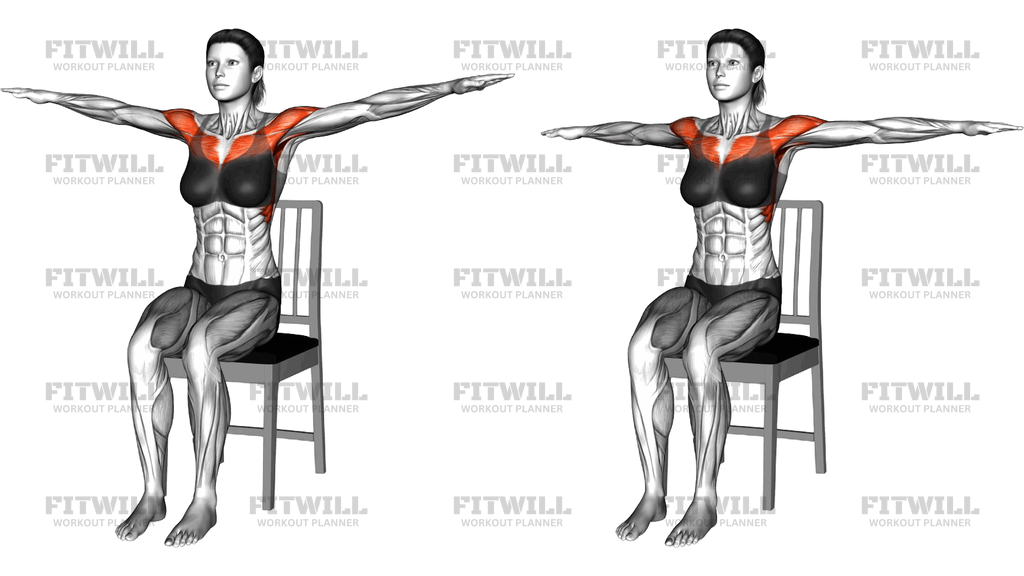
Sitting Arm Circle On A Chair is a simple bodyweight shoulder exercise performed seated with both arms extended straight out to the sides at shoulder height. From that T-shaped position, you draw small, continuous circles with your fingertips, keeping the arms fully extended the entire time. Because you are seated, the hips and legs are taken out of the equation, which makes it easy to stay upright and focus entirely on the shoulder joints doing the work.
This movement is a great low-load conditioning drill for the deltoids, with the front and side portions of the shoulders doing most of the holding and circling work, and the upper chest and upper back assisting to keep the arms lifted. It also builds endurance in the smaller stabilizing muscles around the shoulder blade, which is exactly what tends to fatigue first when you are holding your arms overhead or out to the side for long periods.
The seated setup matters more than it looks. Sitting on a stable chair with feet flat on the floor gives you a fixed base, so you cannot swing, lean, or use momentum from the trunk to keep the arms moving. That makes it a good option for beginners, older adults, office workers breaking up long sitting periods, or anyone rehabbing general shoulder endurance who needs a joint-friendly movement without weights.
Execution is straightforward but easy to rush. Extend both arms straight out to the sides in line with the shoulders, then trace controlled circles about the size of a dinner plate. The burn builds quickly in the shoulders, so most people benefit from shorter sets with strict form rather than long, sloppy ones. You can circle forward for one set and backward for the next, or alternate directions within a set.
The most common errors are letting the arms drift below shoulder height as fatigue sets in, shrugging the shoulders up toward the ears, and making the circles bigger and faster to make the set feel easier. Keeping the arms at shoulder height, the neck relaxed, and the circles small and smooth keeps the tension on the intended muscles and protects the shoulder joints.
Use this exercise as a warm-up before pressing or pulling workouts, as a standalone shoulder endurance set, or as a quick movement break during the workday. A typical starting point is two to three rounds of 20 to 30 seconds per direction, resting briefly between rounds.
[ Workout Log & Planner ]
Put your next workout in Fitwill
Keep your plan and training log ready when you are.


Instructions
- Sit tall on a stable chair with your feet flat on the floor about hip-width apart and your back upright, not slumped against the backrest.
- Extend both arms straight out to the sides so they form a T with your torso, hands open and in line with your shoulders.
- Draw your belly in slightly and keep your ribcage stacked over your hips so your torso stays still throughout the set.
- Relax your shoulders down away from your ears before you start circling.
- Begin tracing small, smooth circles with your fingertips, about the size of a dinner plate, keeping the elbows locked straight.
- Keep your arms at shoulder height the entire time; if they start sinking, the set is ending.
- Circle in one direction for the planned time or rep count, then reverse and circle the opposite direction.
- Breathe steadily and evenly throughout, avoiding breath-holding as the burn builds.
- When finished, lower your arms slowly to your sides, roll your shoulders once or twice, and reset your posture before the next set.
Tips & Tricks
- Start with small circles; making them bigger is the easiest way to cheat, because the shoulder has to control a wider arc as fatigue sets in.
- If you catch yourself shrugging, consciously press your shoulder blades down and think about lengthening your neck before resuming the circles.
- Keep your palms facing forward or down rather than letting the hands flop; a fixed hand position keeps the shoulder joint path consistent.
- Sitting too far back on the chair encourages slouching; sit on the front half of the seat so your torso stays tall and the shoulders do the work.
- Do not let the arms drift forward in front of your shoulders; glance sideways occasionally to check they are still in line with your torso.
- If your shoulders fatigue faster on one side, slow the circles down rather than shortening the set, and let the weaker side set the pace.
- A slight burn through the front and side of the shoulders is expected; sharp pinching at the front of the shoulder means reduce the circle size or take a break.
- Use a chair without wheels or armrests so the base stays stable and your arms have clear space to sweep.
- Alternate direction every set, since circling backward vs. forward feels noticeably different and balances the work across the shoulder.
Frequently Asked Questions
Which muscles does Sitting Arm Circle On A Chair work?
The front and side portions of the shoulders do most of the work, with the upper chest, upper back, and shoulder stabilizers assisting to keep the arms held at shoulder height. The core also works lightly to keep your torso still while the arms move.
Is this exercise suitable for complete beginners?
Yes, it is one of the most beginner-friendly shoulder drills because it uses no load and a stable seated position. Start with 15 to 20 seconds per direction and build up as your shoulder endurance improves.
Should I circle forward, backward, or both directions?
Doing both gives you the most complete feel, since each direction challenges the shoulder slightly differently. A simple approach is one set forward, then one set backward.
How big should the arm circles be?
Keep them small, roughly the size of a dinner plate. Larger circles require more shoulder control and usually lead to the arms dropping or form breaking down before the muscles are genuinely fatigued.
Why do my shoulders rise toward my ears during the circles?
That is the upper traps compensating as the deltoids fatigue. Reset by lowering your shoulder blades, relaxing your neck, and continuing with smaller circles, or end the set and rest.
Can I do Sitting Arm Circle On A Chair as a warm-up?
Yes, it works well as a warm-up before any pressing, lateral raise, or overhead work because it raises the temperature in the shoulders without loading them. Keep the effort light and the sets short in that context.
What kind of chair should I use?
Any sturdy, armless chair without wheels works, such as a dining chair or a stable bench. A firm seat is better than a soft couch because it keeps your hips level and your torso upright.
My arms drop below shoulder height partway through the set. What should I do?
That drop is a sign the set has done its job; holding below shoulder height removes most of the tension from the shoulders. End the set, rest, and shorten your next round so you can hold the full duration with the arms level.
Is this a safe exercise if my shoulders click or feel achy?
Small, slow, unloaded circles are generally gentle on the shoulders, but any sharp pain, pinching, or numbness is a signal to stop. If discomfort keeps appearing, check with a qualified professional before continuing.
How can I make Sitting Arm Circle On A Chair harder?
Increase the time per set, reduce your rest between rounds, or add very light wrist weights. Slowing the circle speed also increases time under tension without adding any equipment.