Sitting Punch On A Chair
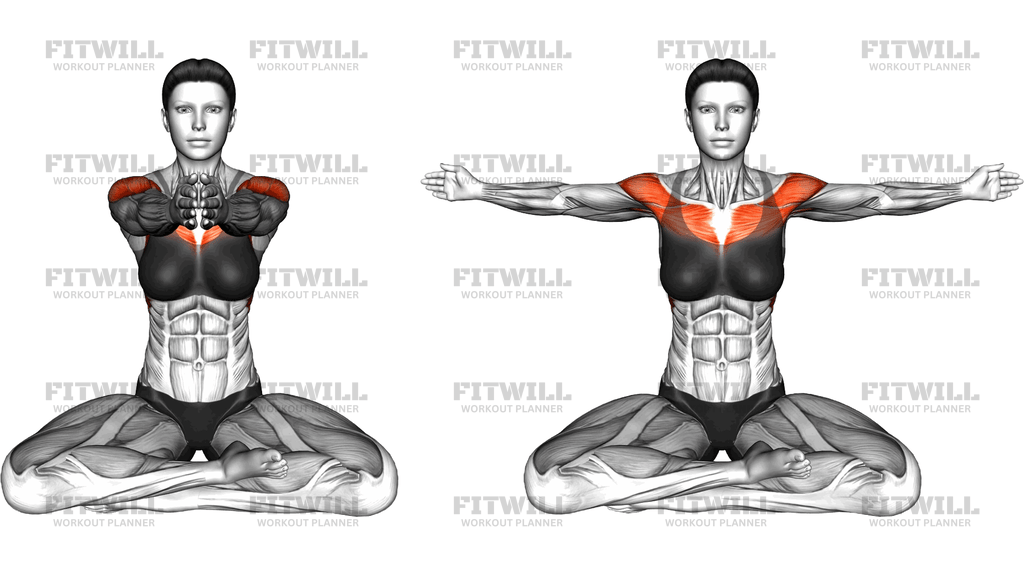
Sitting Punch On A Chair is a seated boxing-style drill where you stay upright on a sturdy chair with your feet flat on the floor and throw controlled straight punches into the air from guard position. Your fists start at chest height with elbows bent and tucked close to your ribs, and each rep alternates one arm extending forward at roughly chest height while the other hand stays anchored at your chin. Because the chair removes your legs from the equation, the work concentrates in the shoulders, arms, and chest, and your trunk has to stay engaged to keep you tall and stable on the seat.
This movement is a great fit for people who want upper-body conditioning without standing work: beginners building pressing coordination, older adults who need the safety of a supported seated position, office workers breaking up long sitting periods, or anyone recovering lower-body training load who still wants to move. It also works well as a warm-up before pressing or boxing sessions because it raises the heart rate and lubricates the shoulder joints without impact.
The main muscles doing the work are the front and side portions of the shoulders, which drive the punch forward, along with the triceps, which straighten the elbow at the end of each extension. The chest assists on the push, and the muscles of the trunk — abs and obliques — rotate your torso slightly with each punch and hold your posture steady against the slight twisting force. Even the upper back stays busy keeping your shoulder blades controlled as the arm reaches and retracts.
Setup matters more than it looks. Sitting on a firm chair with your back off the backrest forces your own trunk muscles to hold you upright, and planting your feet hip-width apart gives you a stable base so the punch comes from your shoulder and torso rather than from rocking your whole body. Slouching or leaning back turns the drill into a floppy arm swing and loses most of the benefit, so think tall spine, ribs down, chin level.
Execution should feel crisp but controlled: snap one fist straight out, fully extend without locking the elbow hard, rotate the forearm so the palm turns down at the end, then pull the hand straight back to your chin as the other arm fires. Keep the punches at or just below chest height, exhale sharply with each extension, and stay rhythmic rather than rushed. Speed can increase over time, but only as long as your torso stays quiet and your shoulders stay relaxed between punches.
In practice, this exercise slots into home circuits, seated warm-ups, low-impact conditioning blocks, and active breaks during the workday. Because it uses only a chair and your body weight, you can adjust the challenge simply by pacing — slower punches emphasize muscle control, while faster alternating punches push your conditioning and shoulder endurance.
[ Workout Log & Planner ]
Put your next workout in Fitwill
Keep your plan and training log ready when you are.


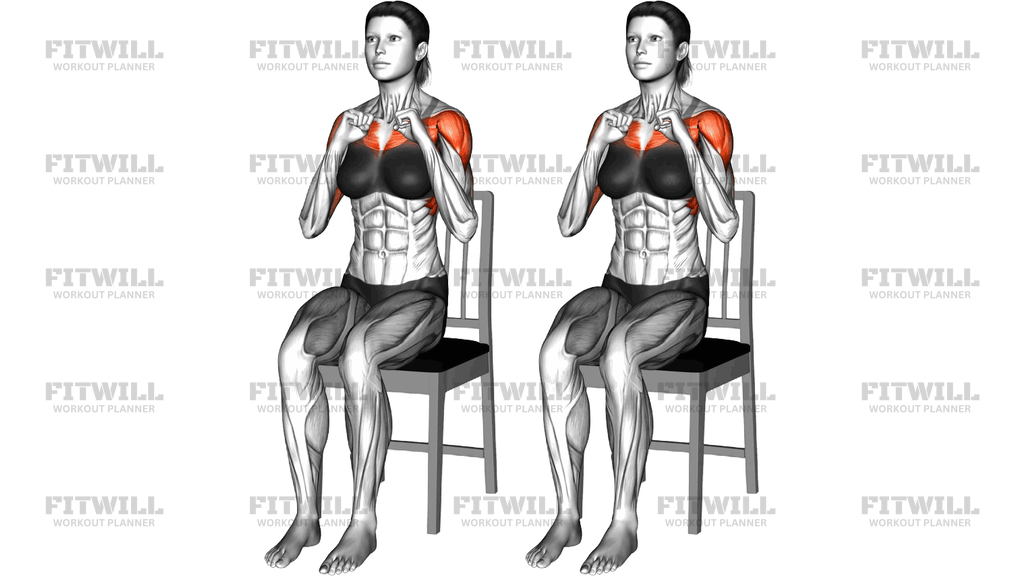
Instructions
- Sit on a sturdy, armless chair with your back not touching the backrest and both feet flat on the floor about hip-width apart.
- Sit tall with your ribs stacked over your hips, then raise both fists to chest height with elbows bent and tucked in beside your ribs, palms facing in.
- Brace your abdominal muscles lightly as if preparing for a light push, and keep your chin level and shoulders relaxed away from your ears.
- Exhale and punch one fist straight forward at chest height, rotating your forearm so the palm turns downward as the arm extends.
- Extend fully but stop just short of snapping the elbow rigid, keeping the punch on a straight line from your chin rather than a wide arc.
- Allow your torso to rotate a small amount with the punch, but keep your hips planted on the seat and avoid leaning backward or sideways.
- Inhale as you retract the fist sharply back to your chin while the opposite arm punches forward, creating a steady alternating rhythm.
- Continue for your target number of reps or time interval, keeping each punch crisp and each return controlled rather than letting the hands drift.
- When finished, bring both fists back to guard at your chest, take a few slow breaths, and stand up carefully from the chair before moving on.
Tips & Tricks
- If you find yourself rocking back on the chair with each punch, the punches are too forceful for your current brace — dial back the speed until only your arms and a small torso rotation move.
- Common mistake: flaring the elbows out to the sides so the punch becomes a wide swing. Keep the elbow grazing past your ribs on the way out so the arm travels straight ahead.
- Do not let the extended shoulder creep up toward your ear; drop the shoulder blade down before you start and check it after every few punches.
- A cushioned or swiveling office chair makes this harder to control — use a firm, stable chair with four legs so the seat does not wobble under you.
- Keep the wrist straight and the fist closed firmly; a bent wrist at full extension is the most common irritant in this drill.
- For conditioning, match your breathing to the punches — a short sharp exhale per punch keeps the rhythm steady and stops you from holding your breath.
- If your shoulders tire before your breathing does, slow the tempo and shorten the set; the goal is clean extensions, not flailing volume.
- Add a small torso rotation toward the punching side rather than leaning your upper body forward — the rotation comes from the ribs over stable hips.
- Rest your feet firmly through the floor instead of letting them dangle or lift; a planted base keeps the punch powerful even from a seated position.
Frequently Asked Questions
Which muscles does Sitting Punch On A Chair work the most?
The front and side shoulders drive each punch, supported heavily by the triceps as the elbow extends. The chest assists the push, and the abs and obliques stabilize and slightly rotate your torso on every rep.
Is Sitting Punch On A Chair suitable for complete beginners?
Yes, it is one of the most approachable upper-body drills because the chair supports your weight and there is no impact or equipment load. Start with slow, controlled punches for 20 to 30 seconds and build speed only when your form stays tidy.
Why do the punches stay at chest height instead of higher or lower?
Chest-height punches keep the shoulder in a comfortable mid-range and match the natural line from your guard position to full extension. Punching much higher strains the shoulder, and punching lower pulls you into a slouch.
Can I do Sitting Punch On A Chair on any chair?
Use a firm, stable chair without wheels or armrests so your elbows can travel freely and the seat will not tip or slide. A swivel office chair is a poor choice because the rotating base absorbs the torso rotation you should be controlling.
Should my back touch the backrest during the exercise?
No — sitting forward of the backrest forces your own trunk muscles to hold you upright, which is a big part of the benefit. If you need brief support between sets, lean back and rest, then re-set your posture before continuing.
How is this different from standing punches or shadowboxing?
Sitting removes leg drive and balance demands, so the workload concentrates in the shoulders, arms, and trunk. That makes it easier on the lower body and better for isolating upper-body endurance, though it burns less total energy than a standing version.
My shoulders burn quickly — is that normal?
Yes, the front shoulders are the main movers and they fatigue fast with repeated punches, especially if you are new to the movement. Slow the tempo, shorten the set, and let the burn settle before your next round.
Can I hold light dumbbells while doing Sitting Punch On A Chair?
It is not recommended for most people, because even light weights add momentum and stress to the shoulder at full extension. Master the body-weight version at higher speeds first, and treat weighted punches as an advanced progression only with very light loads.
What is a good substitute if I do not have a suitable chair?
Sit on the edge of a bench, a stability ball, or even the floor with a tall, cross-legged posture, keeping the same guard position and straight punching line. The key is a stable seated base with your feet or sits bones planted.
Is it safe for someone with shoulder discomfort?
If you currently have shoulder pain, reduce the range so the punch stops before full extension and keep the speed slow, or check with a health professional first. Stop the set if any sharp or pinching sensation appears at the front of the shoulder.