Sitting Woodchopper On A Chair
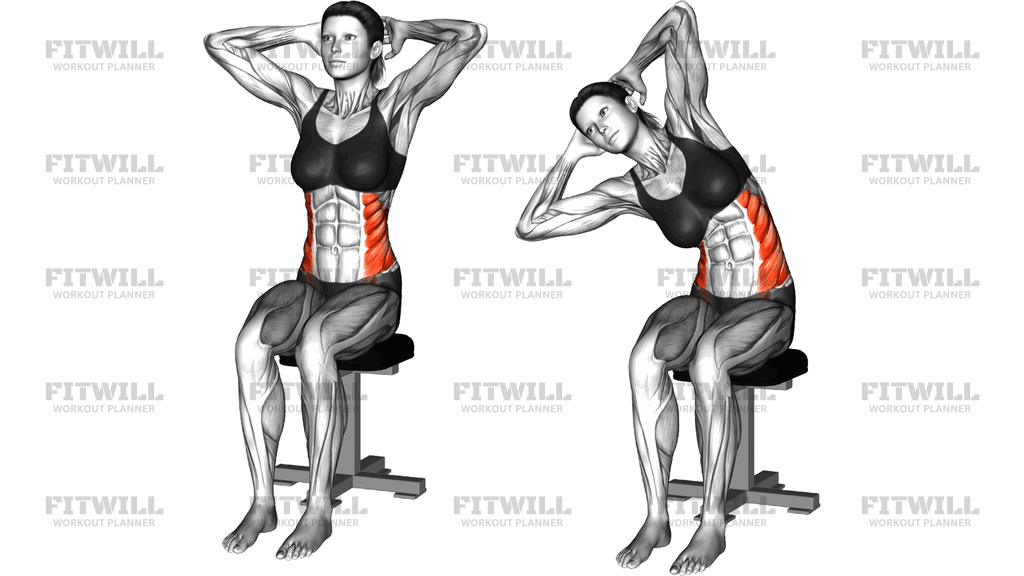
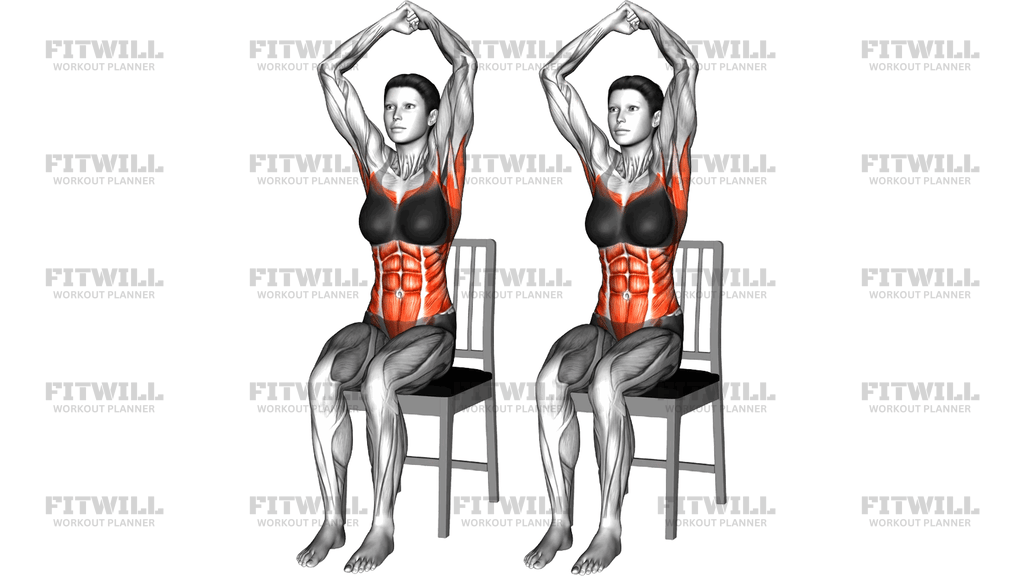
The Sitting Woodchopper On A Chair is a seated rotational core exercise performed with the hands clasped together and the arms extended overhead. From that tall, raised position, you sweep the clasped hands diagonally down and across your body, as if chopping wood from a high shoulder down toward the opposite hip, then control the return back overhead. Because you are seated on a chair with your feet planted, your hips and legs stay fixed, which forces the obliques and deep trunk muscles to do the rotating instead of letting the lower body cheat.
This is a particularly useful variation for people who find standing woodchops hard on the knees, hips, or lower back, or anyone training in a limited space with no cable machine or band available. Office workers, older adults, and beginners rebuilding core control after time away from training all benefit from the supported setup. It is also a smart teaching tool: with the legs locked in place, you can actually feel which side of your trunk is doing the work and whether you are rotating evenly left and right.
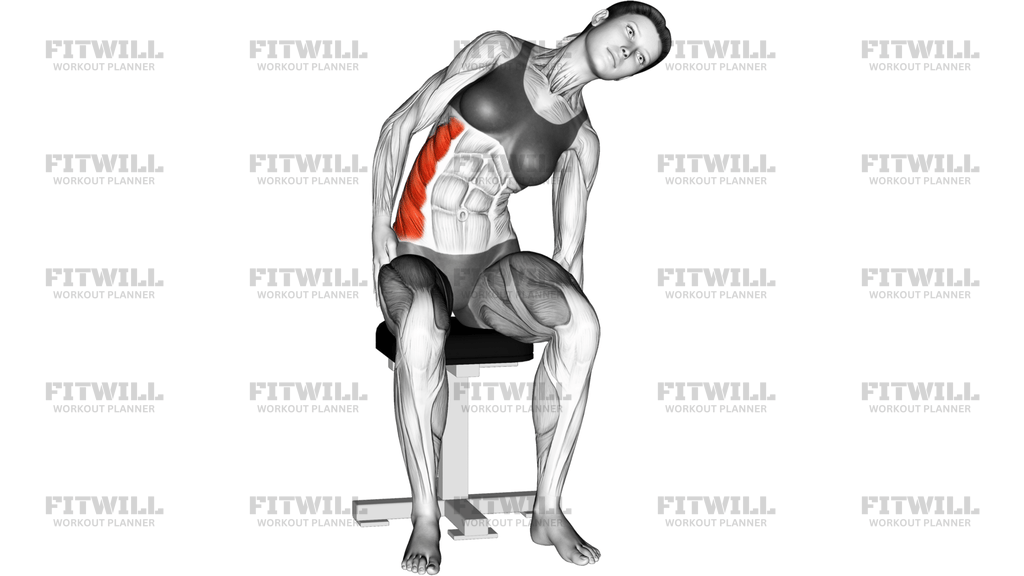
The main muscles at work are the internal and external obliques on the sides of your waist, which drive the diagonal twisting and overhead pull. The rectus abdominis braces the front of the trunk, and the deep core stabilizes your spine while the arms travel through a long arc. Your shoulders, especially the deltoids, hold the arms up and steady the clasped hands throughout, and the muscles along the spine work to keep you tall rather than slumped as you twist.
The setup matters more than it looks. Sitting on a firm chair with your feet flat and roughly hip-width apart gives you a stable base, so the rotation happens through the waist and not by sliding your hips or rocking the chair. Keeping the torso upright and the chest lifted before the chop starts protects the lower back and gives the obliques a clean line to pull through. If you start slouched or twisted, the movement turns into an arm swing with very little trunk involvement.
To execute it well, clasp your hands and raise them overhead with soft elbows, then rotate your trunk slightly so the hands drift toward one side. From there, pull the hands down and across your body in a controlled diagonal, letting your shoulders and ribcage turn while your hips and knees stay pointing forward. Finish the chop near the opposite hip, pause briefly, then retrace the same path back overhead. The return is just as important as the chop; lowering fast wastes half the exercise.
Use this movement as a warm-up for heavier rotational work, as a stand-alone core set on days you cannot get to the gym, or as a low-load way to practice rotary control between harder ab exercises. Since it is body-weight only, the challenge comes from slowing the tempo, adding a pause at the bottom of each chop, and matching the number of repetitions on both sides rather than from adding load.
[ Workout Log & Planner ]
Put your next workout in Fitwill
Keep your plan and training log ready when you are.


Instructions
- Sit on a firm chair with your feet flat on the floor about hip-width apart and your knees bent to roughly 90 degrees.
- Sit up tall on your sit bones, stack your ribs over your hips, and brace your trunk lightly as if preparing for a light push.
- Clasp your hands together, interlacing your fingers, and raise both arms straight overhead with a slight bend in the elbows.
- Rotate your trunk slightly to one side so your clasped hands angle toward that shoulder; this is your starting position for each rep.
- Exhale as you pull your clasped hands down and diagonally across your body toward the opposite hip, letting your shoulders and ribcage turn while your hips and knees stay facing forward.
- Finish the chop with your hands beside or just past the opposite thigh, arms extended, and squeeze the side of your waist briefly at the end of the arc.
- Inhale as you reverse the exact same diagonal path, drawing the hands back up and across to the overhead starting position without slumping or leaning back.
- Keep your neck relaxed and your gaze forward the whole time; do not let your head chase the hands.
- Complete all repetitions on one side, then reset your posture, switch the rotation to the other side, and match the rep count.
Tips & Tricks
- If your lower back arches as the hands go overhead, stop the raise at shoulder height or slightly above; the chop still works, and your spine stays neutral.
- A common mistake is swinging the arms quickly and letting momentum do the work. Slow the descent to two or three seconds so the obliques, not gravity, control the chop.
- Watch for hip shift: if your knee or pelvis turns with your shoulders, the chair is doing the rotation for you. Dig the feet in and imagine your hips are glued to the seat.
- Keep the elbows soft. Locking the arms straight overhead strains the shoulders and turns the move into a shoulder exercise instead of a trunk exercise.
- If one side feels weaker or shorter in range, do the tighter side first and match reps to the weaker side rather than the stronger one.
- To make the exercise harder without equipment, pause for two seconds at the bottom of each chop or lower over a five-second count.
- Avoid collapsing your chest toward your knees at the end of the chop. The finish is a rotation, not a crunch; your torso stays tall as the shoulders turn.
- If the chair is light or unstable, place it against a wall so it cannot slide when you twist with any speed.
Frequently Asked Questions
Which muscles does the Sitting Woodchopper On A Chair work the most?
The internal and external obliques along the sides of your waist drive the diagonal twist, with the rectus abdominis and deep core bracing the trunk. The shoulders and upper back work isometrically to hold the clasped hands on the overhead arc.
Why is the woodchopper done seated instead of standing?
Sitting locks your hips and legs in place, so the rotation has to come from the trunk instead of the hips stepping or pivoting. This makes it easier to feel the obliques working and gentler on the knees and lower back.
Can beginners do the Sitting Woodchopper On A Chair?
Yes, it is one of the most accessible rotational core exercises because it needs only a sturdy chair and no load. Beginners should start with a small arc and a slow tempo before extending the hands fully overhead.
How do I stop the chair from twisting with me during the chop?
Keep your feet flat and actively press them into the floor, and think of your pelvis as fixed while only your ribcage and shoulders turn. If the chair still slides, place its back against a wall.
How far down should my hands travel at the end of the chop?
Bring the clasped hands to the outside of the opposite hip or thigh, as far as you can go while your torso stays upright and your hips stay facing forward. Stop short if you feel yourself slumping or rounding your lower back.
What is the most common mistake in this exercise?
Rushing the arms and using momentum, which turns it into an arm swing. Control the descent, pause briefly at the bottom, and keep the head and chest tall throughout.
Can I add resistance to the Sitting Woodchopper On A Chair?
Yes, once your form is consistent you can hold a light weight plate, dumbbell, or medicine ball between your clasped hands. Increase the load only when you can keep the hips planted and the spine tall through the full arc.
Is the Sitting Woodchopper On A Chair safe for people with back issues?
The seated, unsupported setup is low load, but any rotation loads the spine. If you have a history of back problems, use a smaller range of motion, keep the movement slow, and check with a qualified professional before adding it to your routine.
How many repetitions should I do per side?
Start with 8 to 12 controlled chops per side, matching reps so both sides of the waist develop evenly. For a core-focused finisher, two or three sets per side with a slow return works well.
What can I use if I do not have a chair?
Any firm, stable seat works, such as a bench or the edge of a sturdy stool. Avoid soft couches or swivel chairs, because they remove the stable base the exercise depends on.