Sitting Knee Drives On A Chair
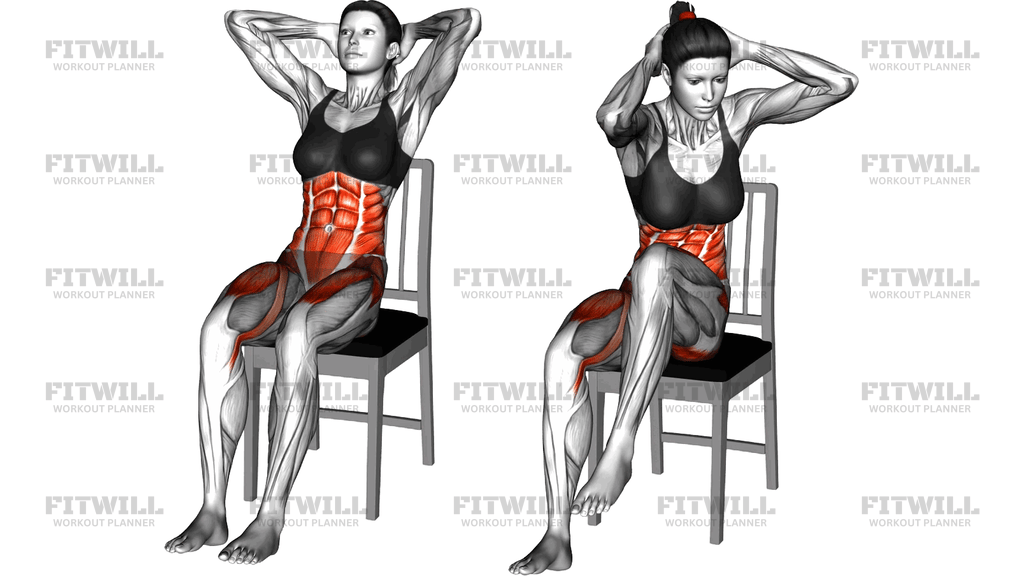
Sitting Knee Drives On A Chair is a compact core exercise that turns an ordinary sturdy chair into a training station. You sit upright on the seat with your hands raised in front of your chest, then drive your knees up toward your torso and lower them back down under control. The movement looks simple, but because your torso has to stay tall while your legs travel, your abdominal wall works hard to hold your spine steady while your hip flexors power the knee lift.
This is one of the most approachable core exercises you can program. It suits beginners who find floor work like sit-ups or lying leg raises uncomfortable, older adults who want to train getting up and down with more ease, office workers squeezing in movement breaks, and anyone rehabbing back to harder hanging or lying leg raise variations. Because the chair supports your weight, you can focus entirely on the quality of the contraction instead of balancing or bracing against the floor.
The main muscles at work are the abs, especially the rectus abdominis that runs down the front of your trunk, along with the deeper trunk stabilizers that keep your ribcage from flaring as the knees rise. The hip flexors at the front of the hip do much of the lifting, and the obliques chip in to stop your torso from twisting or collapsing to one side. Raising your hands in front of your chest, as this setup calls for, removes the temptation to push off your thighs and forces the abs to do the work.
Setup matters more than it appears. A chair without wheels, with a solid seat and your feet flat on the floor, gives you a stable base. Sitting tall at or slightly toward the front edge of the seat lets your knees travel up freely instead of jamming against the seat or a desk. A slight backward lean of the torso is fine, but hanging off the backrest turns the drill into a slouch, and slouching shortens the range your knees can travel.
To execute it well, exhale as you pull your knees up toward your chest, pause briefly at the top where your abs are fully shortened, then lower your feet back to the floor slowly rather than letting them drop. Speed is the enemy here; the lowering half is where most of the core control is built. If lifting both knees together is too difficult at first, drive one knee at a time in an alternating rhythm until your strength catches up.
Common use cases include home workouts, warm-ups before lower body training, desk-break routines, and senior or beginner classes where floor transfers are a barrier. Keep the reps smooth, stop if you feel pinching at the front of the hip, and remember the goal is a deliberate abdominal crunch-and-lift, not a quick leg flap.
[ Workout Log & Planner ]
Put your next workout in Fitwill
Keep your plan and training log ready when you are.


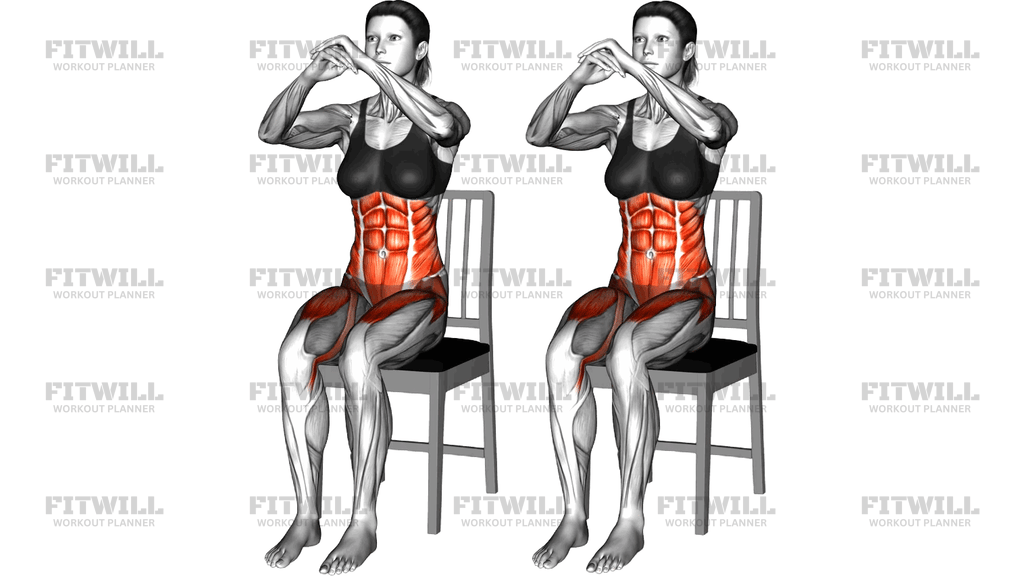
Instructions
- Place a sturdy, armless chair on a non-slip floor and sit tall on the front half of the seat with your feet flat on the floor, hip-width apart.
- Raise both hands in front of your chest at about chin height, elbows bent, so your arms are free and cannot push off your thighs.
- Sit up through the crown of your head, draw your shoulders back and down, and gently brace your abdominal wall as if preparing for a light puff of air to the stomach.
- Inhale, then exhale as you drive both knees up toward your chest, letting your thighs rise off the seat while your torso stays tall and your feet tuck back under you.
- Pause for a beat at the top with your knees as close to your chest as your range allows, feeling your abs fully shorten.
- Lower your feet back to the floor slowly, taking two to three seconds, resisting the pull of gravity instead of dropping your legs.
- Breathe out on every knee drive up and in on the way down, keeping the rhythm steady rather than holding your breath.
- Reset your posture between reps: feet flat, torso tall, hands up, then begin the next drive.
- Complete your set, then stand up carefully, since the front of your hips may feel warmed up and slightly fatigued.
Tips & Tricks
- The most common mistake is slumping backward into the backrest, which shifts the work from your abs to a passive slouch; perch slightly forward on the seat so your trunk has to hold itself up.
- Do not yank your knees up with a bounce — the chair gives you stability, so use it to make each lift slow and deliberate instead of fast and sloppy.
- If your knees bang against the underside of a desk or table, slide the chair back so your thighs have a clear vertical path to your chest.
- Raising your hands near your chin prevents pushing off your knees, but watch for shoulders creeping up to your ears; keep them relaxed and down.
- If both knees together is too hard, alternate one knee at a time — the seated position makes this an easy way to scale the drill without losing the ab work.
- A slight backward lean of the torso is acceptable, but if your lower back rounds and your ribs flare as the knees rise, reduce the range rather than letting your posture collapse.
- Feel a pinch at the front of the hip? Lower your knees a little less far and focus on squeezing the abs to curl the trunk slightly toward the thighs instead of just hinging at the hip.
- Avoid chairs with wheels, soft cushioned seats that shift under you, or seats so high your heels cannot rest on the floor — stability of the seat is part of the safety of the drill.
- Because the hip flexors do a lot of the lifting, treat this as a core-controlled movement, not a leg sprint; slowing the lowering phase is what keeps the abs in charge.
Frequently Asked Questions
Which muscles do Sitting Knee Drives On A Chair work?
The primary muscles are the abs at the front of your trunk, with the hip flexors doing much of the actual knee lifting. The obliques and deep trunk stabilizers work to keep your torso from twisting or leaning as the knees rise.
Is Sitting Knee Drives On A Chair good for beginners?
Yes, it is one of the friendliest entry points to core training because the chair supports your body weight and there is no floor transfer involved. Beginners can start with alternating single-knee drives and progress to lifting both knees together.
Why are the hands raised in front of the chest during this exercise?
Keeping your hands up takes away the instinct to push off your thighs or grab the seat, so your abs have to produce the movement. It also gives you a light counterbalance that helps you stay tall as the knees come up.
Should I lift both knees together or one at a time?
Both together demands more from your abs and trunk control, while alternating knees is easier and keeps one foot on the floor for support. Start with the version you can do slowly and cleanly, then progress to both knees.
How high should my knees come during Sitting Knee Drives On A Chair?
Drive them toward your chest as high as you can while your torso stays upright and your lower back does not round. A shorter, controlled range with good posture beats forcing the knees higher by slumping.
What kind of chair should I use?
Use a stable, armless chair with a solid seat and no wheels, positioned so your whole foot rests flat on the floor. A dining-style wooden chair usually works better than a rolling office chair or a deep cushioned armchair.
What is the most common mistake with this exercise?
Slumping back against the chair and swinging the legs quickly, which turns an abdominal drill into a momentum-driven leg movement. Sit toward the front of the seat and control both the lift and the lowering phase.
Can I do Sitting Knee Drives On A Chair every day?
Because it uses only your body weight and a modest range, frequent practice is generally fine for most people. If the front of your hips or your abs feel sore, give them a day to recover before your next session.
What can I use instead of a chair?
Any firm, stable seat such as a bench, a sturdy stool, or the edge of a bed works as long as your feet can rest on the floor and your knees have room to rise. Avoid anything that tips, rolls, or sinks under your weight.
Is this exercise safe if I feel hip pinching?
Reduce how high you lift and slow the tempo so the movement stays comfortable; pinching at the front of the hip usually means the range is too deep for your current mobility. If the discomfort persists at smaller ranges, choose a different core drill and consult a qualified professional.