Sitting Alternating Leg Raise And Abductor On A Ch
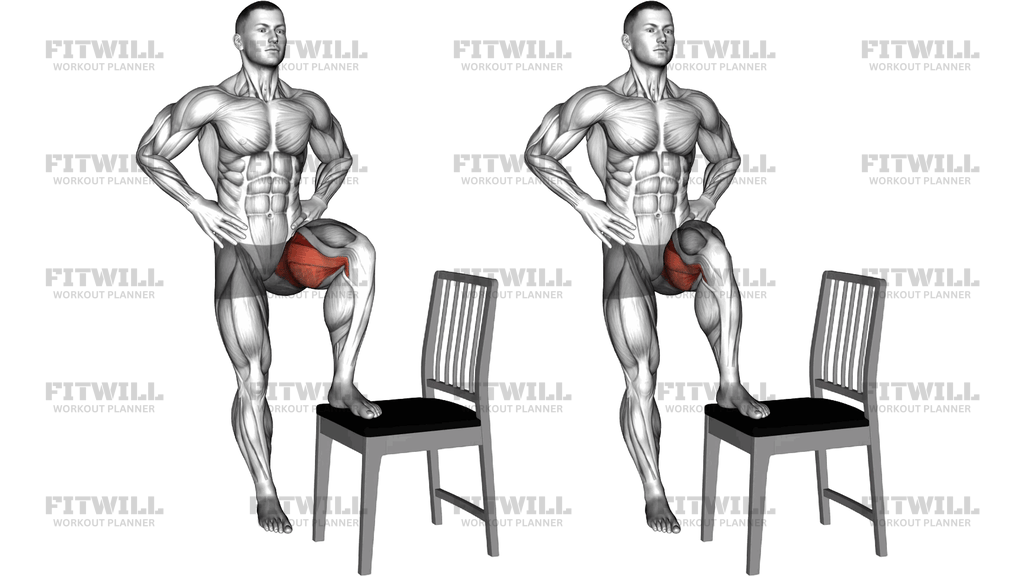
The Sitting Alternating Leg Raise And Abductor On A Chair is a low-equipment hip exercise performed from an upright seated position. You sit tall on a sturdy chair with your hands resting on your hips or the sides of the seat, then alternately lift one leg and sweep it out to the side before returning it to the floor and switching sides. The movement combines a knee raise with a hip abduction, so each rep works the front of the hip and the outer hip musculature in one flowing, controlled arc.
The main work comes from the hip abductors, especially the gluteus medius and the tensor fasciae latae on the outside of the hip, while the hip flexors drive the lift of the thigh. Your lower abs and deep core stay busy the whole time to keep your torso upright and stop you from rocking or slumping as the leg moves. Because one side works at a time, you also get a mild anti-rotation challenge through the trunk.
This exercise suits a wide range of people. It is popular in warm-ups and glute activation routines, useful for desk workers who want to wake up sleepy hip muscles without getting on the floor, and a practical option for beginners, older adults, or anyone rehabbing general hip weakness who finds standing abductions or side-lying work uncomfortable. The chair provides support and removes the balance demands of standing variations, so you can focus entirely on feeling the outer hip do the work.
Setup matters more than it looks. Sit on the front half of the seat with your feet flat and knees bent at roughly ninety degrees, and keep your spine tall rather than collapsing into the backrest. If you lean back or grip the seat and haul yourself around, the trunk muscles disengage and the leg starts swinging on momentum instead of muscle control. Hands on the hips or lightly braced beside you give just enough stability without doing the job for the abs.
To execute it well, lift one thigh a few inches off the seat, then guide the leg out to the side as far as you can without tipping your torso or shrugging the opposite hip. Pause briefly at the widest point, feel the outer hip contracted, then bring the knee back in and lower the foot under control before repeating on the other leg. Keep the range modest and the tempo slow; a small, clean arc beats a big, jerky swing every time.
A few practical points will keep this safe and effective. Move smoothly and avoid letting the low back arch as the leg travels, and stop short of any pinching at the front of the hip. If the chair feels unsteady, place it against a wall. Because the load is your own limb, higher reps and sets work well here, and the exercise pairs naturally with bridges, clamshells, or seated marches in a hip and core routine.
[ Workout Log & Planner ]
Put your next workout in Fitwill
Keep your plan and training log ready when you are.


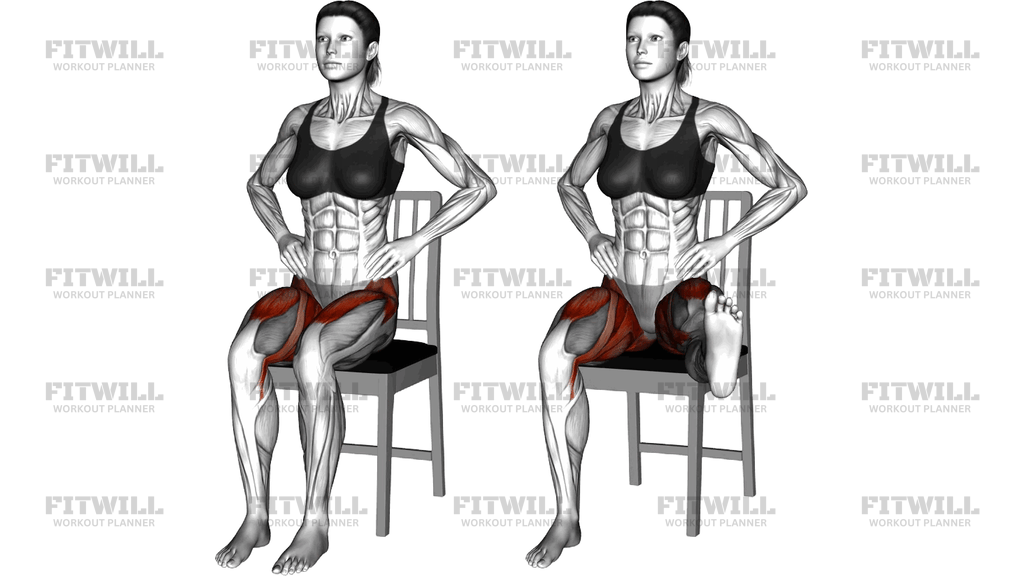
Instructions
- Sit on the front half of a sturdy, armless chair with your feet flat on the floor and your knees bent at about ninety degrees.
- Place your hands on your hips or rest them lightly on the sides of the seat, and lengthen your spine so you are sitting tall, not leaning on the backrest.
- Brace your abdominals lightly as if preparing for a gentle push to the stomach, and keep both sit bones evenly weighted on the seat.
- Lift one thigh a few inches off the seat by bending at the hip, keeping the knee bent and the torso still.
- From the lifted position, guide the knee and foot out to the side in a smooth arc, letting the hip abductors do the work.
- Pause for a beat at the widest point you can reach without tipping your torso or rolling the opposite hip off the seat.
- Reverse the arc to bring the leg back in front of you, then lower the foot to the floor with control rather than dropping it.
- Exhale as you lift and abduct the leg, inhale as you return it to the starting position.
- Repeat the lift-and-abduct arc on the other leg, and continue alternating sides for your target number of reps.
- Reset your posture between reps if you feel yourself slumping: sit tall, re-brace the core, and keep the shoulders relaxed and level.
Tips & Tricks
- The most common mistake is leaning the torso away from the working leg to fake extra range. If your upper body tilts as the knee travels out, shorten the arc and keep your shoulders stacked over your hips.
- Watch for the opposite hip lifting off the seat as you abduct. Pin that side down by pressing through the planted foot; if it still lifts, reduce the range.
- Avoid swinging the leg with momentum. If your foot skims the floor quickly or the knee whips out and back, slow the tempo to about two seconds out and two seconds in.
- A pinching sensation at the front of the hip usually means the leg is lifting too high for your current hip flexor range. Lower the height of the lift before abducting and see if that clears it.
- Keep the working foot relaxed and the knee bent throughout. Straightening the leg turns this into a longer lever that stresses the quad and hip flexor instead of isolating the outer hip.
- Gripping the seat with white knuckles steals work from your core. Use a light fingertip contact for balance only, or move your hands fully to your hips once you feel stable.
- If the chair slides or wobbles, set it against a wall before you start. The exercise only works when the seat stays completely still under you.
- For more outer hip engagement, hold the abducted position for two to three seconds on each rep rather than adding more reps.
- Breathe steadily instead of holding your breath through the arc; the seated position makes breath-holding easy to miss.
Frequently Asked Questions
What muscles does the Sitting Alternating Leg Raise And Abductor On A Chair work?
The primary movers are the hip abductors, mainly the gluteus medius and tensor fasciae latae on the outside of the hip. The hip flexors lift the thigh, and the lower abs and deep core stabilize your upright torso throughout.
Can beginners do the Sitting Alternating Leg Raise And Abductor On A Chair?
Yes, it is one of the most beginner-friendly hip exercises because the chair supports your weight and removes balance demands. Start with a small arc and eight to ten reps per side, then build range and reps as control improves.
Why sit on the front edge of the chair instead of leaning back?
Sitting on the front edge lets you stay tall and keeps your pelvis free to stay level while the leg moves. Leaning against the backrest rounds your spine, switches off the core, and makes it easier to swing the leg with momentum.
How far out should I abduct my leg?
Go only as wide as you can while keeping both sit bones on the seat and your torso upright. For most people that is a modest angle; pushing wider usually just tips the pelvis and loses tension in the outer hip.
Is it a mistake to straighten my leg during the abduction?
Keep the knee bent for this version. A straight leg creates a long lever that shifts effort toward the quadriceps and hip flexors and can strain the front of the hip, while a bent knee keeps the focus on the abductors.
How many reps and sets should I do?
Because the resistance is your own leg, higher volumes work well: try two to three sets of ten to fifteen controlled reps per side. Add a pause at the widest point if you want more challenge without extra reps.
What can I substitute if I don't have a suitable chair?
A sturdy bench, stable ottoman, or the edge of a bed without wheels works fine. Side-lying hip abductions or standing leg abductions with a wall for balance train the same outer hip muscles without any seat at all.
Is this exercise safe for people with hip issues?
The seated, supported position is gentle on the joints, but stop if you feel sharp pain, pinching at the front of the hip, or clicking accompanied by discomfort. Anyone recovering from a hip injury should get clearance from a qualified professional first.
Should I feel this in my lower back?
No, the work should stay in the hips and trunk. If your low back arches or aches, you are likely tilting your pelvis as the leg travels out; re-brace the abs, reduce the range, and keep both sit bones planted on the seat.