Resistance Band Single Arm Fly
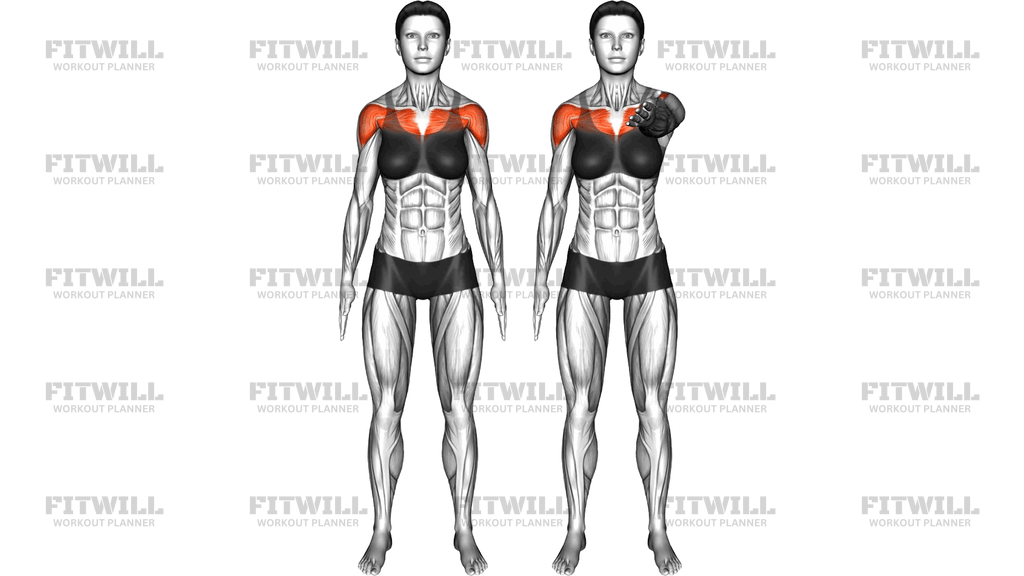
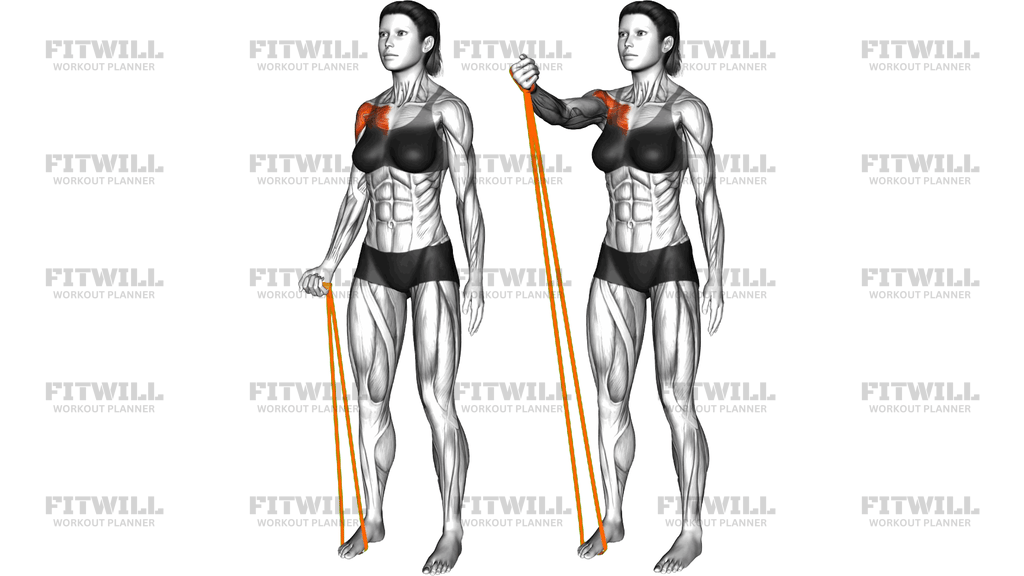
The Resistance Band Single Arm Fly is a standing, unilateral chest exercise where you anchor a resistance band under one foot and raise the working arm from your hip up and slightly across the body to shoulder height. Because the band is anchored low at the ground rather than at shoulder height behind you, the resistance pulls straight down, which places the emphasis on the upper portion of the chest and the front of the shoulder as the arm travels upward.
This movement is a good fit for people who train at home or travel, since the only equipment needed is a single long band. It also works well as an accessory exercise in a gym setting, giving you a way to isolate one side of the chest at a time and address side-to-side differences without needing a cable column or bench. Because you work one arm while standing, your trunk has to stay quiet while the band tries to pull you off balance, which adds a light but real demand on the core.
The main muscles at work are the upper fibers of the chest along with the front deltoid. The arm stays nearly straight with only a soft bend at the elbow, so the movement happens at the shoulder joint rather than the elbow, which is what separates a fly from a raise or press pattern. Muscles around the shoulder blade, along with the grip and the stabilizers of the standing leg, contribute throughout.
Setup matters more here than in most band drills. The band must sit securely under the middle of the working-side foot, and slack at the bottom of the movement should be minimal so tension begins immediately. A grip that is too loose lets the band slip, while standing too tall with a slack band makes the first half of the rep feel empty. Take a moment to set your stance and check the anchor before your first rep.
To execute it well, keep the elbow soft and locked in place, lead with the hand, and raise the arm on a slight diagonal toward the midline of the body rather than straight ahead or out to the side. Pause briefly at shoulder height, then lower under control instead of letting the band snap the arm back down. The return is where many people lose the benefit, so treat the lowering half as work, not a rest.
Common uses include warm-up activation before pressing, high-rep finishers after bench or push-up work, and rehab-style shoulder training where light, smooth resistance is preferred. Keep the band tension moderate, stay within a height you can control, and stop the set if you feel the band slipping or your shoulder pinching at the top.
[ Workout Log & Planner ]
Put your next workout in Fitwill
Keep your plan and training log ready when you are.


Instructions
- Place the middle of a long resistance band under the arch of your working-side foot so it is anchored firmly to the floor, and stand tall with feet about hip-width apart.
- Hold one end of the band in your working hand with a firm overhand grip, arm hanging at your side with a small amount of tension already on the band, and let your free arm relax at your other side.
- Soften your knees slightly, brace your trunk, and square your hips and shoulders forward so the band pulls straight down from your hand.
- Keeping a soft, fixed bend in the elbow, raise your arm forward and slightly across the midline of your body, as if your hand were tracing a diagonal line toward the ceiling in front of your opposite shoulder.
- Continue until your hand reaches roughly shoulder height, feeling the squeeze across the upper chest and front of the shoulder, and pause there for a beat.
- Lower the arm slowly along the same diagonal path back down to your side, resisting the band's pull rather than dropping the arm quickly.
- Exhale as you raise the arm, and inhale as you lower it back down.
- Keep your torso upright throughout; do not lean back or rotate your shoulder toward the ceiling to help the arm up.
- Complete all reps on one side, then re-anchor the band under the opposite foot and repeat with the other arm.
- Between sets, step off the band carefully to release tension rather than letting go of the handle while it is stretched.
Tips & Tricks
- Stand closer to the band anchor if the top of the rep feels too heavy, or choke up on the band if the bottom feels slack; adjust tension with distance and grip, not by swinging the arm.
- The most common mistake is turning this into a front raise by moving the arm straight ahead; angle the hand slightly toward the midline so the upper chest stays involved.
- Do not lock the elbow hard or bend it more as you fatigue; keep the same soft bend from start to finish so the shoulder does the work.
- If you feel the band slipping off your foot, shift it to the middle of the arch and keep your heel down; anchoring under the toes makes it pop loose.
- Avoid shrugging the working shoulder toward your ear at the top; think of pressing your shoulder blade down slightly as the arm rises.
- Control the lowering phase for two to three seconds; the band's recoil makes the bottom half easy to cheat, and that is where much of the muscle work happens.
- Pick a band you can lift to shoulder height without leaning back; a band that is too heavy will pull you forward at the start and arch your lower back at the top.
- Keep your wrist neutral and grip firm but not crushing; a bent-back wrist at the top of the rep is a sign the band is too strong.
- If standing on the band bothers your foot, place a small towel between the band and your arch, or hold the anchor foot steady by slightly bending the knee for balance.
Frequently Asked Questions
Which muscles does the Resistance Band Single Arm Fly work?
The main movers are the upper fibers of the chest and the front deltoid, with the shoulder blade stabilizers and grip helping throughout. Because the band is anchored low under your foot, the upper chest gets more emphasis than in a standard horizontal fly.
Why should the band be anchored under my foot instead of held behind me?
With the band anchored at the floor, the resistance pulls straight down, so raising the arm upward loads the chest in an ascending pattern that matches the clavicular pec fibers. It also makes the setup simple and equipment-light with no anchor point needed.
Is the Resistance Band Single Arm Fly suitable for beginners?
Yes, it is one of the more beginner-friendly chest fly variations because the band provides smooth resistance and the range is easy to limit. Start with a light band and stop the arm at chest height if shoulder height feels unstable.
Should my arm stay straight during this exercise?
Keep a soft, fixed bend in the elbow, roughly ten to fifteen degrees, and hold it constant. Fully locking the elbow can stress the joint, and bending it more during the rep turns the movement into a partial front raise.
Why does my shoulder shrug when I raise the arm?
That usually means the band is too heavy or the upper traps are compensating for a tired chest. Reduce the tension, focus on keeping the shoulder blade quiet and down, and rebuild the height gradually.
Can I do the Resistance Band Single Arm Fly without stepping on the band?
You can anchor the band around a sturdy low object such as a heavy table leg or door anchor set at floor level. The key is a secure low anchor so the resistance still pulls downward and the setup stays identical.
How does this differ from a two-arm band fly?
The single-arm version lets you train each side independently, which helps even out strength differences, and it adds a balance and core demand because the band pulls only on one side. Two-arm versions are faster for volume but hide asymmetries.
How many reps should I perform?
Because band tension rises as the arm climbs, moderate-rep sets of ten to fifteen per side work well for most goals. Choose a band that keeps the last two reps challenging without forcing you to lean back or shrug.
Is it safe if I have a shoulder issue?
Many people tolerate light band fly work well, but if you have a current or recent shoulder injury, get clearance from a qualified professional first. Keep the range below the point of discomfort and avoid any pinching sensation at the top of the rep.