Resistance Band Sitting Bent Over Reverse Fly On A
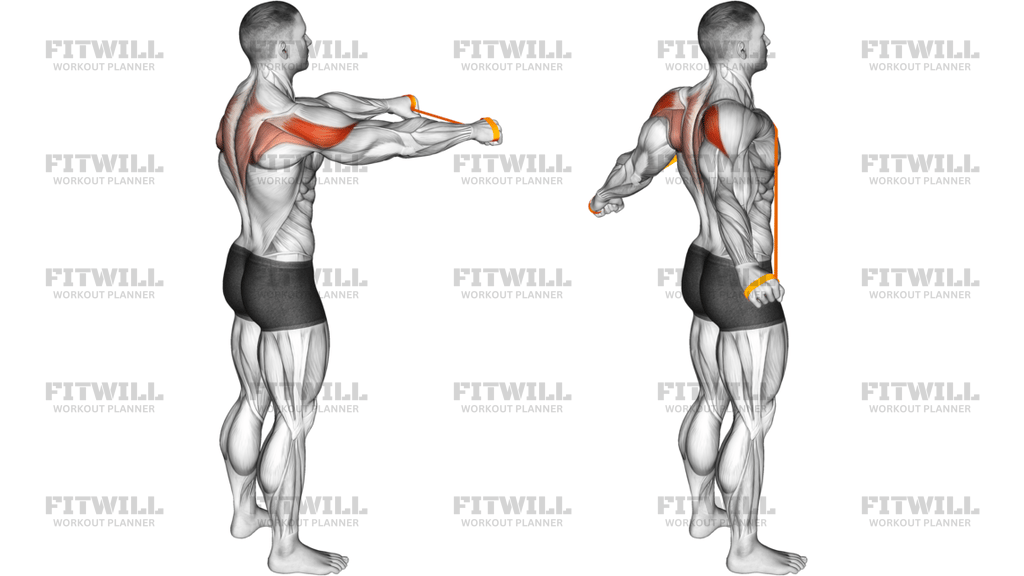
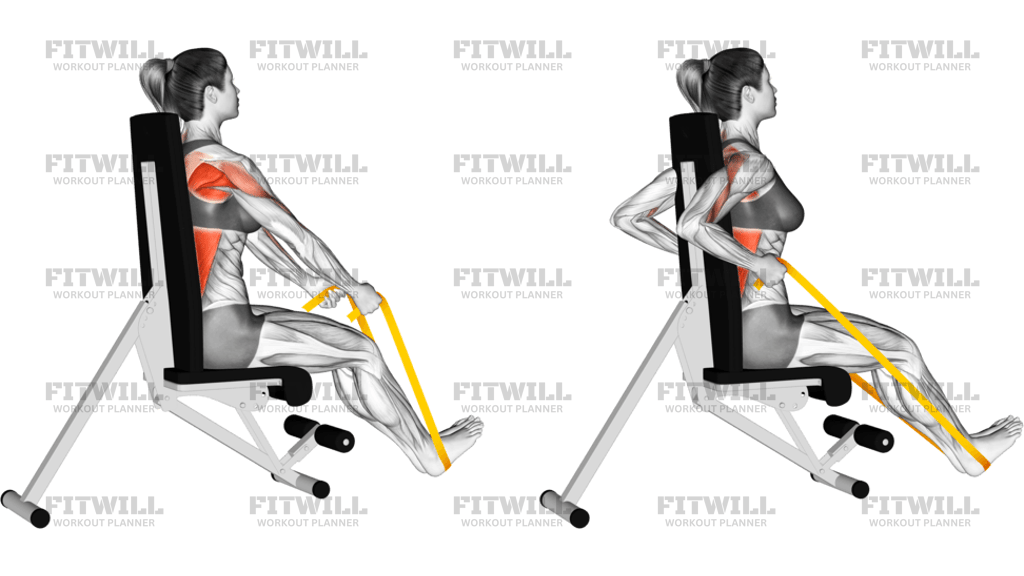
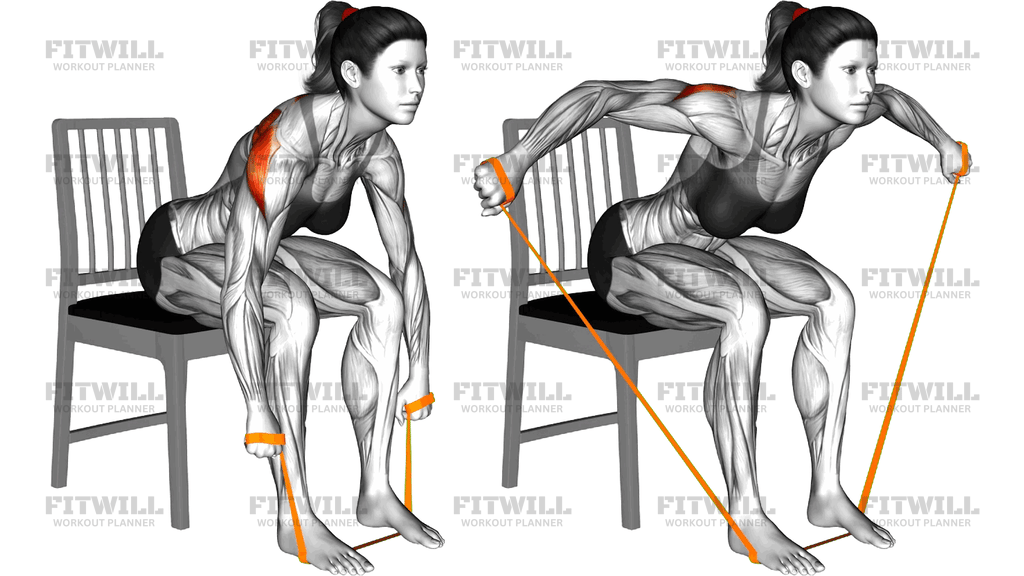
Resistance Band Sitting Bent Over Reverse Fly is a seated rear-deltoid isolation exercise. You sit on a sturdy chair or bench, hinge forward until your chest is close to your thighs, anchor a resistance band under both feet, and raise your arms out to the sides against the band's pull. Because the band runs from your hands down to your feet, tension is highest at the top of the movement, exactly where the rear shoulders do the most work.
This exercise earns its place in a routine by hitting a region most pressing and pulling exercises under-serve: the posterior deltoids and the muscles that pull the shoulder blades together. People who spend long hours at a desk or who bench and press frequently tend to have strong front shoulders and weak rear shoulders, which can pull the shoulders forward and make upper-back work feel awkward. Seated reverse flys with a band are one of the simplest ways to rebalance that.
The seated bent-over position is what makes this version special. Sitting removes the balance and lower-back demands of a standing bent-over fly, so you can concentrate entirely on the shoulder blades and rear delts. The trade-off is that the torso must stay anchored to the thighs — if you lift your chest to help the arms, you steal tension from the target muscles. Think of the torso as fixed and the only movement happening at the shoulders.
Execution is deliberately slow. Grip the band, keep a slight bend in the elbows, and sweep the arms up and out until they roughly align with your shoulders or slightly above, leading with the elbows rather than the hands. Pause briefly at the top, feel the squeeze between the shoulder blades, then lower over two to three seconds instead of letting the band snap you back down.
You will see this movement used in warm-ups before pressing days, in posture-focused routines, as a finisher after heavier rowing or pulling work, and in home programs where a single band and a chair replace an entire cable station. It suits beginners well because the band's resistance is light at the start of each rep, and it suits advanced lifters as a high-rep pump work with a very low injury risk when done with control.
A few practical points keep it safe and effective: choose a chair that will not tip, keep the band fully anchored under both feet, hinge from the hips rather than rounding your way down, and stop the set the moment your upper traps start shrugging toward your ears. Small ranges done cleanly beat big swings done with momentum every time.
[ Workout Log & Planner ]
Put your next workout in Fitwill
Keep your plan and training log ready when you are.


Instructions
- Sit sideways-neutral on a sturdy chair or bench with your feet flat on the floor, roughly hip-width apart, and place the middle of the resistance band under both feet.
- Hinge forward at the hips until your chest is close to your thighs, and cross or hold one end of the band in each hand so there is mild tension with your arms hanging down beside your calves.
- Keep a neutral spine, a soft bend in the knees, and a small bend in the elbows before the first rep begins.
- Brace your abdomen lightly and press your chest toward your thighs to lock the torso in place.
- Raise both arms out to the sides in a wide arc, leading with the elbows, until your upper arms are about level with your shoulders and the band is stretched toward your feet.
- Pause for a beat at the top and squeeze your shoulder blades together without shrugging them up.
- Lower your arms slowly along the same arc over two to three seconds until the hands return beside your lower legs.
- Exhale as you raise the arms, inhale as you lower them.
- Complete your reps, then sit upright before letting go of the band so the anchor under your feet stays secure.
Tips & Tricks
- If the band feels slack at the bottom, shorten your grip by wrapping an extra loop around each hand — the challenge in this setup comes at the top, so you want some tension before the first inch of movement.
- Momentum is the most common fault here: swinging the arms up while lifting the chest off the thighs turns a rear-delt exercise into a row. If your torso moves, slow the tempo down or use a lighter band.
- Lead with the elbows rather than the hands. If your hands race ahead of your elbows, the front of the shoulder starts to take over.
- Shrugging toward your ears signals the upper traps are dominating. Drop the shoulders away from the ears before each rep and reduce the band tension if the shrug persists.
- Keep the pinkies slightly higher than the thumbs as you lift — a subtly neutral or externally rotated arm position feels more comfortable for most people in the shoulder joint.
- The band pulls diagonally down to your feet, so expect the hardest part to be the last few inches of the raise. Do not arch back or lean sideways to finish the rep; accept a shorter range instead.
- Make sure the band sits under the arch of both feet, not just the toes. A band slipping off mid-rep is the main safety issue in this exercise.
- Slight elbow bend is correct; straightening the arms completely makes the movement feel like a lockout strain. Re-bend the elbows if you feel pressure behind the shoulder.
- Use higher reps — 12 to 20 — since the band's resistance peaks where the rear delts are weakest at end range, and heavy bands tend to pull you out of the hinge.
Frequently Asked Questions
What muscles does the Resistance Band Sitting Bent Over Reverse Fly work?
The primary muscles are the rear shoulders (posterior deltoids), with the middle traps and rhomboids between the shoulder blades assisting as you squeeze the arms together. The core and lower back work isometrically just to hold the seated hinge.
Why is this reverse fly done sitting instead of standing?
Sitting removes the balance and lower-back fatigue that comes from holding a standing bent-over position. With the torso braced against the thighs, nearly all of your effort goes into the rear shoulders and upper back.
How high should I raise my arms in the Resistance Band Sitting Bent Over Reverse Fly?
Aim to bring your upper arms to about shoulder height or just slightly above, in a wide arc out to the sides. Going far past that point usually involves shrugging or arching, which takes work away from the rear delts.
Where exactly should the resistance band be anchored?
The band runs under the arch of both feet with one end held in each hand. Your feet provide the anchor, so keep them flat and firmly planted; the tension rises diagonally from your hands down to your feet as you lift.
I feel this in my traps and neck instead of my rear shoulders — what am I doing wrong?
You are most likely shrugging as you lift, or the band is too heavy so your upper traps jump in to finish each rep. Reduce the tension, consciously press your shoulders away from your ears, and shorten the range to where you can move only at the shoulders.
Is this a good exercise for beginners?
Yes. The seated position is very stable, the band offers gentle resistance at the start of each rep, and the movement pattern is easy to learn. Beginners should focus on a slow tempo and a still torso rather than how far the arms travel.
How many reps and sets should I do?
Because the band's tension peaks at end range, moderate loads work best: 2 to 4 sets of 12 to 20 reps with a controlled lowering phase. It fits well as a warm-up before pressing or as a finisher after rows.
What can I use if I do not have a resistance band?
Light dumbbells work in the same seated bent-over position, though the tension pattern is different — gravity loads the bottom of the rep instead of the top. Cable reverse flys are another substitute if you have access to a cable station.
Are there any safety concerns with this exercise?
The main risks are the band slipping off your feet and hinging with a rounded lower back. Keep the band secured under the arch of both feet, use a stable chair that will not tip, and hinge forward from the hips with a neutral spine rather than slumping down.
Should my elbows be straight or bent during the movement?
Keep a small, fixed bend in the elbows throughout, roughly 10 to 20 degrees. Fully straight arms put unnecessary strain on the elbow and shoulder joints, and excessive bending turns the fly into a row.