Standing Alternating Front Feet Tap To Knee Tuck
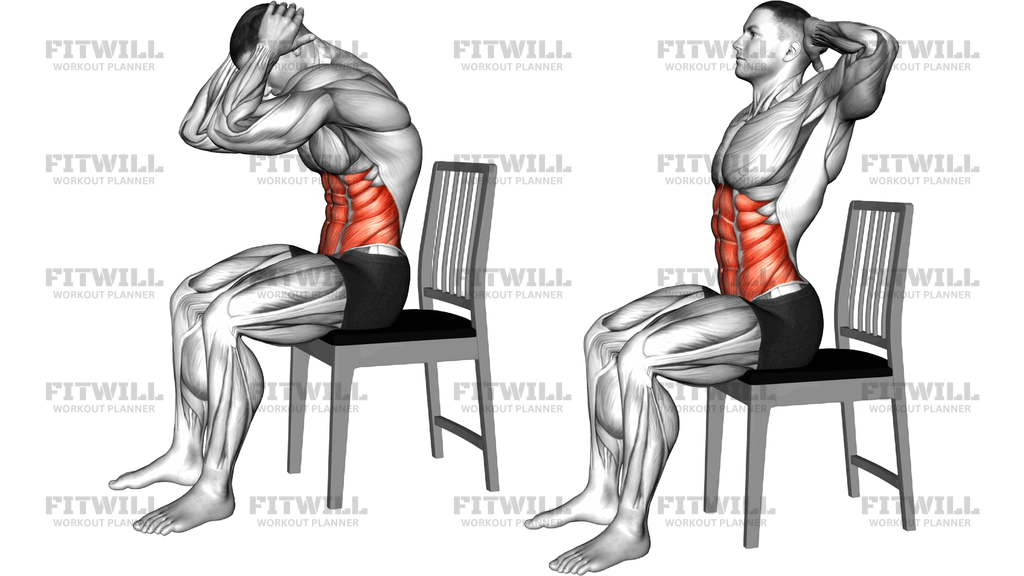
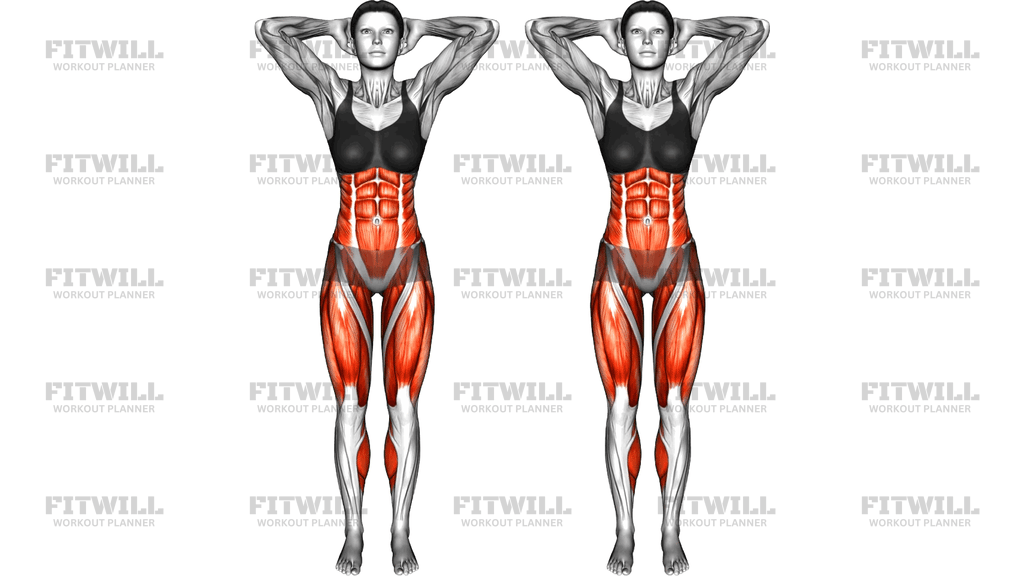
The Standing Alternating Front Feet Tap To Knee Tuck is a body weight core drill performed from an upright stance with the hands placed lightly behind the head. Each rep combines two distinct leg actions on the same side: you first tap one foot forward in front of your body, then immediately pull that same knee up toward your chest in a controlled tuck. After returning the foot to the floor, you repeat the sequence on the opposite side, alternating back and forth for the duration of the set.
Because the movement is done standing, it demands more from your trunk than a floor-based knee tuck. Every time you lift the knee, the standing leg has to keep you balanced while your lower abs and hip flexors drive the thigh upward. The hands-behind-head position also discourages slouching; if your torso starts to round or your elbows collapse forward, you will feel it immediately in your neck and upper back rather than your midsection.
This exercise is a good fit for warm-ups, circuit training, and home workouts where no equipment is available. It suits anyone who spends a lot of time training abs on the floor and wants a functional standing alternative, as well as older or beginner trainees who need a low-impact way to work on hip mobility, single-leg balance, and trunk control at the same time. The alternating rhythm also gives it a light conditioning effect when performed for longer sets.
Setup matters more than speed here. Stand tall with your feet roughly hip-width apart, soften the knees slightly, and place your fingertips behind your ears or at the back of your head with the elbows flared wide. Bracing the trunk before the first tap keeps your ribcage stacked over your pelvis, which is what allows the knee to travel high without your lower back arching or your torso leaning away from the working side.
To execute it well, tap the ball of one foot a short step in front of you, shift your weight smoothly back to the standing leg, and then drive that knee up until the thigh is at or above parallel with the floor. Exhale as the knee rises, pause briefly at the top, and lower the foot back to the start under control before switching sides. Keep the movement crisp but never jerky, and let the standing hip, knee, and ankle absorb the weight shifts naturally.
A few practical points will keep this exercise productive. If you wobble, stand near a wall or chair for light fingertip support while you build balance. If your lower back complains during the tuck, reduce the knee height and focus on pulling the pelvis slightly under rather than reaching the knee higher. Stop the set when your form or rhythm degrades, since sloppy, rushed reps are where this movement loses both its core benefit and its safety.
[ Workout Log & Planner ]
Put your next workout in Fitwill
Keep your plan and training log ready when you are.


Instructions
- Stand tall with your feet hip-width apart, knees soft, and your weight spread evenly across both feet.
- Place your fingertips lightly behind your head or ears and flare your elbows out to the sides, keeping your chest open.
- Brace your abs gently and imagine your ribcage drawn down over your pelvis before you start moving.
- Tap the ball of one foot forward in front of your body, keeping the movement light and quick.
- Shift your weight fully onto the standing leg, then drive that same knee up toward your chest while exhaling.
- Lift the knee until the thigh reaches at least parallel with the floor, keeping your torso upright and elbows wide.
- Pause for a beat at the top, then lower the foot back to the floor with control as you inhale.
- Repeat the tap and tuck on the opposite side, alternating legs for the planned number of reps or time.
- Reset your stance and brace briefly between reps if you lose your balance or your rhythm gets sloppy.
Tips & Tricks
- Do not pull on your neck. The hands behind your head are a position guide, not a handle — keep your fingertips light and your elbows wide through every tuck.
- If your torso leans back as the knee rises, your lower back is compensating for weak lower abs. Cue yourself to tuck the pelvis slightly under instead of chasing a higher knee.
- Rushing the transition between the foot tap and the knee tuck turns this into a leg swing. Pause for a split second after the tap so the tuck starts from a controlled, balanced position.
- Keep the standing knee soft but not deeply bent. Locking it out makes you unstable, while squatting low turns the drill into a one-leg squat.
- Drive the knee straight up in front of your hip rather than across your body. Crossing the midline shifts the work away from the lower abs and into the hip rotators.
- Point the toes of the working leg slightly and lead the tap with the ball of the foot; a heavy heel-first tap usually means you are lunging instead of tapping.
- If balance is the limiting factor, rest your fingertips on a wall or the back of a chair until your standing-leg stability improves, then progress to hands behind the head.
- Breathe in a steady rhythm — exhale on the tuck, inhale on the return — instead of holding your breath through the whole cycle.
Frequently Asked Questions
What muscles does the Standing Alternating Front Feet Tap To Knee Tuck work?
The main drivers are the lower abs and hip flexors, which lift the knee toward the chest. The obliques and deep core stabilize your torso, while the standing leg's glutes, quads, and calf muscles handle balance and weight shifts.
Is the Standing Alternating Front Feet Tap To Knee Tuck suitable for beginners?
Yes. It is low impact and needs no equipment, so beginners can start with a lower knee height and a slower tempo. Standing near a wall for light support makes the balance demand manageable while the pattern is learned.
Why does my neck hurt when my hands are behind my head during this exercise?
That usually means you are pulling your head forward with your hands or collapsing your elbows as the knee lifts. Keep the fingertips light, the elbows wide, and focus on moving from the hip, not the head.
How high should I raise my knee in the tuck portion?
Aim for the thigh reaching at least parallel with the floor, but only as high as you can keep your torso upright and your lower back from arching. A slightly lower, cleaner tuck beats a high knee pulled up with momentum.
Can I do the Standing Alternating Front Feet Tap To Knee Tuck as a warm-up?
Absolutely. Its alternating rhythm raises your heart rate, mobilizes the hips, and activates the trunk, making it a solid warm-up before lower body or core training. Keep the reps moderate and the tempo controlled.
What is the most common mistake in this movement?
Leaning the torso back or swinging the leg to generate the tuck. Both shift work away from the abs and strain the lower back, so keep your chest tall, brace your trunk, and let the hip do the lifting.
What can I substitute if standing balance is difficult for me?
Perform the tap and tuck with one hand on a wall or chair back for support, or switch to a seated or lying knee tuck until your single-leg stability improves. The core demand remains similar with a supported version.
How many reps should I do of the Standing Alternating Front Feet Tap To Knee Tuck?
Start with 8 to 12 taps and tucks per side, or work in 20 to 30 second sets if you prefer time-based training. Stop the set once your rhythm, balance, or knee height starts to break down.
Is it safe for my lower back and knees?
For most people, yes, as long as you keep the knee lift within a pain-free range and avoid yanking the leg up. If you have a history of lower back or hip issues, use a modest knee height and stop if you feel discomfort rather than muscular effort.