Sitting Lean Forward Groin Stretch On A Chair
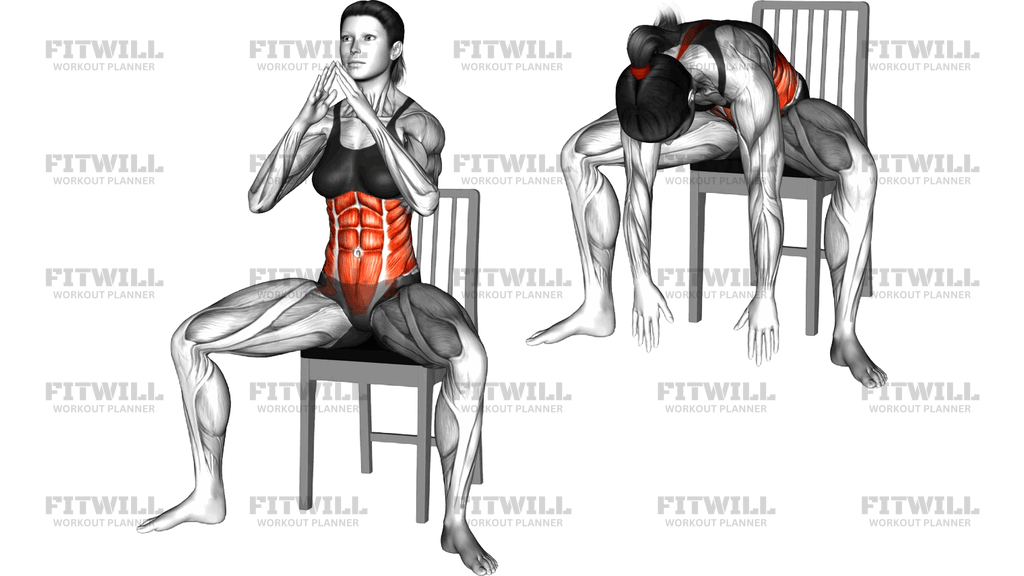
The Sitting Lean Forward Groin Stretch On A Chair is a seated flexibility exercise that targets the adductors, the muscles running along the inner thigh. You sit on the edge of a sturdy chair with your feet planted wide apart, then hinge your torso forward and let your chest and arms drop down between your knees. The wide foot position is what makes this version unique: instead of stretching the groin by spreading the legs against resistance, you use gravity and forward lean to open the inner thighs in a supported, low-load position.
This stretch is especially useful for people who spend long hours sitting, since tight adductors often accompany stiff hips and a shortened forward-lean pattern. It also suits beginners, older adults, and anyone recovering general hip mobility who may find a standing wide-stance groin stretch too demanding on balance. Because the chair takes your weight, you can relax into the stretch instead of working to hold yourself up, which usually produces a cleaner, more comfortable release in the inner thighs.
Setup matters here more than it might seem. Sitting too far back on the seat limits how far you can hinge, and a foot stance narrower than shoulder width shifts the stretch toward the hamstrings and lower back rather than the groin. Aim to sit on the front edge of the chair with both sit bones supported, knees tracking out over your toes, and heels firmly grounded so the legs create a stable frame for the torso to fold through.
To perform it well, keep your spine long as you start to lean, hinging from the hips rather than rounding through the midsection. Let your arms hang and reach toward the floor between your feet, and let your head relax downward once you reach your comfortable end range. You should feel a pulling sensation along the inner thighs, possibly with a mild stretch in the hips and lower back. Hold, breathe steadily, and rise back up slowly rather than snapping upright.
Use this movement as part of a warm-up before lower-body training, a cooldown after leg days, or a standalone mobility break during the workday. Common use cases include improving squat depth, easing general inner-thigh tightness, and supporting comfortable stride length in walking and running. Move gently, never force the range, and back off immediately if you feel sharp pain in the groin or hip joint.
[ Workout Log & Planner ]
Put your next workout in Fitwill
Keep your plan and training log ready when you are.


Instructions
- Place a sturdy chair against a wall or on a non-slip floor so it cannot slide, and sit on the front edge of the seat with both sit bones fully supported.
- Spread your feet wide apart, wider than your shoulders, with toes turned slightly outward and heels flat on the floor.
- Sit tall with your chest lifted and rest your hands together in front of your chest or on your knees to set your starting posture.
- Brace lightly through your trunk, then hinge forward from the hips, keeping your back long as your chest begins to travel down between your knees.
- Let your arms hang and reach toward the floor between your feet, following the path your chest is taking.
- Continue leaning until you feel a steady stretch along both inner thighs; let your head relax and hang with the spine rather than craning it up.
- Hold the end position for 20 to 30 seconds, breathing slowly and deeply, allowing the inner thighs to soften a little more with each exhale.
- To come out, place your hands on your knees or thighs and press yourself back up to the tall seated position with a slow, controlled motion.
- Rest for a few breaths, reset your foot position, and repeat for 2 to 3 repetitions.
Tips & Tricks
- A common mistake is rounding the upper back immediately, which turns the movement into a slouched slump instead of a hip hinge; think chest forward and fold from the hip crease.
- If your heels lift as you lean down, your stance is too wide for your current flexibility; bring the feet in slightly until both heels stay planted.
- Letting the knees cave inward as you drop the chest reduces the groin stretch; actively keep your knees pushing outward over your toes.
- Sit on the very front edge of the seat before you start. Sitting too far back stops the backs of your legs from contacting the chair and limits your forward range.
- Do not bounce at the bottom of the stretch. The adductors respond better to a steady hold than to rhythmic pulsing, especially in a loaded hinge position.
- If your lower back, rather than your inner thighs, complains during the lean, keep your hands on your knees for support and reduce the depth until the groin becomes the limiting factor.
- Keep your neck relaxed and let the head hang. Holding your head up through the fold creates neck and upper-back tension for no added stretch.
- Warm up first with a minute or two of marching in place or leg swings; stretching cold adductors from a deep fold tends to feel pinchy and restrictive.
- Expect one side to feel tighter than the other. If that happens, shift your torso slightly toward the tighter side during the hold to bias the stretch.
Frequently Asked Questions
Which muscles does the Sitting Lean Forward Groin Stretch On A Chair target?
The main targets are the adductors along the inner thigh. The forward fold also produces a light stretch through the hips, glutes, and lower back.
Why are the feet spread so wide in this stretch?
The wide foot position opens the angle between your legs so that leaning forward drops the chest between the knees and pulls on the inner thighs. With a narrow stance, the same lean would mostly stretch the hamstrings and lower back instead.
Is this stretch suitable for beginners?
Yes. The chair supports your weight, which makes it easier to relax into the stretch than in a standing wide-leg fold. Beginners should simply limit the depth of the lean to a mild, comfortable pull.
How long should I hold the Sitting Lean Forward Groin Stretch On A Chair?
Hold for 20 to 30 seconds per repetition and complete 2 to 3 rounds. If you are using it after a workout, longer holds of up to 45 seconds can help the inner thighs release further.
What is the most common mistake in this exercise?
Rounding the back and collapsing the chest straight down toward the lap. Hinging from the hips with a long spine keeps the tension on the groin rather than straining the lower back.
Can I do this stretch if I feel a pinching sensation in the hip?
A pulling sensation in the inner thigh is expected, but a pinch in the hip or groin crease is a signal to reduce the depth, turn your toes out slightly more, or stop and consult a professional if it persists.
What can I use if I do not have a chair?
Any stable, armless seat works, such as a bench or the edge of a sturdy ottoman. Avoid chairs with wheels or anything that could slide out from under you during the lean.
Should I do this stretch before or after a workout?
It works in both slots. Before training, keep the holds short and the depth moderate; after training, use longer holds to settle the inner thighs.
How does this compare to a butterfly stretch?
Both stretch the adductors, but the butterfly presses the soles of the feet together while you sit upright, whereas this chair version spreads the feet wide and folds the torso between the legs, which many people find easier on the knees.