Sitting Shoulder Stretch On A Chair
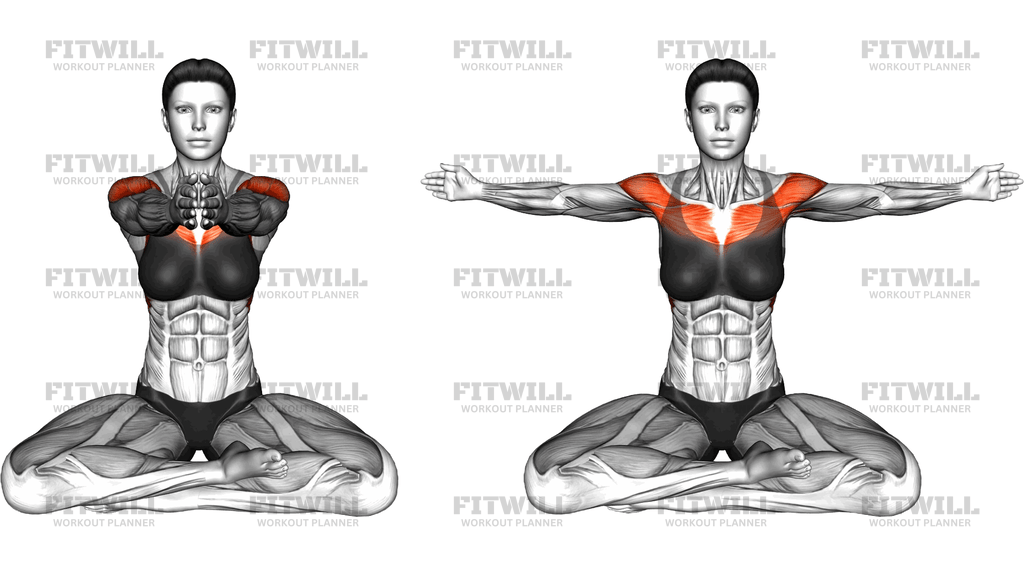
The Sitting Shoulder Stretch On A Chair is a simple overhead reach stretch performed from an upright seated position. You sit tall on a sturdy chair with your feet flat on the floor, then sweep both arms out to the sides and up overhead until your hands meet above your head with your arms fully straight. The seated base removes balance from the equation, so all of your attention can go into feeling the shoulders, upper back, and sides of the torso lengthen.
This stretch is especially useful for people who spend long hours at a desk, since prolonged sitting and typing tend to leave the shoulders rounded forward and the overhead reach restricted. It also suits older adults, office workers, and anyone in a rehabilitation or return-to-training phase who wants a gentle, low-load way to restore shoulder mobility without standing or getting on the floor.
The main targets are the deltoids and the muscles that run between the shoulder and neck, with the triceps and the lats lengthening as the arms reach fully overhead. Because the chair supports your spine, you can keep your ribs stacked over your pelvis instead of arching your lower back to fake extra range. That alignment is what separates a genuine shoulder stretch from a back-bending substitute.
Setup matters more than it looks. A chair without wheels, seated with your sitting bones grounded and feet about hip-width apart, gives you a stable platform. If the chair has a backrest, sitting slightly forward of it lets your shoulder blades move freely as the arms rise. Slouching or perching on the edge of the seat will shorten the very muscles you are trying to lengthen.
To perform it well, start with your hands resting beside your hips, then lift both arms out and up in a smooth arc until your palms touch overhead. Keep your neck relaxed, chin level, and shoulders drawn down away from your ears rather than shrugging up into the stretch. Breathe steadily and let the range improve gradually over several breaths instead of forcing the arms higher.
Use this stretch as a movement break during the workday, as part of a warm-up before pressing or pulling exercises, or in a cool-down after upper-body training. Hold each repetition for 15 to 30 seconds, repeat two to four times, and stay well short of any pinching sensation in the shoulder joint. Comfortable tension that eases as you breathe is the goal, not pain.
[ Workout Log & Planner ]
Put your next workout in Fitwill
Keep your plan and training log ready when you are.


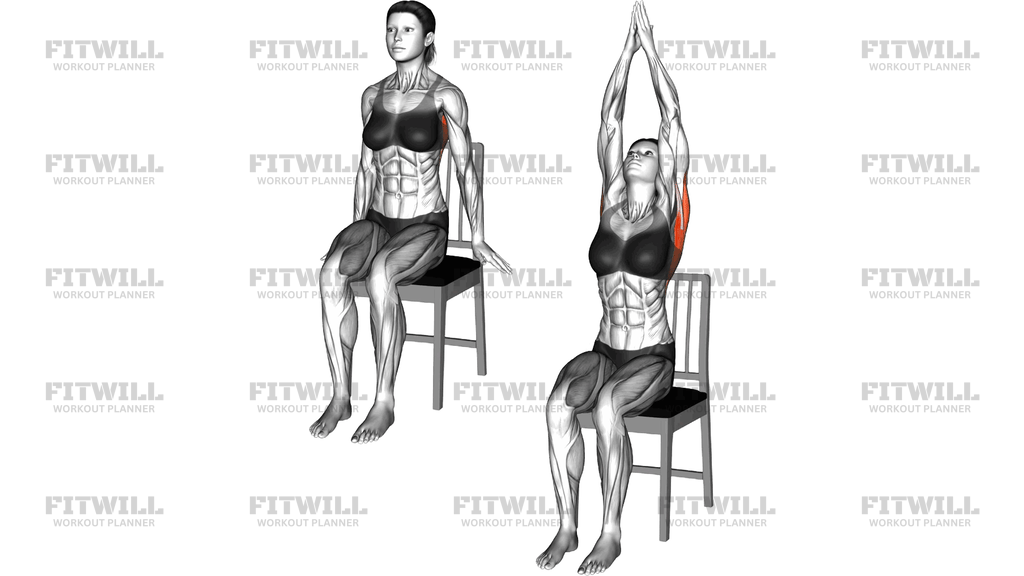
Instructions
- Sit on a sturdy, armless chair with your feet flat on the floor about hip-width apart and your sitting bones firmly planted on the seat.
- Lengthen your spine so you are sitting tall, and rest your hands on the seat beside your hips with your palms facing down or inward.
- Draw your shoulder blades gently down and back, and brace your core lightly so your ribs stay stacked over your pelvis.
- On an exhale, raise both arms out to the sides and up in a wide arc toward the ceiling.
- Continue lifting until your arms are fully straight overhead and your palms come together above your head.
- Keep your shoulders sinking away from your ears and your chin level so your neck stays long and relaxed.
- Hold the top position for 15 to 30 seconds, breathing slowly and letting the arms drift slightly higher as the shoulders release.
- Lower your arms back down along the same wide arc with control until your hands return beside your hips.
- Rest for a breath or two, then repeat for 2 to 4 repetitions, keeping the movement smooth and pain-free throughout.
Tips & Tricks
- If your shoulders shrug up as the arms rise, pause at the height where they stay down and work there for a few sessions before reaching higher.
- A common mistake is arching the lower back to push the hands higher; lightly tighten your abdominals to keep the torso upright and let the shoulders do the stretching.
- Keep the chair against a wall if it slides, and never use a chair with wheels or a swivel base for this stretch.
- If you feel a pinch at the front of the shoulder overhead, widen your arms slightly or lower the reach a few degrees instead of pushing through it.
- Try alternating emphasis by turning your palms to face each other before pressing up, which some people find easier on the shoulder joint.
- Exhale as you raise your arms and inhale at the top; holding your breath usually coincides with unnecessary tension in the neck and traps.
- If your mid back rounds as you reach, imagine growing taller through the crown of your head rather than leaning back.
- Sitting too far forward on the seat edge makes the pelvis tilt; reposition so your weight is even across both sitting bones before starting.
- Progress range slowly over weeks. A consistent daily reach with modest height beats one aggressive attempt that leaves the shoulder irritated.
Frequently Asked Questions
Which muscles does the Sitting Shoulder Stretch On A Chair target?
It primarily lengthens the deltoids and the muscles connecting the shoulder to the neck, including the upper traps. As the arms reach fully overhead, the triceps and lats also get a noticeable stretch.
Is the Sitting Shoulder Stretch On A Chair suitable for complete beginners?
Yes, it is one of the most accessible shoulder stretches because the chair provides balance support and the range is easy to self-regulate. Beginners should start with a modest overhead reach and only progress as comfort allows.
Why do my shoulders rise toward my ears when I reach overhead?
The upper traps often take over when the shoulders lack overhead mobility or when you rush the lift. Slow the arc down and consciously press your shoulder blades down before continuing to raise the arms.
What kind of chair should I use for this stretch?
Use a stable, armless chair with a flat seat and no wheels so it cannot roll out from under you. Sitting slightly forward of the backrest allows the shoulder blades to move freely.
How long should I hold the Sitting Shoulder Stretch On A Chair?
Hold the overhead position for 15 to 30 seconds per repetition and complete 2 to 4 rounds. For a desk break, even one or two gentle holds every hour can help counteract rounded shoulder posture.
Can I do this stretch if overhead reaching causes shoulder pinching?
Do not push through a pinch. Reduce the angle of the reach, widen your arms slightly, or turn your palms to face each other, and if the sensation persists, consult a qualified professional before continuing.
What is a good substitute if I do not have a chair available?
The same overhead reach can be done standing with your back against a wall, or seated on a bench or stability ball if you can keep your torso upright. The chair version simply makes the position easier to hold for longer.
Should my palms touch overhead, or can they stay apart?
Palms touching is the finished position shown in the exercise, but stopping just short of contact is fine if your current range does not allow it. The stretch comes from the arm position, not from forcing the hands together.
Is this stretch better before or after a workout?
It works well in both slots. Use it gently and briefly before upper-body pressing or pulling to prepare the shoulders, and hold it longer after training when the tissues are warm and receptive to a deeper stretch.
Why sit instead of standing to stretch the shoulders?
Sitting removes the balance and leg demands of a standing overhead reach, making it easier to keep the ribs stacked and the spine tall. That positioning directs the stretch into the shoulders instead of the lower back.