Sitting Forearms Stretch On A Chair
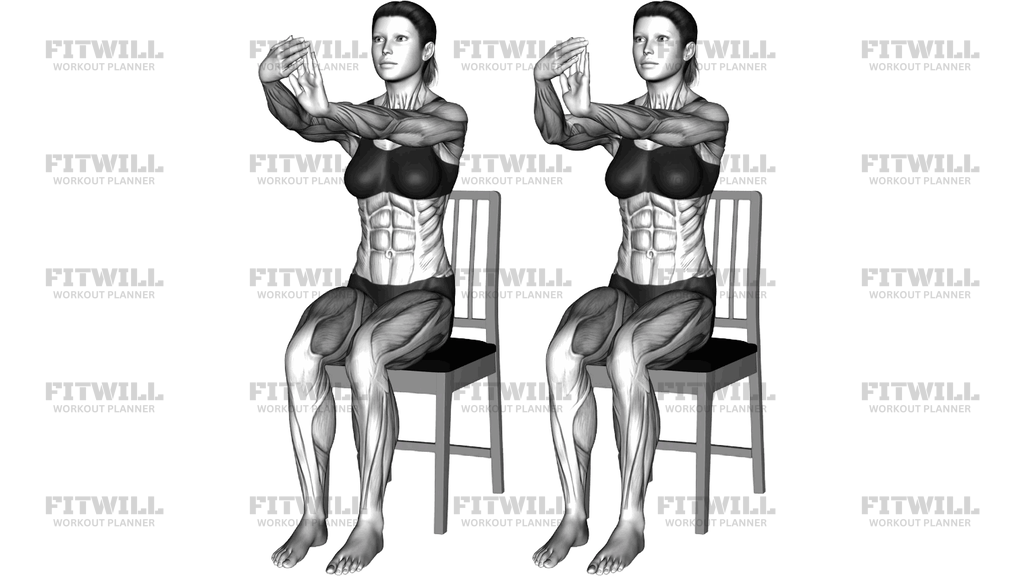
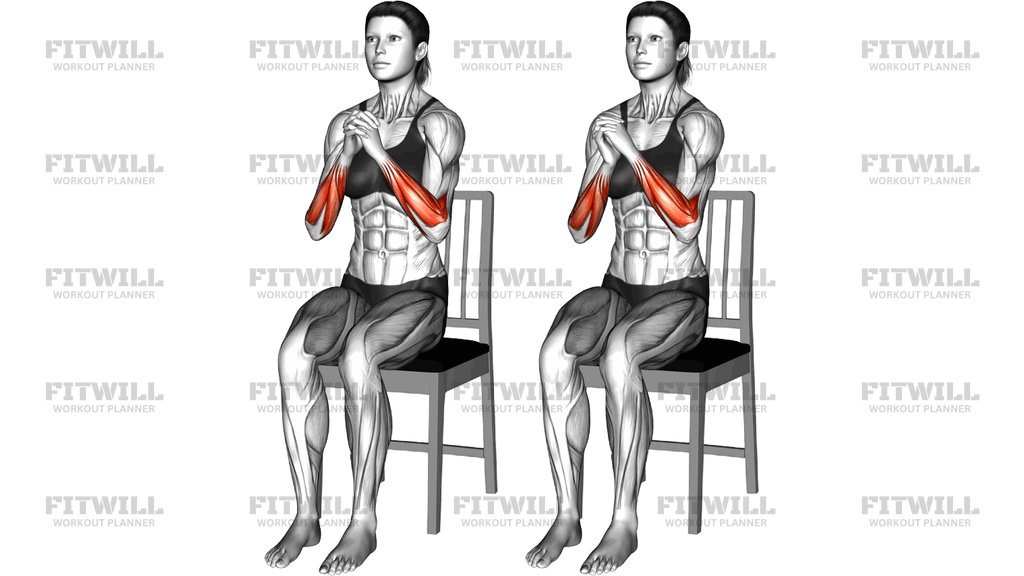
The Sitting Forearms Stretch On A Chair is a simple seated stretch that targets the muscles along the top of the forearms, especially the wrist extensors. You sit upright on a standard chair with your feet flat on the floor, extend both arms straight forward at about shoulder height, turn your palms to face away from you, and let your fingers drop down toward the floor. That position lengthens the extensor muscles that run from the outside of the elbow down to the wrist and hand.
This stretch is particularly useful for anyone who spends long hours typing, using a mouse, or gripping tools, because those activities keep the wrist extensors under constant low-level tension. It is also a common inclusion in warm-ups and cooldowns for lifting, racket sports, climbing, and golf, where the grip works hard and the outer forearm often accumulates tightness. Office workers and people who feel aching around the outside of the elbow after repetitive hand work tend to benefit the most from doing it several times a day.
The seated setup matters more than it might seem. Sitting on a chair with an upright torso and stable feet removes the balance demands of standing, so you can focus entirely on the sensation in the forearm instead of holding your body steady. Extending the arms forward at shoulder height puts the wrist joint at the end of a long, straight lever, which means even a small change in wrist angle produces a clear stretch. Keeping the shoulders relaxed and down, rather than shrugged toward the ears, helps the tension stay in the forearms where it belongs.
To execute it well, reach the arms forward without locking the elbows hard, rotate the palms outward until they face away from you, and then allow the hands to hinge down at the wrist so the fingers point toward the floor. You should feel a pull along the top of the forearm and possibly into the outer elbow. The stretch should be noticeable but never sharp or tingly. Hold for fifteen to thirty seconds while breathing steadily, then ease the wrists back to neutral before lowering the arms.
A few practical points will keep this stretch safe and effective. Move into the position gradually, because the wrist extensors are small muscles and respond poorly to aggressive yanking. If one side is tighter than the other, stretch each arm individually rather than forcing both wrists to the same depth. Anyone with a current wrist injury, recent forearm fracture, or persistent pain near the elbow should keep the range small and stop if symptoms worsen. The stretch works best when it feels like a gentle, sustained lengthening rather than a battle.
[ Workout Log & Planner ]
Put your next workout in Fitwill
Keep your plan and training log ready when you are.


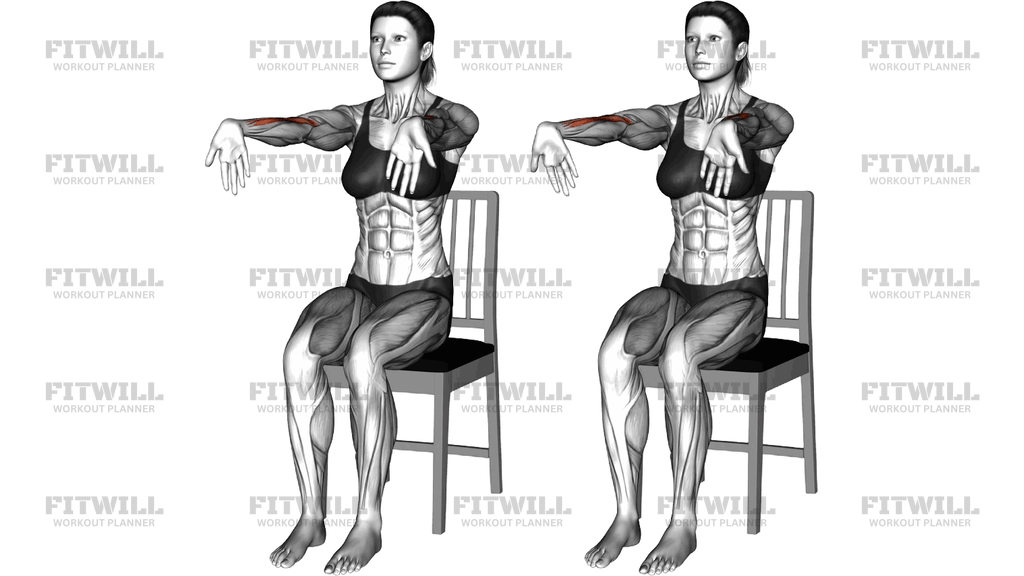
Instructions
- Sit on the front half of a sturdy chair with your feet flat on the floor, hip-width apart, and your sitting bones grounded evenly on the seat.
- Sit tall through the spine, let your shoulders drop away from your ears, and rest your hands on your thighs to start.
- Extend both arms straight forward to about shoulder height, keeping a soft bend in the elbows rather than locking them.
- Rotate your forearms so your palms face away from you, as if pushing the air in front of you.
- Hinge your hands down at the wrists until your fingers point toward the floor, letting the backs of the hands lengthen.
- Ease deeper only until you feel a clear pull along the top of the forearms and around the outer elbow, then hold that position.
- Keep breathing slowly and evenly through the hold, avoiding any tendency to hold your breath or shrug the shoulders.
- After fifteen to thirty seconds, slowly lift the hands back to neutral with palms facing away, then lower the arms and shake out the wrists.
- Repeat for a second hold if the forearms still feel tight, or work one arm at a time if one side is noticeably stiffer.
Tips & Tricks
- The most common mistake is dropping the whole hand by collapsing the arm instead of hinging at the wrist; keep the forearm still and let only the hand move.
- Watch for shoulders creeping up toward the ears as the arms extend; reset them down before deepening the wrist angle.
- If you feel the stretch only in the elbow and nothing in the forearm, try softening the elbow slightly, which often shifts the tension down the muscle.
- Do not force the fingers straight or pull them back with the other hand at full intensity; the seated double-arm version relies on wrist angle alone, and adding hand pressure too fast is what usually causes soreness afterward.
- Keep the elbows from flaring outward as the palms rotate away; the arms should stay roughly parallel to each other and the floor.
- Tingling in the fingers is a signal to back off immediately and reduce the wrist angle rather than pushing through it.
- If your chair has armrests that block the arms from reaching shoulder height, sit slightly forward or use a backless bench so the arms can extend freely.
- Stretch after grip-heavy work rather than right before maximum-effort gripping, since long static stretching immediately beforehand can temporarily reduce grip force.
Frequently Asked Questions
Which muscles does the Sitting Forearms Stretch On A Chair target?
It primarily lengthens the wrist extensors along the top of the forearm, with some stretch reaching the brachioradialis near the outer elbow. These are the muscles most heavily involved in gripping and wrist extension.
Why are the palms turned to face away in this stretch?
Rotating the palms outward and then letting the fingers drop changes the angle at the wrist so the extensor muscles on the back of the forearm are lengthened. With the palms facing down or in, the same stretch is much weaker.
Is the Sitting Forearms Stretch On A Chair good for beginners?
Yes, it is one of the most beginner-friendly forearm stretches because the chair provides a stable seat and the movement is small and easy to control. Beginners should simply start with a shallower wrist angle and shorten the hold to about fifteen seconds.
How long should I hold the Sitting Forearms Stretch On A Chair?
Fifteen to thirty seconds per hold works well for most people, and two to three holds per session is enough. For general tightness from desk work, repeating it a few times throughout the day is more useful than one long session.
Can I do this stretch one arm at a time instead of both arms together?
Absolutely, and it is often better if one forearm is tighter than the other. Extend a single arm forward, set the wrist angle to the depth that suits that side, and place the resting hand on your thigh for stability.
What should I do if I feel tingling in my fingers during the stretch?
Reduce the wrist angle until the tingling stops and settle for a milder pull along the forearm. Tingling suggests nerve involvement rather than muscle stretch, so pushing deeper is counterproductive.
How is this different from a standing forearm stretch?
The seated position removes balance demands and makes it easier to keep the shoulders relaxed and the torso still. The arm position and stretch angle are the same, but the chair version lets you focus entirely on the forearm sensation.
Should I do the Sitting Forearms Stretch On A Chair before or after training?
It fits best after grip-heavy sessions such as deadlifts, pull-ups, or racket sports, or as a break during long typing sessions. If you use it before training, keep the holds short so grip strength is not temporarily reduced.
Who should be careful with this stretch?
Anyone with an acute wrist injury, a recent forearm or wrist fracture, or diagnosed conditions like carpal tunnel syndrome should keep the range very gentle or consult a professional first. Pain near the elbow joint itself is a cue to stop rather than push deeper.