L Sit Legs Kick On A Chair
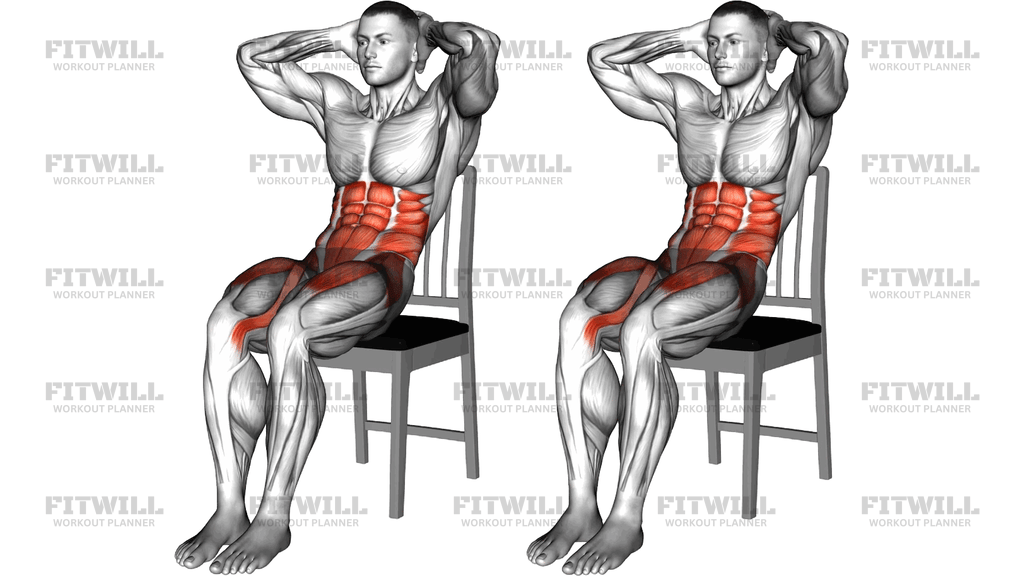
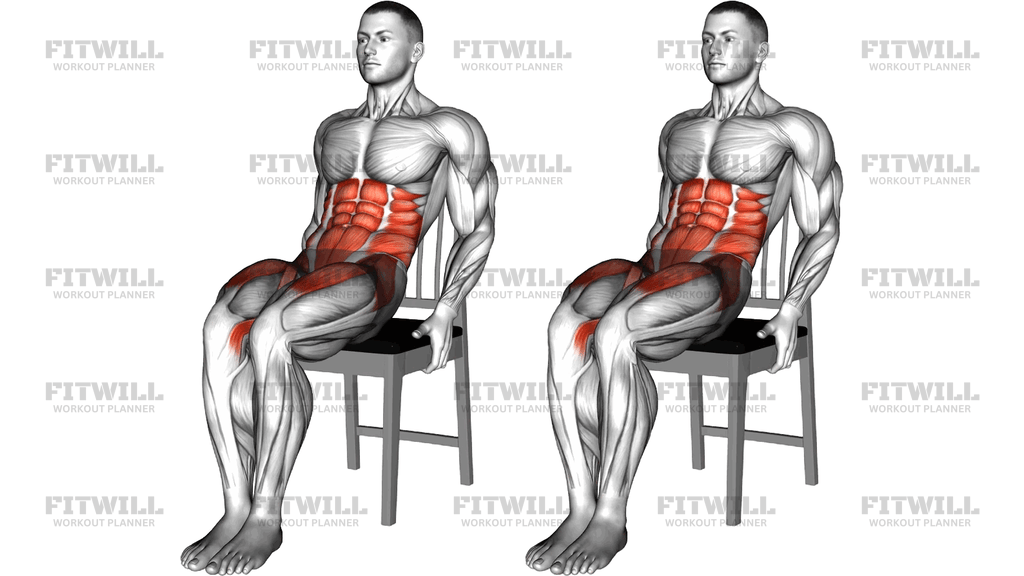
L Sit Legs Kick On A Chair is a seated bodyweight core exercise that uses nothing more than a sturdy chair. You sit tall with your hands gripping the front edge of the seat, press your weight down through your arms, and drive both legs out in front of you until they extend into an L-sit position, hovering just above the floor. It looks simple, but holding your legs up and kicking them out from a seated position puts steady tension on the hip flexors and lower abs in a way few floor exercises can match.
This movement is especially useful for people who struggle to lift their legs during hanging leg raises or L-sits. Because your body weight is supported by the chair rather than hanging from a bar, you can train the same hip flexion pattern with far less grip and shoulder demand. It also works well for office workers or anyone with limited equipment who wants a genuine core challenge from a chair.
The primary work comes from the hip flexors, which lift and hold the thighs up, with the lower abs stabilizing the pelvis and the quads helping straighten the knees as the legs kick out. Your arms and shoulders work isometrically the whole time, pressing down into the seat to keep your torso from sinking back as your legs rise.
Setup matters more than it seems. A chair without wheels, with a stable base and enough room behind you for your hands, is essential. Your grip should be on the front edge of the seat itself, fingers pointing forward, so your wrists stay in a comfortable line while you press down. If the chair tips or slides, the whole movement breaks down and your lower back takes the strain instead of your hips and abs.
To execute it well, lean your torso slightly forward as you press into the seat, then lift your thighs clear of the surface and kick both legs out together until the knees are straight and the feet point forward. Hold the extended position briefly, then lower the legs back down with control rather than dropping them. The tempo, not speed, is what makes this exercise effective.
Because the support and range are adjustable, this exercise scales nicely. Beginners can lift one leg at a time or keep the knees slightly bent, while more advanced trainees can hold the extended L position for longer counts or add slow leg kicks at the top. Stop the set if you feel the work shifting into your lower back instead of the front of your hips.
[ Workout Log & Planner ]
Put your next workout in Fitwill
Keep your plan and training log ready when you are.


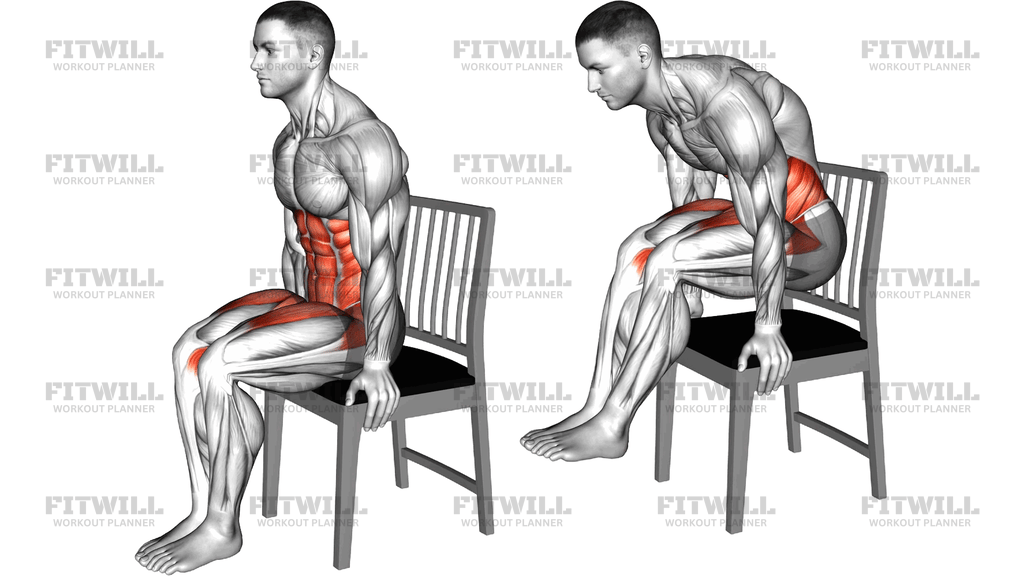
Instructions
- Sit sideways or facing forward on a sturdy, non-wheeled chair so both buttocks are fully supported and your knees are bent with feet flat on the floor.
- Place both hands on the front edge of the seat, fingers pointing forward, gripping firmly just outside your hips.
- Sit tall and brace your abs, pulling your ribs down slightly so your lower back is not arched before you start.
- Press down through your hands and lean your torso a few degrees forward to shift your weight onto your arms.
- Lift both thighs off the seat and kick your legs out in front of you together, extending the knees until your legs form an L shape with your torso and your feet hover above the floor.
- Pause briefly at the extended position with knees straight and toes pulled up or pointed forward, keeping your chest up and shoulders pressed down away from your ears.
- Bend your knees and lower your legs back down under control until your thighs settle on the seat and your feet return to the floor.
- Exhale as you kick the legs out, and inhale as you lower them back to the seat.
- Reset your grip and brace again between reps rather than bouncing straight into the next one.
- Start with 6-10 controlled reps, and keep one foot on the floor or work one leg at a time if both legs together is too difficult.
Tips & Tricks
- If your lower back rounds and aches when both legs kick out, reduce the lever by bending your knees slightly instead of forcing a straight-leg L position.
- Do not let your shoulders creep up to your ears as you press into the seat; push the chair away from you to keep the shoulder blades depressed.
- A common mistake is dropping the legs quickly after the kick, which removes the eccentric tension from the hip flexors; lower for a slow count of two to three seconds.
- Check the chair before every set: any wobble, sliding, or a seat edge that digs into your palms will pull your focus away from keeping the pelvis steady.
- Keep your weight forward on the seat as you lift. If your hips slide back and you end up perched on the tailbone, the abs stop doing their job and the movement becomes a hip hike.
- Point your knees and feet in the same direction on every kick; letting one leg flare outward usually means one hip flexor is doing more work than the other.
- If your wrists ache from gripping the seat edge, rest the heel of your hand just on the edge with fingers curled over the side instead of pressing flat across it.
- Warm up the hip flexors with a few seated knee lifts before attempting the full kick, since cold hips tend to compensate by arching the lower back.
- Progress by extending the pause at the top of the kick from one second to three before adding any repetitions.
Frequently Asked Questions
What muscles does L Sit Legs Kick On A Chair work?
The hip flexors do most of the lifting, while the lower abs stabilize the pelvis and the quads straighten the knees during the kick. The arms and shoulders work isometrically to press your body down into the seat.
Is L Sit Legs Kick On A Chair suitable for beginners?
Yes, provided the chair is stable. Beginners should start with one leg at a time or keep the knees bent during the kick, then progress to the full two-legged L position as hip flexor strength improves.
Why do my legs lift but my lower back hurts during this exercise?
That usually means your pelvis is tipping forward because your abs are not braced. Stop, reset with ribs pulled down, and try a smaller kick with slightly bent knees before extending fully.
How is L Sit Legs Kick On A Chair different from hanging leg raises?
Both train hip flexion, but the chair supports your body weight through your hands, which removes the grip and shoulder strength demands of hanging. This makes it easier to focus on the hips and abs without your grip failing first.
What kind of chair should I use?
Use a fixed, four-legged chair with a flat seat and no wheels or casters. Push it against a wall if the floor is slippery, and avoid chairs with armrests that block your hands from gripping the seat edge.
How long should I hold the extended L position?
Start with a one-second pause at the top of each kick. Once you can complete ten clean reps, extend the hold to three to five seconds instead of adding more reps right away.
Can I substitute L Sit Legs Kick On A Chair if I have no chair?
A sturdy bench, ottoman, or even the edge of a firm bed works as long as your hands can grip the surface and it will not tip. Seated knee tucks on the floor with hands behind your hips are another option.
Should my feet touch the floor at the bottom of each rep?
Yes, let your feet lightly touch down and reset your brace between reps. This keeps each kick starting from a controlled position instead of using momentum from the previous rep.
How many sets and reps should I do?
Two to three sets of 6-10 controlled reps is a solid starting point. Because the hip flexors fatigue quickly, prioritize smooth, complete kicks over pushing to failure.