Sitting Overhead Stretch On A Chair
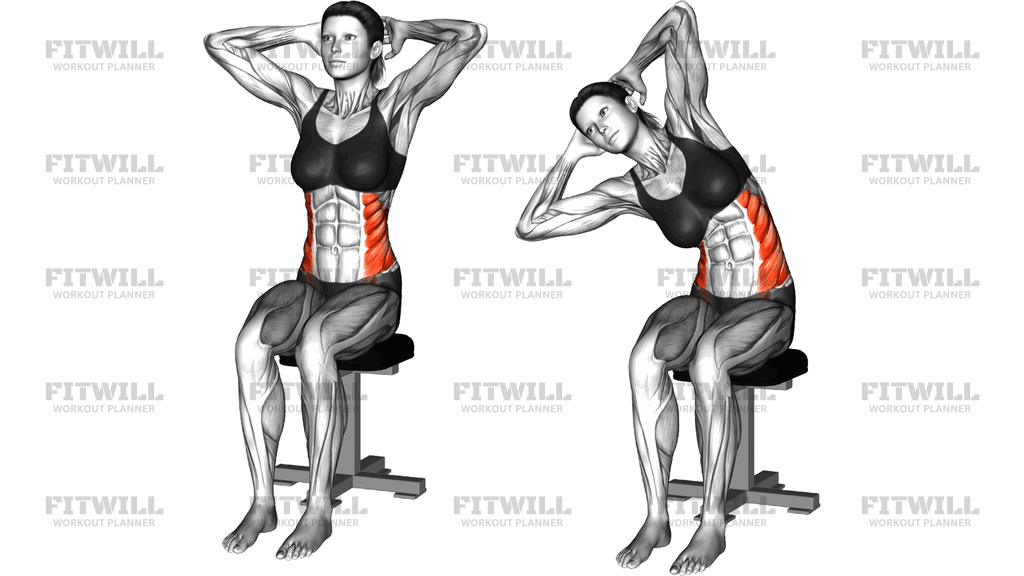
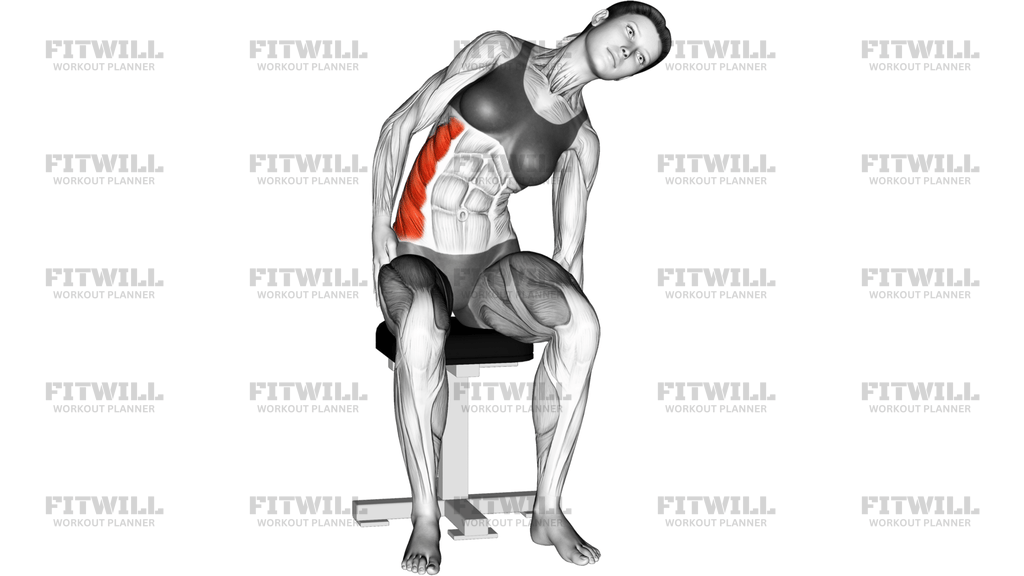
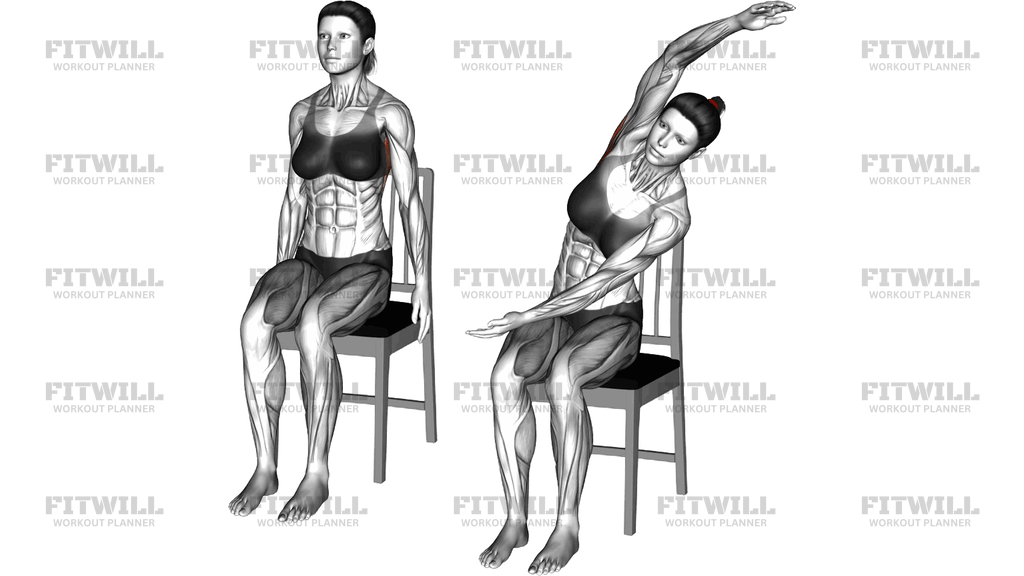
The Sitting Overhead Stretch On A Chair is a seated lateral stretch performed from an upright chair, where you reach one arm straight overhead and lean sideways to open up the entire side of your body. Because you are seated with your hips planted, the chair removes balance from the equation and lets you focus purely on lengthening the muscles that run from your hip up through your waist and into your armpit.
This stretch primarily targets the obliques along the side of your trunk, along with the quadratus lumborum deep in your lower back. When the arm is fully overhead, the reach also lengthens the lats and the tissues around the rib cage, which is why the stretch is often felt from the hip all the way to the wrist on the reaching side.
It is especially useful for people who spend long hours sitting at a desk, since prolonged sitting tends to stiffen the sides of the trunk and compress the lower back. It also suits office workers fitting in quick movement breaks, older adults who want a safe stretch without getting on the floor, and lifters looking to open up their lats and waist after back or core training.
Setup matters more than most people expect. Sit tall on the front half of the chair with both feet flat on the floor, and keep your hips square and level throughout. If your hips shift or one cheek lifts off the seat as you lean, the stretch leaks out of the waist and puts twisting stress on the lower back, so anchor the pelvis first and move from the trunk.
To perform it well, reach one arm straight up toward the ceiling with your palm facing inward, then bend sideways away from that arm rather than forward. Think of pushing your hips down into the chair while your fingertips travel up and over in a long arc. The other hand can rest on your thigh or the edge of the seat for light support. You should feel a clean pull along the side of your ribs and waist, not a pinching sensation in your shoulder or lower back.
Keep the stretch mild to moderate and breathe steadily while you hold it, then repeat on the other side. A hold of twenty to thirty seconds per side works well, and doing one to two rounds makes a practical addition to a warm-up, a cooldown, or a midday reset at your desk. Avoid forcing the lean; the goal is a comfortable, even stretch, not touching your ear to your shoulder or folding as far sideways as possible.
[ Workout Log & Planner ]
Put your next workout in Fitwill
Keep your plan and training log ready when you are.


Instructions
- Sit sideways-free on a sturdy chair with your feet flat on the floor about hip-width apart and sit tall on the front half of the seat so your back is off the backrest.
- Place both hands lightly on your thighs, square your hips forward, and level them so both sit bones stay in contact with the seat.
- Reach your right arm straight up toward the ceiling, palm facing in toward your body, and lengthen through the fingertips before you lean.
- Brace your midsection lightly and keep your chest facing forward so you do not twist as you move.
- Bend slowly to your left, letting the raised arm arc up and over your head while your left hand rests on your thigh or the seat edge for support.
- Continue leaning until you feel a steady stretch along the right side of your waist, ribs, and armpit, keeping both hips pressed into the chair.
- Hold the end position for twenty to thirty seconds, breathing slowly and letting the stretch ease slightly with each exhale.
- Return upright by drawing your torso back over your hips under control, then lower the right arm back to your thigh.
- Reset your posture, then repeat the same sequence with your left arm overhead, bending to the right.
- Perform one to two stretches per side, keeping the intensity comfortable throughout.
Tips & Tricks
- If you feel the stretch mostly in your shoulder joint instead of your waist, lower the reaching arm slightly and think about lengthening the ribs away from the hip rather than cranking the arm sideways.
- A common mistake is letting the opposite hip lift off the seat as you lean, which shortens the stretch; check that both sit bones stay planted and reduce the lean until they do.
- Do not let your torso rotate forward toward your lap. If your chest turns down, you are losing the side-bend angle, so keep your collarbone facing the same direction it started.
- Skip the arm raise at first if your shoulder is stiff or cranky. Bending sideways with both hands on your thighs still gives you a useful oblique stretch, then add the overhead reach as mobility allows.
- Avoid pulling your head sideways with the reaching hand. The arm should act as a long lever extending from your ribs, not as a way to yank the neck into the bend.
- If the chair slides on a hard floor, place it against a wall or on a mat so it cannot shift while you lean.
- Keep your neck long and your gaze forward. Letting the head drop toward the shoulder adds neck strain without improving the stretch at the waist.
- The reach should feel like a smooth arc up and over, not a hard side crunch. If you feel compression in your lower back on the leaning side, come out of the stretch a few degrees.
- Exhale as you lean into the stretch and keep your breathing slow during the hold; holding your breath tends to tense the very muscles you are trying to lengthen.
Frequently Asked Questions
Which muscles does the Sitting Overhead Stretch On A Chair target?
It mainly lengthens the obliques along the side of your trunk and the quadratus lumborum in your lower back. With the arm fully overhead, you also feel it in the lats and the tissues around the ribs and armpit.
Why is this stretch done seated on a chair instead of standing?
Sitting anchors your hips and removes the balance demands of a standing side bend, so you can focus on the stretch along your waist. It also makes the movement accessible if standing is uncomfortable or tiring.
Is the Sitting Overhead Stretch On A Chair good for beginners?
Yes, it is one of the easiest side-body stretches to learn because the chair provides support and the range is easy to limit. Beginners should start with a smaller lean and no more than a mild stretch sensation.
How far sideways should I lean during the Sitting Overhead Stretch On A Chair?
Lean only until you feel a comfortable pull along the side of your waist and ribs. Depth varies from person to person, and pushing past a moderate stretch risks straining the lower back or shoulder.
Why do both hips need to stay on the chair?
If one hip lifts as you lean, your trunk twists and the stretch shifts away from the obliques into the lower back. Keeping the hips level keeps the side-bend angle honest and the stretch where you want it.
My shoulder hurts when I reach overhead. Can I still do this stretch?
Try keeping both hands on your thighs and simply bending sideways, which still stretches the waist without loading the shoulder. If overhead reaching continues to cause pain, stop and get the shoulder assessed before forcing the position.
What can I use if I do not have a chair available?
Any stable seat works, such as a bench or the edge of a sturdy bed, as long as your feet can rest flat on the floor. The key requirements are a firm, level surface and a seat that will not tip or slide.
How long should I hold the Sitting Overhead Stretch On A Chair?
Twenty to thirty seconds per side is a solid standard, repeated once or twice. Shorter holds of about fifteen seconds work fine as a brief desk break between work sessions.
Should I do this stretch before or after a workout?
It fits both. Use gentle, shorter holds beforehand to loosen the sides of your trunk before lifting or core work, and use longer holds afterward to settle the waist and lats while you are warm.
Is it normal to feel the stretch all the way up to my armpit?
Yes. When the arm is overhead, the lats and the connective tissue along the ribs are part of the lengthened line, so the sensation commonly runs from the hip up to the armpit. It should feel like an even pull, not a sharp point of pain.