Dumbbell Lying Triceps Extension On Floor (Version)
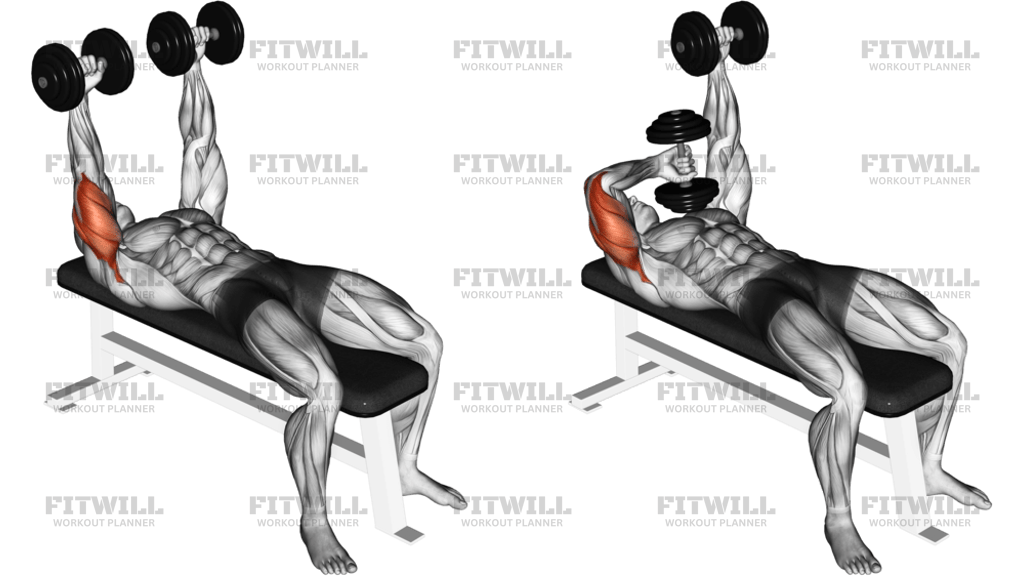
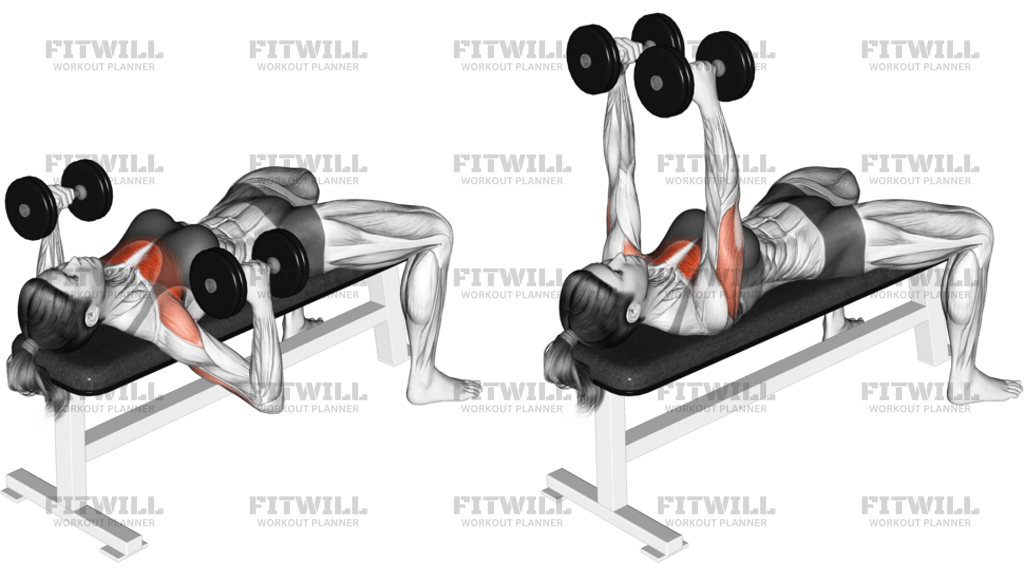
The Dumbbell Lying Triceps Extension On Floor is a triceps isolation exercise performed flat on the ground with a dumbbell in each hand. With your knees bent and feet planted, you press the dumbbells to a straight-arm position over your chest, then bend only at the elbows to lower the weights back and down toward the floor beside or slightly behind your head. The elbows stay pointed toward the ceiling throughout, so the triceps do all of the work as the forearms swing through an arc.
This movement is a strong choice for anyone who wants dedicated triceps work without a bench. Because you are lying on the floor, the range of motion stops naturally once your upper arms touch the ground, which gives you a built-in depth limit and a clear sense of where the rep ends. That makes it friendlier for people who find bench-based skull crushers uncomfortable on the shoulders or elbows, and it also makes the exercise easy to set up at home with nothing more than a pair of dumbbells and floor space.
The triceps brachii, especially the long head, is the prime mover here. The overhead lowering path places the long head in a stretched position, which is why this angle is so effective for the back of the arm. Your anterior shoulders and the small stabilizing muscles around the shoulder joints assist with controlling the dumbbells, and your core works lightly to keep your ribs from flaring as you lower.
Setup matters more than most people expect. Keeping your knees bent and feet flat on the floor helps you maintain a neutral, comfortable position through your lower back, and keeping the elbows stacked over the shoulders keeps tension on the triceps rather than letting it drift into the shoulder joint. If your elbows wander forward or outward as the weights get heavy, the exercise quietly becomes a pressing movement and the triceps lose the emphasis.
To perform it well, move at the elbow joint only. Lower the dumbbells under control until the backs of your upper arms are near or lightly touching the floor, pause for a beat without relaxing, then drive the weights back up by straightening the elbows until your arms are extended over your chest. Squeeze the triceps at the top without locking out aggressively.
This exercise fits well as a secondary triceps movement after pressing work, or as the main triceps builder in a minimalist home program. It also works nicely as a teaching exercise, since the floor gives immediate feedback about where your arms are relative to your torso and helps you learn what a true elbow-dominant extension feels like.
[ Workout Log & Planner ]
Put your next workout in Fitwill
Keep your plan and training log ready when you are.


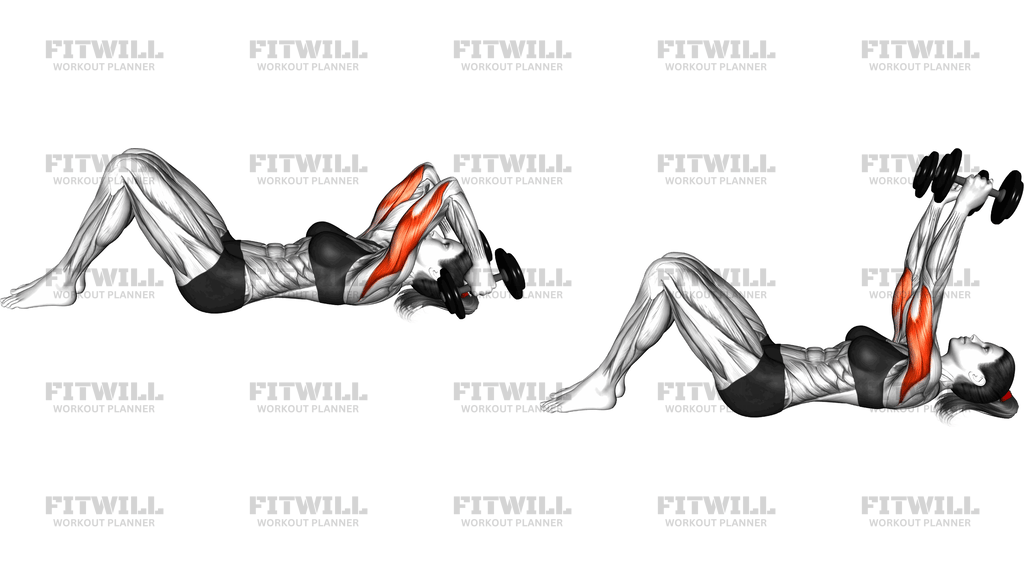
Instructions
- Lie flat on your back on the floor with your knees bent and your feet flat on the ground, hip-width apart.
- Hold a dumbbell in each hand with a neutral grip (palms facing each other) and press the weights straight up until your arms are extended over your chest.
- Brace your core lightly and pull your ribs down so your lower back stays comfortable against the floor.
- Point your elbows up toward the ceiling and keep your upper arms roughly perpendicular to the floor for the whole set.
- Bend only at the elbows and lower the dumbbells in a controlled arc back toward the floor beside your head.
- Continue lowering until the backs of your upper arms are close to or lightly touching the floor, and feel the stretch along the back of the arms.
- Pause briefly at the bottom without relaxing, then extend your elbows to press the dumbbells back to the starting position over your chest.
- Squeeze your triceps at the top of each rep, stopping just short of a hard elbow lockout.
- Exhale as you extend the elbows, inhale as you lower the weights back down.
- Finish the set by lowering the dumbbells with control to your chest, then sit up or roll to one side to put them on the floor safely.
Tips & Tricks
- If your elbows drift toward your ears as the dumbbells lower, the tension shifts from the triceps to the shoulders. Keep the upper arms vertical and think of the elbows as hinges fixed in place.
- Elbows flaring wide is the most common fault on this setup. Turn your arms slightly so the inner plates of the dumbbells track close together, and the path will stay cleaner.
- Do not rush the bottom portion. Dropping the weights toward the floor is the fastest way to bounce off the ground and lose the stretch that makes this angle valuable.
- Choose moderate weights. Because the dumbbells travel over your face and head, a rep you can control for the full range beats a heavier pair you can only half-rep.
- If your lower back arches off the floor, bend your knees more firmly and drive your feet gently into the ground to settle your pelvis.
- A neutral, palms-facing grip is usually the most elbow-friendly option for this movement. If you feel elbow discomfort, check the grip and the speed of the lowering phase before changing anything else.
- Lightly touching the upper arms to the floor at the bottom gives a consistent depth marker, but do not slam or rest heavily between reps or the triceps lose tension.
- Keep your head resting on the floor instead of lifting it to watch the dumbbells. Watching your arms can pull your neck into a strained position for an entire set.
- When your triceps fatigue, the elbows tend to drift forward into a half press. If that happens, stop the set rather than letting the shoulders take over.
Frequently Asked Questions
Which muscles does the Dumbbell Lying Triceps Extension On Floor work?
The triceps brachii is the primary muscle, with strong emphasis on the long head because the weights travel back behind the line of the shoulders. The front of the shoulders helps stabilize, and the core works lightly to hold your torso position.
Why do this on the floor instead of on a bench?
The floor gives you a natural stopping point when your upper arms reach the ground, which limits range safely and makes depth consistent rep after rep. It also removes the need for a bench, so the exercise works well in minimal home setups.
Is the Dumbbell Lying Triceps Extension On Floor safe for beginners?
Yes, as long as you start with light dumbbells and learn the elbow-only movement pattern first. Because the weights pass over your head, beginners should prioritize control over load from the very first set.
How far back should I lower the dumbbells?
Lower them until the backs of your upper arms are near or lightly touching the floor, feeling a stretch in the triceps. Going deeper than that usually forces the elbows to move and shifts stress toward the shoulders.
What grip should I use on the dumbbells?
A neutral grip with palms facing each other is the standard choice and keeps the wrists in a comfortable, stable position. It also helps the two dumbbells track close together through the arc.
Why do my shoulders take over during this exercise?
That usually means your elbows are drifting back or out as the weights lower, turning the movement into a partial press. Keep your upper arms vertical and reduce the weight until you can hold the elbow position for every rep.
Can I do the Dumbbell Lying Triceps Extension On Floor if I have elbow discomfort with skull crushers?
Many people tolerate the floor version better because the range stops at the ground and the stretch is slightly shorter. Use a neutral grip, slow the lowering phase, and use a lighter weight, and stop if discomfort persists.
How many reps and sets should I use?
Two to four sets of 8 to 15 controlled reps works well for most training goals. Because the dumbbells travel over your face, stay a few reps shy of technical failure rather than grinding to a limit.
What can I use if I don't have dumbbells?
A single dumbbell held with both hands, an EZ barbell, or a resistance band anchored behind you can all recreate the same extension pattern. The key detail to preserve is the upper arms staying vertical while the forearms swing.
How do I put the dumbbells down safely after a set?
Lower the weights to your chest with your elbows bent, then sit up or roll to one side and place them on the floor. Do not drop them from the extended position over your head or torso.