Seated Neck Rotation
The Seated Neck Rotation is a gentle mobility and stretching exercise for the muscles that turn and support the head, performed from an upright cross-legged position on the floor. You simply sit tall, relax your shoulders, and rotate your head from side to side through a comfortable range, letting the neck do the work while the rest of the body stays quiet. Because it requires no equipment, it can be done almost anywhere, which makes it one of the easiest ways to look after a stiff neck during the day.
This movement targets the sternocleidomastoid and the deep rotator muscles of the cervical spine, along with the upper trapezius, which is highlighted across the top of the shoulders and up the sides of the neck. When these muscles get tight from long hours at a desk, driving, or looking down at a phone, turning the head to check a blind spot or look over your shoulder can feel restricted and uncomfortable. Slow, deliberate rotation helps maintain the mobility those everyday actions depend on.
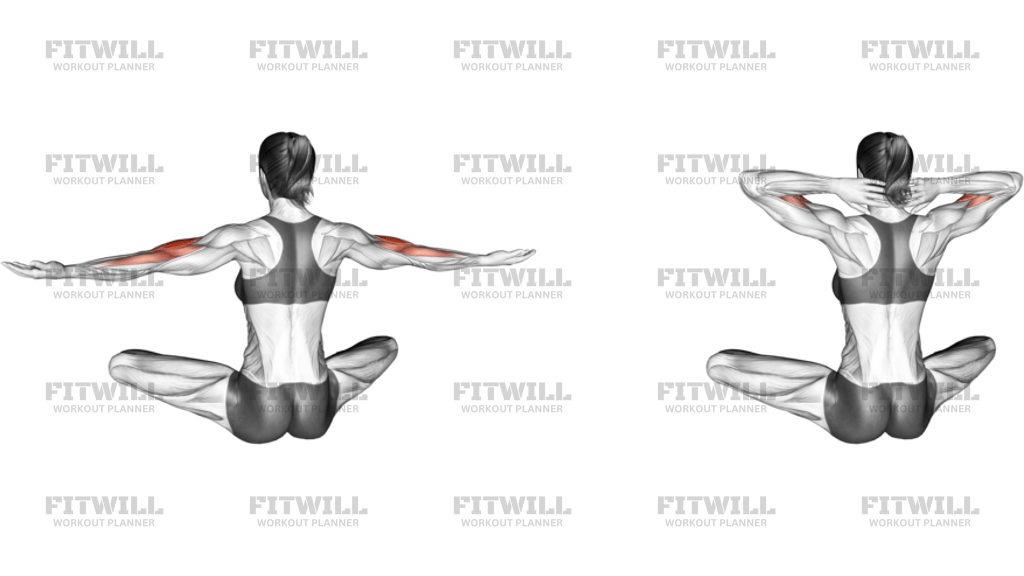
The seated setup matters more than it looks. Sitting cross-legged with a tall spine gives the neck a stable base, so the rotation happens at the cervical vertebrae rather than being borrowed from a slouching chest or a twisting torso. Keep your hands resting lightly on your knees or thighs and let your arms stay completely passive throughout the set.
To perform it well, imagine your nose tracing a slow, smooth arc from one shoulder toward the other. The temptation is to rush or to force the chin past the shoulder, but the neck responds much better to patience than to pushing. Move only as far as feels easy, pause briefly at the end of the turn, and let the head come back to center before changing sides.
This exercise fits naturally into a morning routine, a warm-up before upper-body training, or a short movement break during a long workday. It is also a common choice for people easing back into training after long periods of sitting, since it reintroduces rotation without load. Anyone recovering from a neck injury or experiencing pain, dizziness, or tingling should check with a healthcare professional before adding it to their routine.
Fitwill
Log Workouts, Track Progress & Build Strength.
Achieve more with Fitwill: explore over 9600 exercises with images and videos, access built-in and custom workouts, perfect for both gym and home sessions, and see real results.
Start your journey. Download today!




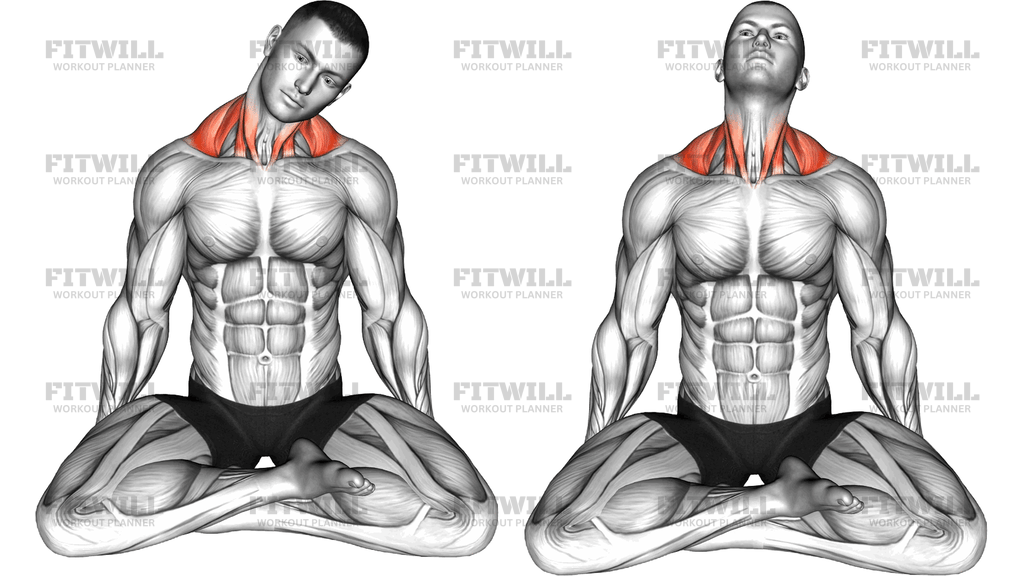
Instructions
- Sit on the floor in a comfortable cross-legged position, resting your hands lightly on your knees or thighs.
- Sit up tall through the crown of your head and let your shoulders drop away from your ears before you begin.
- Brace your core lightly and keep your chest facing forward so your torso stays square and does not twist with your head.
- Inhale, then as you exhale, slowly rotate your head to one side, leading the turn with your chin and eyes.
- Stop turning at the point where you feel a mild stretch along the side and back of your neck, and hold there for a moment.
- Keep your jaw relaxed and your shoulders level throughout the turn rather than hiking the shoulder you are rotating toward.
- Slowly rotate your head back through center without pausing or letting it swing, then continue to the opposite side.
- Breathe steadily and evenly the whole time, exhaling as you turn into each rotation.
- Alternate sides for the desired number of repetitions, keeping the speed slow enough that each turn takes several seconds.
- Finish by returning your head to a neutral, forward-facing position and taking a breath before standing up.
Tips & Tricks
- Lead each turn with your eyes rather than dragging your chin around; letting your gaze go first usually produces a smoother rotation.
- The most common mistake is letting the shoulders creep upward, which shortens the very muscles you are trying to mobilize. Reset your shoulder position after every few repetitions.
- If your range is lopsided, spend extra repetitions on the stiffer side, but never force past the point where the stretch becomes sharp.
- Keep the rotation purely horizontal. Tilting the ear toward the shoulder changes this into a side flexion stretch and shifts the work to different muscles.
- Avoid dropping the head backward or letting the chin jut forward as you tire; imagine your head rotating on a perfectly level turntable.
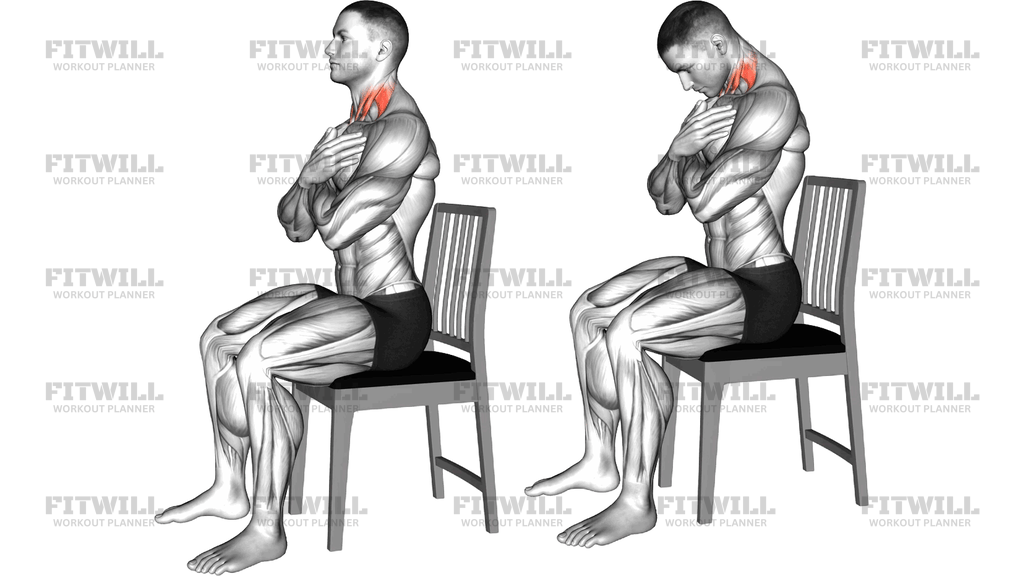
- If sitting cross-legged bothers your hips or knees, perform the same rotation while seated upright on a firm chair with both feet flat on the floor.
- Treat the hold at the end of each turn as the productive part of the rep. A short pause under a mild stretch does more for a stiff neck than the number of reps does.
- Do this before pressing, pulling, or overhead work as part of your warm-up, since free neck rotation makes bracing and head position under load more comfortable.
Frequently Asked Questions
What muscles does the Seated Neck Rotation stretch and mobilize?
It primarily works the rotators of the cervical spine, including the sternocleidomastoid, while the upper trapezius and levator scapulae are engaged and stretched along the top and sides of the neck.
Is the Seated Neck Rotation good for beginners?
Yes, it is one of the most beginner-friendly neck drills because it uses no load and your own comfort sets the range. Start with small, slow turns and let the range improve naturally over time.
Why is the Seated Neck Rotation done cross-legged instead of standing?
Sitting cross-legged gives you a stable, grounded base so the torso stays quiet and the rotation comes from the neck itself. An upright seated position also makes it easier to notice if you start slouching or twisting.
Should I use my hands to pull my head further into the rotation?
No, keep your hands resting passively on your knees or thighs. Pulling on the head adds pressure to the cervical spine, and the mild stretch from an active turn is all this exercise needs.
How far should I rotate my head during the Seated Neck Rotation?
Turn only until you feel a mild stretch along the side of the neck, typically to about where your chin lines up over your shoulder. Forcing the head past a comfortable end range adds risk without benefit.
What is the most common mistake with the Seated Neck Rotation?
Rushing the reps and letting the shoulders rise toward the ears. Both turn a controlled neck rotation into a quick head swing, so slow the tempo down and check your shoulder position between reps.
How many repetitions of the Seated Neck Rotation should I do?
Around 5 to 10 slow rotations per side, once or twice a day, is a practical starting point. On days when your neck feels especially stiff, a few extra gentle reps are usually enough.
Can I do the Seated Neck Rotation if my hips are too tight to sit cross-legged?
Yes, simply sit on a firm chair with both feet flat on the floor and keep the same tall posture. The neck movement is identical; only the seat changes.
When should I avoid the Seated Neck Rotation?
Skip it if you feel pain, dizziness, numbness, or tingling during the movement, or if you have a recent neck injury. Check with a healthcare professional before returning to neck work in those situations.