Dumbbell Decline Shrug Version 2
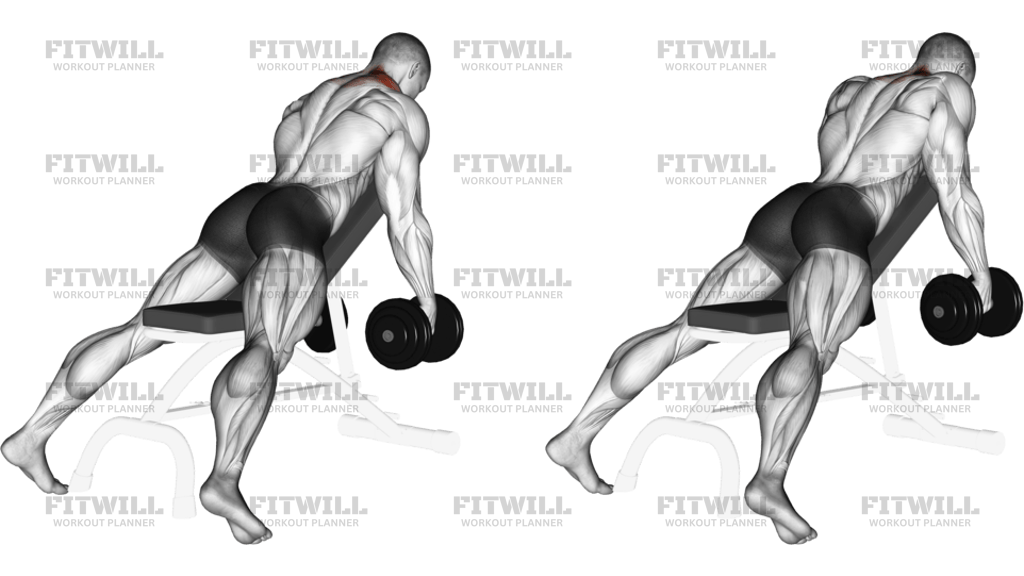
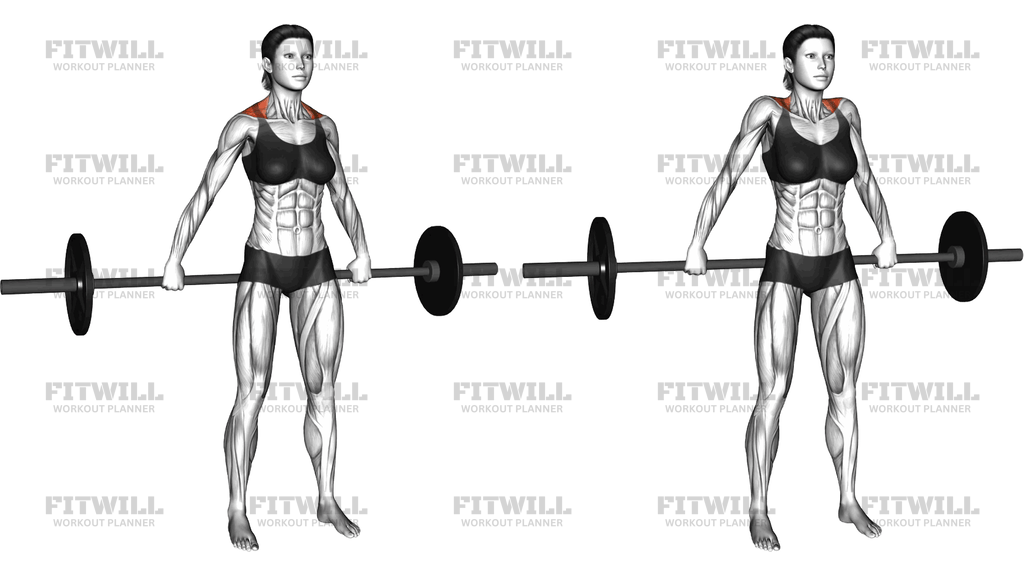
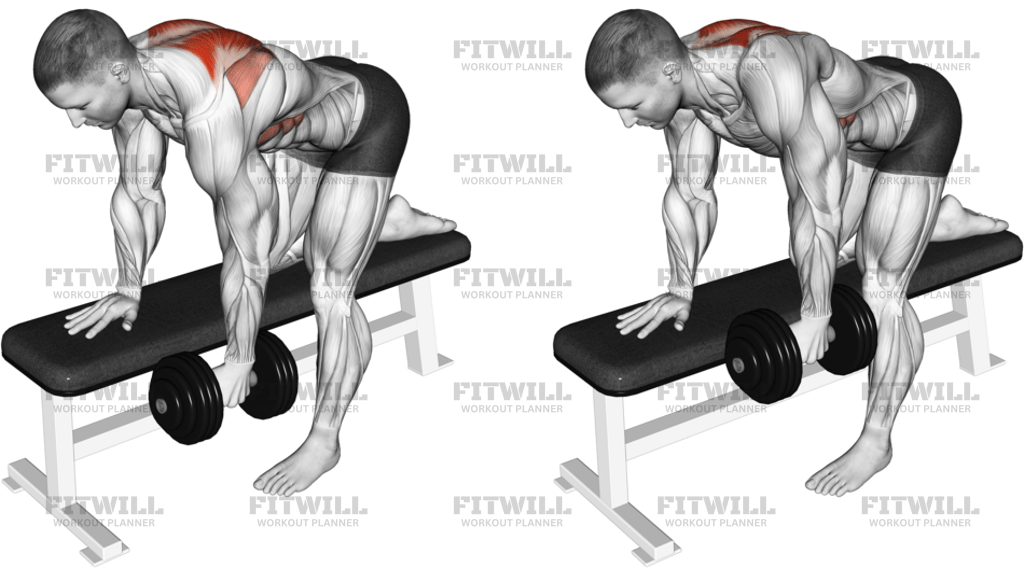
Dumbbell Decline Shrug Version 2 is a chest-supported dumbbell shrug done face down on a decline bench. The image shows the torso fixed against the pad with the arms hanging straight down, which is exactly what makes this variation useful: the body cannot swing the weight, so the upper traps have to do the lifting. Rhomboids, rear delts, and forearms assist by stabilizing the shoulder girdle and holding the dumbbells steady.
The supported setup changes the exercise in an important way. Instead of bracing hard through the lower back and hips like you would in a standing shrug, you can focus on pure scapular elevation. That makes the movement a good choice when you want upper-trap work without turning the set into a full-body heave. It is also helpful after presses or pulls when you want to train the traps without more spinal fatigue.
Set the bench so your chest and upper abdomen are supported and your arms can hang freely toward the floor. Plant your feet wide enough to keep the body stable, then let the shoulders relax at the bottom without collapsing the neck forward. From that stretched position, shrug both shoulders straight up toward your ears. The elbows stay nearly locked the whole time, and the dumbbells should travel in a clean vertical line rather than drifting back into a row.
The top of the rep should feel like a short, deliberate squeeze, not a roll or a jerk. Lower the dumbbells slowly until the traps lengthen again, then repeat with the same path and tempo. If the chest loses contact with the pad, the elbows start bending, or the shoulders begin circling, the load is too heavy or the bench position is off. Keep the chin lightly tucked and the neck long so the shrug happens through the traps instead of through tension in the neck.
Use this exercise as accessory work for trap size, upper-back thickness, and carryover to deadlifts, carries, and contact-sport posture. It works best when the reps are smooth, the range is controlled, and the shoulders move straight up and down on every repetition. Small, consistent reps are the goal here, not momentum.
[ Workout Log & Planner ]
Put your next workout in Fitwill
Keep your plan and training log ready when you are.


Instructions
- Set the bench so your chest and upper abdomen are supported and your arms can hang straight down with a dumbbell in each hand.
- Lie face down on the pad, plant your feet wide on the floor, and keep your torso glued to the bench.
- Let the shoulders settle low at the bottom while keeping your neck long and your chin slightly tucked.
- Brace lightly through the midsection so the ribs do not lift off the pad as you start the rep.
- Shrug both shoulders straight up toward your ears without bending your elbows or pulling the dumbbells backward.
- Pause for a brief squeeze at the top while the weights stay under control.
- Lower the shoulders slowly until the traps lengthen and the dumbbells return on the same vertical path.
- Reset at the bottom with the torso still against the bench and repeat for smooth, even reps.
Tips & Tricks
- Keep the dumbbells directly under your shoulders; if they drift forward or back, the set starts turning into a row.
- Drive the shrug straight up instead of circling the shoulders so the upper traps stay on the work.
- Use only a short pause at the top; a long hold usually turns into neck tension or torso movement.
- Keep the elbows softly locked for the entire rep so the biceps do not take over.
- Plant the feet wide and steady so your hips do not twist when the weights get heavy.
- Lower the dumbbells under control from every rep; bouncing off the bottom removes most of the trap tension.
- Keep the chin lightly tucked so the neck stays long instead of jutting forward.
- If the bench digs uncomfortably into the ribs or shoulders, adjust the chest position or choose a lighter angle.
Frequently Asked Questions
What muscles does Dumbbell Decline Shrug Version 2 work?
It mainly trains the upper traps. The rhomboids, rear delts, and forearms help stabilize the shoulder girdle and keep the dumbbells moving cleanly.
Is Dumbbell Decline Shrug Version 2 good for beginners?
Yes, if you start light and keep the chest-supported setup stable. It is easier to control than a standing shrug because you cannot use much body momentum.
Should I shrug the shoulders or pull the elbows back?
Shrink the shoulders straight up. If the elbows pull back, the rep turns into a row and the traps lose the main load.
How heavy should I go?
Use a weight that lets you keep the chest on the bench, the elbows nearly straight, and the shrug path vertical from the first rep to the last.
What is the most common mistake in this shrug?
The usual mistake is rolling the shoulders or using too much load, which makes the movement jerky and shifts work away from the upper traps.
Why use a decline bench instead of standing?
The bench removes most of the ability to cheat with the hips, back, or knees, so the traps have to produce the movement more directly.
Should my shoulder blades pinch together at the top?
No. Think about lifting the shoulders upward, not squeezing the shoulder blades together.
Should this exercise hurt my neck?
No. You may feel strong upper-trap effort, but neck pinching or sharp discomfort usually means the load is too heavy or the chin is jutting forward.
How can I progress Dumbbell Decline Shrug Version 2?
Progress by keeping the same strict path while adding a little load, a longer pause at the top, or a few more controlled reps.