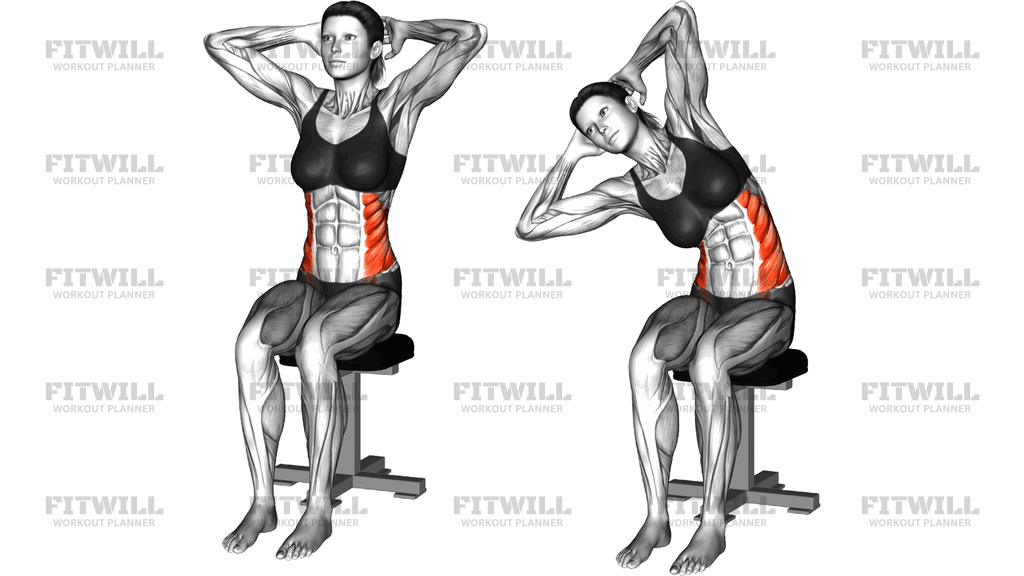
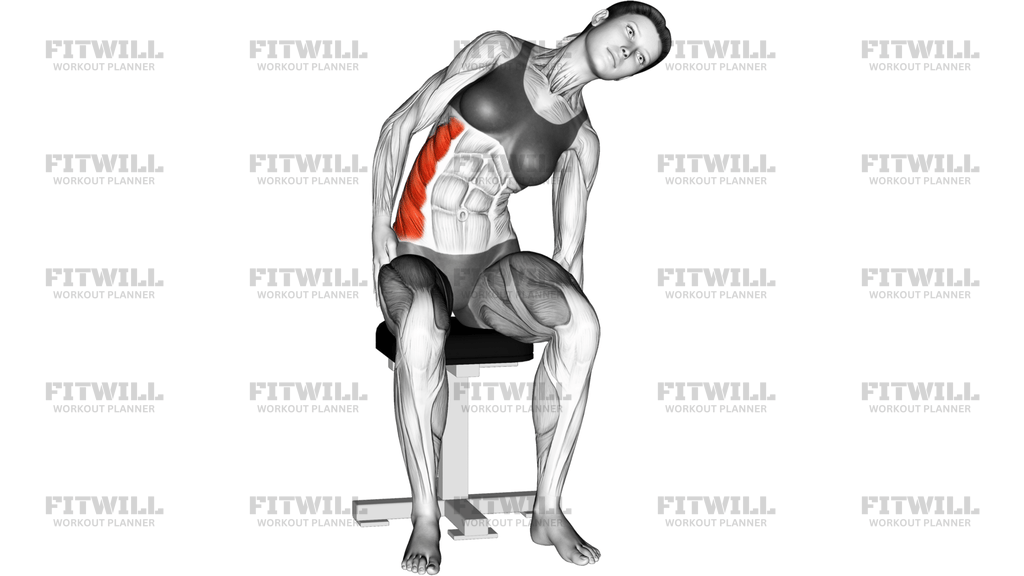
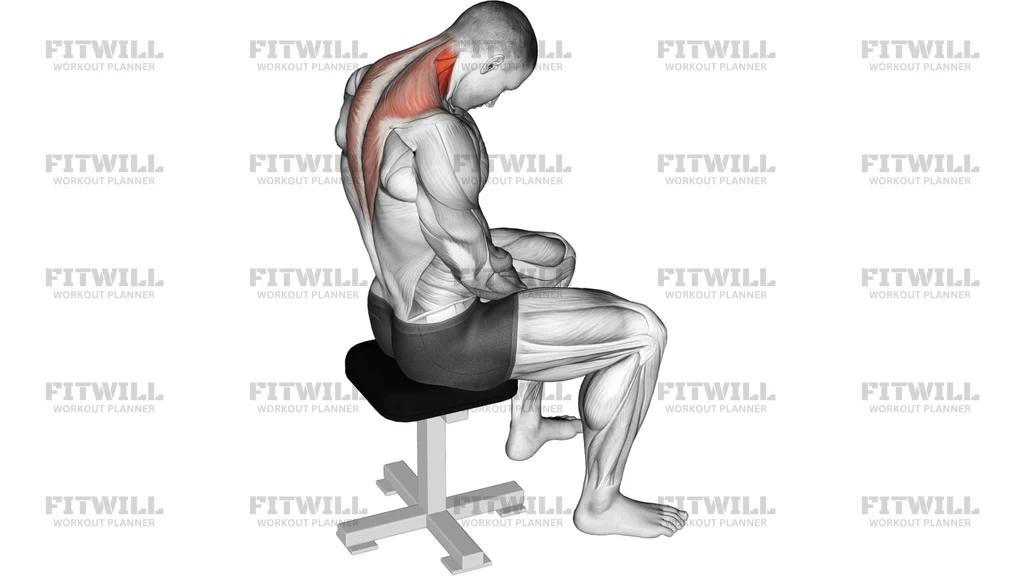
Seated Neck Flexion To Extension On Chair
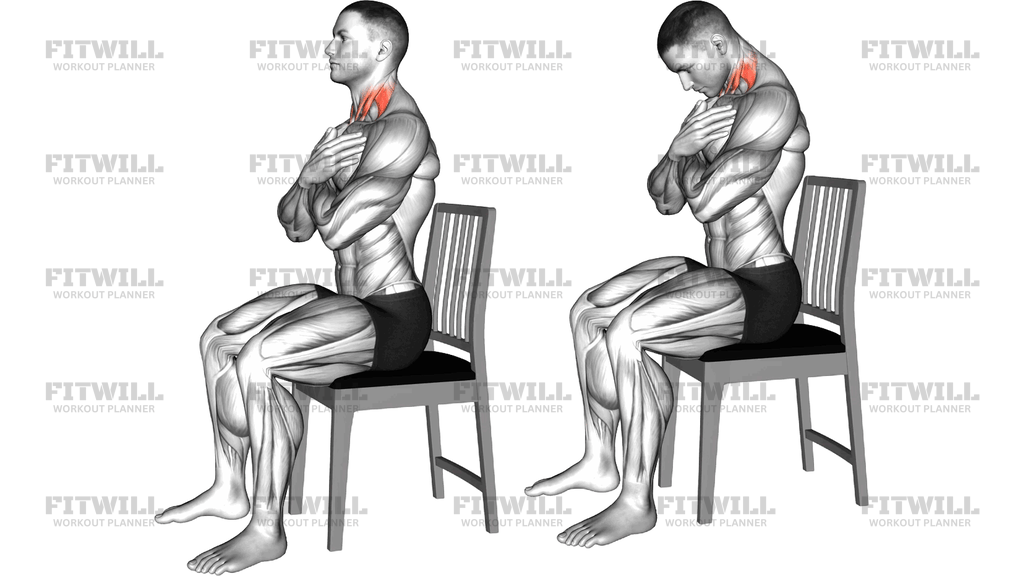
Seated Neck Flexion To Extension On Chair is a simple body weight drill that takes the neck through its forward-and-back arc while the rest of the body stays anchored. You sit upright on a chair with your arms crossed over your chest, drop your chin toward your chest, then lift your head to look up toward the ceiling, keeping the movement isolated in the neck rather than the upper back. Because the arms are pinned across the torso, you get constant feedback whenever your chest or shoulders try to join in.
This movement mainly trains the front-of-neck muscles such as the sternocleidomastoid and deep neck flexors on the way down, and the neck extensors at the back of the cervical spine as you lift your head. The upper traps and levator scapulae help control the motion, especially on the slow return. The activation is modest in load but meaningful in control, which is exactly what most desk-bound necks are missing.
It suits office workers, drivers, students, and anyone whose head drifts forward over a screen for hours. It is also a common warm-up or rehabilitation-style exercise prescribed after neck tightness or stiffness, because it is gentle, self-regulated, and requires no equipment beyond a stable chair. Athletes in contact or combat sports use it as a low-risk entry point before progressing to weighted or banded neck work.
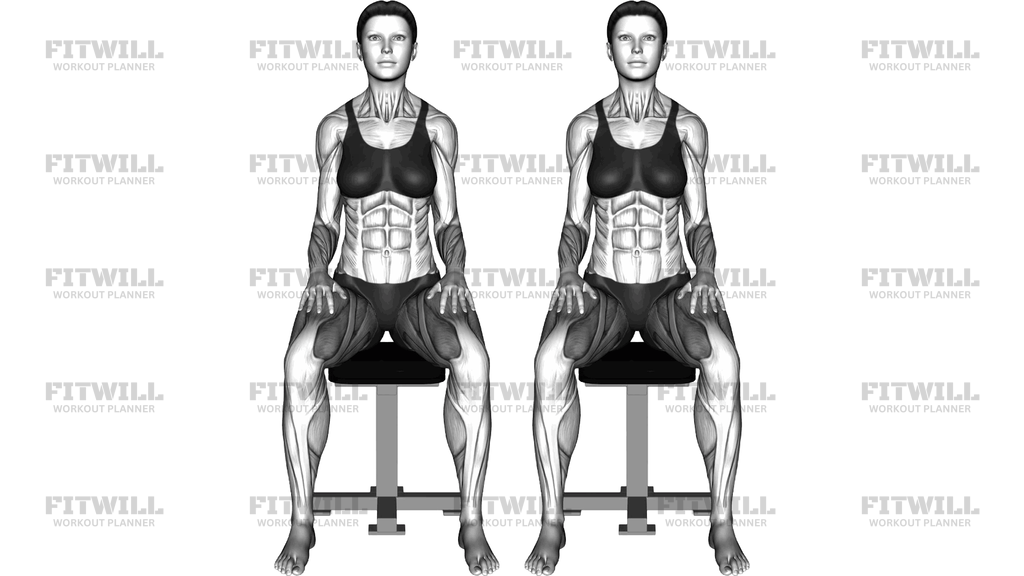
Setup matters more than it looks. Sit tall on the front half of the chair seat with feet flat on the floor, ribs stacked over the pelvis, and arms folded across the chest. If you lean back against the chair back or slump, the chair back blocks the extension phase and your rounding torso fakes extra flexion. The upright, unsupported trunk forces the cervical spine to do the actual work.
Execute it by leading with the chin: nod down until your chin nears your chest without your shoulders hunching, pause briefly, then glide your head back and up until you are gazing at the ceiling with your mouth relaxed and closed. Move slowly enough that you could stop at any point. Two sets of eight to ten smooth repetitions is plenty for most people.
Keep the range comfortable, not maximal. Sharp pain, dizziness, tingling, or nausea are signals to stop and shorten the range or seek professional guidance. Move deliberately, breathe normally, and treat this as a control exercise rather than a stretch to force.
[ Workout Log & Planner ]
Put your next workout in Fitwill
Keep your plan and training log ready when you are.


Instructions
- Sit sideways-free on a stable chair with your feet flat on the floor, hip-width apart, and your sitting bones planted firmly on the front half of the seat.
- Sit tall with your ribcage stacked over your pelvis and do not lean against the chair back; your trunk stays upright and unsupported for the whole set.
- Cross your arms over your chest with each hand resting on the opposite shoulder or upper chest to lock your torso still.
- Set your gaze level and take a relaxed breath in through your nose before starting.
- Exhale slowly and nod your chin down toward your chest, letting your head roll forward one vertebra at a time until you feel a mild gathering at the back of the neck.
- Pause for one second at the bottom without letting your shoulders creep up or your upper back round.
- Inhale and glide your head backward and upward, leading with the crown of your head, until you are looking up toward the ceiling with your mouth closed and jaw relaxed.
- Pause briefly at the top, then slowly lower your head back down through the same arc to complete one repetition.
- Keep breathing steadily throughout and avoid holding your breath at either end of the movement.
- Reset your posture after each rep: re-stack the ribs, relax the shoulders down, and repeat for 8-10 controlled repetitions.
Tips & Tricks
- The most common mistake is turning this into a torso exercise: if your chest collapses forward on the flexion phase, press your arms tighter across your chest and think of nodding only from the neck.
- Do not crank the extension phase back as far as possible; the goal is a smooth glide of the head over the shoulders, and pushing for end range usually just compresses the back of the cervical spine.
- Keep your jaw loose at the top of the extension. Clenching or opening the mouth is a sign you are recruiting unnecessary tension.
- If your shoulders hike up as your chin drops, shrug them down first before starting and keep your hands heavy on your chest as a reminder.
- Slow the return phase down. Most people snap back from flexion quickly; a two-second return builds far better control of the neck extensors.
- Perform the movement in front of a mirror occasionally: your torso should look identical at the start and end of each rep, with no forward lean or arching.
- If sitting tall feels tiring, shorten the set rather than slumping; a fatigued, rounded trunk defeats the purpose of the chair setup.
- Avoid doing this with fast, bouncy reps right before heavy lifting; treat it as a warm-up or standalone control drill, not a power movement.
- If the back of the chair interferes with your head during extension, rotate slightly or move to the front edge of the seat so your head can travel freely backward.
Frequently Asked Questions
Which muscles does Seated Neck Flexion To Extension On Chair work?
The forward (flexion) phase targets the front-of-neck muscles, chiefly the sternocleidomastoid and deep neck flexors, while the upward (extension) phase works the neck extensors along the back of the cervical spine. The upper traps and levator scapulae assist and control the arc.
Why are the arms crossed over the chest in this exercise?
Crossing the arms locks the torso so the chest and shoulders cannot substitute for the neck. It also gives you instant feedback: if your arms or chest start moving, your trunk is cheating.
Can beginners do Seated Neck Flexion To Extension On Chair?
Yes, it is one of the most beginner-friendly neck exercises because the load is only the weight of your head and the chair provides a stable seat. Start with a small, comfortable arc and 6-8 repetitions.
How far should I look up during the extension phase?
Only to the point where your gaze lifts comfortably toward the ceiling without strain, pinching, or dizziness. A smooth, partial arc repeated with control beats forcing the end range.
Should my back touch the chair back during this exercise?
No. Lean nothing against the chair back; it would block your head's backward travel in the extension phase and encourage slouching during flexion. Sit on the front half of the seat and stay tall.
What is the most common mistake with this movement?
Rounding the upper back and collapsing the chest instead of moving only the head, which makes the range look bigger than it is. Keep the trunk stacked over the pelvis and lead purely with a nodding motion.
Can I do Seated Neck Flexion To Extension On Chair if my neck feels stiff at a desk?
It is often used as a gentle mobility break for desk-related stiffness because it needs no equipment. Keep the range pain-free, move slowly, and stop if you feel sharp pain, tingling, or dizziness.
What can I use instead of a chair?
Any firm, stable seat such as a bench works the same way; the key is an upright seated position with feet flat and no back support touching your torso. Avoid soft couches or swivel chairs.
How many sets and repetitions should I do?
One to three sets of 8-10 slow, controlled repetitions is enough for most people, either as a daily desk break or as a warm-up before upper body training. Quality of motion matters far more than volume here.
Is it safe to do this every day?
For most healthy people, daily gentle neck flexion and extension is fine because the load is very low. If you have a recent neck injury, ongoing pain, or symptoms like tingling into the arms, check with a qualified professional first.