Side Walk Elbow Open
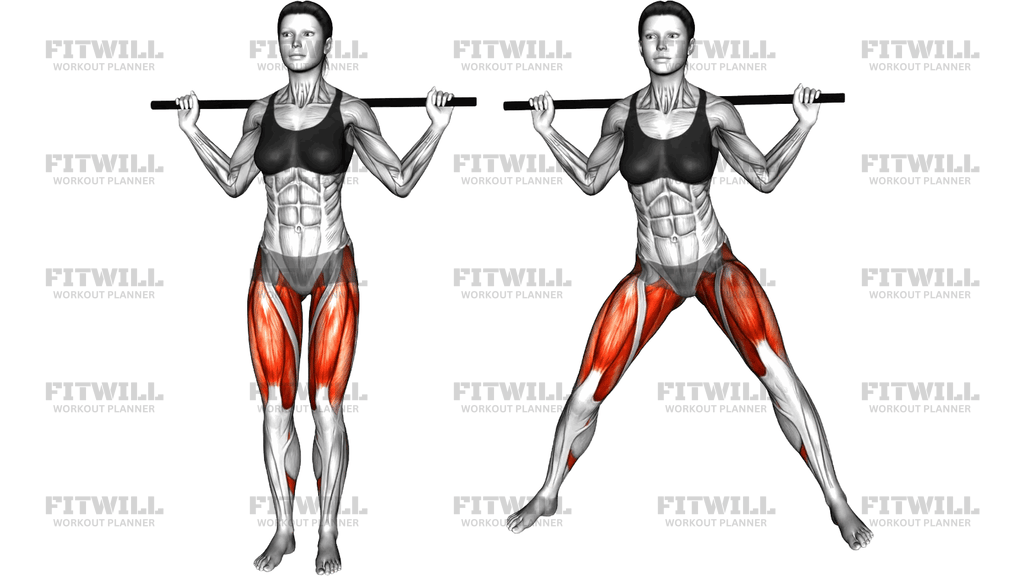
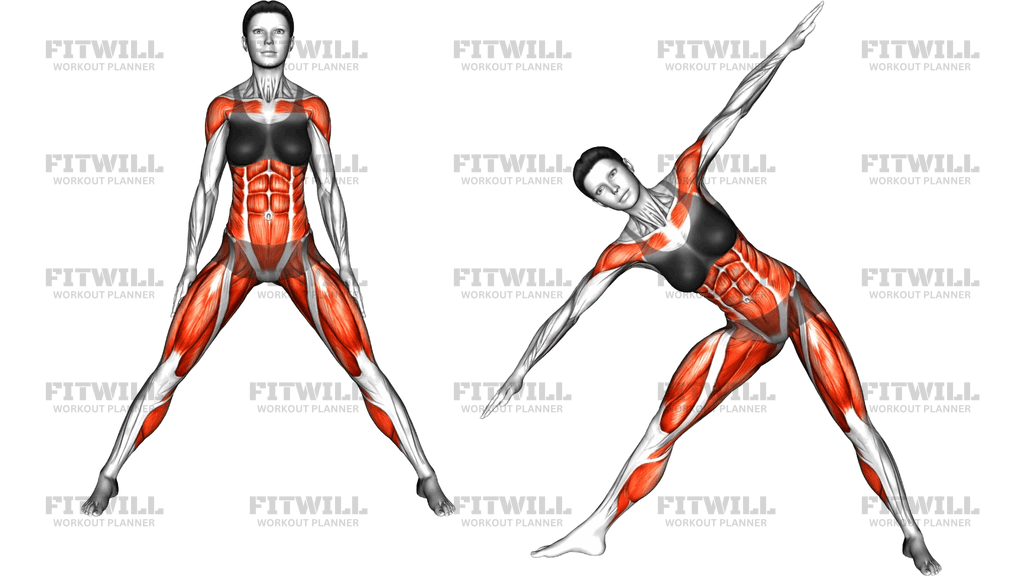
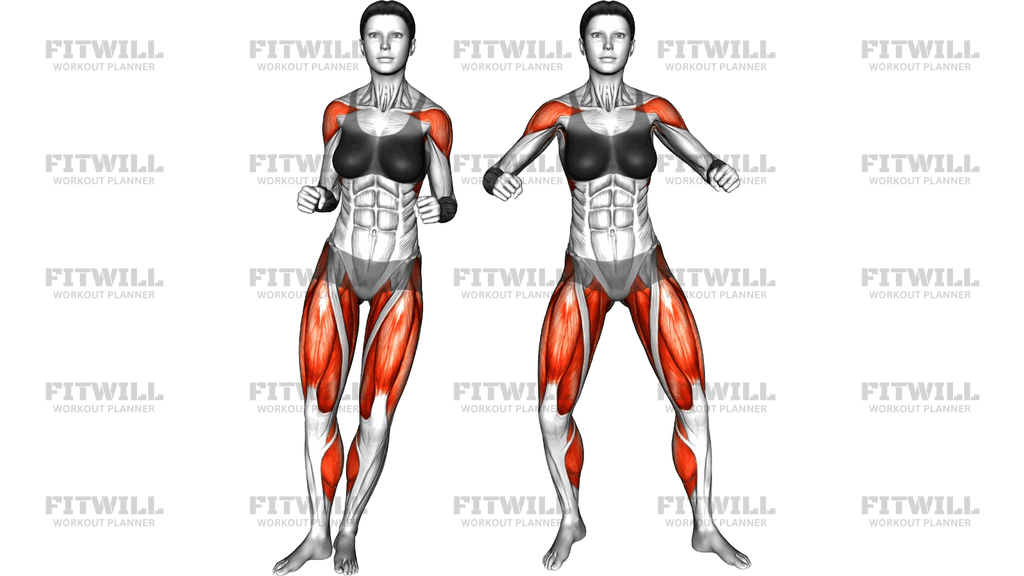
The Side Walk Elbow Open is a standing body weight movement that combines a lateral step-out with a simultaneous elbow raise, so your legs and shoulders work together in one rhythmic pattern. You start with your feet close together and your elbows bent at your sides, then step out wide to one side while lifting and opening your elbows up and out to shoulder height. You reverse the motion to return to the narrow stance, and you can repeat on the same side or alternate directions as you travel across the floor.
Because it pairs a lower body side step with an upper body elbow open, this exercise trains several things at once. The side stepping loads the glutes, especially the gluteus medius on the outer hip, along with the quads as you control the width of your stance. Opening the elbows out to the sides works the lateral deltoids in much the same way as a lateral raise, while the bent-elbow position shortens the lever so the shoulders stay working without needing any load. Holding your torso steady as the limbs move also asks the core, particularly the obliques, to keep you from swaying.
Setup matters more than it looks. With no external resistance, the only load you have is your own body position, so a tall spine, soft knees, and feet that stay hip-width or closer at the start are what create the demand. If you let your feet drift wide between reps or your elbows stay low and forward, the movement loses both the hip work and the shoulder work. Think of the elbows leading the motion: they rise and open as the foot lands wide, and they lower as the feet come back together.
This is a useful exercise for warm-ups, general conditioning circuits, and anyone building shoulder mobility and hip stability without equipment. It suits beginners well because the range is self-limiting, and it also works as a low-impact way for more experienced lifters to accumulate volume for the side delts and outer hips between heavier sessions. Since it can travel sideways across a room or stay in place, it adapts easily to small training spaces.
To execute it well, move with rhythm rather than speed. Step out, let the elbows open until your upper arms are roughly level with your shoulders, then press back down through the wide foot to return. Keep your knees tracking over your toes on the wide stance, keep your fists relaxed, and avoid shrugging as the elbows lift. If you feel it mostly in your neck, drop the elbows slightly lower and focus on spreading them wide instead of high.
The main safety points are simple. Land each step with a soft knee rather than a locked leg, keep your weight distributed across the whole foot instead of dumping into the inside of the knee, and stay within a stance width where you can control the return. Because the movement is low impact and self-loaded, most people can perform it comfortably, but anyone with an acute knee, hip, or shoulder issue should reduce the range or step width until the movement feels clean.
[ Workout Log & Planner ]
Put your next workout in Fitwill
Keep your plan and training log ready when you are.


Instructions
- Stand tall with your feet together or hip-width apart, knees slightly soft, and arms bent so your fists are near your lower ribs with elbows tucked close to your sides.
- Brace your abs lightly, pull your shoulders down away from your ears, and look straight ahead to set a neutral spine before you move.
- Shift your weight onto one leg, then step the other foot out wide to the side, landing with the whole foot flat and the knee bent in line with the toes.
- As the foot lands wide, raise both elbows up and out to the sides, keeping them bent at roughly 90 degrees, until your upper arms are about level with your shoulders.
- Pause briefly in the wide position with elbows open, squeezing the outer hips and feeling the shoulders doing the lifting.
- Press through the wide foot to push yourself back, bringing the feet together again as the elbows lower back down to your sides.
- Exhale as you step out and open the elbows, and inhale as you return to the narrow stance.
- Repeat on the same side for your target reps, or alternate sides, walking sideways across your space and back.
- Between sets, reset your stance and shoulder position so each rep starts from the same tall, braced posture rather than from a slouched carryover.
Tips & Tricks
- If your elbows stay low and drift forward, the rep turns into a leg-only step. Cue yourself to spread the elbows wide, not just lift them, so the side shoulders actually get worked.
- A common mistake is letting the wide knee cave inward on the step-out. Land with the knee stacked over the second toe to protect the joint and load the glutes properly.
- Avoid shrugging as the elbows rise. If your traps take over, lower the elbows to a mid-range and focus on widening them before you lift higher.
- Keep your torso vertical. Leaning back as the elbows open usually means the range is too aggressive for your shoulder mobility right now.
- The tempo should feel even: one count out, one count back. Rushing turns this into a bouncing jack pattern and steals the control work from the hips and shoulders.
- If your feet creep wider between reps, mark a narrow starting line with a floor tile or mat edge and return to it every rep.
- Keep the fists relaxed and wrists neutral. Clenching hard transfers tension up the forearms and into the neck.
- For a harder version, hold the wide stance with elbows open for two to three seconds before returning, or add a small squat at the wide position.
- For an easier version, reduce the step width and only raise the elbows to chest height until the pattern feels smooth.
Frequently Asked Questions
What muscles does the Side Walk Elbow Open work?
The main targets are the side shoulders, which lift and open the elbows, and the glutes and quads, which control the side step and wide stance. The obliques and deep core work to keep your torso steady as the arms and legs move.
Is the Side Walk Elbow Open good for beginners?
Yes. It is low impact, self-loaded, and easy to scale by narrowing the step or lowering the elbows. Beginners should master a slow, narrow version before increasing step width or rep speed.
Why are the elbows bent instead of straight in the Side Walk Elbow Open?
The bent-elbow position shortens the lever arm, so the lateral deltoids work through a comfortable range without added load. It also lets the elbows lead the motion, which helps you feel the shoulders opening rather than just swinging the arms.
How wide should my stance be on the step-out?
Wide enough that you feel the outer hips working, but not so wide that your knees twist inward or you cannot control the return. A stance roughly one and a half to two shoulder widths is a reasonable target for most people.
Should I repeat on one side or alternate directions?
Both work. Repeating on one side for a set builds a stronger burn in the outer hip of the working leg, while alternating sides suits warm-ups and conditioning circuits where you want balanced, continuous movement.
Why do I feel this in my neck instead of my shoulders?
That usually means you are shrugging as the elbows lift. Pull the shoulder blades down, keep the elbows slightly below shoulder height at first, and focus on spreading them wide rather than lifting them high.
Can I add weight to the Side Walk Elbow Open?
Yes, light dumbbells or a resistance band around the thighs both work once the body weight version feels easy. Add load only when you can keep the elbows wide and the knees tracking over the toes through every rep.
What can I substitute if stepping sideways bothers my knees?
Try a smaller step width, or perform the elbow open standing in place while tapping one foot out instead of a full weight shift. Both keep the shoulder pattern while reducing the lateral knee load.
How many reps should I do?
For warm-ups, 10 to 15 controlled reps per side works well. For strength-endurance work in the hips and shoulders, aim for 2 to 3 sets of 12 to 20 reps with a brief pause in the wide, elbows-open position.