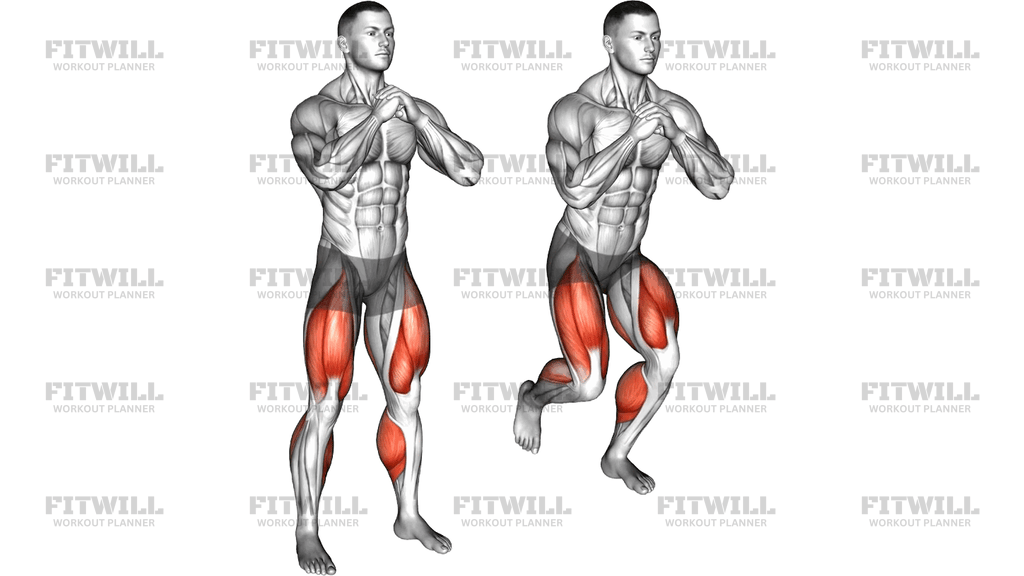
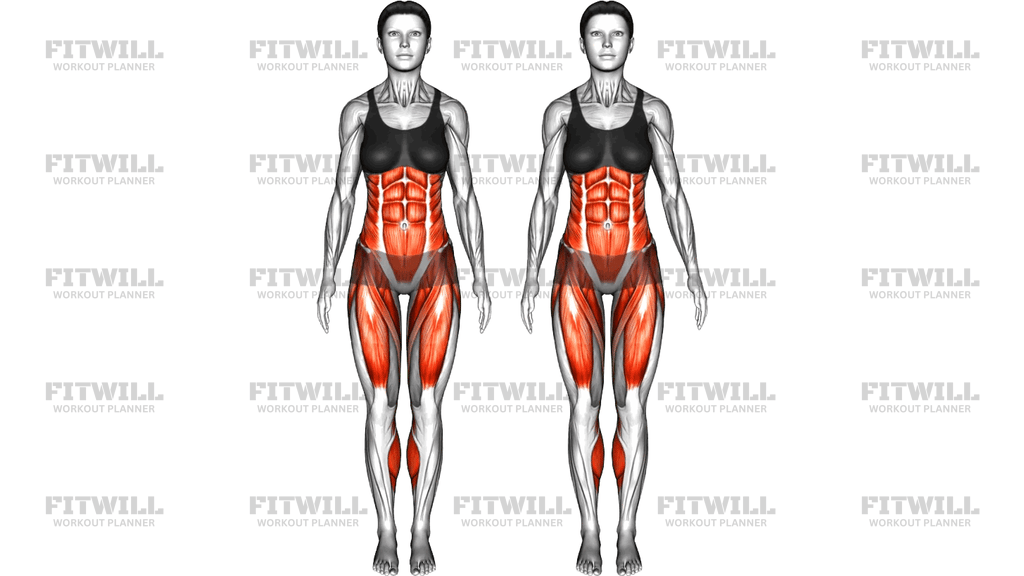
Forefoot Screw One Legged Stand
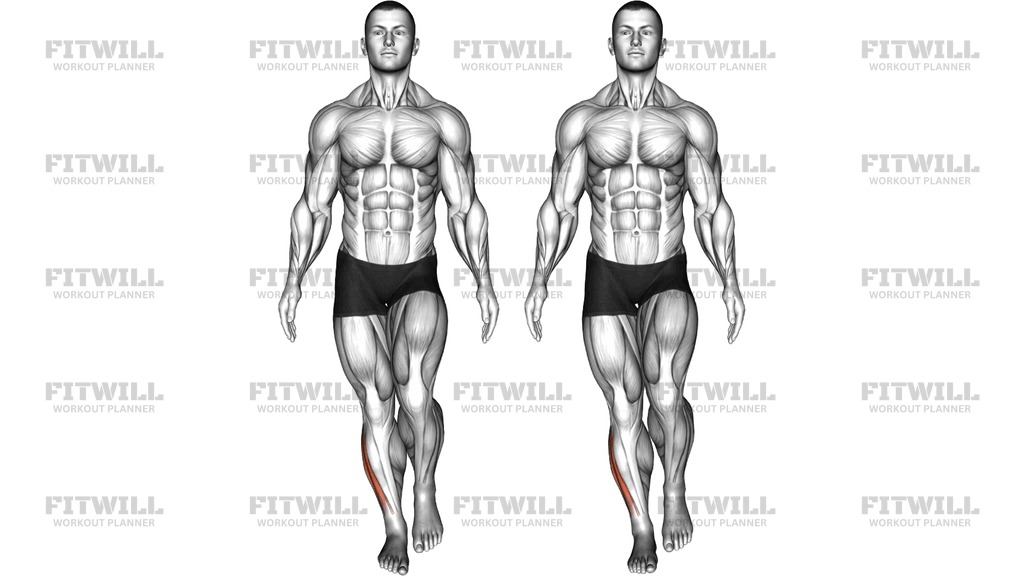
The Forefoot Screw One Legged Stand is a barefoot-style balance and foot-strengthening drill performed standing on one leg. Instead of simply balancing, you actively "screw" your forefoot into the floor — pressing the ball of the big toe, ball of the little toe, and heel down while creating a gentle outward spiral torque through the foot. This coils the arch, wakes up the peroneus longus along the outer lower leg, and turns a passive balance hold into a genuinely loaded stability exercise.
This movement is especially useful for runners, lifters who struggle to keep their arches during squats and deadlifts, and anyone rehabbing or prehabbing ankle sprains. Because you are on one leg, the standing hip also has to work hard to keep your pelvis level, so the glute medius and deep core get meaningful stabilizing work without any external load.
Setup matters more here than in most standing drills. Stand close to a wall or sturdy support at first, shift your weight fully onto one foot, and position your weight over the three contact points of the foot rather than dumping it into the heel. The screwing action only works if the foot stays flat on the floor — the toes should press and grip, not curl or claw, and the heel must not lift or roll outward.
To execute it well, think of your foot as a corkscrew anchored at the heel. Without letting the knee collapse inward or the foot roll, twist the forefoot slightly outward into the ground as if you were trying to spread the floor beneath you. You should feel the arch rise and a burn along the outside of the lower leg. Hold the position with tall posture, relaxed shoulders, and steady breathing, keeping your gaze fixed on a point in front of you.
The hold should feel effortful but controlled. If you wobble, that is normal — small corrections at the ankle are part of the training effect. If you lose the arch, grip with your toes, or roll onto the outer edge of the foot, reset rather than grinding through a sloppy hold. Quality of the screw is what drives the adaptation.
Use this drill as a warm-up before lower-body training, as a standalone foot-care block a few times per week, or as part of an ankle-stability progression. Start with 20 to 30 seconds per side and progress the time or remove your hand support as the single-leg stance becomes solid.
[ Workout Log & Planner ]
Put your next workout in Fitwill
Keep your plan and training log ready when you are.


Instructions
- Stand barefoot next to a wall or doorway you can lightly touch for support, with your feet about hip-width apart.
- Shift your weight completely onto one leg and lift the opposite foot a few centimeters off the floor, keeping it relaxed beneath you.
- Spread the toes of your standing foot and place your weight evenly across three points: the base of the big toe, the base of the little toe, and the center of the heel.
- Brace your core lightly, stack your ribs over your hips, and stand tall with your arms relaxed at your sides or one hand hovering near the wall.
- Keeping the heel down and the sole flat, screw the forefoot into the floor by rotating it slightly outward, as if trying to turn your foot into the ground like a corkscrew.
- Feel your arch lift and the outer lower leg engage as you apply the twist — the pressure should stay on the whole sole, not roll onto the outer edge.
- Hold this screwed, single-leg position for 20 to 30 seconds, breathing slowly through your nose and fixing your eyes on a spot at eye level ahead of you.
- If you wobble, make small corrections from the ankle and hip rather than reaching out with your arms; touch the wall only if you truly need it.
- Release the twist slowly, let the arch settle, and set the lifted foot down with control.
- Switch legs and repeat, aiming for equal hold times on both sides.
Tips & Tricks
- Gripping with curled toes is the most common fault — the toes should stay long and press the floor, while the arch does the lifting through the forefoot screw.
- If your heel rolls outward during the twist, you are screwing too hard; reduce the torque until the whole sole stays glued to the floor.
- Watch that your standing knee tracks over your second toe. If it drifts inward, cue the screw harder and squeeze the glute on the same side.
- A collapsed arch during the hold means the peroneus longus is switching off — shorten the hold to 10 to 15 seconds and build back up with the foot actively screwed.
- Keep the lifted leg still and close to the standing leg. Swinging or tapping it down repeatedly turns the drill into a hopping exercise and ruins the ankle-stability work.
- Look at a fixed point at eye level, not down at your foot. Dropping your head forward makes balance noticeably harder and rounds your upper back.
- Do the drill barefoot or in thin, flat shoes. Thick cushioned soles mute the sensory feedback your feet need to find the three contact points.
- Expect the outer lower leg to burn before your balance does — that is the target muscle doing its job, not a reason to stop early.
- Use fingertip wall contact as a fallback rather than leaning on it. The moment you load the hand, the standing leg loses most of the challenge.
- Train both sides even if one ankle feels clumsier; the weaker side usually needs the extra sets more than the side that already feels stable.
Frequently Asked Questions
What muscles does the Forefoot Screw One Legged Stand work?
The main target is the ankle stabilizers, especially the peroneus longus on the outer lower leg, which lifts and supports the arch as you screw the forefoot down. The calves, standing-leg glutes, and deep core assist to keep you upright on one leg.
What exactly does "screwing the forefoot" mean?
It means pressing the ball of your foot into the floor and adding a slight outward twisting torque, like turning a corkscrew, while keeping the heel planted. This engages the arch and outer lower-leg muscles instead of letting the foot passively sit on the ground.
Can beginners do the Forefoot Screw One Legged Stand?
Yes. Start with your fingertips on a wall and holds of 10 to 20 seconds per side. As your balance improves, reduce the wall contact and lengthen the holds toward 30 to 45 seconds.
Why does my foot roll onto its outer edge during the hold?
That usually means the twist is too aggressive or the toes are gripping instead of pressing. Lighten the screw, keep the big-toe ball firmly down, and the sole should stay flat across all three contact points.
Should I do this exercise barefoot?
Barefoot is ideal because you can feel the floor and adjust pressure through the toes and arch. Thin, flat shoes work too, but avoid soft, cushioned sneakers that hide foot positioning errors.
How is this different from a regular single-leg balance hold?
A plain balance hold mostly challenges reaction and sway, while the forefoot screw adds active tension through the arch and outer leg. That deliberate torque loads the peroneus longus and trains the foot position you want under squats, lunges, and running.
Is the Forefoot Screw One Legged Stand good after an ankle sprain?
It is commonly used in ankle-stability routines because single-leg loading plus foot control rebuilds balance and lower-leg strength. Clear any return to exercise with your healthcare provider first, and start with wall support and short holds.
How long should I hold each rep?
Aim for 20 to 30 seconds per side to start, and build up to 45 to 60 seconds as the screwed position stays solid. Stop the set when the arch collapses or you cannot keep the heel flat, since quality matters more than clock time.
What can I use instead if standing on one leg is too hard right now?
Do the same forefoot screw while standing on both feet with weight shared evenly, or sit and practice pressing the three foot points into the floor. Once the two-legged version feels controlled, progress to the single-leg stand near a wall.
When is the best time to include this drill in my workout?
It works well as a warm-up before squats, lunges, or running because it switches on the arch and hip stabilizers you are about to use. You can also do it as a short standalone block on rest days.