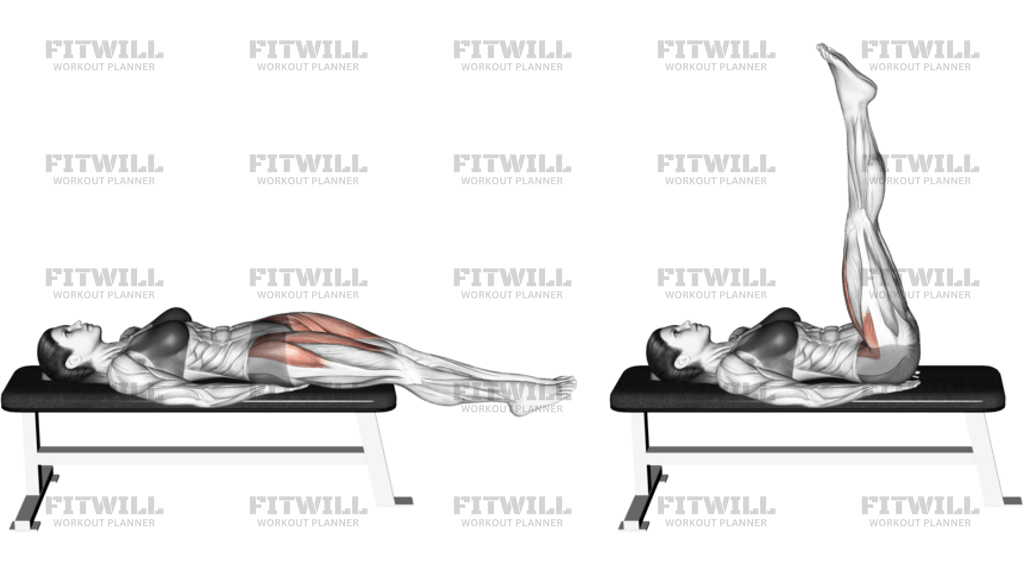
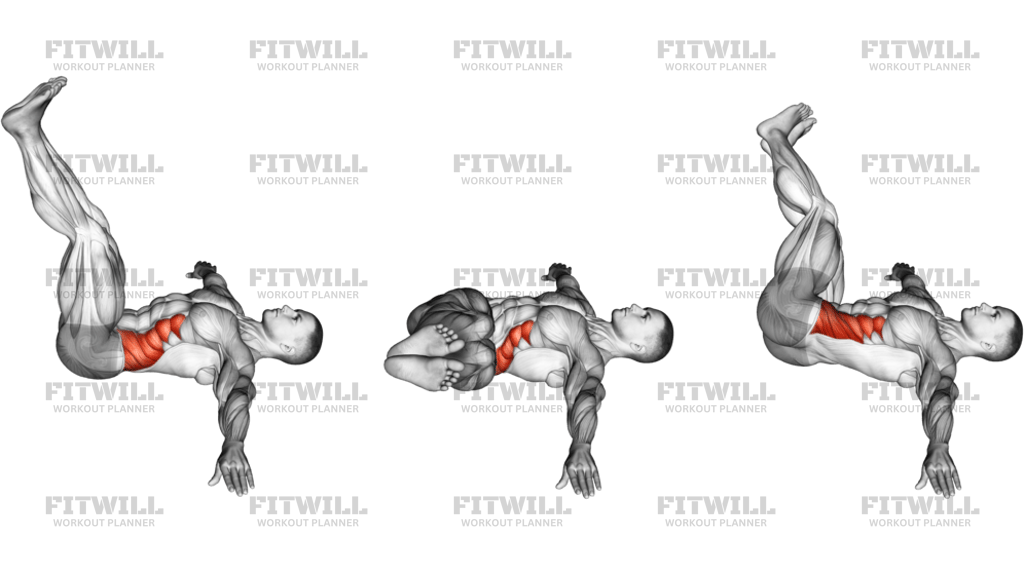
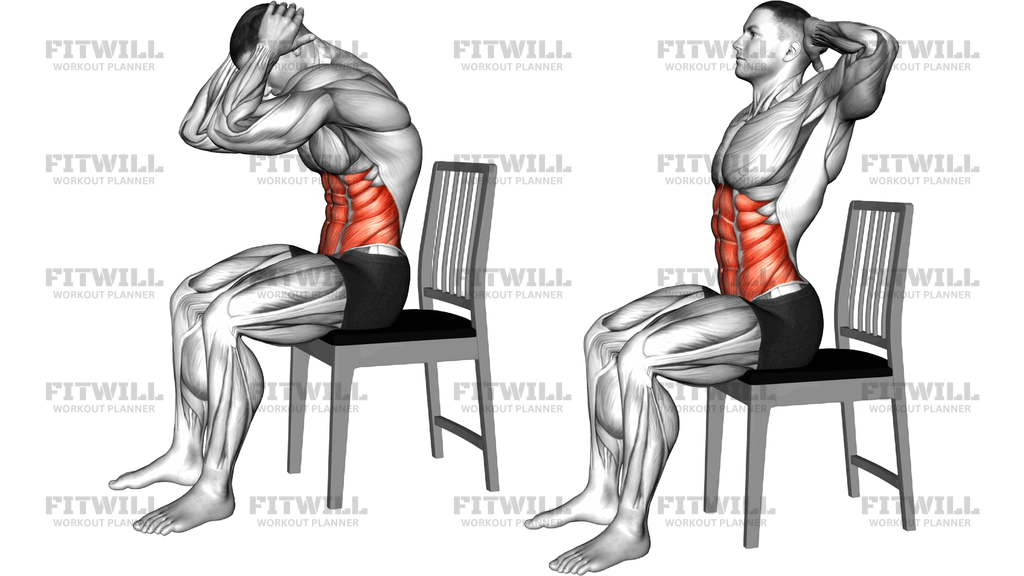
Lying Quarter Hip Raise
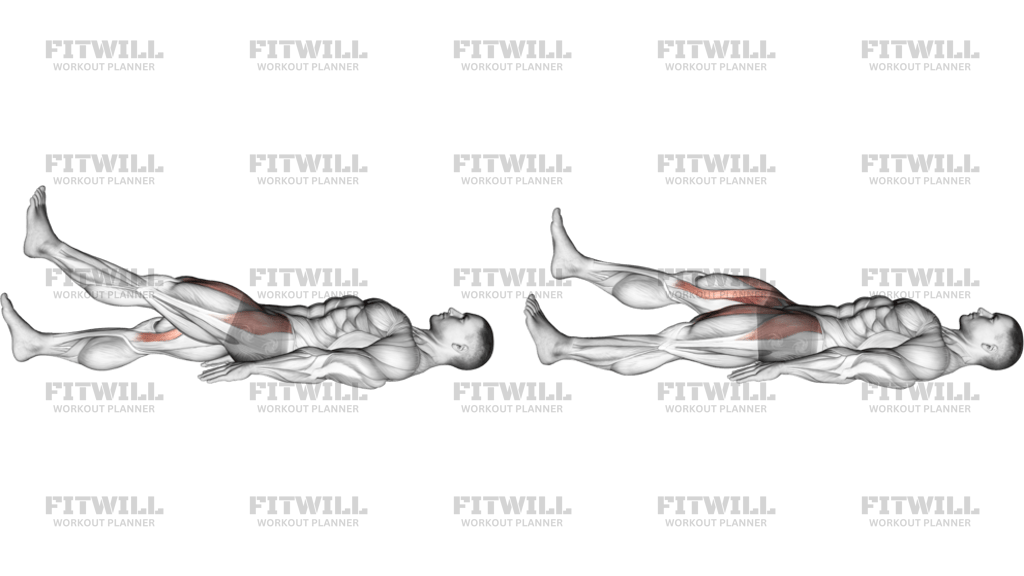
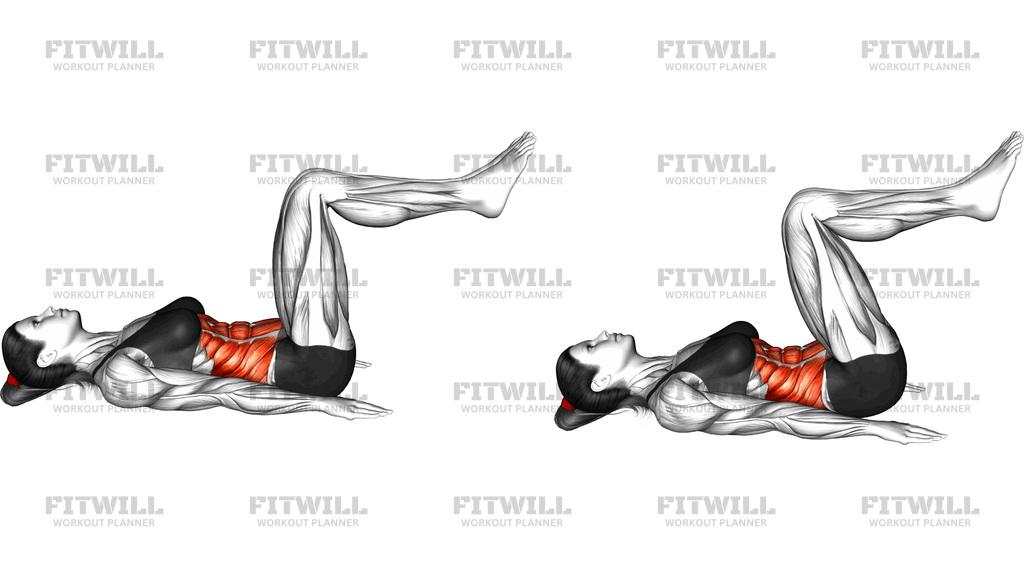
The Lying Quarter Hip Raise is a small-range core exercise performed on the floor with nothing but your body weight. You start on your back with your knees bent to roughly 90 degrees and stacked directly over your hips, feet off the ground. From there, instead of a full reverse crunch, you lift your hips just a few inches off the floor by curling your pelvis toward your ribs, then lower them back down with control. That shortened range is the whole point: it keeps tension on the lower portion of the abs without letting momentum or hip flexor strength take over.
This movement targets the lower abdominal area, with the rectus abdominis doing most of the visible work and the deep transverse abdominis helping to hold your trunk steady. The hip flexors are involved, but a well-executed quarter raise minimizes their contribution by making the pelvis curl rather than the thighs swing. If your legs move toward your head without your tailbone leaving the floor, the abs are no longer doing the lifting.
The Lying Quarter Hip Raise suits people who find full reverse crunches too hard or too jerky, anyone rebuilding core strength after a layoff, and lifters who want a precise finisher for the abs after squats, deadlifts, or presses. Because the range is short and the body stays supported, it is also a practical choice for beginners learning what a posterior pelvic tilt actually feels like — a skill that carries over to planks, leg raises, and heavy compound lifts.
Setup matters more here than in most ab exercises. Your arms stay flat on the floor beside you, your lower back should stay in contact with the ground, and your knees stay fixed over your hips throughout the set. If the knees drift toward your chest, you turn the exercise into a knee tuck; if they drift away, your hip flexors and lower back take the load. Keeping the shins still and letting only the pelvis move is what makes the quarter range effective.
Execute it by pressing your arms lightly into the floor, exhaling as you curl your tailbone and hips up a few inches, and pausing briefly at the top. Lower slowly until your hips just touch back down, keeping your knees in place the entire time. Expect to feel this low in the abs rather than in the thighs, and keep the reps slow enough that you could stop the movement at any point. Because the range is short, common errors are easy to spot: bouncing off the floor, pushing with the hands, or letting momentum rock the legs. Slow the tempo down and reduce the reps before any of those creep in.
[ Workout Log & Planner ]
Put your next workout in Fitwill
Keep your plan and training log ready when you are.


Instructions
- Lie flat on your back on an exercise mat with your legs raised and knees bent to about 90 degrees, knees stacked directly over your hips and feet off the floor.
- Place your arms straight at your sides with palms flat on the floor beside your hips; let your head and shoulders rest relaxed on the mat.
- Brace your core gently and check that your lower back is in contact with the floor before you begin.
- Keeping your knees fixed over your hips and your shins still, curl your pelvis toward your ribs by pulling your lower abs down and in.
- Lift your hips and tailbone just a few inches off the floor — this is the 'quarter' range — and pause at the top for one second.
- Lower your hips back to the floor slowly and under control, stopping the moment your tailbone touches down rather than relaxing into the floor.
- Exhale as you raise your hips and inhale as you lower them, keeping the breathing rhythm steady for every rep.
- Complete all reps with your knees over your hips the entire time; reset your leg position between sets if the knees drift.
Tips & Tricks
- The most common mistake is pulling the knees toward the chest, which turns the exercise into a knee tuck. Lock your eye on your knees and keep them frozen over your hips for the whole set.
- If you feel your hip flexors doing the work, your hips are probably lifting straight up instead of curling. Think about rolling your tailbone toward the ceiling rather than pushing your hips upward.
- Do not push hard into the floor with your hands. The arms are there for light balance support; pressing down hard will lever your hips up and steal work from the abs.
- Keep the lift small and honest — a controlled three-inch rise with a pause beats a big rocking lift that uses momentum.
- Your head and neck should stay relaxed on the mat. If you keep craning forward, you are compensating for a weak curl by using your neck.
- Avoid bouncing at the bottom. Let the hips kiss the floor and start the next curl from a still position so the abs initiate every rep.
- If your lower back arches and lifts off the floor as you lower, you are dropping too fast. Slow the descent and shorten the lowering range until you can keep the back flat.
- Point your toes or keep your feet neutral — either is fine — but do not swing the feet, since leg motion replaces the pelvic curl this exercise is built around.
Frequently Asked Questions
What muscles does the Lying Quarter Hip Raise work?
The lower portion of the rectus abdominis does most of the work, supported by the deeper transverse abdominis and the obliques. The hip flexors assist, but a proper pelvic curl keeps them in a supporting role.
Why does the Lying Quarter Hip Raise only lift the hips a few inches?
The quarter range is deliberate: it isolates the pelvic curl that the lower abs control, without letting a full leg swing or momentum take over. Short range plus a pause at the top often means more abdominal tension, not less.
Is the Lying Quarter Hip Raise good for beginners?
Yes. The body stays supported on the floor, the range is small, and it teaches the posterior pelvic tilt that most beginner lifters struggle to feel. Start with 8 to 12 slow reps and build from there.
How is this different from a reverse crunch?
A reverse crunch curls the hips up and continues into a fuller spinal flexion as the knees travel toward the chest. The Lying Quarter Hip Raise stops after the initial hip lift, keeping the knees locked over the hips the entire time.
Why do I feel my thighs working instead of my abs?
Your legs are moving and your pelvis is not. Keep the knees fixed over your hips and focus on curling the tailbone toward the ceiling — the lift should come from the abs rotating the pelvis, not from the hips flexing the thighs.
Should I keep my lower back flat on the floor?
Keep it in contact with the floor in the starting position, and only let the hips and tailbone lift as you curl. If your lower back arches and gaps away from the floor, you are lowering too far or too fast.
What can I use instead of the Lying Quarter Hip Raise?
A full reverse crunch, a lying leg raise with bent knees, or a dead bug all train a similar region. The quarter raise is the best pick when you want the smallest, most controlled version of the pelvic curl.
Do I need any equipment for the Lying Quarter Hip Raise?
No equipment is required — just enough floor space to lie down. An exercise mat is recommended to cushion your spine, shoulders, and tailbone, but the movement itself is purely body weight.
Is it safe for my lower back?
For most people the movement is gentle because the back stays supported on the floor and the range is short. If lifting your hips causes discomfort, reduce the range, move slower, and stop if pain persists rather than pushing through it.