Sitting Torso Twist On A Chair
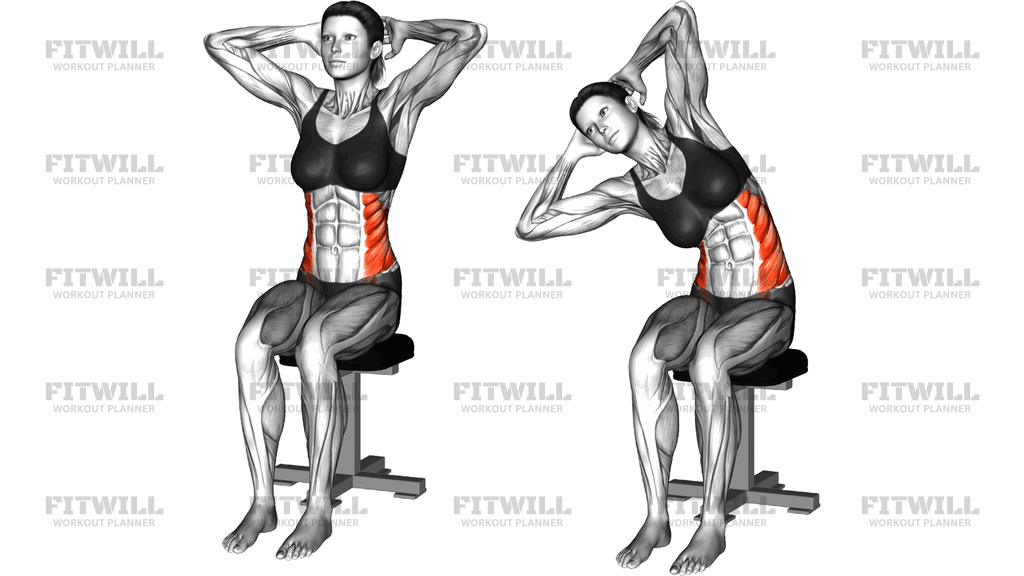
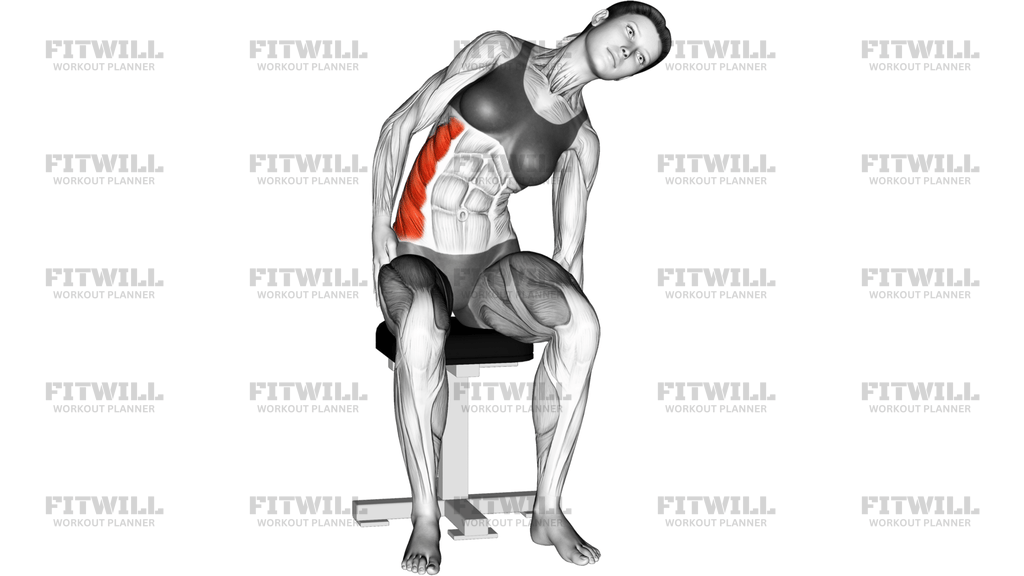
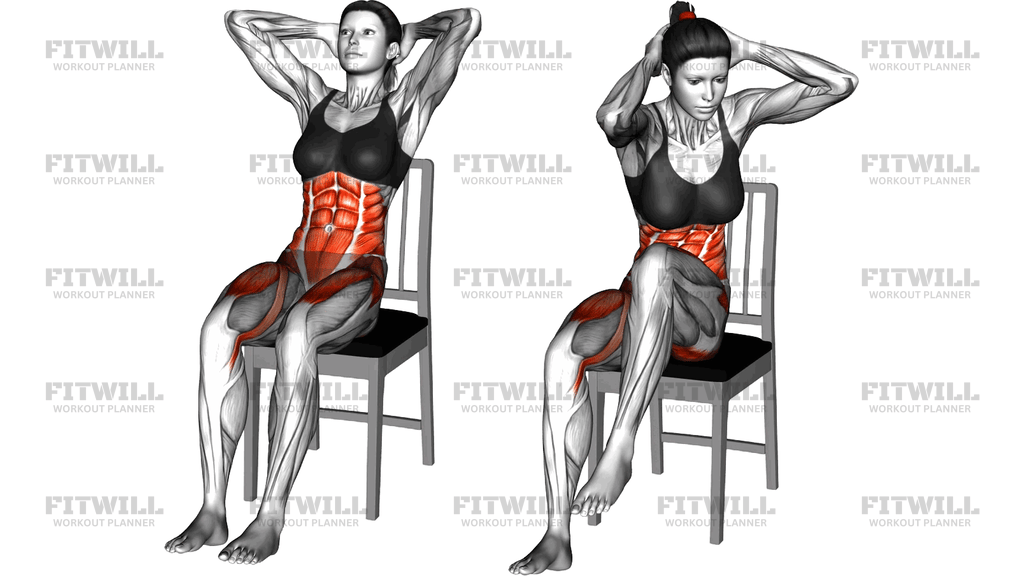
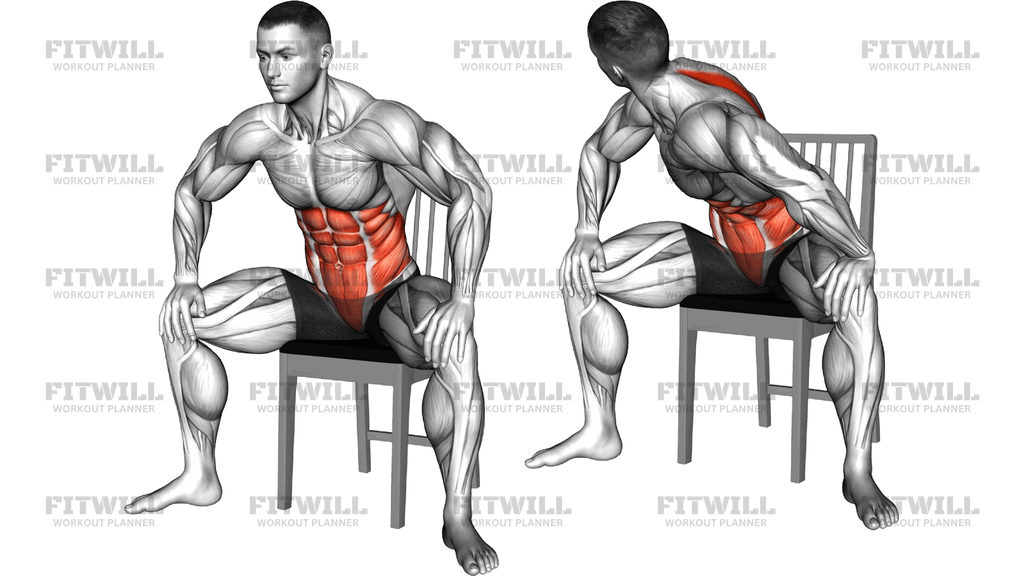
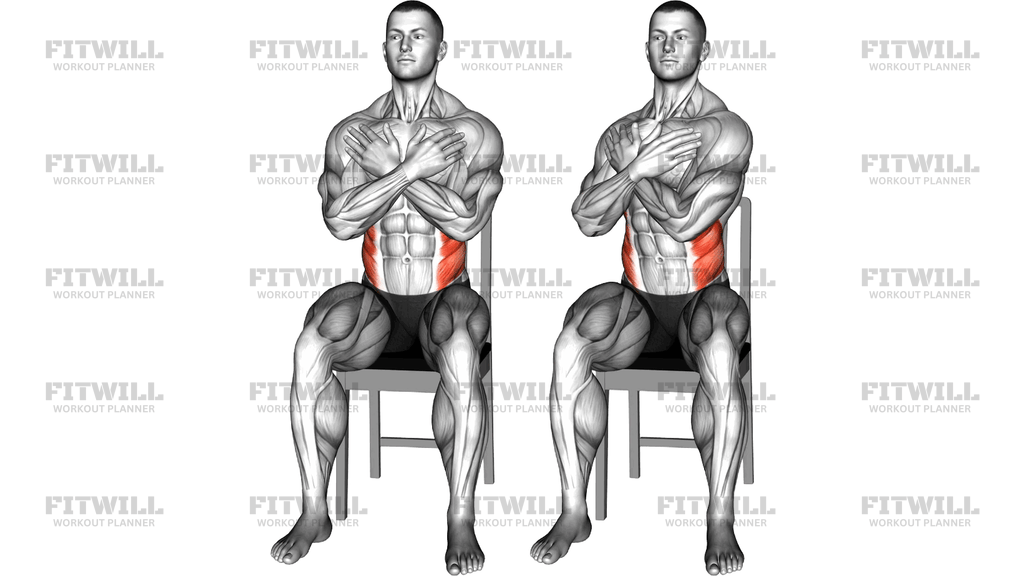
The Sitting Torso Twist On A Chair is a simple rotational drill performed from an upright seated position with the arms crossed over the chest. You sit tall on a sturdy chair with your feet flat on the floor, brace your midsection, and rotate your upper body from side to side while keeping your hips and knees pointing forward. Because the chair removes the balance and lower body demands of a standing twist, all of your attention goes into controlled rotation through the waist.
This movement primarily works the obliques, the muscles running along the sides of your trunk that handle rotation and anti-rotation. The rectus abdominis, deep core muscles, and the small muscles of the lower back assist as you turn and control each rep. The crossed-arm position also gently wakes up the chest and shoulder girdle, since the arms travel with the torso rather than swinging independently.
The seated setup is what makes this exercise accessible and effective. Sitting shortens the leverage the legs usually provide, so the twist has to come from your trunk rather than from a hip swing or momentum. That makes it a good choice for office workers breaking up long sitting periods, older adults who want to maintain rotational mobility without getting on the floor, and anyone rehabilitating comfortable trunk rotation after long periods of inactivity.
Execution is about quality of rotation, not speed. Sit tall with your spine long, cross your arms over your chest with each hand resting on the opposite shoulder, and rotate your ribcage to one side while your hips stay planted on the seat. Pause briefly at the end of the turn, then rotate to the other side in one smooth, controlled motion. Your head and shoulders should turn together, and your lower body should stay quiet throughout.
You can use this drill as a warm-up before heavier trunk or full-body training, as a mobility break during the workday, or as a low-fatigue finisher on days when your core needs some easy volume. Keep the tempo deliberate and the range honest. If you feel the movement coming from your hips or your lower back arching to gain range, reduce the rotation until everything above the waist turns and everything below it stays still.
[ Workout Log & Planner ]
Put your next workout in Fitwill
Keep your plan and training log ready when you are.


Instructions
- Sit on a sturdy chair with your feet flat on the floor about hip-width apart and your knees bent roughly 90 degrees.
- Sit up tall on your sit bones with your spine long and your shoulders relaxed down, not rounded forward.
- Cross your arms over your chest so each hand rests on the opposite shoulder or upper arm, elbows tucked slightly toward your torso.
- Gently brace your abdominal muscles as if preparing for a light push to the stomach, and keep your hips pressed evenly into the seat.
- Exhale and rotate your entire upper body, ribcage and shoulders together, to the right while your hips and knees stay facing forward.
- Pause for one to two seconds at the end of the rotation, feeling the work along the side of your waist.
- Inhale and rotate in a controlled arc across the center to the left side, without letting your arms swing or your torso lean back.
- Continue alternating sides for your desired number of repetitions, moving smoothly through the center each time.
- On the final rep, rotate back to the starting square position, uncross your arms, and sit tall for a breath before standing.
Tips & Tricks
- The most common fault is letting the hips and knees rotate with the torso. Squeeze your thighs slightly and press your feet into the floor to lock the lower body in place.
- If you catch yourself leaning your chest backward to fake extra range, shorten the twist. Depth should come from rotation of the ribcage, not from tilting the spine.
- Keep your eyes tracking with your shoulders. Leading with your head ahead of the chest strains the neck, while letting the head lag behind flattens the rotation.
- Do not jam the end range or bounce into the turn. A one-second pause at each side does more for controlled rotation than fast, loose reps.
- If the chair slides or wobbles, place it against a wall or choose one with a stable four-leg base. A rolling office chair turns this into a different and riskier movement.
- Breathe with the movement rather than holding your breath: exhale into each twist, inhale as you travel through center.
- Your arms only ride along for the ride. If your elbows start flaring or your hands pull on your shoulders to crank the turn, reset the crossed-arm position.
- For a slightly stronger version, slow the rotation to a two or three count per side. The seated position already limits leverage, so tempo is your easiest way to progress.
Frequently Asked Questions
Which muscles does the Sitting Torso Twist On A Chair work?
The obliques on the sides of your waist do most of the work, with support from the rectus abdominis, the deep core, and the small stabilizing muscles of the lower back.
Why cross the arms over the chest instead of holding them out?
Crossing the arms keeps them attached to the torso so the rotation comes from your waist rather than from arm swing, and it removes the temptation to use momentum to force extra range.
Can beginners do the Sitting Torso Twist On A Chair?
Yes. It is one of the most beginner-friendly rotational drills because the chair provides support and there is no load. Start with a modest range and prioritize keeping the hips facing forward.
Should my hips move during the twist?
No. Your hips and knees should stay pointing forward the whole time so the rotation happens above the waist. If your hips turn with you, plant your feet more firmly and reduce the range.
How many repetitions should I do?
Ten to fifteen controlled rotations per side works well as a warm-up or mobility break. Because the drill is low intensity, quality of rotation matters far more than rep count.
Is this exercise safe for people with lower back issues?
Many people with stiff or tired lower backs find seated rotation comfortable because the chair supports the spine, but anyone with a diagnosed back condition should get clearance from a healthcare professional first and stay in a pain-free range.
What kind of chair works best for the Sitting Torso Twist On A Chair?
A stable, armless chair with a flat seat and a firm back is ideal. Avoid rolling office chairs, stools without back support, or anything that tips easily when your upper body rotates.
Can I add resistance to this movement?
Yes, once your control is solid you can hold a light medicine ball or plate against your chest with the same crossed-arm position, but earn it first with clean body weight reps.
Should I do this exercise before or after my workout?
It works best as a warm-up before training that involves rotation, throwing, or striking, or as a gentle mobility break during long periods of sitting. Doing it after heavy training is also fine since the fatigue cost is minimal.