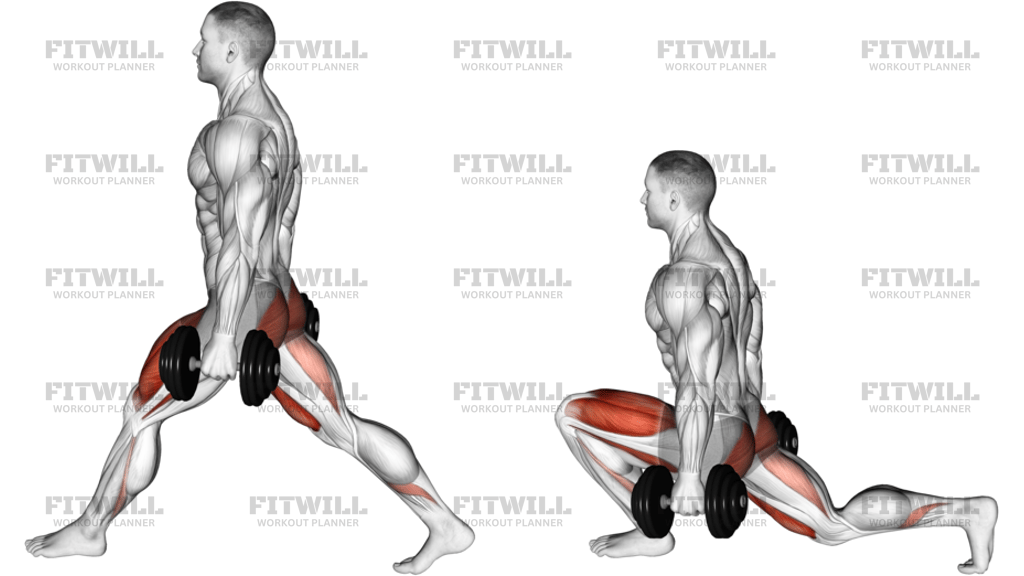
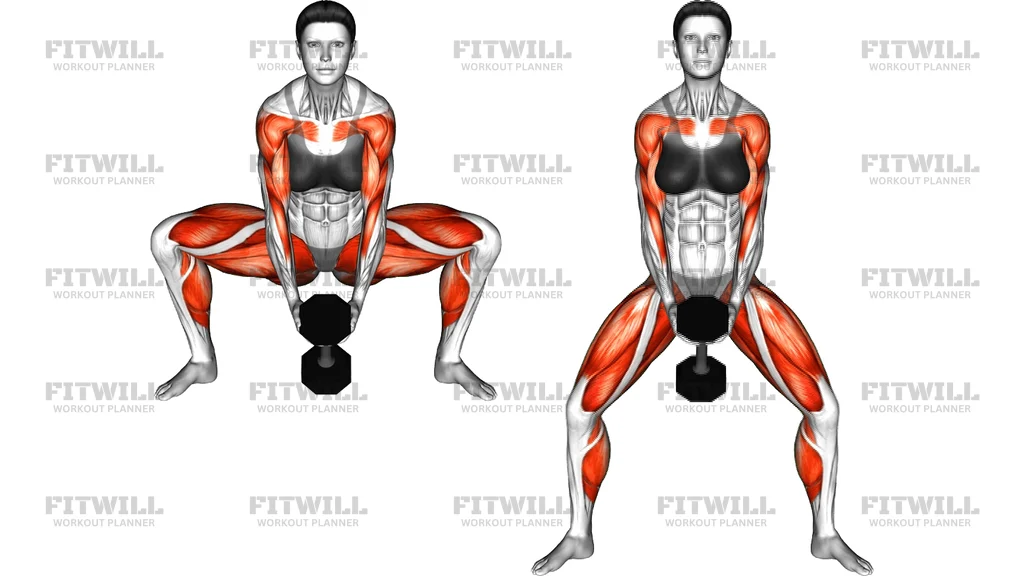
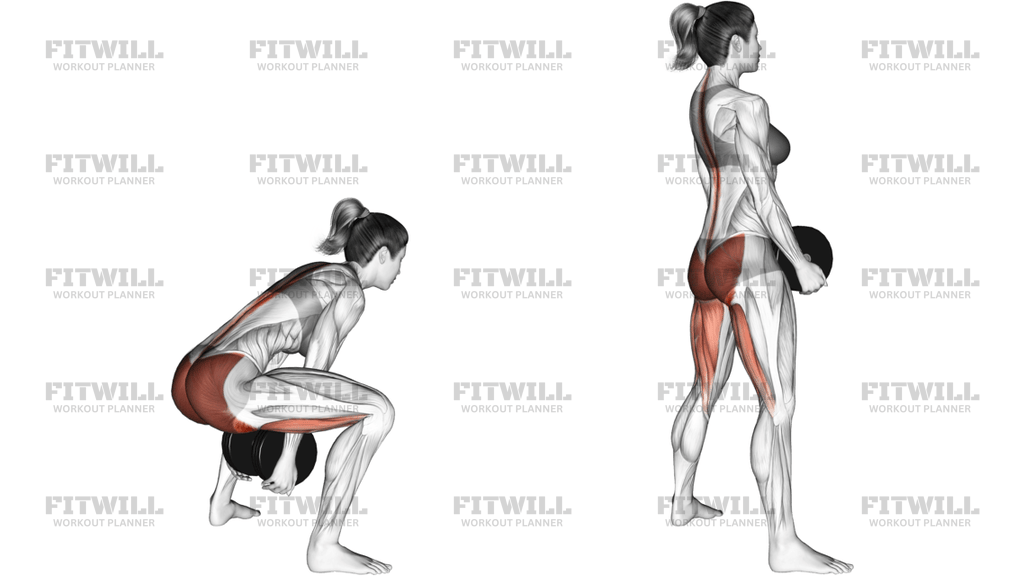
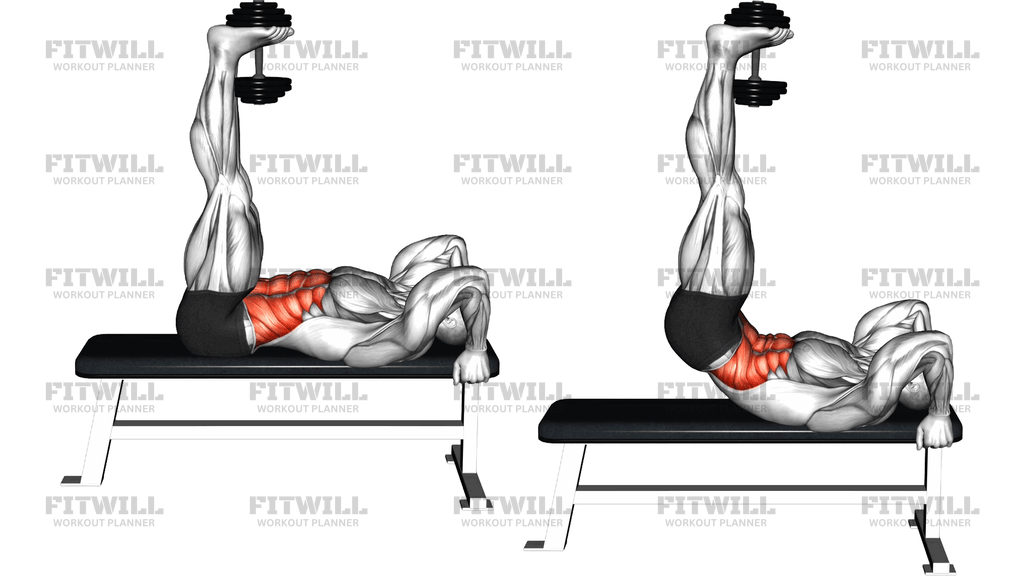
Dumbbell Goblet Side Lunge Stretch (Version 2)
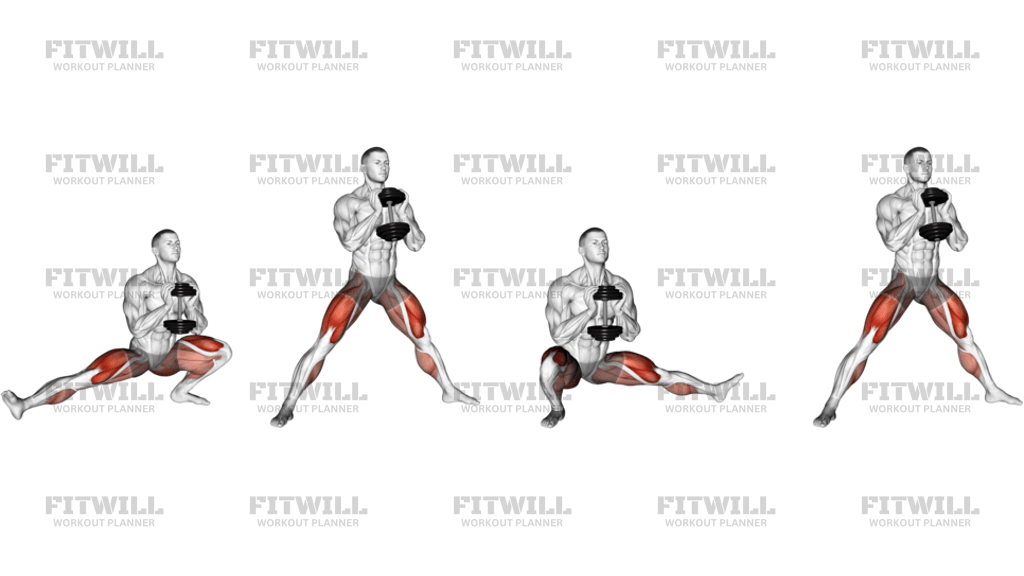
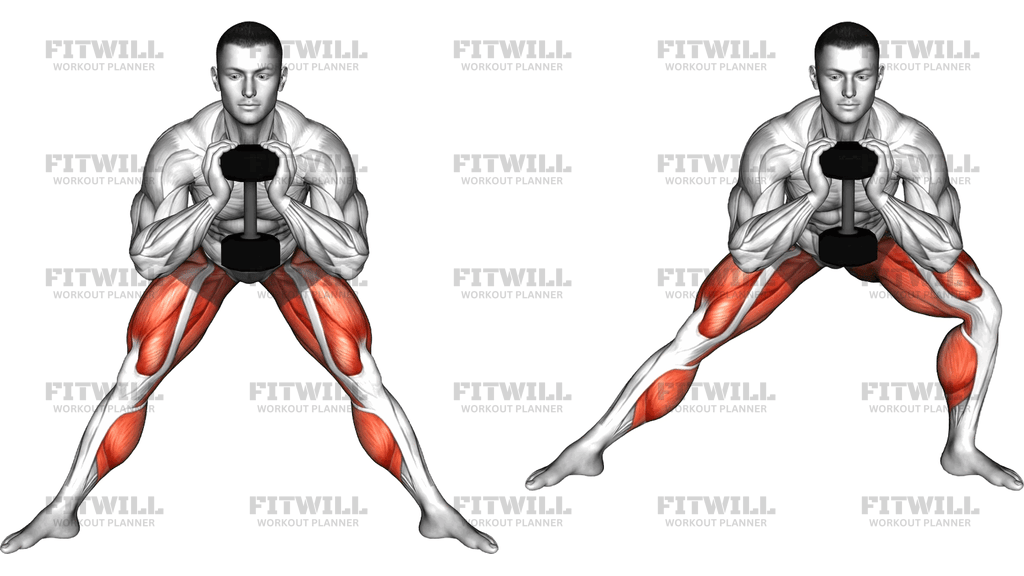
The Dumbbell Goblet Side Lunge Stretch is a wide-stance mobility drill where you hold a single dumbbell goblet-style against your chest and shift your weight side to side over a planted, straddled base. Instead of stepping out into a traveling lunge, both feet stay fixed on the floor while your hips slide laterally over one leg, straightening the opposite leg and opening up the inner thigh. It blends a loaded stretch for the adductors with light work for the bent-leg side's quads and glutes.
This movement is especially useful for anyone whose squat depth is limited by tight inner thighs, as well as desk workers and lifters who spend long hours sitting with their legs closed. The adductors are a muscle group that rarely gets lengthened in daily life, and this stretch puts them under a controlled, adjustable load. Because you can widen or narrow your stance and choose how deep you shift, it scales cleanly from stiff beginners to flexible athletes.
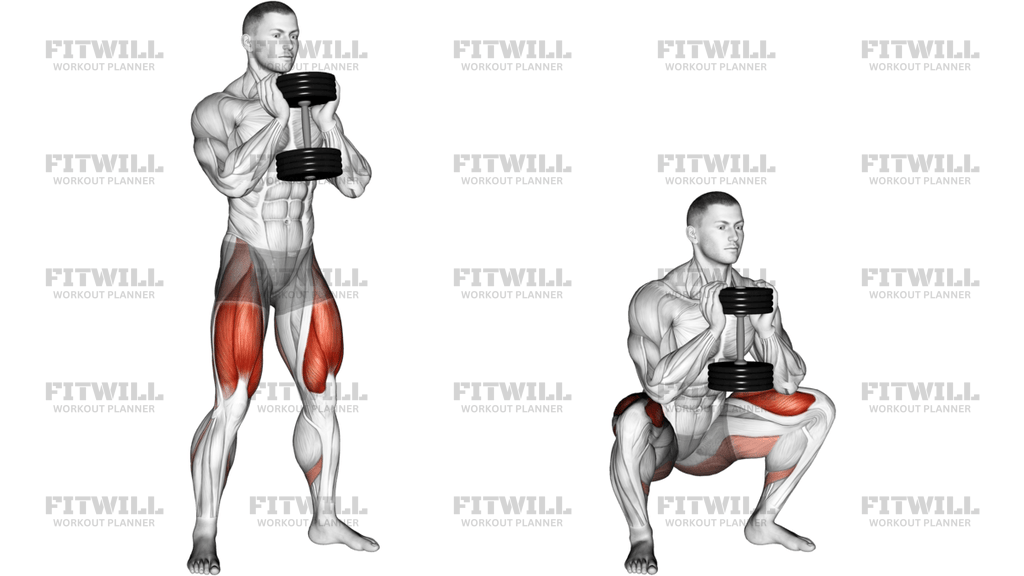
The goblet hold is what makes the setup work. Cradling the dumbbell vertically at your chest with both hands acts as a counterweight, letting you sit your hips back and down without rounding your lower back or hinging forward excessively. That keeps your chest tall and your spine neutral while your pelvis drops into the stretch. The heavier or lighter the dumbbell, the more or less counterbalance you get, so a moderate weight is usually the sweet spot.
To execute it well, set your feet roughly twice shoulder-width apart with toes turned out slightly. Shift your hips sideways over one foot, letting that knee bend and travel out in line with the toes while the opposite leg stays long with the foot flat on the floor. You should feel a firm pull along the inner thigh of the straight leg. Pause briefly at the end range, then slide across to the other side without standing up through the middle.
The main safety points are simple: keep the bent knee tracking over or slightly outside the toes rather than collapsing inward, keep both heels down, and treat the stretch as firm tension rather than pain. Common use cases include pre-squat warm-ups, cooldowns after leg day, and standalone hip-mobility sessions on rest days.
Fitwill
Log Workouts, Track Progress & Build Strength.
Achieve more with Fitwill: explore over 9600 exercises with images and videos, access built-in and custom workouts, perfect for both gym and home sessions, and see real results.
Start your journey. Download today!




Instructions
- Stand with your feet about twice shoulder-width apart, toes turned out 15 to 30 degrees, and your weight spread evenly across both feet.
- Hold one dumbbell vertically against your chest, cupping both hands under the top head so your elbows point down and stay close to your ribs.
- Brace your abs, lift your chest, and pull your shoulders back so the dumbbell rests against your sternum rather than drifting forward.
- Shift your hips sideways over your right foot, bending the right knee and letting it travel out in the same direction the toes are pointing.
- Keep the left leg straight and the left foot completely flat on the floor as you lower into the shift.
- Descend until you feel a firm stretch along the inner thigh of the straight leg, and hold that end position for one to two seconds.
- Keep the dumbbell at chest height throughout so it stays a counterbalance and does not pull your torso into a rounded slump.
- Drive through the bent leg's heel and mid-foot to slide your hips across to the left side, passing through center without standing all the way up.
- Breathe steadily throughout: exhale as you shift into the stretch, inhale as you move through center to the other side.
- Alternate sides for your desired number of reps, then bring your feet together and stand up out of the wide stance to reset.
Tips & Tricks
- If your bent knee caves inward as you sink, deliberately push it out over your little toe — the goblet hold gives you something to brace against while you correct it.
- A lifting heel on the straight-leg side is a sign your stance is too wide or your adductors are too tight for the current depth; narrow the stance slightly rather than letting the foot roll.
- Resist the urge to lean the dumbbell toward the side you are shifting into; keeping it centered at your sternum is what preserves the upright torso and the quality of the stretch.
- Pause one to two seconds at the deepest point of each shift. Rushing side to side turns a stretch into a momentum drill and mostly works the bent leg instead.
- Keep the trailing leg genuinely straight but not locked hard; a soft knee with the foot flat keeps tension on the adductors instead of dumping stress into the joint.
- Expect one side to feel tighter than the other. Spend an extra rep or two on the tighter side rather than forcing the looser side deeper to match.
- Choose a dumbbell light enough that it never limits your range — it is there for balance, not loading. Ten to twenty-five pounds covers most people.
- If you feel a pinch in the hip crease of the bent leg rather than a stretch in the straight leg, sit your hips back slightly and reduce the depth before widening again.
- Work on a flat, non-slip surface. This exercise puts real pressure through the outside edge of each foot, and a slick floor invites your feet to slide wider than you intended.
Frequently Asked Questions
Which muscles does the Dumbbell Goblet Side Lunge Stretch target?
The primary target is the adductors along the inner thigh of the straight leg, which are under the greatest lengthened tension. The bent leg's quads and glutes work lightly to control the shift, and the calves help stabilize both ankles.
Is the Dumbbell Goblet Side Lunge Stretch a strength exercise or a stretching exercise?
It is primarily a loaded stretch, so treat it as mobility work rather than a strength builder. The dumbbell is there as a counterbalance to help you keep an upright torso and reach a deeper, more controlled position.
How is this different from a regular dumbbell side lunge?
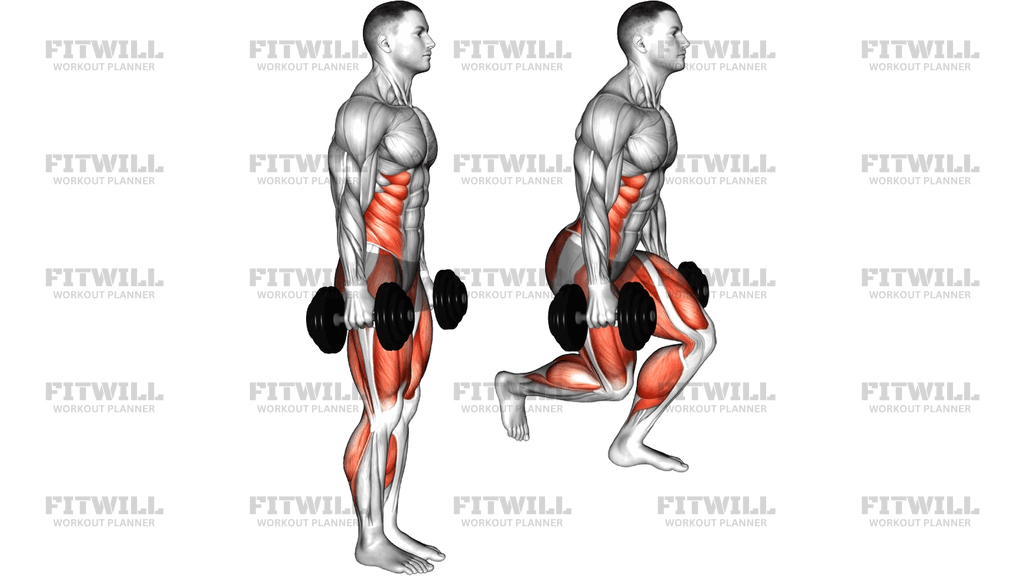
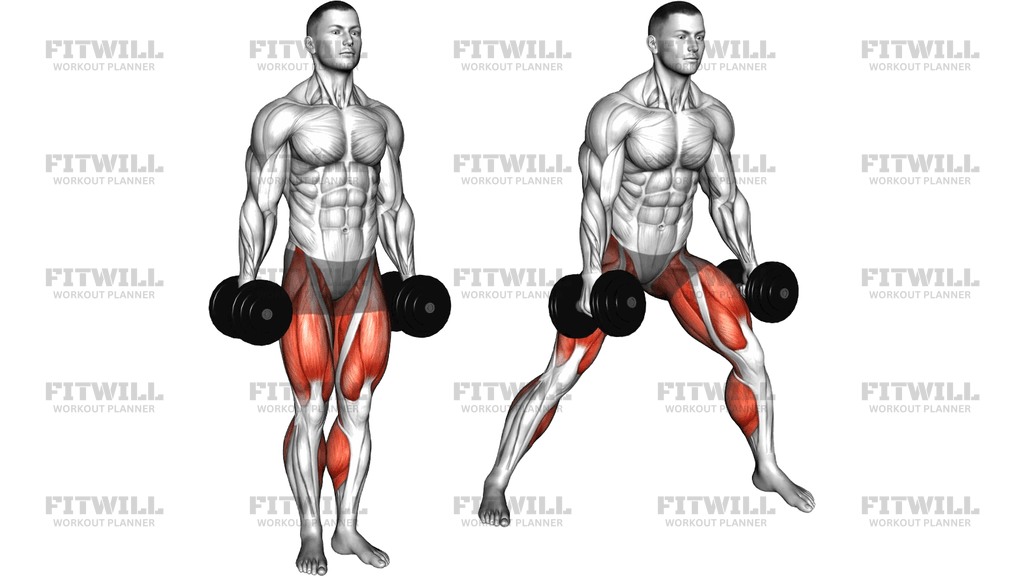
In a side lunge you step out, load the bent leg, and drive back up to standing. In the Dumbbell Goblet Side Lunge Stretch your feet never move — you shift side to side over a fixed wide stance and pause in the stretched position instead of returning to a narrow stand.
Can beginners do the Dumbbell Goblet Side Lunge Stretch?
Yes, and it is actually a good early mobility drill because the range is self-regulated by your stance width. Start with a very light dumbbell or just your hands clasped at your chest, and narrow the stance until you can keep both heels down.
Why hold the dumbbell at the chest instead of letting it hang at my side?
The goblet position puts the weight in front of your torso, which counterbalances your hips sitting back and keeps your chest lifted. A hanging dumbbell would pull one shoulder down and twist your spine as you shift.
How long should I hold each side of the Dumbbell Goblet Side Lunge Stretch?
For a warm-up, pause one to two seconds per side and flow continuously between shifts. For a deeper cooldown stretch, hold one side for twenty to thirty seconds before switching.
My heel lifts off the floor on the straight-leg side. What should I change?
That usually means your stance is wider than your current hip mobility allows. Bring your feet in a few inches and slightly reduce the depth of the shift until your whole foot stays flat, then widen gradually over weeks.
What can I substitute if I do not have a dumbbell?
A kettlebell held by the horns works identically, and with no weight at all you can clasp your hands in front of your chest for a small counterbalance. The stance and side-to-side shift stay the same in every version.
Is it safe for my knees to shift this deep to one side?
It is generally well tolerated as long as the bent knee tracks in the same direction as the toes and does not travel past them aggressively. If you feel pinching or sharp pain in the knee rather than a stretch in the inner thigh, reduce the depth and keep the shift more shallow.
When is the best time to use the Dumbbell Goblet Side Lunge Stretch in my workout?
It works well as part of a warm-up before squats, deadlifts, or any leg session, since it opens the inner thighs under light load. It also fits nicely in a cooldown or a dedicated hip-mobility block on rest days.