Dumbbell Sumo Deadlift High Pull
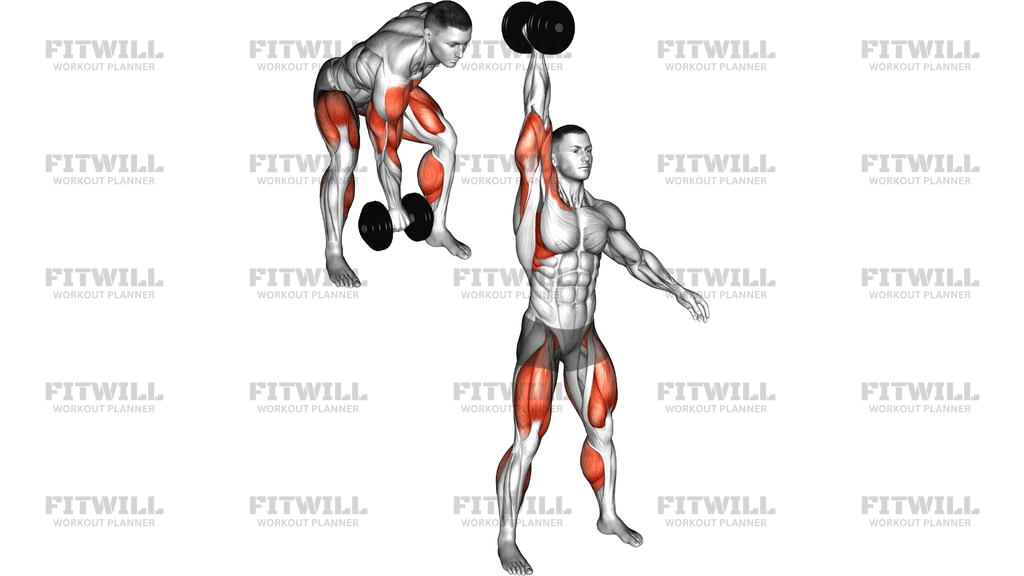
The Dumbbell Sumo Deadlift High Pull is a two-phase, full-body lift that starts like a wide-stance deadlift and finishes with an upright-row style pull. You set your feet much wider than shoulder width, toes turned out, and hold a single dumbbell with both hands between your legs. From there you drive through the floor to stand, then immediately use that momentum to pull the dumbbell up along the front of your body toward upper chest or chin height before lowering it back down under control. One dumbbell is all you need, which makes this a go-to option for home training, hotel gyms, or condensing a barbell-style movement into limited equipment.
This lift earns its place in a program because it chains two powerful patterns together. The deadlift portion loads the quads, glutes, hamstrings, and inner thighs hard — the wide sumo stance puts real emphasis on the adductors, which most pulling exercises ignore. The high pull portion then asks your traps, shoulders, and upper back to finish the job, while your grip and core work the entire time. Because the pull is fast and explosive, it also teaches you to transfer force from your hips to your upper body in one coordinated sequence, which carries over to sports and everyday lifting.
Setup matters more here than in most dumbbell moves because the wide stance changes your leverage. Your knees must track over your toes as they bend outward, and your torso needs to stay taller than it would in a conventional deadlift. If your stance is too narrow or your toes are not turned out enough, your knees will cave inward and your lower back will round to reach the weight. Take a moment to position your feet, grip the dumbbell head with both hands, and set your chest up before you pull — the whole rep runs smoothly or poorly based on that first position.
Execution is a rhythm, not two separate exercises. Push the floor away with your legs, and as the dumbbell passes your knees, extend your hips aggressively and let that drive carry the dumbbell upward, guiding it with a pull from your elbows — elbows stay high and wide, above the hands. Then reverse the path: lower the dumbbell to your thighs, hinge it back down inside your stance, and reset your brace before the next rep. Breathe in and brace at the bottom, exhale as you pull.
The Dumbbell Sumo Deadlift High Pull fits well as a first strength exercise on lower-body or full-body days, as a conditioning move in circuits at lighter weights, or as a technique gateway to barbell sumo deadlifts and clean pulls. Keep the weight modest at first — this is a speed and coordination lift, and the most common error is grabbing a heavy dumbbell and muscling it up with your arms and lower back instead of driving with the legs. If your form breaks down, the answer is almost always a lighter bell and crisper hip extension, not more effort.
[ Workout Log & Planner ]
Put your next workout in Fitwill
Keep your plan and training log ready when you are.


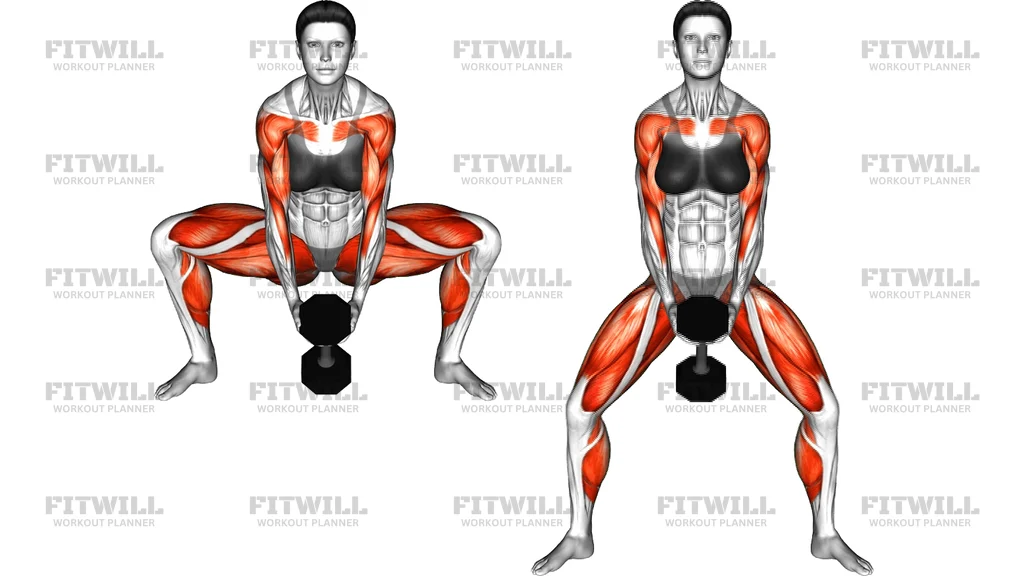
Instructions
- Place a single dumbbell on the floor and stand over it with your feet roughly one and a half shoulder widths apart, toes turned out at about 30 to 45 degrees so the dumbbell sits directly between your legs.
- Grip the top head of the dumbbell with both hands, one hand over the other or side by side, and let it hang vertically with your arms straight.
- Sit your hips down and back until your thighs are near parallel to the floor, keeping your knees pushed out over your toes, chest tall, and spine neutral.
- Take a deep breath into your belly and brace your core before you initiate the pull.
- Drive through your whole foot to stand, extending your hips and knees forcefully while the dumbbell travels up close to your body.
- As the dumbbell passes your thighs, pull your elbows up and out to the sides, letting the dumbbell rise to around upper chest or chin height with your elbows higher than your hands.
- Pause briefly at the top with your hips fully extended and shoulders pulled up and back.
- Reverse the path under control: lower the dumbbell to your thighs, then hinge at the hips and bend your knees to set it back down inside your stance.
- Exhale at the top of the pull and inhale again at the bottom before each new rep.
- Reset your stance and brace between reps if your position drifts, rather than grinding out sloppy repetitions.
Tips & Tricks
- If your knees collapse inward during the pull, widen your toe angle and actively think about spreading the floor with your feet — the sumo stance only works if the knees track over the toes.
- Do not turn this into a biceps exercise. If your arms bend before your hips finish extending, the weight is too heavy or you are rushing the leg drive; the arms should only steer the dumbbell after the hips snap open.
- Keep the dumbbell tracking close to your body in a straight vertical line. Letting it swing away from you multiplies stress on the lower back and kills the pull's efficiency.
- Rounding the upper back in the bottom position is common when the dumbbell is heavy. Lift your chest and pull your shoulders down and back before each rep starts.
- Your heels must stay glued to the floor. If you rise onto your toes during the deadlift portion, your stance is likely too narrow or your ankles need more practice at depth.
- Use a lighter dumbbell than your normal sumo deadlift weight — the high pull demands speed, and the top position is much harder than the bottom looks.
- If your grip fails before your legs do, try alternating which hand wraps on top each set so both hands get even work holding the single dumbbell head.
- Stop each rep with a full reset instead of bouncing out of the bottom; the controlled descent is where your hamstrings and inner thighs get a lot of their work.
- Warm up your hips with a few bodyweight sumo squats first — the deep, toes-out position is unfamiliar to most lifters and feels much better once it's greased.
Frequently Asked Questions
What muscles does the Dumbbell Sumo Deadlift High Pull work?
It hits the quads, glutes, hamstrings, and inner thighs during the wide-stance deadlift portion, then the traps, shoulders, and upper back during the pull. Your grip, forearms, and core stay active through the entire rep.
Is the Dumbbell Sumo Deadlift High Pull suitable for beginners?
Yes, if you start light. Learn the pattern by doing the sumo deadlift portion alone for a few sessions, then add the high pull once you can keep your knees out and spine neutral at the bottom.
How wide should my stance be for the Dumbbell Sumo Deadlift High Pull?
Roughly one and a half shoulder widths, with toes turned out 30 to 45 degrees. Adjust until your knees can track over your toes at the bottom without collapsing inward and the dumbbell hangs freely between your legs.
How high should I pull the dumbbell?
To about upper chest or chin height, with your elbows leading and staying above your hands. If the dumbbell can only reach your waist, the weight is too heavy for a proper high pull.
Why does my lower back ache after this exercise?
Usually because the dumbbell drifts away from your body, your chest drops in the bottom position, or you lift with your back instead of driving with your hips. Lighten the load and film a set from the side to check your spine position.
Can I use two dumbbells instead of one for the Dumbbell Sumo Deadlift High Pull?
It's better to stick with one dumbbell held with both hands, as the exercise name specifies. Two separate dumbbells make it hard to keep the pull centered and symmetrical.
What can I substitute if I don't have a dumbbell?
A kettlebell by the horns or a weight plate held with both hands works well with the same wide stance and pull. The key is a single implement you can grip centrally between your legs.
How is this different from a regular Dumbbell Sumo Deadlift?
The regular version stops when you're standing tall with the dumbbell at your thighs. The high pull adds an explosive second phase where your hips' momentum carries the dumbbell up to chest height, recruiting your traps and shoulders.
How many reps should I do of the Dumbbell Sumo Deadlift High Pull?
For strength and power, work in sets of 4 to 8 reps with a moderate weight. For conditioning circuits, use a lighter dumbbell for 10 to 15 reps, stopping when your form or pull speed drops off.
Should my knees stay bent at the top of the pull?
No — finish with your hips and knees fully extended and standing tall, then re-bend to lower the weight. Cutting hip extension short is one of the most common faults and shifts the work away from your glutes.