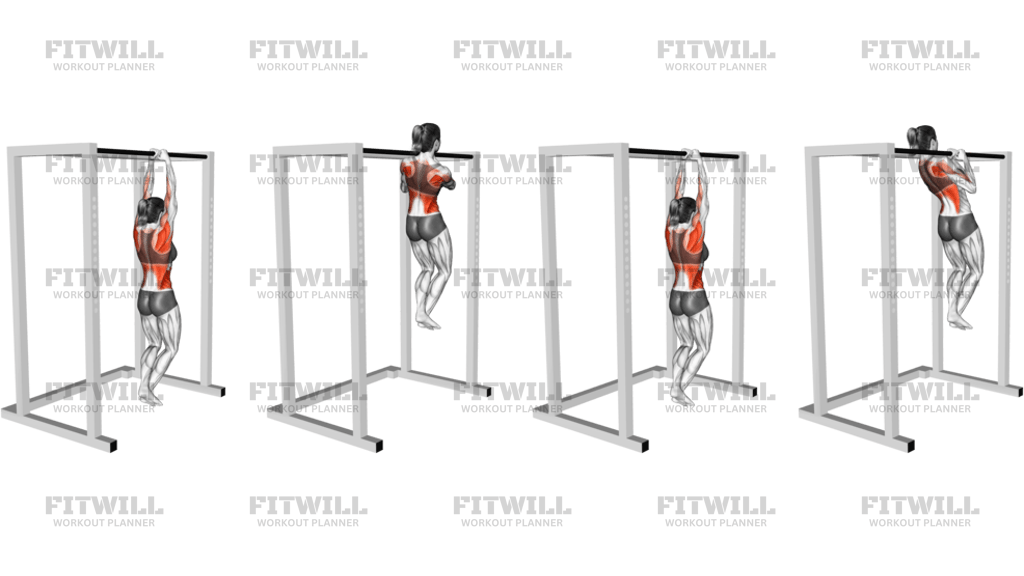
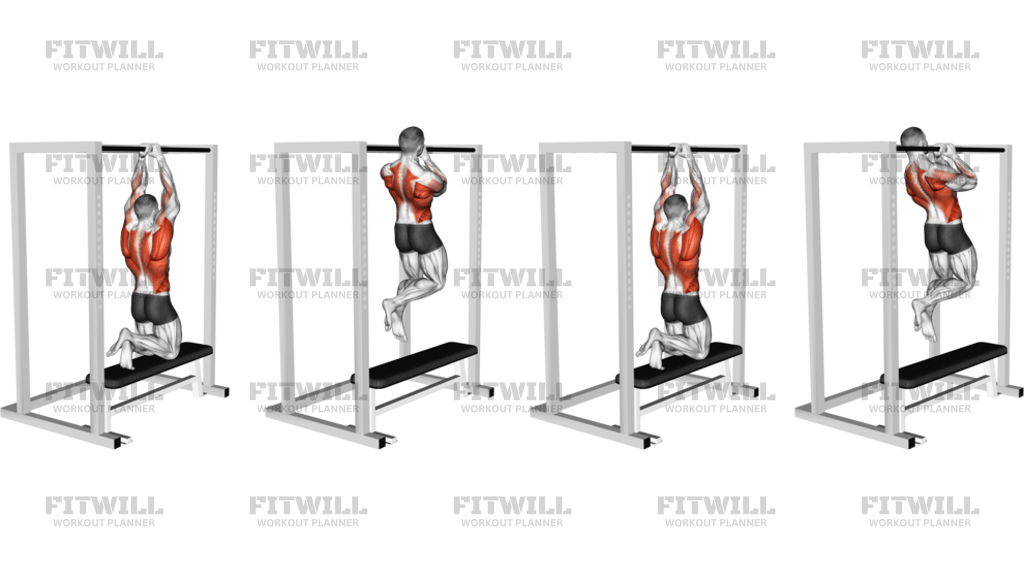
Isometric Hold Close Grip Chin Up
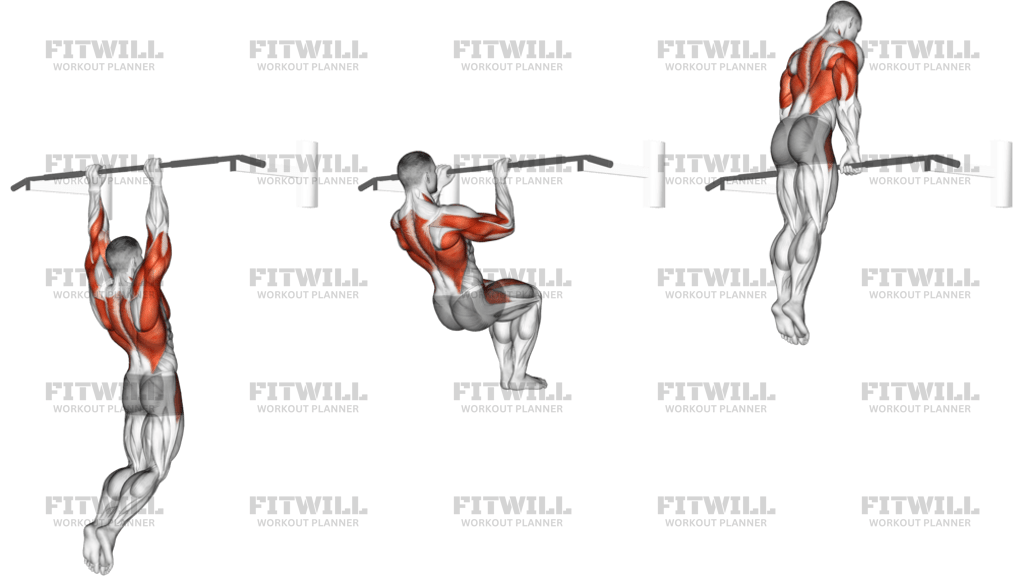
The Isometric Hold Close Grip Chin Up is a static strength exercise performed on a pull-up bar with a narrow, underhand (supinated) grip. Instead of pulling through full repetitions, you pull yourself up until your chin clears the bar and then hold that top position for a set amount of time with your legs hanging or crossed behind you. The static hold removes momentum from the equation and forces the pulling muscles to work continuously against your full body weight.
This movement is especially useful for anyone building toward their first unassisted chin up, since holding the top position trains the exact point of the range where most people are weakest. It is equally valuable for experienced lifters who want to strengthen the lockout, improve bar control, and add training volume to the biceps and upper back without the joint stress of repeated concentric and eccentric reps.
The narrow supinated grip shifts a large share of the work to the biceps and forearm flexors, while the lats, rhomboids, mid traps, and rear delts stabilize the shoulder girdle and keep the chest driven toward the bar. Your core and hip flexors work isometrically as well to stop the legs from swinging and keep the body in a clean vertical line under the bar.
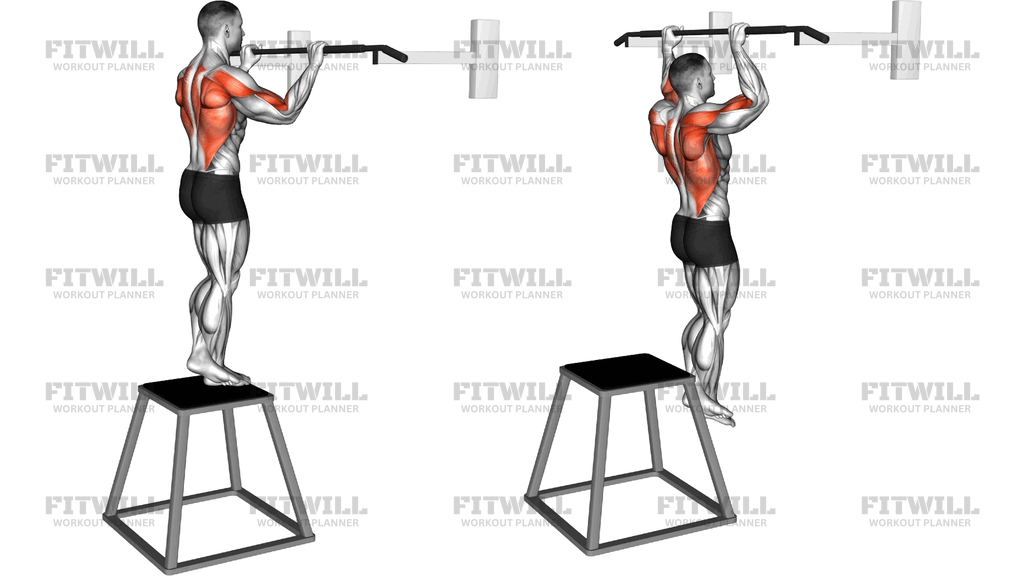
Setup matters more than most people expect. Because you have to reach the top position under control, many lifters will need a box, bench, or jump to get there rather than pulling from a dead hang every set. Grip the bar with hands roughly shoulder-width apart or slightly narrower, palms facing you, and aim to finish with the bar at or just below your collarbone and elbows pulled down close to your ribs.
To execute the hold well, keep the chin over the bar, the elbows tight to the body, and the shoulder blades pulled down and together rather than shrugged up toward your ears. Breathing should stay steady and controlled, shallow breaths through the nose or pursed lips, never a full breath hold. When the position starts to degrade, such as the chin dropping below the bar or the elbows drifting outward, end the set rather than grinding through a sloppy hold.
Common use cases include chin up progression work, finishing sets after regular pull-ups, and low-volume strength circuits. Because the exercise places sustained tension on the elbow flexors and shoulder stabilizers, progress hold times gradually, rest fully between sets, and use assistance such a band or spotter if you cannot yet hold the top position with clean form.
[ Workout Log & Planner ]
Put your next workout in Fitwill
Keep your plan and training log ready when you are.


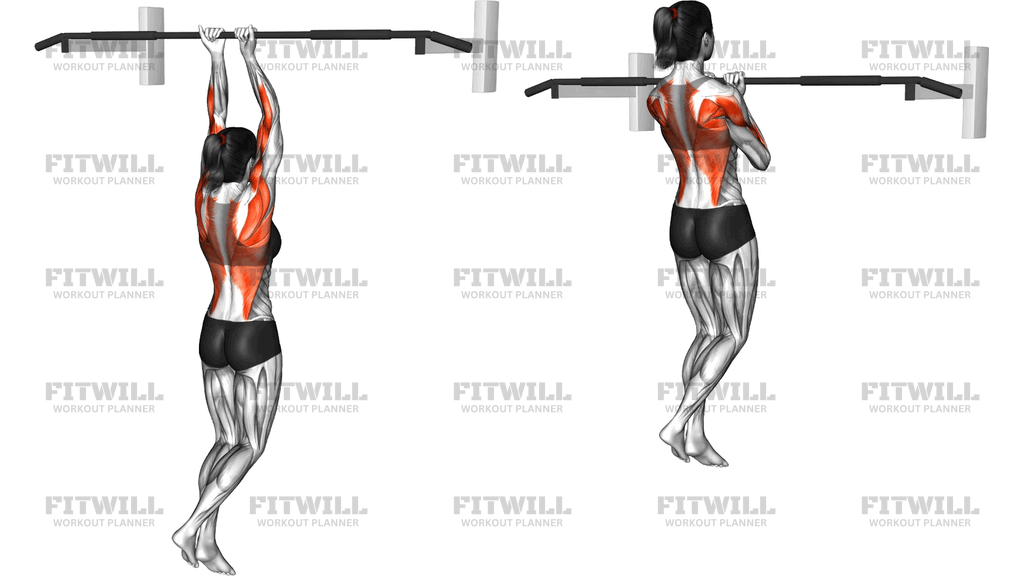
Instructions
- Stand under a pull-up bar and grip it with an underhand grip, hands about shoulder-width apart or slightly narrower, thumbs wrapped around the bar.
- Use a box, bench, or controlled jump to raise yourself to the top position, with your chin over the bar, the bar near your upper chest, and your elbows bent fully and tucked close to your ribs.
- Lift your feet off the support so you hang from the bar, letting your legs hang down or crossing your ankles behind you with knees slightly bent.
- Pull your shoulder blades down and back, lift your chest toward the bar, and brace your core to stop any swinging.
- Hold this top position for your target time, keeping your chin above the bar and your elbows pinned near your sides the entire time.
- Breathe in short, steady breaths throughout the hold instead of holding your breath.
- When the hold ends or your position starts to slip, lower yourself under control to a dead hang or step back onto your box or bench rather than dropping off the bar.
- Rest fully between holds, shake out your grip, and reset your hand position on the bar before starting the next set.
- Stop the set as soon as your chin drops toward the bar, your elbows flare out, or your shoulders shrug up, since those are signs the hold is no longer effective.
Tips & Tricks
- Choose a hold time you can complete with your chin clearly over the bar; a clean 10-second hold beats a 25-second hold where the chin slowly sinks below the bar.
- If your elbows drift outward as you fatigue, think about squeezing them toward each other behind you, which keeps the biceps and lats loaded instead of dumping stress into the shoulders.
- Avoid shrugging your shoulders up to your ears; actively press the bar down and pull the shoulder blades toward your back pockets to keep the upper back engaged.
- Keep your legs still. Swinging or kicking means your core has disengaged and momentum is buying you time your pulling muscles are not working for.
- If you cannot reach the top position cleanly, set the bar lower or use a sturdy box so you can step into the hold instead of straining a partial pull every set.
- Chalk or a firm full grip on the bar will usually outlast a loose grip; if your hands start sliding, end the set rather than regripping mid-hold.
- Progress by adding 2 to 5 seconds per hold across weeks, not by jumping straight to long holds, since the elbow flexors take sustained loading seriously.
- Pair this hold with slow negative chin ups in the same session if your goal is your first full chin up; the two cover both ends of the range of motion.
- Keep your wrists neutral and stacked over the bar; cocked wrists shorten the biceps contribution and often lead to forearm burn before the hold should end.
Frequently Asked Questions
Which muscles does the Isometric Hold Close Grip Chin Up work the most?
The biceps take the largest share because of the narrow underhand grip and the fully bent elbow position during the hold. The lats, upper back, forearms, and grip muscles work hard to keep you stable under the bar.
Why use a close grip instead of a regular shoulder-width grip for this hold?
The narrower supinated grip puts the elbows in front of the body and shortens the lever at the shoulder, which places more continuous tension on the biceps and forearm flexors. It also lets many lifters hold the top position more comfortably with the elbows tucked.
How do I get into the top position if I cannot do a full chin up yet?
Use a sturdy box or bench to step up, or a small controlled jump, so you arrive at the top with your chin over the bar. A resistance band looped over the bar or a spotter supporting your waist can also reduce the load enough to hold cleanly.
How long should I hold the Isometric Hold Close Grip Chin Up?
Start with 5 to 15 second holds for 3 to 5 sets and only extend the time when you can keep your chin over the bar with elbows tucked for every second of the set. Quality of position matters far more than the clock.
What are the most common mistakes in this exercise?
The biggest ones are letting the chin sink below the bar, shrugging the shoulders up to the ears, flaring the elbows outward, and swinging the legs to buy time. All of these shift tension away from the pulling muscles and reduce the training effect.
Can the Isometric Hold Close Grip Chin Up help me get my first chin up?
Yes, it is one of the most direct progressions because it strengthens the hardest part of the movement, the top position, under your full body weight. Combine it with slow lowering work and band-assisted full reps for the best results.
How should I breathe during the hold?
Take short, steady breaths throughout the hold rather than holding your breath. Bracing your core lightly while continuing to breathe keeps blood pressure spikes down and helps you last longer in the position.
Is it safe to do this exercise every day?
Daily practice is not necessary and the sustained loading on the elbows and grip benefits from recovery. Two to three sessions per week with at least one rest day between them is a sensible starting point.
What can I substitute if I have no pull-up bar available?
A close-grip supinated hold on a sturdy overhead bar or rings works the same way, and an isometric biceps curl hold against a fixed surface trains a similar elbow-flexor contraction. Neither fully replaces the hanging position, but both are reasonable stand-ins.