Lying Floor Single Leg Negative Dragon Flag
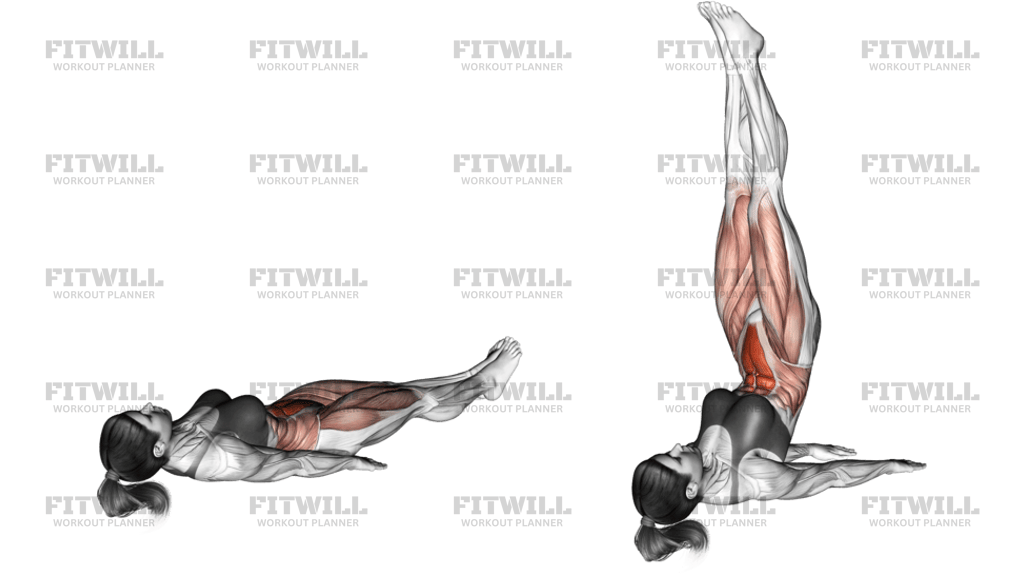
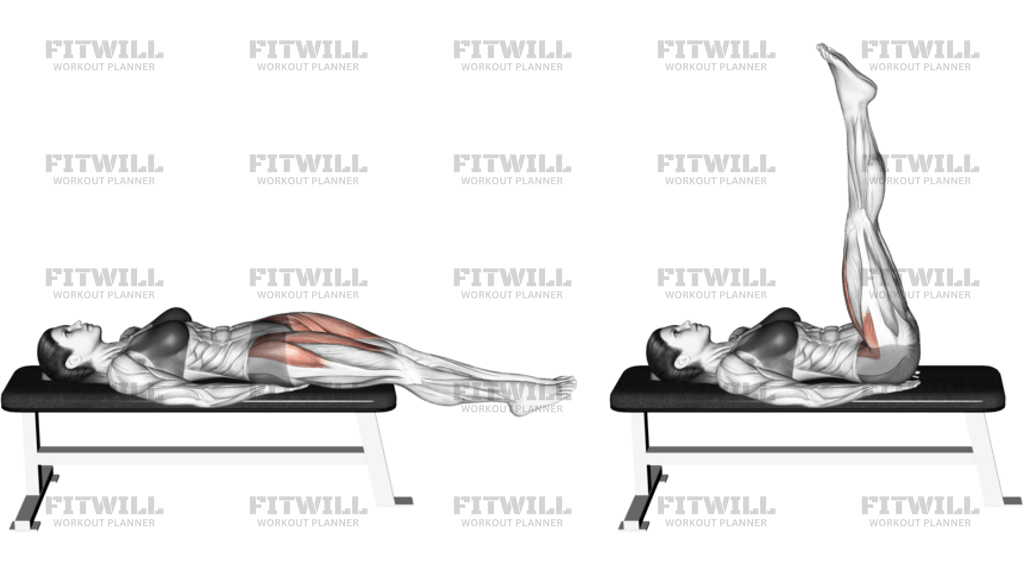
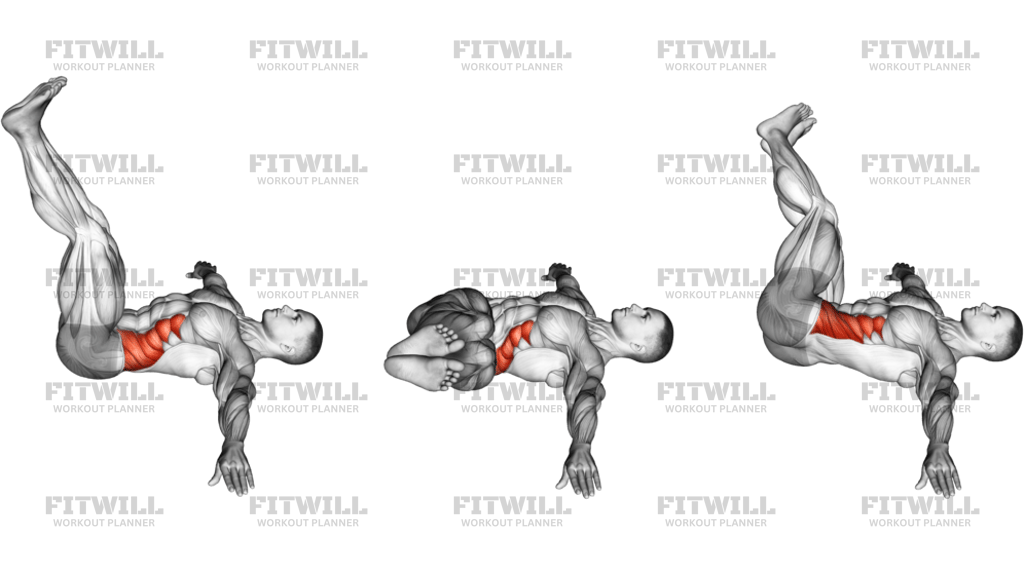
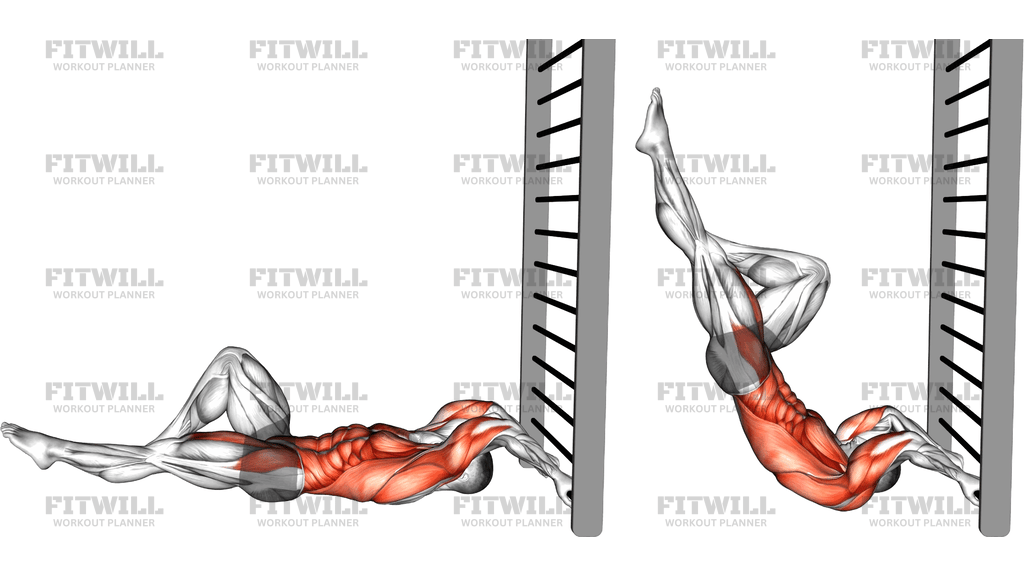
The Lying Floor Single Leg Negative Dragon Flag is an eccentric-only version of one of the toughest core exercises in existence, scaled down so you can actually train it productively. You lie on your back on the floor, grip a sturdy anchor such as the base of wall bars or a rack upright overhead, tuck one knee to your chest, and lift into the vertical position with the other leg straight. From there, the entire job is to resist gravity on the way down, peeling your hips and spine onto the floor one segment at a time while the straight leg travels in a slow arc from vertical to just above the ground.
Because only the lowering half of the dragon flag is performed, you can spend three to six controlled seconds under tension on every rep even if you cannot yet do a single full concentric dragon flag. Muscles adapt to eccentric loading at higher force levels than they can produce concentrically, which makes negatives the standard tool for building toward this movement. The tucked leg is the key modification here: keeping one knee pulled into your chest shortens the lever your abs must control, cutting the load substantially compared to the two-leg version while preserving the exact hip-hinge and spinal-control pattern you need later.
The primary work comes from the lower abs and deep core, which must hold the pelvis and lumbar spine rigid as the body pivots down from the shoulders. The straight leg places a long lever arm on the hip flexors and rectus femoris, the lats and grip work isometrically as you pull against the anchor, and the glutes contribute by keeping the hips from collapsing into an arch. The obliques fight side-to-side rotation, which becomes very real when one leg is bent and the other is straight.
Setup matters more here than in most ab drills. Your grip point should be low and solid so your arms can stay extended overhead with your shoulders and head supported on the floor, and your body should be aligned so the descent travels in one straight line rather than drifting sideways. Lying directly on the floor, rather than on a bench, gives you a defined end point: the rep is finished when your pelvis and back are flat, which prevents the sloppy partial reps that creep in once fatigue sets in.
This exercise suits intermediate to advanced trainees working toward the full dragon flag, calisthenics athletes building midline strength for levers and hanging work, and anyone who wants serious anti-extension strength for the trunk without spinal compression from weighted flexion. Keep the tempo honest, stop the set as soon as your hips sag or your lower back arches away from the floor, and treat each rep as a controlled lowering, never a collapse.
[ Workout Log & Planner ]
Put your next workout in Fitwill
Keep your plan and training log ready when you are.


Instructions
- Lie on your back on the floor with your head toward a low, fixed anchor such as the bottom of wall bars or a rack upright, and take a firm overhand grip with both arms extended overhead.
- Pull one knee in toward your chest and hold it there with your hands or by keeping it tightly tucked; this leg stays bent for the entire set.
- Draw both knees toward your chest, then extend the straight leg toward the ceiling while lifting your hips and lower back off the floor until your body is stacked vertically over your shoulders, supported on your upper back and head.
- Squeeze the straight leg tight, point the whole body into one line, and press your grip into the anchor so your shoulders stay pulled down and stable.
- Inhale at the top, then begin lowering by letting the hips travel down and toward your feet in a slow arc, keeping the straight leg locked out and the tucked knee glued to your chest.
- Resist the descent for three to six seconds, trying to touch each part of your back to the floor sequentially instead of letting the whole body drop at once.
- Exhale slowly through the lowering phase and keep bracing so your lumbar spine never arches sharply as you approach the floor.
- Finish with your pelvis and back flat on the floor and the straight leg resting lightly on the ground beside the tucked leg.
- To reset, pull both knees back to your chest, lift your hips, and re-extend into the vertical starting position before beginning the next negative.
- Complete all reps on one side, rest, then switch which leg stays tucked and repeat.
Tips & Tricks
- The most common failure is dropping too fast. If you cannot take at least three seconds from vertical to flat, tuck the working leg slightly or shorten the range by stopping the descent when your hips reach about 45 degrees.
- Keep the tucked knee pressed firmly to your chest for the whole rep. If it drifts away, your lever suddenly lengthens mid-set and the descent usually turns into a collapse.
- Watch for the hips twisting toward the straight leg. Square your pelvis to the ceiling at the top and pick a fixed point on the ceiling to keep the descent in one plane.
- Grip the anchor hard and think about pulling it toward your feet. A slack grip lets your shoulders ride up and removes the upper-back stability the pivot depends on.
- Do not let your lower back slap into an arch just before you land. The last inch of the descent should be the slowest, not the fastest.
- If your hip flexors cramp, that usually means the straight leg is doing the work your abs should be doing. Reduce the arc or bend the working knee a little and rebuild the extension gradually.
- Keep your neck relaxed and your head heavy on the floor. Straining the chin forward is a sign you are losing the brace rather than controlling the movement.
- Quality beats quantity here: three or four clean five-second negatives train more than ten sloppy drops. End the set when the tempo slows noticeably.
- Progress by slowing the tempo first, then moving to a shallower tuck on the bent leg, and only then attempting the two-leg negative dragon flag.
Frequently Asked Questions
Which muscles does the Lying Floor Single Leg Negative Dragon Flag work?
The lower abs and deep core do most of the work holding your pelvis and spine rigid during the descent, with strong support from the hip flexors on the straight leg, the obliques against rotation, and the lats and grip from pulling on the anchor.
Why keep one knee tucked during the Lying Floor Single Leg Negative Dragon Flag?
The tucked leg shortens the lever your core has to control, which cuts the load dramatically compared to the two-leg dragon flag. It lets you practice the exact lowering pattern with a tempo you can actually sustain.
Is the Lying Floor Single Leg Negative Dragon Flag suitable for beginners?
Not as a first core exercise. Build a base with lying leg raises, hollow holds, and slow reverse crunches first, then start with partial-range negatives where you only lower from vertical to about 45 degrees.
What kind of anchor do I need for the Lying Floor Single Leg Negative Dragon Flag?
Any low, solid point you can grip overhead while lying on the floor works, such as the base of wall bars, a heavy rack upright, or a fixed bar close to the ground. It must not move when you pull on it hard.
How slow should the lowering phase be?
Aim for three to six seconds from the vertical position to flat on the floor. If you cannot control at least three seconds, reduce the range rather than rushing the rep.
Why do my lower back and hips arch at the bottom of the descent?
That happens when core tension runs out before the rep is finished, so the hips drop ahead of the brace. Stop the negative at the point where your back still stays flat, and extend the range over weeks as control improves.
How is the Lying Floor Single Leg Negative Dragon Flag different from a full dragon flag?
A full dragon flag includes pulling your body back up to vertical, while this version only trains the controlled lowering. Because the eccentric portion is the hardest part, this lets you accumulate quality tension long before you can lift back up cleanly.
Should I do all reps on one leg before switching?
Yes, finish the set with one leg tucked, then rest and repeat with the other leg tucked. Switching the tucked leg mid-set breaks your position and usually costs you tempo.
What can I use instead of the Lying Floor Single Leg Negative Dragon Flag?
Slow lying leg raises with a curled pelvis, bench reverse crunches lowered slowly, or two-leg floor dragon flag negatives with a shorter range all train the same pattern at a lower demand.
How do I stay safe when performing the Lying Floor Single Leg Negative Dragon Flag?
Use an anchor that cannot slip, keep the tempo controlled, and stop the set the moment your hips sag or your lower back arches sharply. Avoid training this movement on a slick surface where your shoulders or arms can slide during the descent.