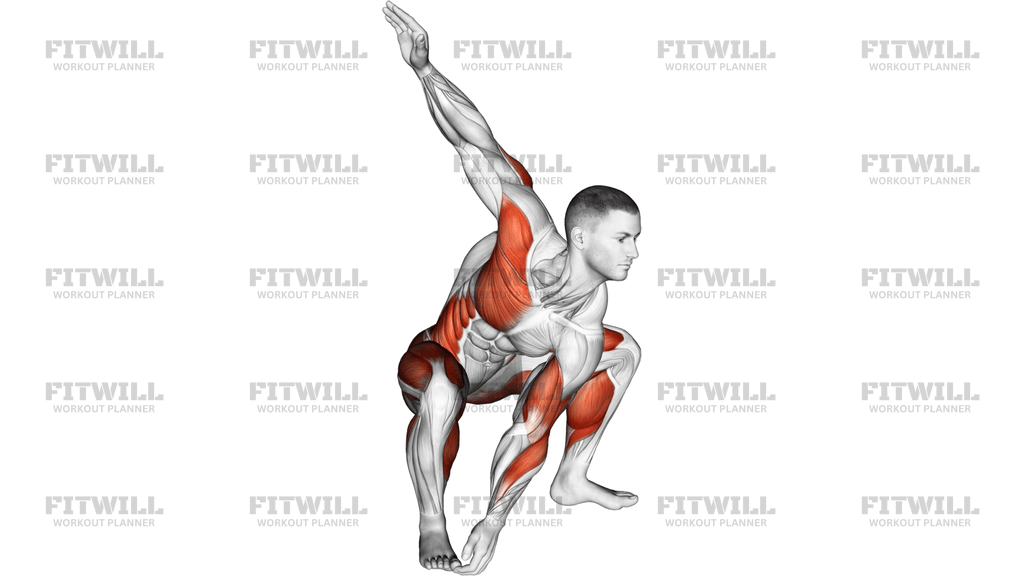
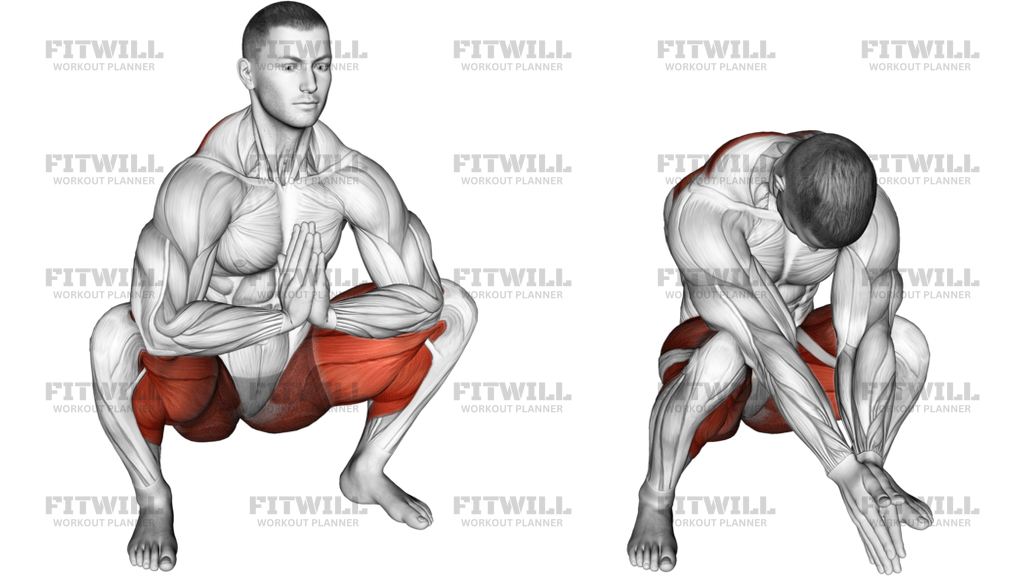
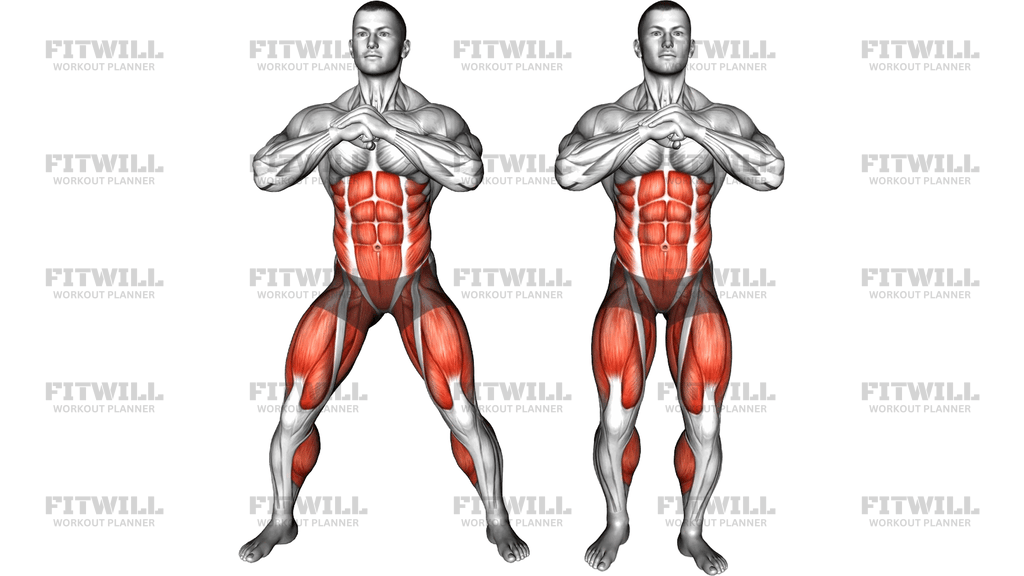
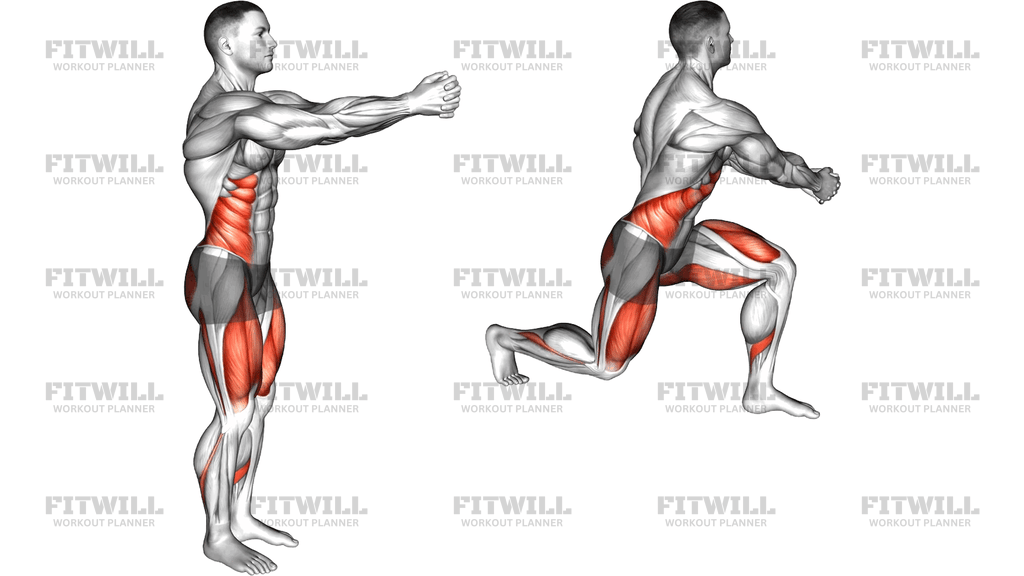
Wall Supported Side Leg Swing
The Wall Supported Side Leg Swing is a dynamic mobility drill that targets the adductors along the inner thigh and the abductors on the outer hip. You stand facing a wall with one hand placed flat against it for balance, then swing the leg nearest the wall in a smooth arc, crossing it in front of your body before letting it travel out to the side as high as your hip mobility comfortably allows. The wall takes care of stability so you can put all of your attention into the range and rhythm of the swing.
This movement is most often used as part of a warm-up before lower body training, running, sprinting, or any sport that demands quick changes of direction. Because the leg swings actively through its range rather than being held in a static stretch, it raises the temperature of the hip tissues and rehearses the exact hip abduction and adduction pattern those activities use. It is also a good option for anyone who feels tight in the inner thighs after sitting for long periods.
The wall setup matters more than it might seem. Balancing on one leg while swinging the other can quickly turn into a struggle against wobbling, and that struggle shortens the swing and tightens the very muscles you are trying to loosen. With a hand planted on the wall at roughly shoulder height, your torso stays tall, your weight stays centered over the standing leg, and the swinging leg is free to move through its full, natural arc.
To execute it well, keep the swing leg relatively relaxed and let it travel like a pendulum, allowing a slight bend at the knee as it passes in front of the body. The standing leg stays soft, with a small bend in the knee, and your hips should stay square to the wall rather than twisting to chase extra height. Height comes from repeated swings as the adductors and outer hips release, not from forcing or bouncing hard at the top range.
A typical approach is ten to fifteen swings per side, starting smaller and gradually increasing the arc as you loosen up. Common use cases include pre-run routines, lower body warm-ups before squats or lunges, and rehab-adjacent hip mobility work where a supported version of the leg swing is preferred over an unsupported one. If you feel any sharp pulling at the groin, reduce the height of the swing and slow the tempo before continuing.
Fitwill
Log Workouts, Track Progress & Build Strength.
Achieve more with Fitwill: explore over 9600 exercises with images and videos, access built-in and custom workouts, perfect for both gym and home sessions, and see real results.
Start your journey. Download today!




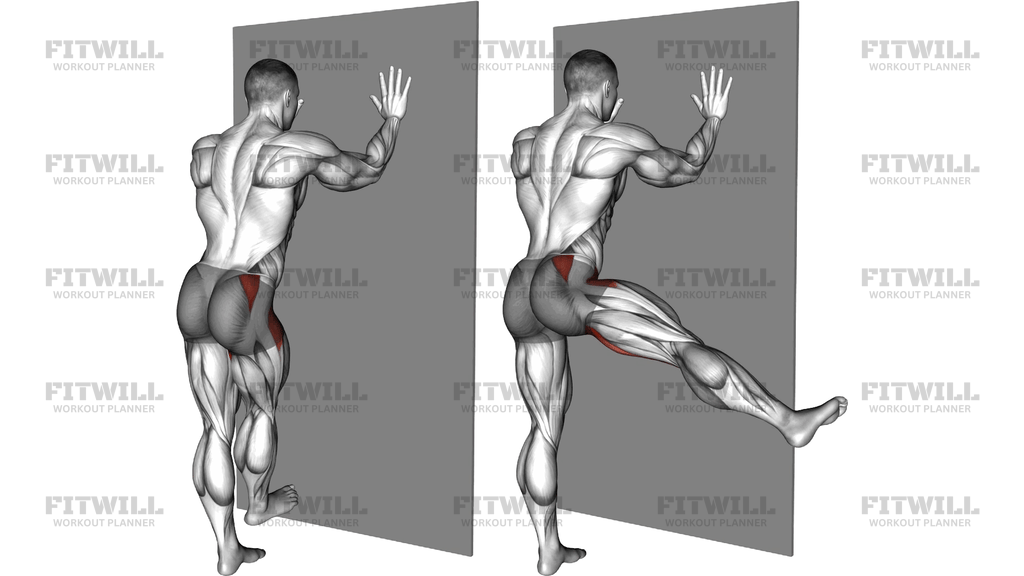
Instructions
- Stand facing a wall at about arm's length, feet together and body upright.
- Place the hand closest to the wall flat against it at roughly shoulder height, with a soft bend in the elbow so you can lean slightly into the support.
- Shift your weight onto the leg farther from the wall and let the leg nearest the wall hover just off the floor.
- Brace your trunk lightly and keep your hips square to the wall so the movement comes from the hip joint, not from twisting your torso.
- Swing the near leg forward across the front of your body, letting it pass in front of your standing leg with a relaxed knee.
- Reverse the arc smoothly and let the leg travel out to the side along the wall, rising only as high as feels like a comfortable stretch through the inner thigh.
- Continue the pendulum rhythm, crossing in front and opening out to the side, letting the range grow naturally over the first several swings.
- Exhale as the leg swings out to the side and inhale as it returns across your body, keeping the breathing steady.
- Complete 10 to 15 swings, then lower the foot, switch hands on the wall, and repeat on the other side.
- Step away from the wall slowly and reset your stance before starting the next drill.
Tips & Tricks
- If your groin pinches or grabs at the top of the swing, shrink the arc by a few inches and rebuild height gradually instead of forcing the leg upward.
- Keep the toes of the swinging leg roughly facing forward or slightly up; letting the foot flop inward usually means the knee is twisting to fake extra range.
- Watch that the hand on the wall is doing support work, not pushing. If your torso leans hard into the wall each rep, move your feet a little closer to it.
- The standing knee should stay softly bent and pointing the same direction as your toes; locking it out makes balance harder and stresses the joint.
- A common mistake is turning the whole body to swing higher. If your chest rotates away from the wall, the hip has stopped moving and the spine is compensating.
- Start with smaller, faster-feeling swings and finish with larger, slower ones. Going straight to full range on the first rep is how inner thigh strains happen.
- Keep the swing leg heavy and relaxed. A tensed, straight-knee leg shortens the arc and turns a mobility drill into a hip flexor strength contest.
- If balance is still an issue even with the wall, place your free hand on your hip or let it hang loose rather than reaching it out to the side.
Frequently Asked Questions
What muscles does the Wall Supported Side Leg Swing work?
It primarily dynamically stretches the adductors on the inner thigh while the outer hip muscles, including the gluteus medius, control the leg as it swings. The standing leg's hip and ankle stabilizers also work to keep you steady.
Is the Wall Supported Side Leg Swing a strength exercise or a stretch?
It is best treated as a dynamic stretch and warm-up drill. The goal is active mobility through the hip's abduction and adduction range, not muscle building.
Should I swing the leg closest to the wall or the far leg?
Swing the leg nearest the wall. This lets the leg travel freely along the wall's plane and keeps your hand support on the opposite side of your body's movement.
How high should my leg go during the Wall Supported Side Leg Swing?
Only as high as a comfortable stretch allows, with no sharp pulling in the groin. The range usually increases on its own after several swings as the adductors loosen.
Can beginners do this exercise?
Yes, and the wall makes it a good beginner entry point for leg swings. Start with a smaller arc and hold the wall lightly rather than leaning your full weight into it.
Why do I feel the swing in my groin and not my outer hip?
The inner thigh is the tissue being lengthened as the leg opens out to the side, so a mild stretch there is expected. If it becomes painful rather than stretchy, reduce the height and slow the tempo.
How many swings should I do per side?
Ten to fifteen controlled swings per side works well as part of a warm-up. If you are very tight, do a few extra smaller swings before progressing to the full arc.
What can I use instead of a wall?
A sturdy door frame, squat rack upright, or tree works the same way. Any stable vertical surface at about shoulder height lets you keep the same hand placement and swing path.
When should I avoid the Wall Supported Side Leg Swing?
Skip it if you have an active groin strain, recent hip injury, or sharp pain during the movement, and check with a qualified professional before returning. Gentle static work may be more appropriate during recovery.
Should my hips stay facing the wall during the swing?
Yes. Keeping the hips square ensures the range comes from the hip joint itself. If your torso rotates away from the wall, you are compensating and losing the benefit for the inner thigh.