Standing Stacked Arm Chest Squeez
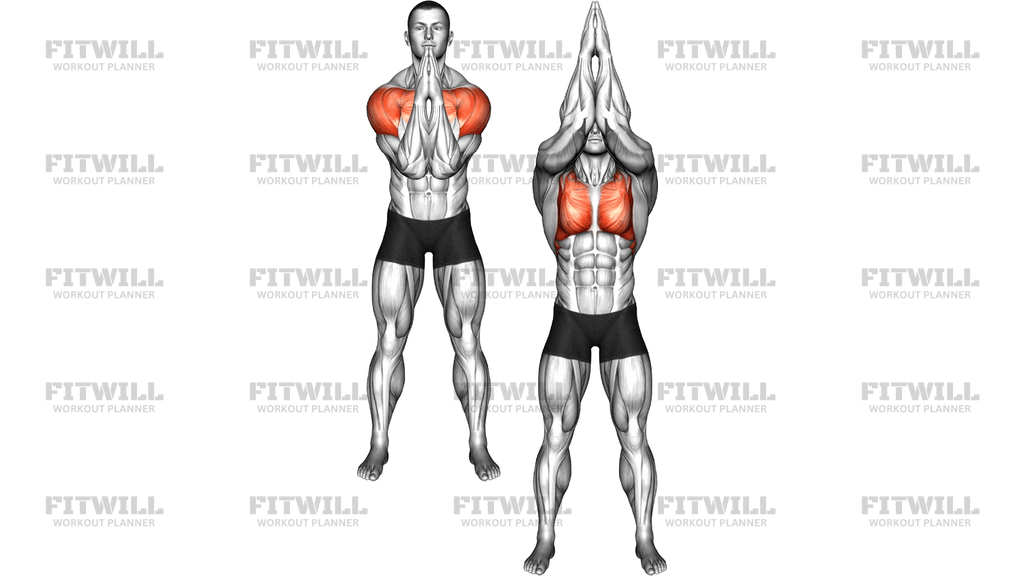
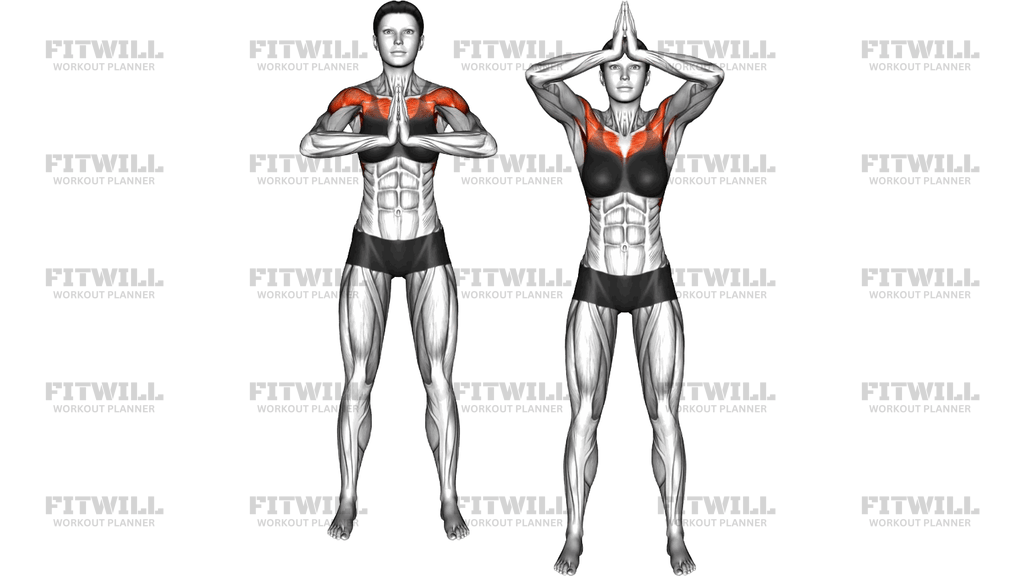
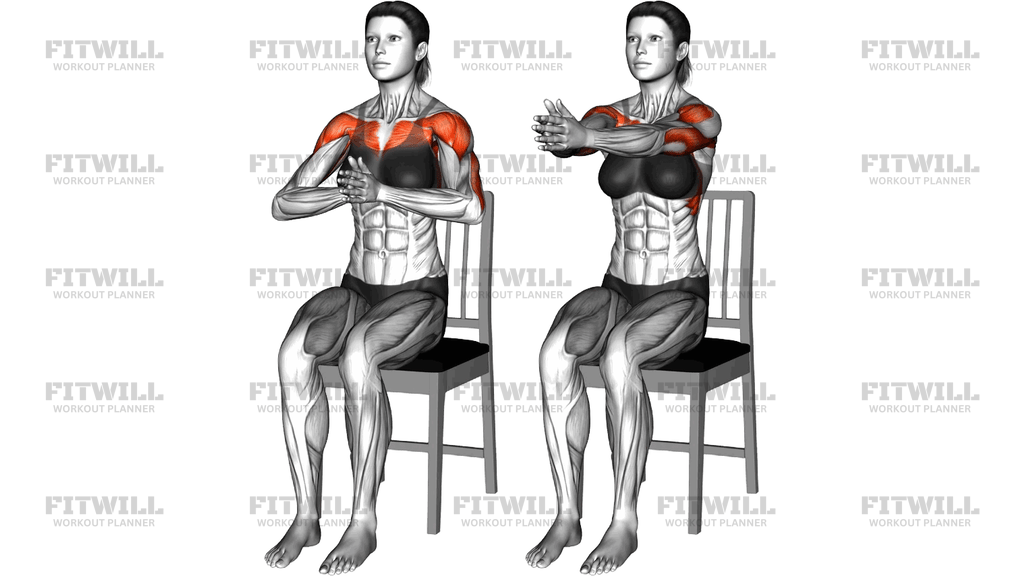
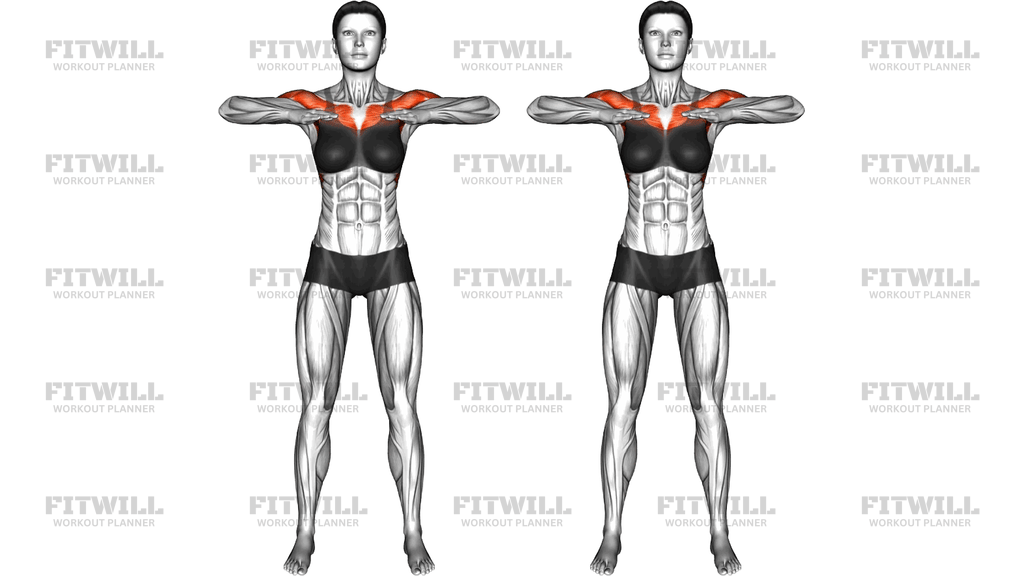
The Standing Stacked Arm Chest Squeeze is a bodyweight isometric exercise that targets the chest by having you press your forearms firmly into each other at chest height. You stand tall, lift your arms so the upper arms are roughly parallel to the floor, bend the elbows to about ninety degrees, and stack one forearm directly over the other. From there, you drive the arms into each other and hold, creating a strong contraction through the pectoral muscles without any external load.
Because it requires no equipment and very little space, this movement works well as a warm-up primer before pressing, as a finishing squeeze after chest work, or as a low-impact option for anyone training at home, traveling, or recovering from a period away from the gym. It is also a useful teaching tool: many people press weights without ever feeling their chest actually doing the work, and a deliberate isometric squeeze like this builds the mind-muscle connection that carries over to push-ups, bench presses, and chest flys.
The setup matters more than it looks. Raising the arms to chest height with the elbows level biases the upper and mid chest fibers, while a sloppy, low, or drifting arm position shifts tension into the front shoulders and neck. Keep the wrists neutral, the shoulders pulled gently down away from the ears, and the ribs stacked over the hips so the torso does not lean back as you press.
To execute it well, breathe steadily while you hold the squeeze rather than holding your breath, and think about pulling the elbows toward each other, not just pushing the hands together. The contraction should come from the chest across the sternum. Start with moderate pressure for five to ten seconds, relax briefly, and repeat for several reps. As control improves, increase the pressing intensity or the hold duration.
The main safety points are simple: avoid shrugging, avoid jutting the chin forward, and ease into maximum effort presses. Hard isometrics can spike blood pressure when performed with full force and breath-holding, so build intensity gradually and keep the breathing smooth throughout each hold.
[ Workout Log & Planner ]
Put your next workout in Fitwill
Keep your plan and training log ready when you are.


Instructions
- Stand upright with your feet about hip-width apart, knees soft but not bent deeply, and your core gently braced.
- Raise both arms straight out in front of you to chest height, elbows bent to roughly ninety degrees so the forearms are horizontal to the floor.
- Stack one forearm directly on top of the other in front of your sternum, hands relaxed with palms facing down and wrists neutral.
- Draw your shoulder blades down and back slightly so your shoulders stay away from your ears, and keep your ribs stacked over your hips.
- Press the top forearm down into the bottom forearm and drive the bottom forearm up, squeezing the arms toward each other with firm, even pressure.
- Feel the contraction spread across your chest from the sternum toward both shoulders, and hold that squeeze for five to ten seconds.
- Keep breathing smoothly throughout the hold; never hold your breath during the press.
- Release the pressure slowly over one to two seconds rather than letting the arms spring apart.
- Switch which forearm is stacked on top and repeat the squeeze so both sides of the chest get the same work.
- Reset your posture between reps, standing tall with the head level before starting the next hold.
Tips & Tricks
- If you feel the work mostly in the front of the shoulders, lower your elbows a touch and focus on pulling the elbows toward each other instead of crushing the hands together.
- A common mistake is shrugging as the press intensifies; check that the space between your ears and shoulders has not shortened during the hold.
- Keep the forearms truly stacked and horizontal. Letting the top hand slide past the bottom elbow turns the hold into an awkward arm wrestle and reduces chest tension.
- Do not let your upper body lean backward as you press; brace the abdominals lightly so the squeeze stays in the chest and not the lower back.
- Match the pressure to your goal: light to moderate squeezes work well as a warm-up primer, while near-maximal holds suit a finisher at the end of a chest session.
- Swap the stacking order every set. Most people have a dominant side, and always stacking the same way reinforces the imbalance.
- Your elbows should stay at or just below shoulder height. Flaring them high turns this into a neck and trap exercise.
- Progress by lengthening the hold first, then by increasing pressing force. Chasing both at once usually degrades position.
- If your wrists ache, relax the hands completely and let the forearms do the pressing rather than gripping or flexing the palms.
Frequently Asked Questions
Which muscles does the Standing Stacked Arm Chest Squeeze work?
The primary muscles are the pectorals across the chest, with the upper chest fibers working hard because the arms are held at chest height. The front shoulders and triceps assist by holding the arm position while you press.
Why are the arms stacked on top of each other instead of pressed palm to palm?
Stacking the forearms lets you press down with one arm and up with the other, which creates opposing forces and a strong chest contraction without needing a ball, towel, or partner. It also keeps the elbows at chest height, which biases the upper chest.
Is the Standing Stacked Arm Chest Squeeze suitable for beginners?
Yes. It is a low-risk, bodyweight movement, and beginners can start with gentle five-second squeezes. The main learning point is keeping the shoulders relaxed and feeling the chest rather than the shoulders doing the work.
How hard should I press during the hold?
For a warm-up or muscle-activation use, press at about half of your maximum and hold five to ten seconds. For a finisher, you can press much harder for shorter holds, as long as your breathing stays smooth and your shoulders stay down.
How many reps and sets should I do?
A common dose is eight to twelve holds of five to ten seconds per side, resting briefly between each. For warm-up purposes, two or three lighter sets before pressing is plenty.
Why do I feel this more in my neck and traps than my chest?
That usually means your elbows have drifted up toward shoulder height or above and you are shrugging as you press. Lower the elbows slightly, relax the hands, and reset your shoulder blades down before squeezing again.
Can I use the Standing Stacked Arm Chest Squeeze as a substitute for push-ups or bench pressing?
It can supplement pressing work, but it cannot fully replace it, because isometrics only strengthen the chest at the joint angle you are holding. Use it as a primer, a finisher, or an option when you have no equipment, and keep actual pressing or fly movements in your routine when possible.
Should I switch which forearm is on top?
Yes. Alternate the stacking order every set or every few holds so both sides of the chest and both arms receive the same stimulus. Always stacking the same way can reinforce a side-to-side strength difference.
Is it safe to press at maximum effort?
Near-maximal isometrics are generally fine for healthy trainees, but build up gradually and keep breathing throughout the hold. Straining with held breath and full force can cause a sharp rise in blood pressure, so ease into intensity over a few sessions.
Can I add resistance to this exercise?
You can increase effort by pressing harder or holding longer, which is usually enough. If you want external resistance, a small ball or towel squeezed between the palms is a natural progression, but the stacked-arm version needs no equipment at all.