Double Elbow Raise And Double Elbow Clap
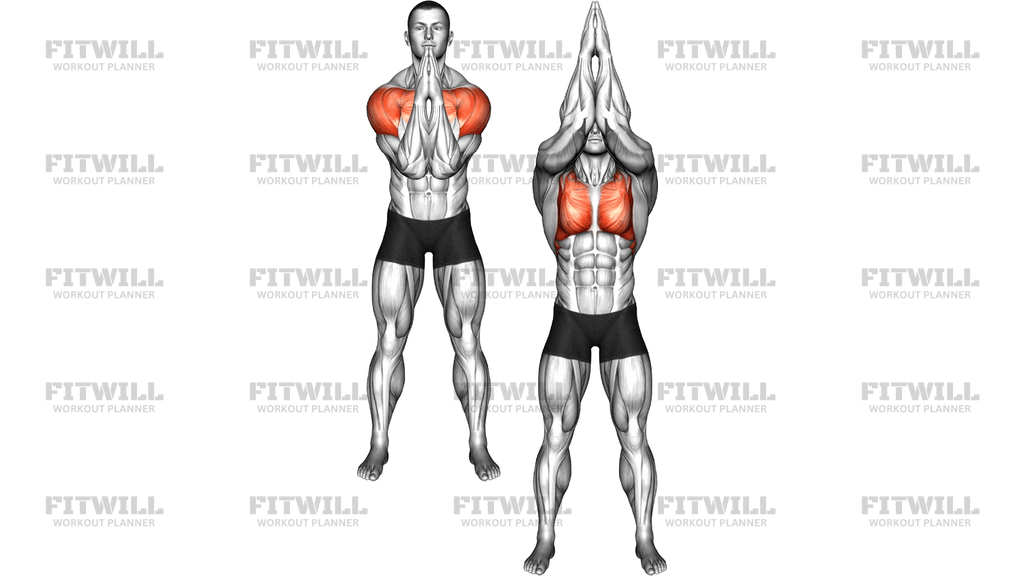
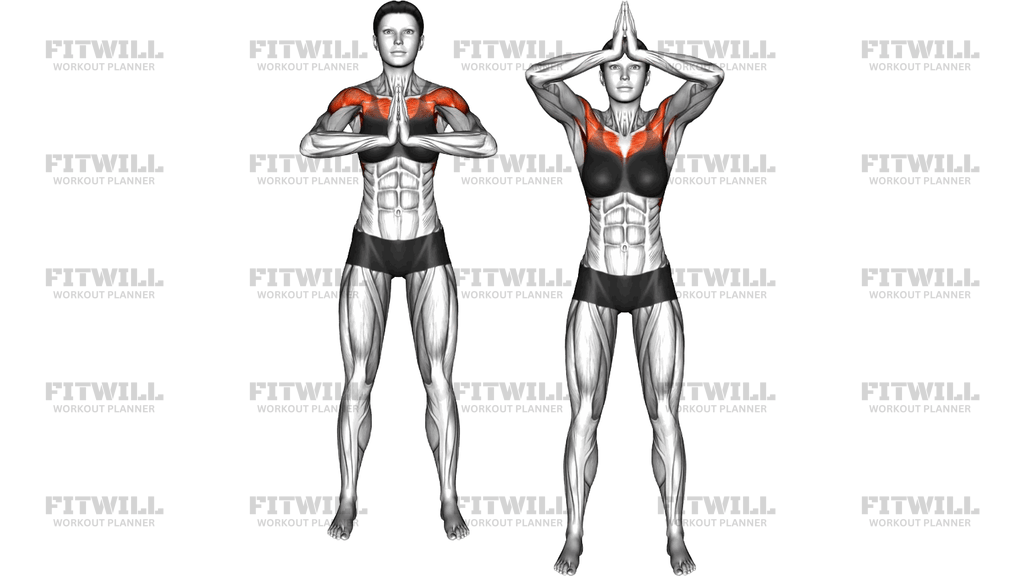
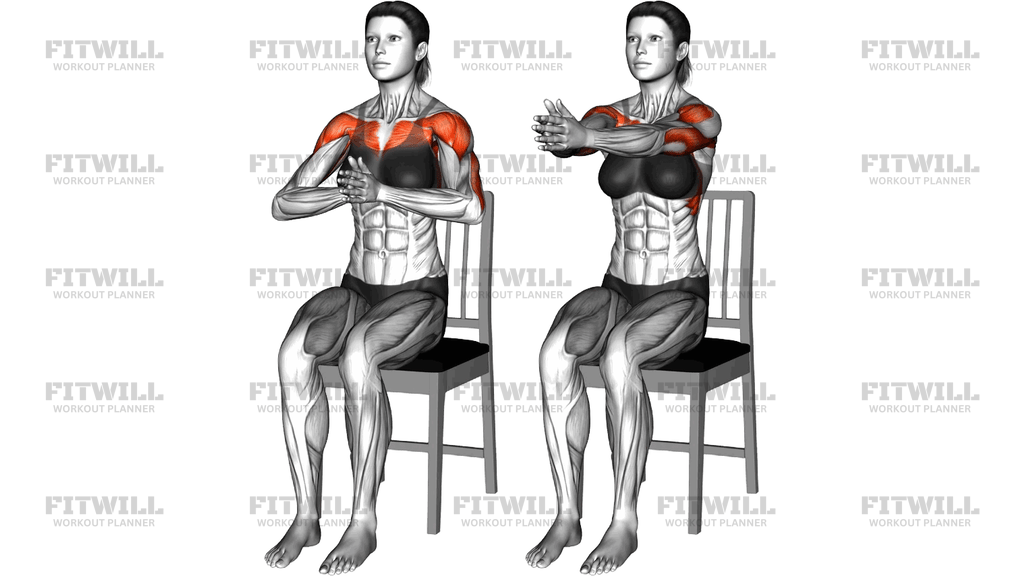
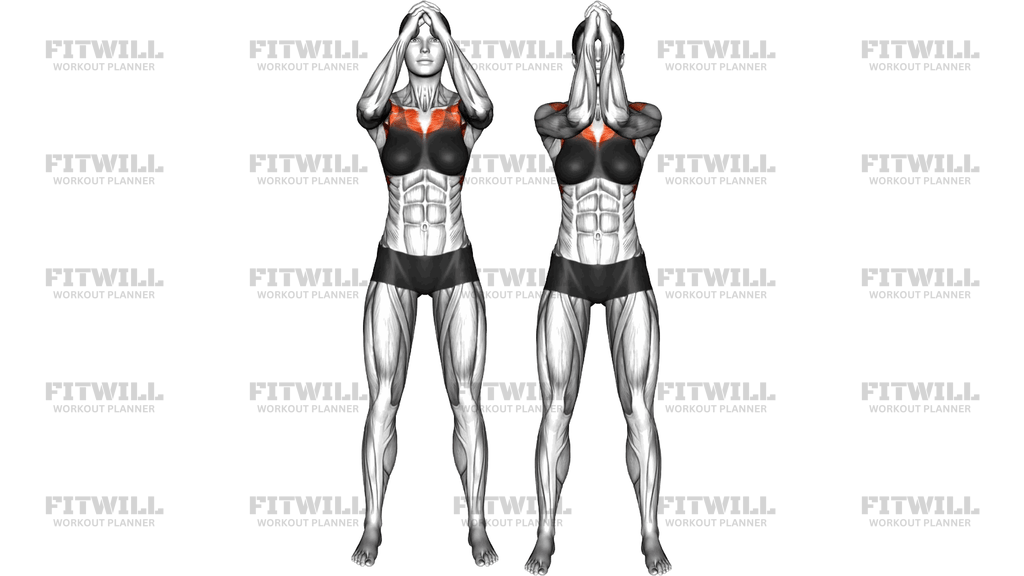
Double Elbow Raise And Double Elbow Clap is a standing, equipment-free chest exercise built around one simple action: pressing your palms together and driving your elbows through a raised, squeezing arc in front of your body. Because there is no weight to lift, the resistance comes entirely from your own muscles working against each other — the pressing hands create tension that the chest has to control as the elbows lift and come together. The highlighted work in this pattern sits squarely across the pectorals, with the front of the shoulders assisting.
The setup is what makes this movement work. You stand tall with your feet about hip-width apart, palms pressed firmly together with fingers pointing upward, hands held in front of your face or just above your head. From there you spread your elbows out wide, then squeeze them forward and inward until they touch or nearly touch in front of your chest. That inward squeeze — the 'clap' — is the peak contraction, and it directly targets the sternal fibers of the chest in a way similar to a cable or dumbbell fly, just with zero equipment.
This makes the exercise useful for a wide range of people. Beginners can use it to learn what a chest contraction actually feels like before touching a barbell or machine. People training at home, in a hotel room, or as a warm-up before pressing work get a targeted chest activation without setup time. It is also a practical option for anyone recovering general pressing capacity who wants a low-load, high-awareness movement to keep the chest engaged.
Execution quality depends on three things: hand pressure, elbow path, and torso discipline. Keep your palms pressing together hard for the entire set — if the pressure fades, the tension fades. Let the elbows travel a deliberate arc: wide and high on the raise, then squeezing inward and slightly down on the clap. Your torso should stay upright and still; the temptation is to shrug your shoulders toward your ears or lean back as the elbows rise, and both of those steal work away from the chest.
The most common mistakes are rushing the reps and letting the shoulders do the moving. Because the range of motion is short, it is easy to turn this into a quick shoulder shrug-fest that looks busy but trains little. Slow the tempo down, hold the clap position for a full second, and focus on feeling the chest fibers draw the elbows together rather than the arms flicking inward. Breathe out on the squeeze, in on the release.
Treat this as an activation or finishing movement rather than a mass-builder on its own. Two to four sets of twelve to twenty slow reps, either before bench or push-up work to prime the chest, or at the end of a session to finish the fibers off, fits how the movement is best used.
[ Workout Log & Planner ]
Put your next workout in Fitwill
Keep your plan and training log ready when you are.


Instructions
- Stand with your feet about hip-width apart, knees soft but not bent, and your torso upright with your gaze forward.
- Press your palms together firmly in front of you with fingers pointing upward, then raise the joined hands so they sit in front of your face or just above your forehead.
- Brace your core lightly, pull your shoulder blades down away from your ears, and keep your ribs stacked over your hips.
- From the pressed-hand position, spread both elbows out wide to the sides as you begin to raise them, feeling a stretch across the chest.
- Squeeze your elbows forward and inward until they touch or nearly touch in front of your chest — this is the clap position.
- Hold the clap for one to two seconds, actively pressing the palms together and squeezing the chest as the elbows meet.
- Slowly release the elbows back out wide to the starting spread position, keeping palm pressure constant the whole time.
- Exhale as you squeeze the elbows together, inhale as you let them open back out.
- Complete all reps with your hands staying pressed together and your head and neck relaxed, then shake out the arms and shoulders between sets.
Tips & Tricks
- The exercise only works if your palms keep pressing — the moment hand pressure drops, the chest contraction disappears and the elbows just float.
- If you feel it mostly in your neck or traps, your shoulders are creeping up. Actively pull the shoulder blades down and back before starting each rep.
- Do not let your head jut forward as the hands rise overhead; keep the chin level so the elbows arc around the chest, not around the neck.
- A slow two-count outward, one-count squeeze-in tempo makes a short range of motion far more productive than fast reps ever will.
- If the top position feels awkward behind the head, lower the hands slightly so they sit in front of the forehead — the chest work stays the same.
- Leaning back as the elbows rise turns this into a front-shoulder raise. Keep your weight even over both feet and your torso vertical.
- Think of the clap as the chest pulling the elbows together, not the arms slapping them — that mental cue dramatically changes what you feel.
- Slight soreness in the chest the next day is normal; sharp pinching at the front of the shoulder means reduce the height of the elbow arc.
Frequently Asked Questions
Which muscles does the Double Elbow Raise And Double Elbow Clap work?
The primary muscle is the chest, particularly the pectoralis major across the mid-chest. The front of the shoulders assists during the raise, and the arms work isometrically to hold the palms pressed together.
Why are my palms pressed together during the Double Elbow Raise And Double Elbow Clap?
Pressing the palms together creates self-generated tension, which is what gives the chest something to contract against in a bodyweight movement. If you release the hand pressure, the exercise loses nearly all of its training effect.
Is the Double Elbow Raise And Double Elbow Clap good for beginners?
Yes — it is one of the simplest ways to learn what a chest squeeze feels like before using weights. Beginners should focus on slow reps and constant palm pressure rather than speed or rep count.
How high should my elbows travel in the Double Elbow Raise And Double Elbow Clap?
The elbows rise from a wide, spread position up to roughly head height as they squeeze together in front of you. If overhead positioning bothers your shoulders, keep the arc slightly lower in front of the face.
Why do I feel the Double Elbow Raise And Double Elbow Clap in my shoulders instead of my chest?
That usually means the shoulders are shrugging up or the elbows are being lifted by the front delts rather than squeezed inward by the chest. Drop the shoulder blades down, reduce the height of the arc, and slow the inward clap phase down.
Can I use the Double Elbow Raise And Double Elbow Clap as a warm-up before bench pressing?
Yes, one or two light sets of fifteen slow reps work well to activate the chest before pressing. It also makes a good finishing movement after push-ups or presses to fully fatigue the pecs without equipment.
How many reps of the Double Elbow Raise And Double Elbow Clap should I do?
Because the resistance is self-generated, higher reps with a slow tempo work best — aim for twelve to twenty controlled reps per set for two to four sets. Hold the clap position for a second on each rep.
What can I substitute if the Double Elbow Raise And Double Elbow Clap bothers my shoulders?
A chest squeeze with a light ball or towel pressed between the palms at chest height uses the same contraction with a lower arm position. Isometric palm presses held in front of the chest are another gentle option.
Do I need any equipment for the Double Elbow Raise And Double Elbow Clap?
No equipment is needed — only your own hands pressing together create the resistance. A small amount of open floor space and enough room to spread your elbows wide is all the setup requires.