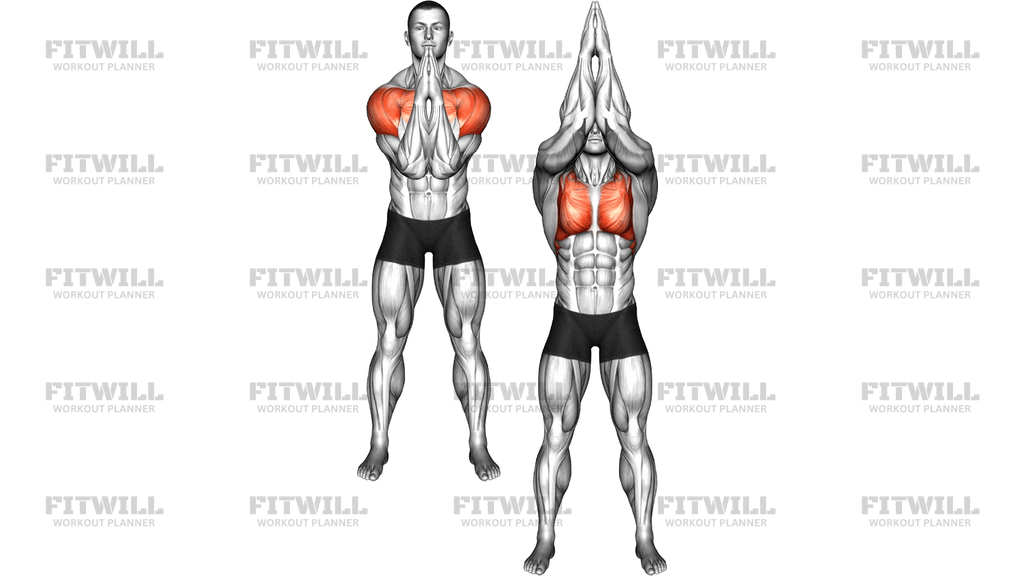
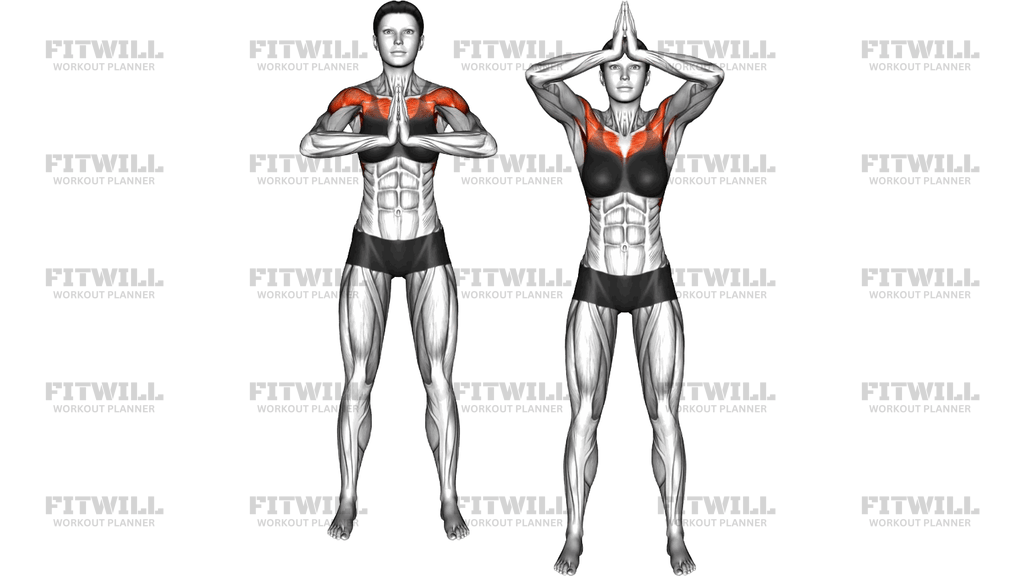
Standing Chest Cross Stretch
The Standing Chest Cross Stretch is a simple body weight stretch performed from an upright standing position. You raise both arms straight out in front of you at shoulder height, then draw one arm across the front of your body so the forearm slides horizontally over the chest, keeping the arm long rather than bent. The crossing position opens the space between the shoulder blades while lengthening the muscles across the front of the shoulder and upper chest, which is why it is a staple cooldown movement after pressing, pushing, or any upper body training session.
This stretch is especially useful for people who spend long hours at a desk, drive frequently, or perform a lot of bench pressing, push-ups, and overhead work. Those activities tend to leave the chest and front shoulders in a shortened position, and the cross-body arm sweep gently elongates them. At the same time, the reaching arm wraps across the torso and tensions the muscles between the shoulder blades, so you get a two-sided effect from one very economical position.
Setup matters more than it might seem. Standing tall with feet about hip-width apart, ribs stacked over the pelvis, and shoulders relaxed away from the ears keeps the stretch targeted at the shoulder girdle instead of leaking into the lower back. If you shrug, lean sideways, or rotate the torso to chase a bigger range, you lose the clean line of pull across the chest and may compress the neck or spine unnecessarily.
To execute it well, extend the arm fully, keep the palm facing down or slightly inward, and use the opposite hand just above the elbow to guide the arm snugly across the chest. The stretch should register as a broad, comfortable pull across the rear shoulder and upper back of the crossing arm and across the front of the shoulder on the supporting side. Hold for twenty to thirty seconds, breathe steadily, and repeat on the other side.
Because it requires no equipment and almost no space, the Standing Chest Cross Stretch fits easily into warm-ups, cooldowns, office breaks, and pre-bed routines. It is a low-risk movement when performed gently, making it suitable for beginners and experienced lifters alike. The main safety point is patience: the shoulder is a mobile joint, and forcing the arm past a comfortable range is the one mistake that turns a helpful stretch into an irritated one.
Fitwill
Log Workouts, Track Progress & Build Strength.
Achieve more with Fitwill: explore over 9600 exercises with images and videos, access built-in and custom workouts, perfect for both gym and home sessions, and see real results.
Start your journey. Download today!




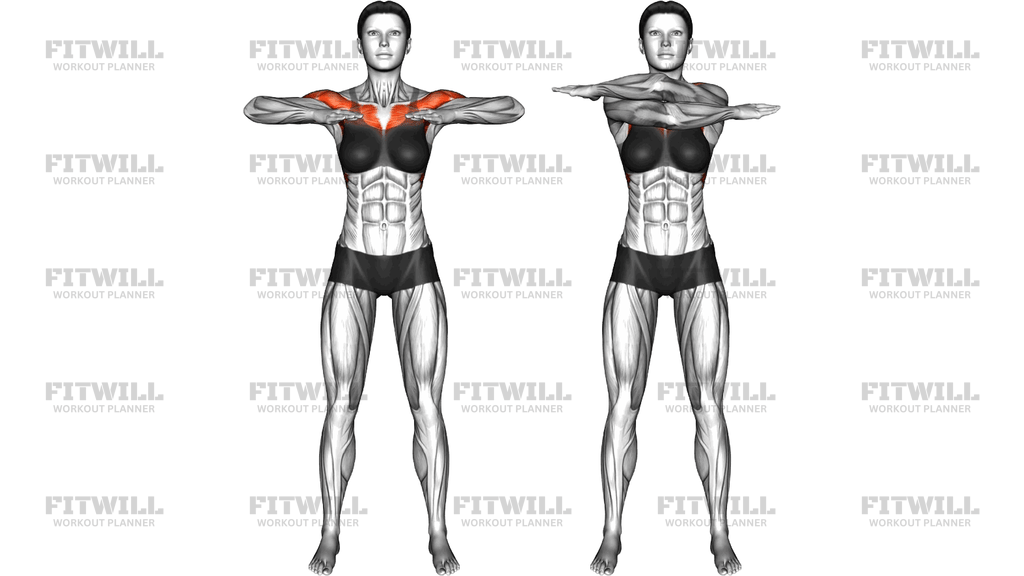
Instructions
- Stand upright with your feet about hip-width apart, weight evenly distributed, and arms relaxed at your sides.
- Raise both arms straight out in front of you to shoulder height, palms facing down, so your fingertips nearly touch.
- Draw one arm horizontally across the front of your chest, keeping the elbow extended and the shoulders level.
- Place your opposite hand just above the crossed arm's elbow and pull it gently toward your chest until you feel a broad stretch.
- Keep your torso facing forward, ribs stacked over hips, and avoid twisting or leaning sideways to increase the range.
- Hold the end position for twenty to thirty seconds, breathing slowly and letting the tension ease with each exhale.
- Release the pull gradually, uncross the arm, and return both arms to the extended forward position before switching sides.
- Repeat the stretch on the other arm, matching the hold time so both sides receive equal attention.
- Finish by lowering the arms to your sides and rolling the shoulders back once or twice to reset before your next exercise or activity.
Tips & Tricks
- Keep the crossing arm straight rather than bending the elbow; a bent arm turns this into a partial stretch and shifts tension into the upper arm.
- Grip above the elbow, never on the elbow joint itself, so the pressure stays on the muscle and not on the joint.
- If you feel a pinching sensation at the front of the shoulder, lower the arm slightly below shoulder height before crossing it.
- Do not shrug while pulling; dropped shoulders keep the stretch in the chest and rear deltoid instead of hiking it up into the neck.
- Avoid rotating your torso to follow the arm. If your chest wants to swing around, brace your core lightly and think of keeping your sternum pointed straight ahead.
- Exhale as you draw the arm across; many people hold their breath and unconsciously tense up, which shortens the very muscles you are trying to lengthen.
- If your shoulders feel stiff, start with a smaller pull and increase it over several sessions rather than forcing full range on day one.
- Warm muscles stretch more comfortably, so place this after training or a short walk rather than as the very first movement of a cold morning.
- One side is almost always tighter than the other, so note the difference and give the tighter side an extra round rather than matching only the comfortable side.
Frequently Asked Questions
Which muscles does the Standing Chest Cross Stretch target?
It primarily lengthens the pectoral muscles and the front of the shoulder, while the crossed arm position places a strong stretch on the rear shoulder and the muscles between the shoulder blades. It is effectively a stretch for the entire shoulder girdle.
Is the Standing Chest Cross Stretch good for beginners?
Yes. It requires no equipment, no flexibility prerequisites, and the intensity is fully controlled by how far you pull the arm across. Beginners should simply start with a lighter pull and shorter holds.
Should my arm be straight or bent during the Standing Chest Cross Stretch?
Keep the crossing arm extended so the stretch reaches the shoulder and chest muscles. Bending the elbow shortens the lever and reduces the effectiveness of the position.
How long should I hold the Standing Chest Cross Stretch?
Twenty to thirty seconds per side is a solid default. For a cooldown, one or two rounds per side is usually enough; breathe steadily throughout rather than holding your breath.
Why do I feel the Standing Chest Cross Stretch more in my back than my chest?
That is normal. Crossing the arm over the torso strongly lengthens the rear shoulder and the muscles between the shoulder blades, so a back-of-shoulder sensation is expected even though the chest is also being worked.
Can I do the Standing Chest Cross Stretch every day?
Yes, as long as you stay within a comfortable range. It is gentle enough to use daily, especially if you sit for long periods or train pressing movements frequently.
What is the most common mistake in the Standing Chest Cross Stretch?
Pulling on the elbow joint itself or twisting the torso to force extra range. Grip just above the elbow and keep your chest facing forward so the stretch stays in the muscles instead of loading the joint and spine.
What can I use if the Standing Chest Cross Stretch bothers my shoulder?
Try a doorway chest stretch or a wall slide, which load the shoulder differently. If any stretch produces sharp pain rather than a pull, stop and reduce the range or choose an alternative.
When is the best time to use the Standing Chest Cross Stretch?
It works best after pressing workouts like bench press, push-ups, or overhead work, and also as a break during long sitting sessions. Warm muscles respond more comfortably than cold ones.