Lying Floor 6 Inch Hold
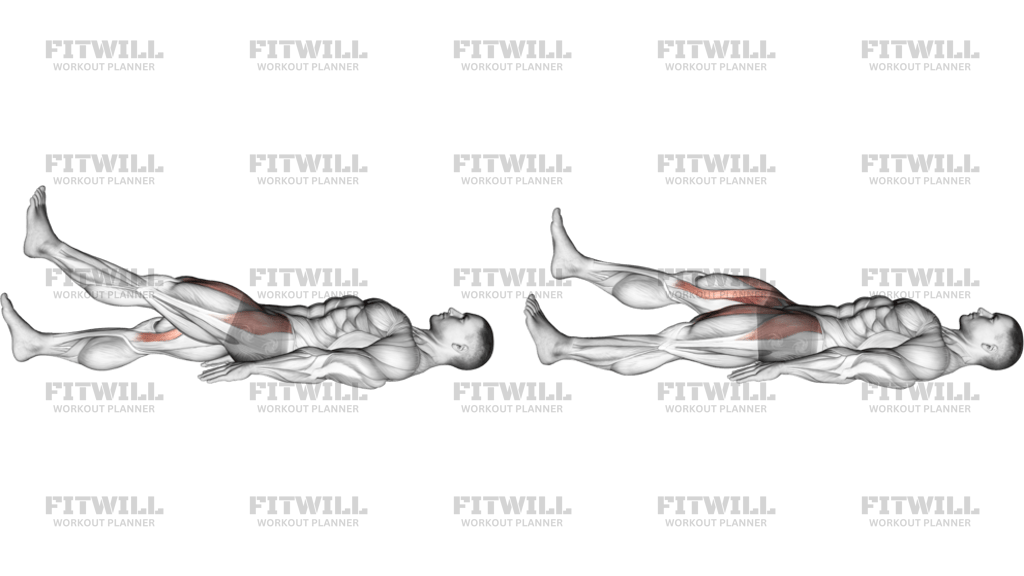
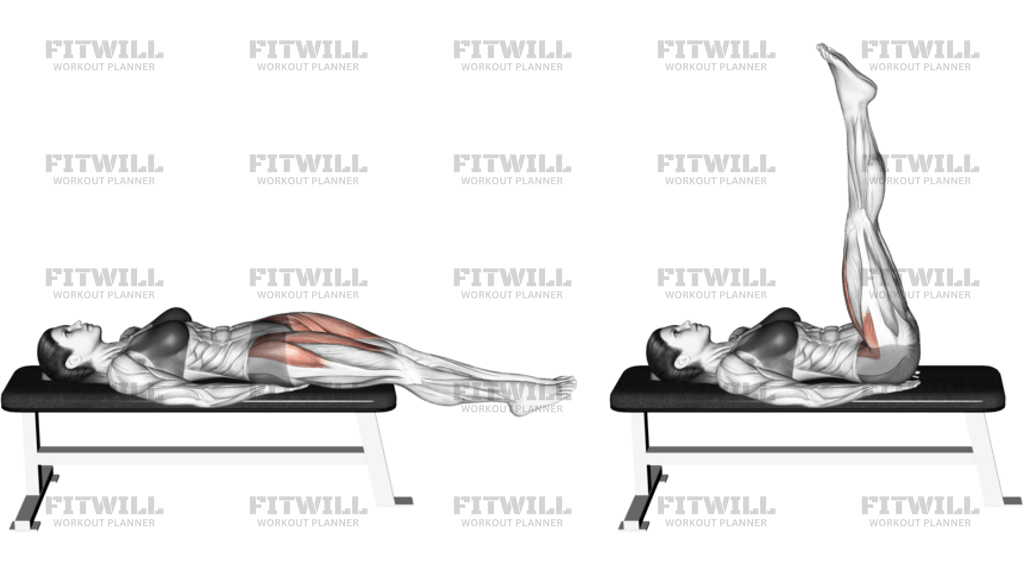
The Lying Floor 6 Inch Hold is a simple but demanding isometric core exercise. You lie flat on your back on the floor, keep your legs completely straight, lift your heels about six inches off the ground, and hold that position without letting the legs drift higher or drop lower. There is no equipment involved and no rep counting — the entire challenge comes from sustaining one fixed position against gravity.
This hold is best known as a staple in martial arts, boxing, and military-style conditioning, where it is often used in timed rounds or during ab circuits. It targets the lower portion of the rectus abdominis along with the deeper stabilizing muscles of the trunk, while the hip flexors work hard to keep the straight legs elevated. Because the legs stay extended, the leverage against your torso is significant, which is exactly what makes six inches feel much harder than it sounds.
Setup matters more than most people expect. The position of your lower back determines whether this hold trains your abs or irritates your spine. Before lifting the legs, you want to press the lower back gently toward the floor and keep the ribs pulled down. If the back arches as the legs rise, the hip flexors take over and the lumbar spine is left hanging in extension — a common and avoidable mistake.
To execute it well, place your arms flat at your sides with palms down for support, brace your midsection as if preparing for a light punch, then raise straight legs to roughly a 30-degree angle, about six inches off the floor. Hold there with steady breathing — never hold your breath — and keep the knees locked and toes reaching forward. When the timer ends, lower the legs slowly rather than letting them flop down.
This movement suits anyone who wants to build static core strength and endurance without equipment: beginners who need a baseline abdominal hold, combat athletes who spend time in compromised body positions, and lifters who want a low-fatigue finisher after heavy training. It also pairs well with planks and hollow holds in a short core block.
The main safety point is honest self-assessment. If you feel strain in your lower back rather than your abdomen, bend the knees slightly, elevate the legs a little higher, or shorten the hold. Discomfort in the lumbar area is a signal to regress the position, not to push through it.
[ Workout Log & Planner ]
Put your next workout in Fitwill
Keep your plan and training log ready when you are.


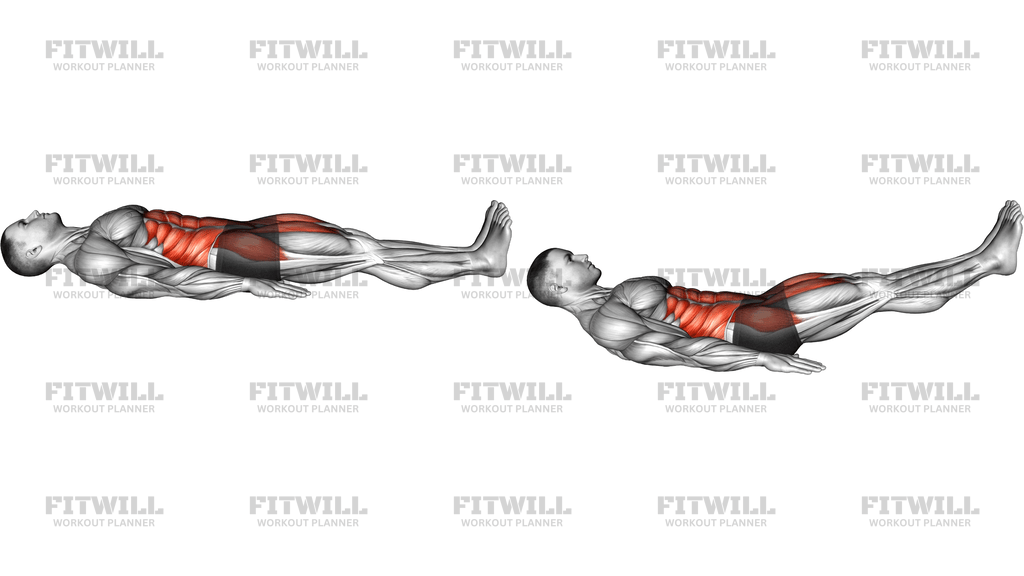
Instructions
- Lie flat on your back on the floor with your legs fully extended and your arms resting at your sides, palms facing down.
- Press your lower back gently toward the floor and tilt your pelvis slightly so there is no gap or arch between your waist and the ground.
- Take a breath, brace your abdominal wall firmly, and keep your ribs pulled down toward your hips.
- Keeping both knees locked and legs together, lift your straight legs until your heels are about six inches off the floor.
- Fix your eyes on a point above you and hold this exact height — do not let the legs rise or sink as fatigue builds.
- Keep your shoulders relaxed and your arms light on the floor; avoid pressing so hard with the hands that they lift your torso.
- Breathe in a slow, controlled rhythm through the entire hold instead of holding your breath.
- When the hold time is up, lower your legs back to the floor under control over two to three seconds.
- Rest briefly, reset your lower back position, then begin the next hold with the same setup.
Tips & Tricks
- If you cannot tell whether your heels are at the right height, place a small object like a rolled towel or a shoebox roughly six inches below your feet and hover just above it.
- The most common failure is the lower back peeling off the floor as the legs fatigue — the moment you feel your waist arch, lower the legs slightly or end the set.
- Many people raise the legs far higher than six inches to make it easier; the higher the legs, the shorter the lever and the less your lower abs work.
- Avoid letting the knees bend, even slightly — bent knees shorten the leg lever and turn the hold into a much easier hip flexor exercise.
- If your hip flexors cramp before your abs fatigue, that is normal early on; slightly higher leg placement and shorter holds will help them adapt.
- Pushing hard into the floor with your hands can tilt your torso and hide a weak brace — use the arms only for balance, not support.
- Start with 15 to 20 second holds done cleanly rather than grinding out 60 seconds with an arched back; add time gradually as your brace improves.
- Point your toes forward and squeeze your thighs together to keep the legs rigid, which reduces shaking and makes the hold more stable.
- If six inches is too demanding at first, perform the hold with knees bent at 90 degrees until you can keep your back flat under tension.
Frequently Asked Questions
What muscles does the Lying Floor 6 Inch Hold work?
It primarily targets the lower abs and the deep core stabilizers, with strong involvement from the hip flexors, which hold the straight legs elevated. The quads also work isometrically to keep the knees locked.
Why does the hold have to be at exactly six inches?
Six inches places the straight legs at an angle that creates high leverage against your torso, which is what makes the position difficult for the lower abs. Higher than that and the exercise becomes noticeably easier; lower and the lower back tends to arch.
Is the Lying Floor 6 Inch Hold good for beginners?
Yes, but beginners should start with shorter holds of 10 to 20 seconds or a bent-knee version. The priority is keeping the lower back flat, not the duration of the hold.
Why do I feel this in my lower back instead of my abs?
That usually means your lower back is arching off the floor while the hip flexors pull on your spine. Flatten your back before lifting, brace harder, raise the legs slightly, or bend your knees to shorten the lever.
How long should I hold the Lying Floor 6 Inch Hold?
Most people do well with 20 to 45 second holds for 3 to 4 rounds, resting about 30 to 60 seconds between them. Only extend the time if you can keep your back flat and legs straight for the entire set.
Can I put my hands under my hips for support?
You can, and it is a reasonable regression if your lower back keeps arching. Just be aware it reduces the bracing demand, so treat it as a stepping stone rather than a permanent setup.
What can I use instead of the Lying Floor 6 Inch Hold?
The hollow body hold, lying leg raise, or plank are close substitutes. The hollow hold is the most similar because it also trains the abs isometrically against an extended-leg lever.
Should I hold my breath during the hold?
No. Keep breathing in a slow, even rhythm through your nose and mouth. Breath-holding spikes tension and blood pressure and makes a long hold much harder to sustain.
Is it normal for my legs to shake during the hold?
Yes, mild shaking is a normal sign of isometric fatigue in the abs, hip flexors, and quads. If the shaking comes with your back arching or the legs dropping, end the set and rest.
Is the Lying Floor 6 Inch Hold safe for people with lower back issues?
Anyone with a history of lower back problems should get clearance from a qualified professional first. Even then, start with bent knees and a higher leg position so the lumbar spine stays supported throughout.