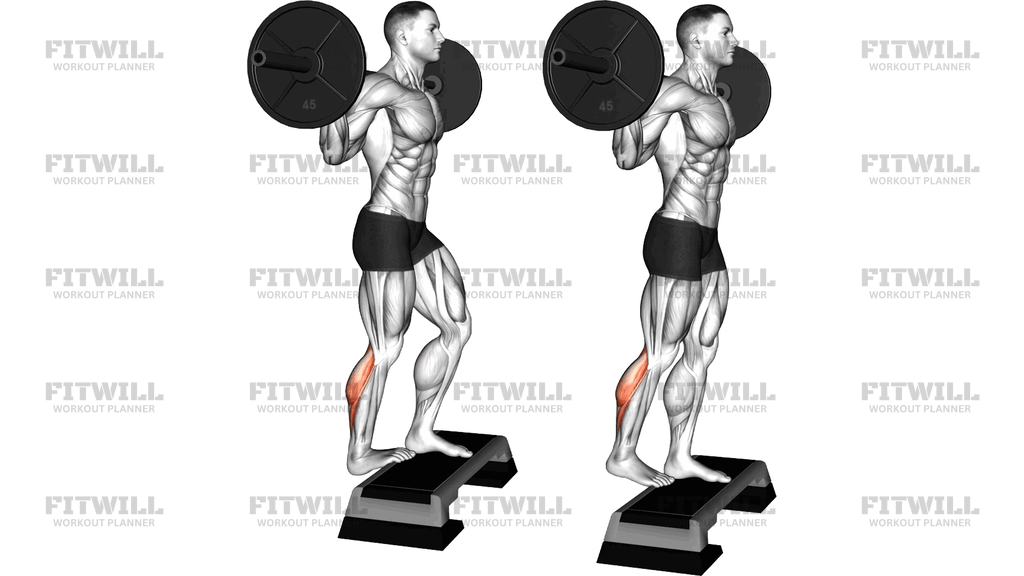
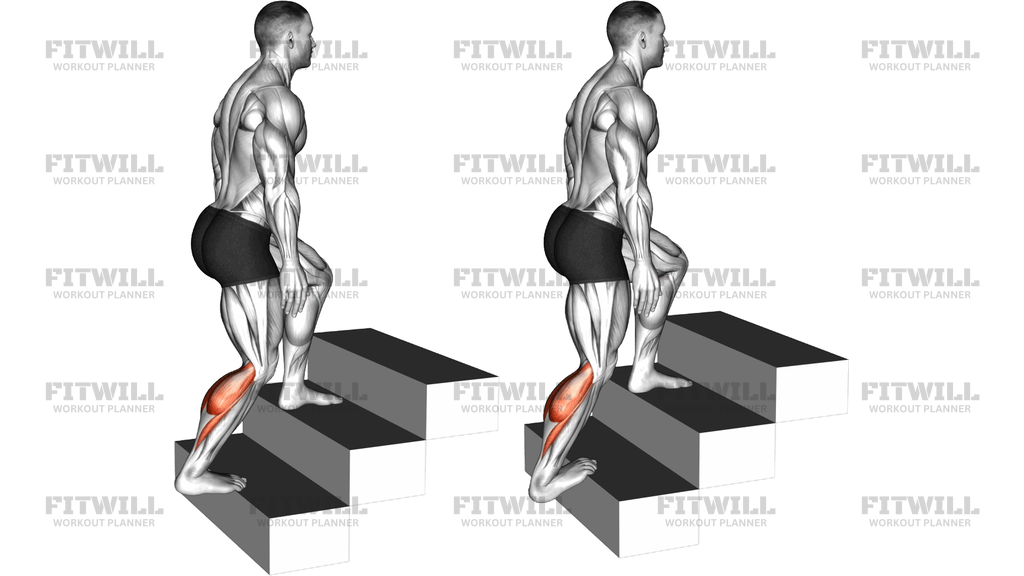
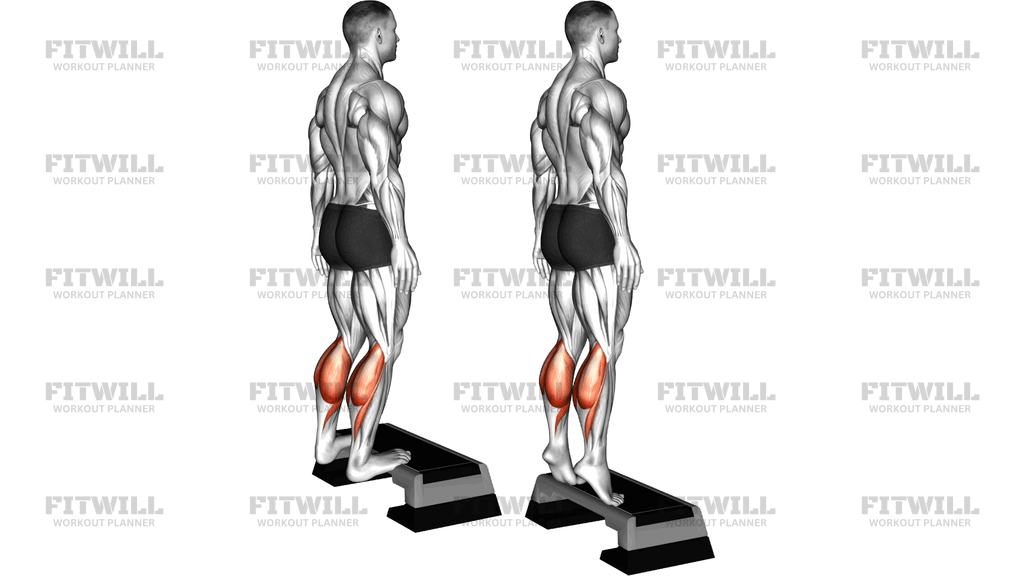
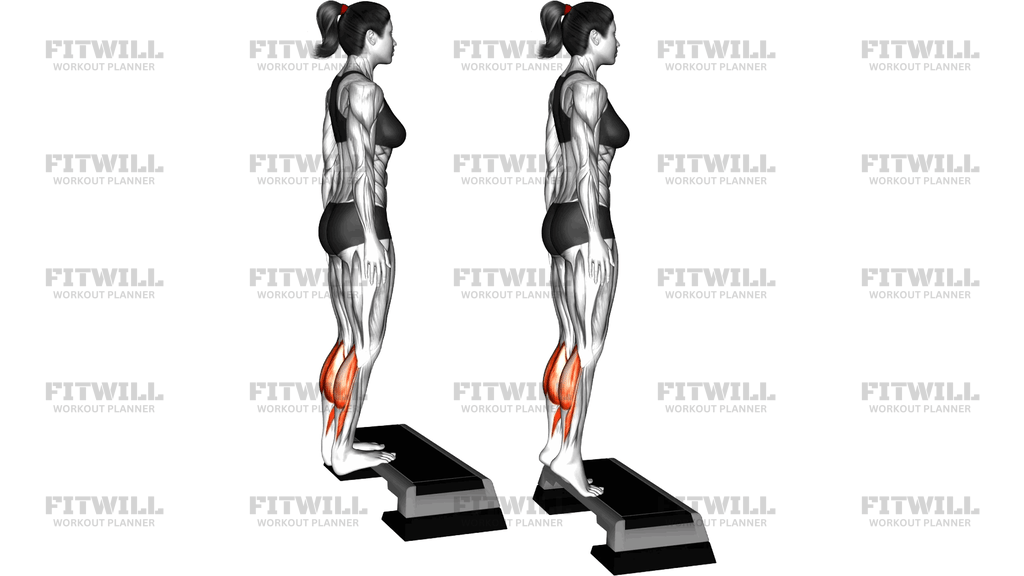
Standing Calf Stretch With Wall Supported
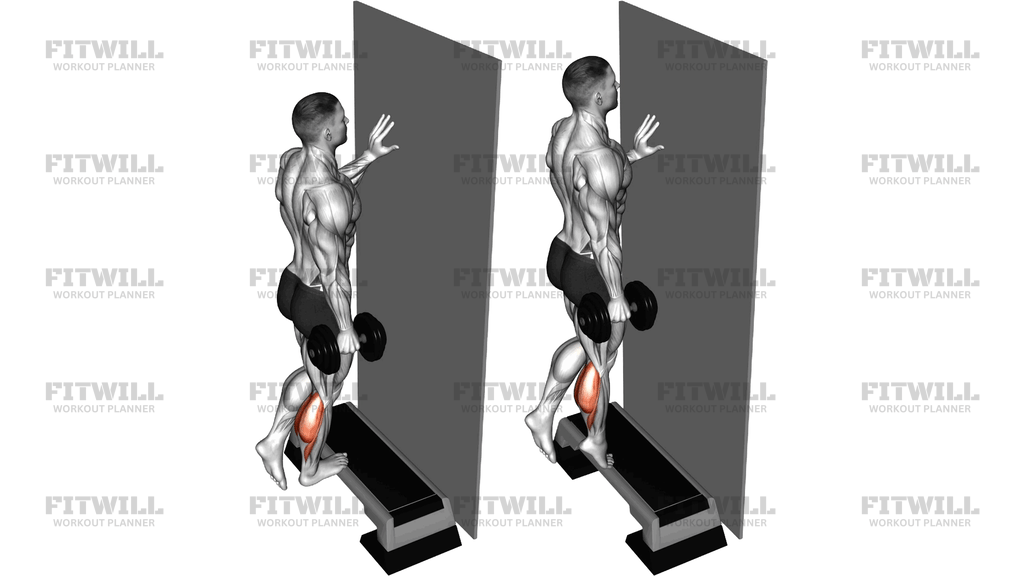
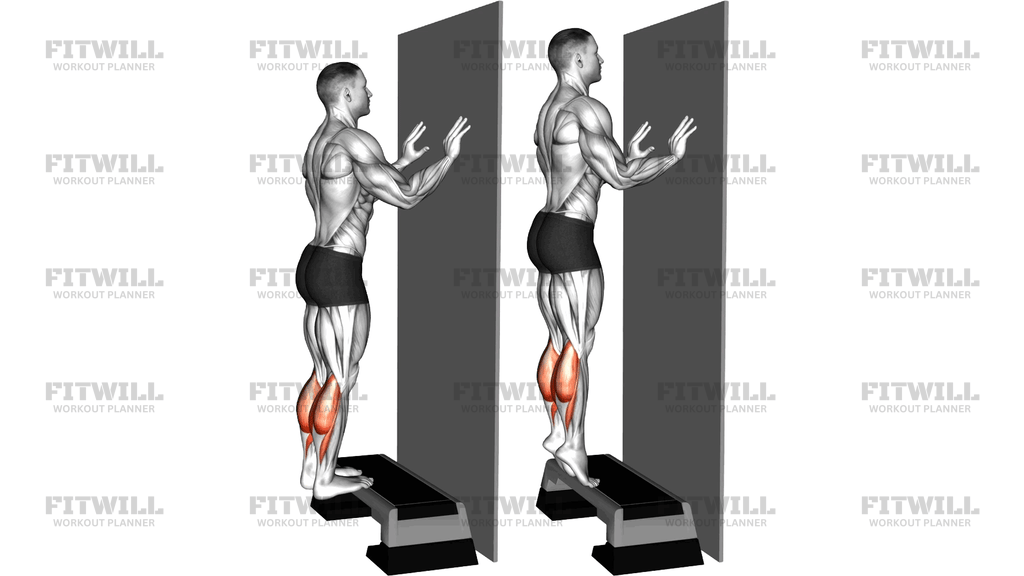
The Standing Calf Stretch With Wall Supported is a simple but highly effective way to lengthen the calves by dropping the heels below the level of the toes while using a wall for balance. You stand with the balls of your feet on the edge of a step platform, place your hands lightly on the wall in front of you, and slowly lower your heels toward the floor until you feel a firm stretch through the back of your lower legs. The wall support means you can relax into the position instead of fighting for balance, which is what makes this version more effective than a free-standing heel drop.
This stretch primarily targets the gastrocnemius, the large two-headed muscle that forms the visible bulk of the calf, with the soleus and smaller muscles around the ankle working alongside it. Because the knees stay essentially straight, the gastrocnemius gets the greatest lengthening. If you bend your knees slightly while in the same position, you shift more of the stretch down into the soleus, so the same setup can be used to address both layers of the calf.
Tight calves are extremely common, especially among people who run, jump, wear heeled shoes for long hours, or spend most of the day sitting. Restricted ankle range of motion often shows up elsewhere too: it can cause the heels to lift early in a squat, contribute to compensations in the knees and hips, and make exercises like calf raises feel shorter and jerkier. Regular use of this stretch is useful before lower-body training as part of a warm-up, after runs or cycling sessions, and on rest days as general mobility maintenance.
The setup matters more than it looks. Standing with only the front third of each foot on the step gives the heels room to travel, and keeping the balls of the feet firmly planted on the edge prevents the feet from sliding. The hands should press into the wall only enough to steady yourself; leaning heavily on it changes the angle of the whole body and reduces the stretch at the ankle. Keep your body in one relatively straight line from head to heels rather than hinging forward at the hips.
To execute it well, lower your heels slowly and deliberately rather than bouncing. Stop at the point where you feel a strong but tolerable stretch, hold for twenty to thirty seconds, then rise back up so your heels are level with or slightly above the toes before repeating. Breathing should stay relaxed and steady, and the stretch should never feel sharp, burning, or painful at the back of the ankle or foot.
One safety point deserves emphasis: the edge of the step is a narrow surface, so position yourself so the wall is genuinely within easy reach before you step up, and never mount or dismount the platform while your heels are hanging low. If you have a history of Achilles tendon problems, work with a shallower heel drop and build depth gradually over weeks rather than forcing maximum range on day one.
Fitwill
Log Workouts, Track Progress & Build Strength.
Achieve more with Fitwill: explore over 9600 exercises with images and videos, access built-in and custom workouts, perfect for both gym and home sessions, and see real results.
Start your journey. Download today!




Instructions
- Stand facing a wall at arm's length and place a step platform on the floor in front of you, close enough that you can reach the wall comfortably.
- Step up so the balls of both feet are planted firmly on the edge of the platform, with the heels hanging off the back and room to drop below the level of the step.
- Place both palms flat against the wall at about chest height, elbows slightly bent, and press just enough to steady your balance.
- Keep your body in a straight line from head to heels, brace your core lightly, and keep your knees nearly straight to bias the gastrocnemius.
- Slowly lower your heels down toward the floor, letting them sink below the edge of the step until you feel a strong stretch through the back of both calves.
- Hold the bottom position for 20 to 30 seconds, breathing slowly and keeping your weight even across the balls of both feet.
- Press through the balls of your feet to raise your heels back up so they are level with or slightly above the toes, releasing the stretch in a controlled way.
- Exhale as you sink into the stretch and inhale as you lift back out; never hold your breath during the hold.
- Repeat for 2 to 3 holds, resting briefly between them, then step down one foot at a time using the wall for support.
- To bias the soleus, repeat the set with a small, controlled bend in both knees while keeping the heels in the same lowered position.
Tips & Tricks
- The most common mistake is bouncing the heels up and down at the bottom; the Achilles responds better to a still, sustained hold, so drop in slowly and stay still.
- If your heels will not drop at all at first, you are likely standing too far forward on the step; shift back so more of the forefoot is supported and the range shortens to something you can control.
- Do not let the feet roll outward or inward as the heels descend; keep the balls of the feet flat on the edge so the stretch stays even across both calves.
- Pressing hard into the wall and leaning your hips back is a subtle cheat that flattens the ankle angle; keep the pressure light and your torso in line with your legs.
- A slight bend in the knees is not a mistake, but know what it does: straight legs emphasize the gastrocnemius, bent knees move the emphasis to the soleus, so choose based on where you feel tightest.
- Warm calves stretch better than cold ones; doing this after walking, light cardio, or a shower will get you more range with less discomfort than doing it cold first thing in the morning.
- If the edge of the step digs into your foot and distracts you, shift slightly so the contact sits under the ball of the foot rather than right at the toe joints.
- Stop and shorten the range if you feel a pinching sensation at the front of the ankle or a sharp pull at the Achilles; a productive stretch feels like broad tension in the calf belly, not pain at a single point.
- Progress by time and consistency rather than depth; holding 30 seconds most days beats one aggressive session a week.
Frequently Asked Questions
Which muscles does the Standing Calf Stretch With Wall Supported target?
With the knees kept nearly straight, the gastrocnemius is the main muscle being lengthened, while the soleus and smaller muscles around the ankle are stretched to a lesser degree. Bending the knees slightly during the same hold shifts more of the stretch into the soleus.
Why use a step platform and wall instead of just dropping the heels on the floor?
Standing on the edge of the step lets the heels travel below the level of the toes, which is a deeper stretch than floor-level positions allow. The wall gives you balance support so you can relax into the hold instead of tensing up to stay upright.
Is the Standing Calf Stretch With Wall Supported suitable for beginners?
Yes, it is one of the most beginner-friendly calf stretches because the depth is fully self-controlled by how far you lower the heels. Start with a shallow range and shorter holds of 15 to 20 seconds, and let the range grow over several weeks.
Should my knees be straight or bent during this stretch?
Keep them nearly straight when your goal is the gastrocnemius, since that muscle crosses the knee joint. A small deliberate bend targets the soleus instead, and doing one set of each is a common way to cover both.
How long should I hold each repetition?
Aim for 20 to 30 seconds per hold, repeating 2 to 3 times. Longer holds of up to a minute can be useful for chronic tightness, but consistency matters more than a single long session.
Is it safe to do this stretch before heavy squats or calf raises?
A moderate-intensity hold of 15 to 20 seconds works well as part of a warm-up, but avoid long, aggressive stretching immediately before maximal lifting, as it can temporarily reduce force output. Save the deeper 30-second holds for after training.
My heels will not go below the step at all. What should I do?
Shift your feet back so more of the forefoot rests on the platform, which shortens the range, and accept a smaller initial drop. Range improves gradually with regular practice, and forcing it risks straining the Achilles or the plantar tissues.
Can I do this stretch if I have had Achilles tendon issues?
Approach it cautiously with a very shallow heel drop, short holds, and no bouncing, and clear it with a physical therapist or doctor first. Any sharp pain at the tendon itself is a signal to stop rather than push through.
What can I use if I do not have a step platform?
A sturdy staircase with a handrail, a stable low box, or even a thick weight plate against a wall can substitute, as long as the surface will not tip or slide. Keep one hand on the support at all times since the surface under your feet is narrow.
Should I feel the stretch in the bottom of my foot as well?
Some tension in the arch or plantar area is normal because those tissues also lengthen when the heel drops. If it becomes the dominant sensation or feels sharp, reduce the depth so the emphasis returns to the calf.