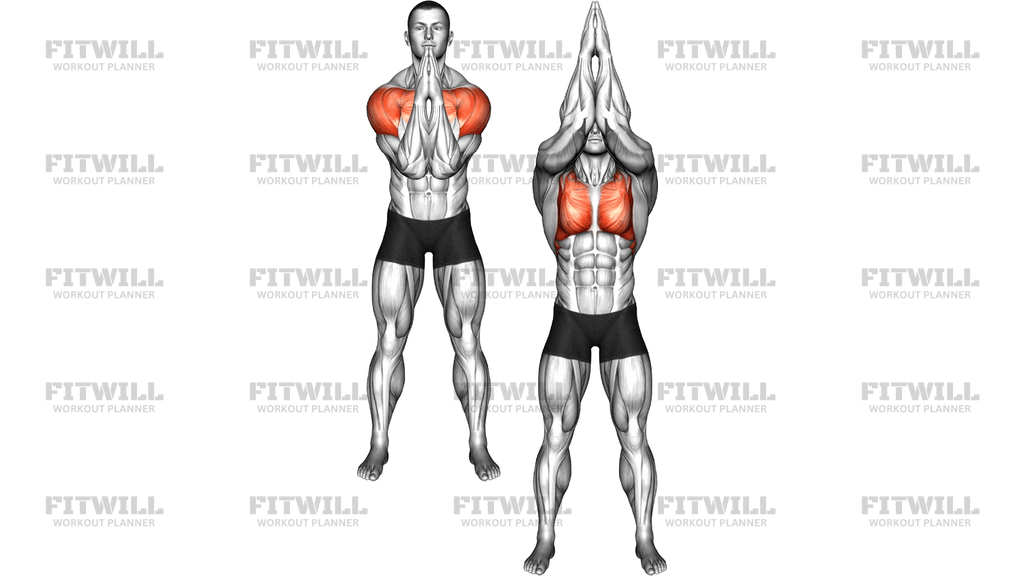
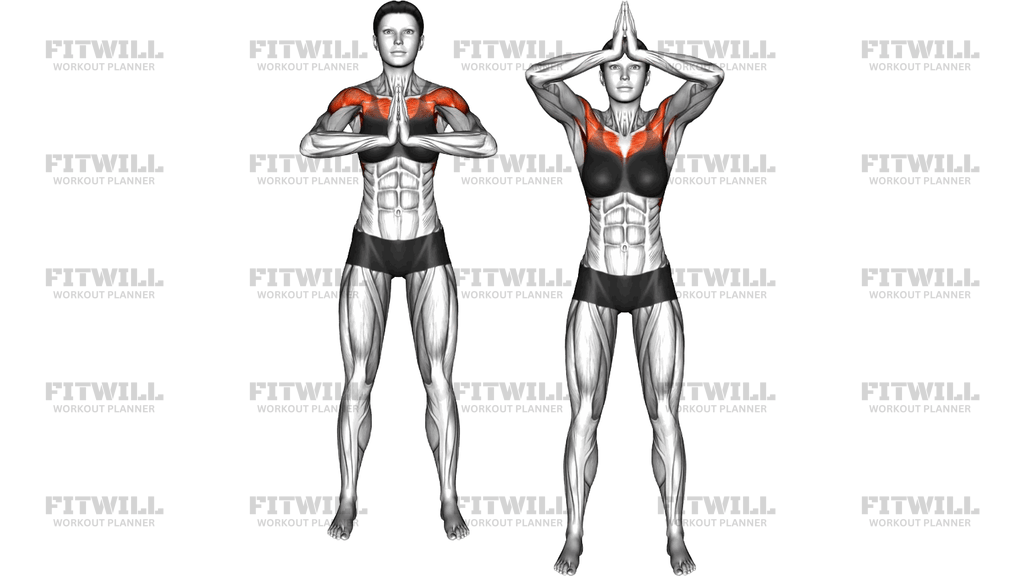
Standing Alternating Behind Back 180 Stretch
The Standing Alternating Behind Back 180 Stretch is a body-weight mobility drill performed from a tall standing position. You sweep one arm through a full 180-degree arc from overhead down behind your back while the opposite arm reaches up, then switch sides in a continuous alternating rhythm. The highlighted work in this movement sits across the chest and front of the shoulder, which lengthen on one side as the arm travels behind the body and on the other as it reaches overhead.
This stretch is most useful for anyone whose shoulders drift forward during the day: desk workers, drivers, and lifters who press or bench frequently all tend to accumulate tightness in the pectorals and anterior deltoids. Opening that tissue in a standing position carries over directly to better posture, a more comfortable overhead position, and a fuller range of motion on pressing exercises.
The setup matters because the stretch quality depends on your torso staying upright. If you lean back or flare the ribs to fake extra range, the chest never actually lengthens and the lower back takes the strain instead. Keep the feet about hip-width apart, the spine tall, and let the arms do the traveling while the trunk stays quiet.
To execute well, stand relaxed with soft knees and brace the core lightly. Raise one arm overhead with the palm facing forward, then sweep it down and around so the hand moves behind your lower back with the elbow bent. As that arm settles behind the back, the opposite arm swings up through the same 180-degree path to overhead, and you continue trading positions at a smooth, even tempo.
Because each arm works on a slight delay from the other, the drill also nudges coordination and thoracic rotation. You will usually notice one side travels farther or feels smoother than the other, which is normal and worth noting so you can give the stiffer side a few extra slow reps.
Use this movement as part of a warm-up before upper-body training, as a reset between long blocks of sitting, or as a cooldown after pressing sessions. Keep it pain-free: the shoulder should feel a gentle pull across the chest, never a pinch at the front of the joint, and any sharp sensation means you should shorten the arc immediately.
Fitwill
Log Workouts, Track Progress & Build Strength.
Achieve more with Fitwill: explore over 9600 exercises with images and videos, access built-in and custom workouts, perfect for both gym and home sessions, and see real results.
Start your journey. Download today!




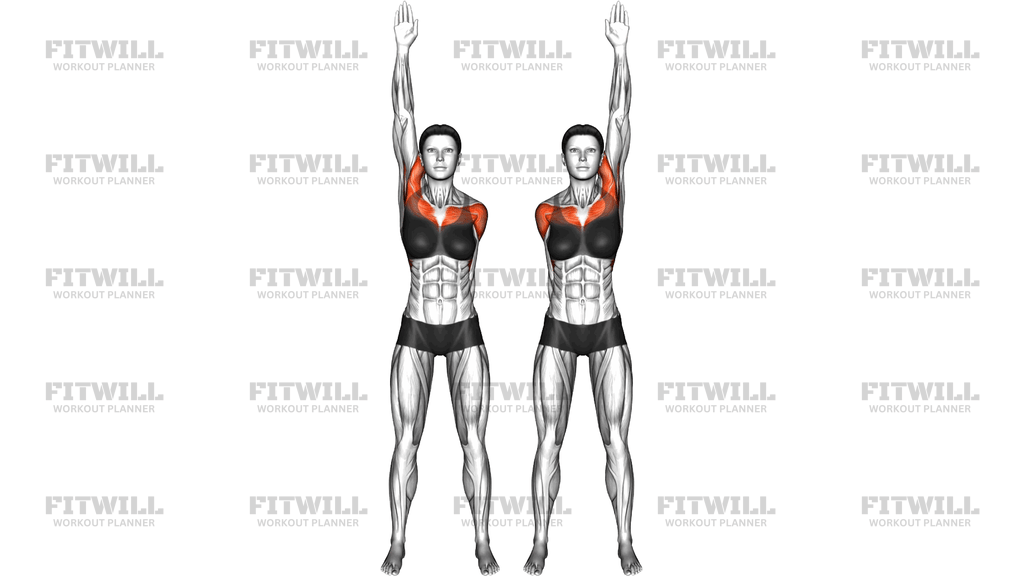
Instructions
- Stand with your feet about hip-width apart, weight spread evenly across both feet, and your spine tall with the crown of your head reaching up.
- Let both arms hang relaxed at your sides, then take a soft breath in and brace your core lightly so your ribs stay stacked over your pelvis.
- Raise your right arm straight overhead with the palm facing forward, keeping the shoulder blade settled down rather than shrugging toward the ear.
- Sweep the right arm down and around through a 180-degree arc so the hand travels behind your lower back, elbow bending as the arm rotates.
- As the right hand settles behind the back, begin lifting your left arm up through the same overhead path so the two arms trade positions smoothly.
- Pause briefly at each end position: feel the stretch across the chest of the arm behind the back and along the underside of the reaching arm.
- Reverse the path in a controlled manner, bringing the behind-back arm back up and overhead as the other arm sweeps down behind the back.
- Continue alternating for your target number of repetitions or time, matching the tempo to slow, steady breathing.
- Exhale as each arm travels behind the back and inhale as it returns overhead, letting the breath set the rhythm.
- Finish by lowering both arms to your sides, rolling the shoulders gently, and noticing whether one side feels looser than the other.
Tips & Tricks
- If you feel a pinch at the front of the shoulder as the arm sweeps behind the back, shrink the arc slightly and let the elbow bend more instead of forcing a straight arm through the full range.
- The most common mistake is leaning the torso backward to buy extra range; keep the ribs down and the trunk vertical so the stretch stays in the chest rather than the lumbar spine.
- Avoid shrugging the overhead shoulder toward the ear, which crowds the neck; think of reaching long through the fingertips while the shoulder blade stays heavy.
- Do not rush the hand-off between arms; a brief pause with one arm behind the back is where the chest stretch actually happens.
- If one side is noticeably tighter, add two or three extra slow repetitions to that side rather than stretching it harder.
- Keep the knees soft; locking them out tends to tip the pelvis forward and arch the lower back during the arm sweep.
- Move the arm in a wide arc away from the body as it travels down, rather than dragging it close past the ear, so the chest lengthens through the whole path.
- Warm shoulders stretch better; if you are doing this first thing in the morning, do a few arm circles before starting.
- Stop if the movement produces tingling or numbness in the arm or hand, which suggests the shoulder position is compressing nerve tissue rather than stretching muscle.
Frequently Asked Questions
What muscles does the Standing Alternating Behind Back 180 Stretch target?
It primarily lengthens the chest, especially the pectoralis major, along with the front of the shoulder. The overhead arm also gives a gentle stretch to the lats and tissues under the armpit.
Why does the arm travel through a 180-degree arc?
The half-circle from overhead to behind the back takes the shoulder through its full available range, loading the chest at one end of the arc and the shoulder's back-side structures at the other. It is what makes this a complete shoulder-circle stretch rather than a static hold.
Is this stretch suitable for beginners?
Yes, it requires no equipment and the range can be scaled easily. Beginners should simply reduce the arc size and keep the movement slow until the shoulders warm up to the full path.
Should I feel it in my lower back?
No. If you feel it in the lower back, you are arching and leaning the torso to compensate for tight shoulders; brace the core lightly and keep the ribs stacked over the pelvis so the stretch returns to the chest.
When is the best time to use the Standing Alternating Behind Back 180 Stretch?
It works well as a warm-up before pressing or overhead training, as a mid-day reset after long sitting, and as a cooldown after chest-focused sessions.
One arm moves farther behind my back than the other. Is that a problem?
A side-to-side difference is common and usually just reflects natural asymmetry or handedness. Give the stiffer side a few extra controlled repetitions, and if one side causes pain rather than simple tightness, shorten the range on that side.
What can I use if the behind-back position is too uncomfortable?
Try a doorway chest stretch or a wall slide to open the chest with less shoulder rotation, then return to this drill once the behind-back position feels accessible.
How many repetitions should I do?
Around 8 to 12 alternating sweeps per side at a slow tempo is a practical dose for warm-up or cooldown. For a stiffness-reset during the workday, 30 to 45 seconds of continuous alternating works well.
Can this stretch help with rounded shoulders from desk work?
It can be a useful part of that picture, because it repeatedly lengthens the chest in a tall standing position. Pairing it with upper-back strengthening gives better long-term results than stretching alone.
Should the arm stay straight the whole time?
A relatively long arm gives the fullest stretch, but a slight elbow bend is fine and often safer as the hand passes behind the back. Forcing a rigid straight arm through the tightest part of the arc is where shoulder pinching usually starts.