Standing Alternating Diagonal Prayer Push
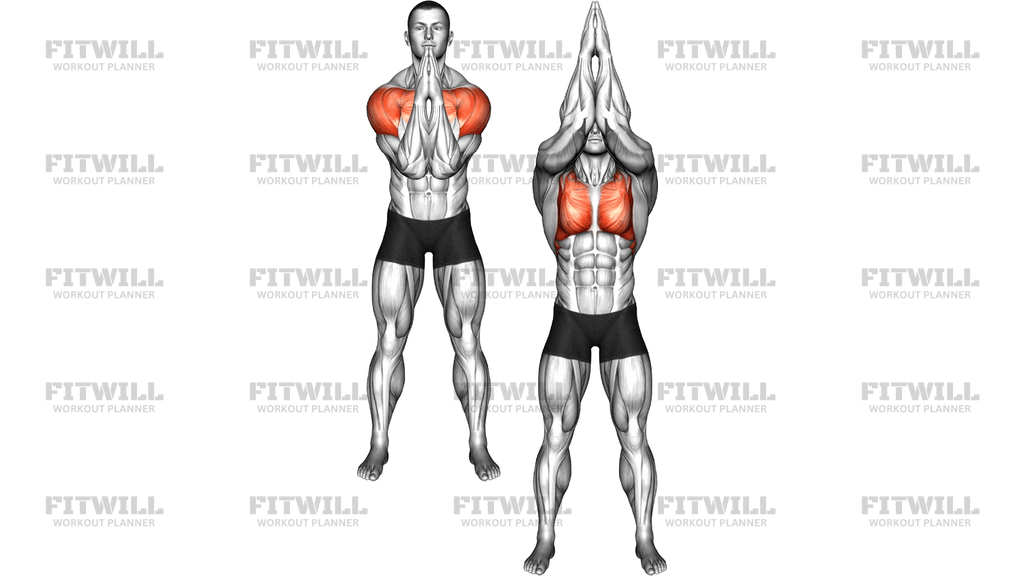
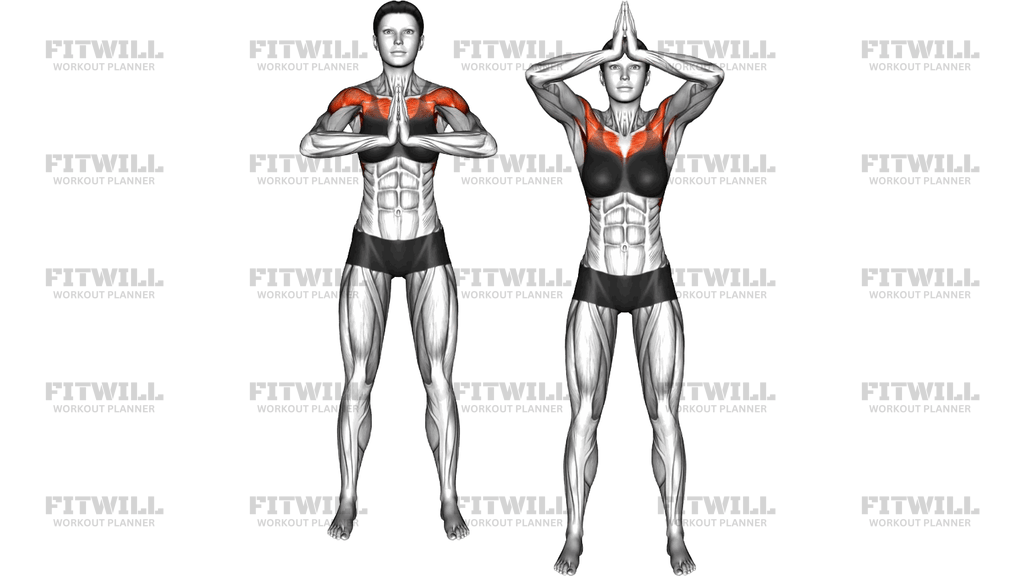
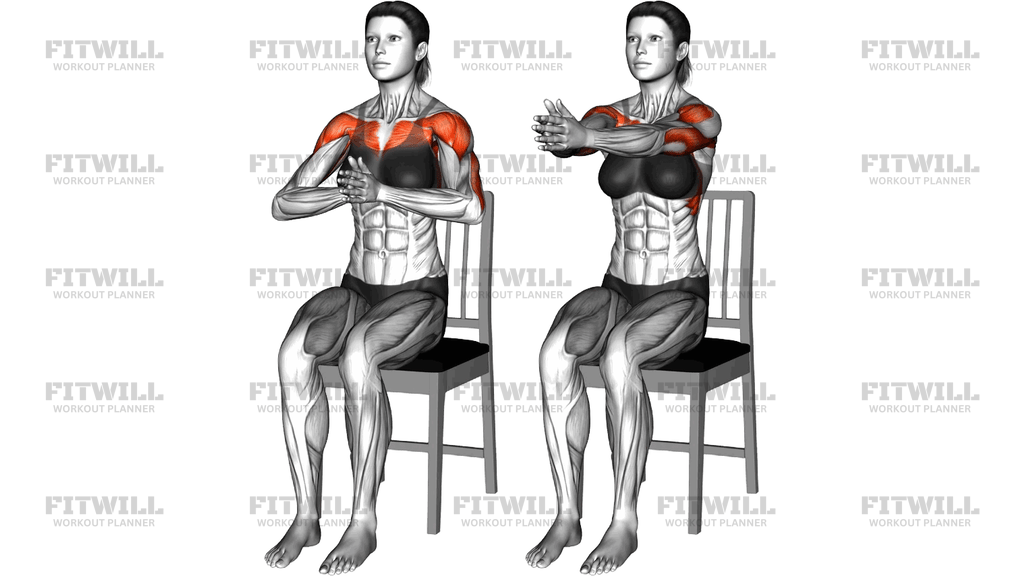
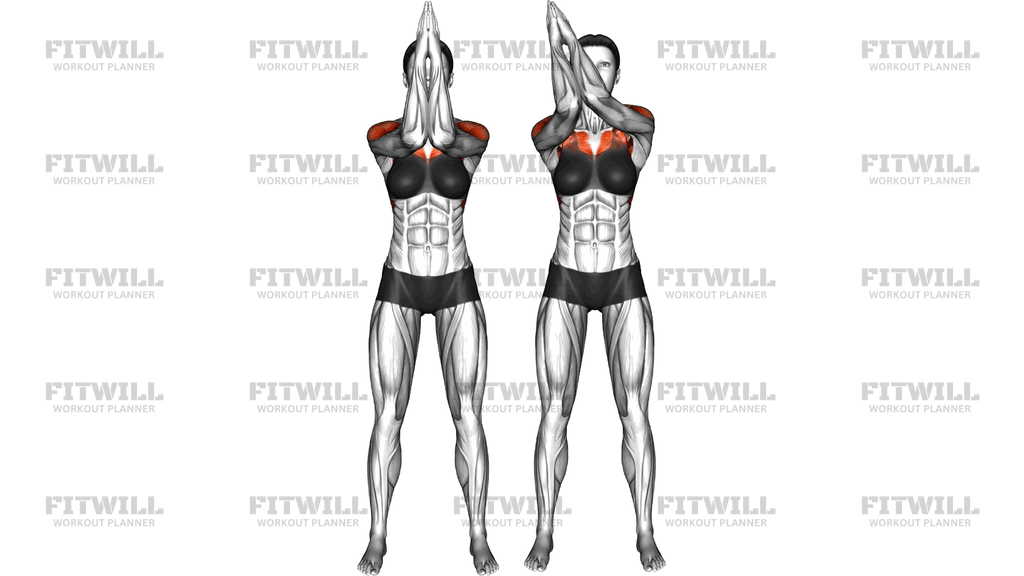
The Standing Alternating Diagonal Prayer Push is a bodyweight chest exercise built around one simple action: pressing your palms firmly together in a prayer position and holding that squeeze while you steer the hands diagonally up and across your body, side to side. Because there is no external load, all of the work comes from your own muscular effort — the harder you press your palms into each other, the more your chest has to do. The highlighted work in this movement sits in the pectorals across the upper and middle chest, with strong support from the front and side of the shoulders.
The setup matters more than it looks. Standing tall with feet about hip-width apart, you raise your arms so the elbows point out to the sides at roughly shoulder height, palms together in front of your face or upper chest. That high elbow line is what puts the pecs in a position to generate force through the press. If your elbows drop and your hands drift down toward your belly, the tension leaks away from the chest and the move turns into an awkward arm squeeze with very little payoff.
From that pressed position, the movement is a diagonal sweep: keep the palms glued together and push the whole arm structure up and out toward one side, so the hands travel on an angled path above the opposite shoulder. Then trace back through the middle and repeat toward the other side, alternating reps. The press between the palms never relaxes — the squeezing action is the exercise, and the diagonal travel is what shifts emphasis across the chest fibers and challenges the shoulder stabilizers from slightly different angles each rep.
This is a useful option for people who train without equipment, for warm-ups before pressing days, and for anyone who wants to feel their chest working without loading the elbow or wrist joints. Travelers, office workers squeezing in training breaks, and beginners learning to actually contract their chest on command all get a lot out of it. Because you self-regulate the intensity through how hard you press, the same movement scales from a gentle activation drill to a genuinely fatiguing set.
The main practical points are straightforward. Keep the torso upright and ribs stacked over the hips rather than arching backward as the hands rise. Breathe steadily instead of holding your breath through the squeeze. And if you feel the work shifting into your neck or the fronts of your shoulders becoming uncomfortable, lower the hands slightly, ease off the press, and rebuild the position before continuing. The move should feel like a sustained chest contraction, not a strain in the joints.
[ Workout Log & Planner ]
Put your next workout in Fitwill
Keep your plan and training log ready when you are.


Instructions
- Stand with your feet about hip-width apart, weight spread evenly across both feet, and your torso tall with a soft bend in the knees.
- Raise your arms in front of you and press your palms together in a prayer position at roughly face or upper-chest height, with elbows lifted out to the sides so the upper arms are close to parallel with the floor.
- Squeeze your palms hard against each other and feel your chest tighten — this press should stay constant for the entire set.
- Brace your core lightly and keep your ribs stacked over your hips so your lower back does not arch as the arms move.
- Keeping the palms glued together, push both hands diagonally up and across toward one side, so the hands end up above and outside the opposite shoulder.
- Pause briefly at the top of the diagonal while maintaining the full palm squeeze.
- Control the hands back down through the starting line in front of your face, then immediately drive the same pressed-hands position diagonally toward the other side.
- Alternate sides for even reps, letting the pressed hands trace the same angled path each time.
- Exhale as you push the hands up the diagonal and inhale as they return through the center.
- At the end of the set, release the palm pressure slowly, lower the arms with control, and shake out the shoulders before the next set.
Tips & Tricks
- The most common mistake is letting the palm press weaken as the hands travel — the moment the squeeze fades, the chest stops working. Re-press the palms before each diagonal rep.
- If your elbows sink toward your ribs during the set, the press angle has changed. Think 'elbows up and wide' the whole time, as if aiming them at the walls beside you.
- Watch for the torso leaning sideways as you chase the diagonal. The arms move; the trunk stays square to the front. A mirror or filming from the front makes this easy to check.
- Don't shrug. If your shoulders creep up toward your ears as the hands rise, drop the whole pressed-hands position an inch or two and reset the shoulder blades down.
- Intensity is your decision, not the movement's. A light press makes this a warm-up; squeezing as hard as you can for slow, deliberate diagonals turns it into a real training set.
- Slowing the return through the middle is where many people lose tension. Treat the center position as a checkpoint: squeeze, confirm the elbows are high, then push to the next side.
- If your wrists complain during the prayer press, slide the palms slightly so the fingers point more upward and the heel of the hand carries less of the twist.
- Because the chest fatigues isometrically before you notice it, stop the set when you can no longer keep a hard palm press — not when the arms simply feel tired.
Frequently Asked Questions
What muscles does the Standing Alternating Diagonal Prayer Push work?
The primary work is in the chest, especially the upper and middle pectorals, which drive the palm-to-palm squeeze. The front and side of the shoulders assist through the diagonal push, and the triceps help hold the arms extended.
Why are the hands pressed together in a prayer position for this exercise?
Pressing the palms together creates an isometric chest contraction — your pecs generate force without any weight. That sustained squeeze is the resistance, and the diagonal travel shifts it across different chest fibers.
How hard should I press my palms together during the Standing Alternating Diagonal Prayer Push?
Press hard enough that you can clearly feel your chest working, but not so hard that your shoulders or wrists strain. For warm-ups use a moderate squeeze; for a working set, press near maximum and move slowly.
Where should my elbows be during the Standing Alternating Diagonal Prayer Push?
Elbows stay lifted out to the sides, around shoulder height, with the pressed hands in front of your face or upper chest. If the elbows drop, tension shifts away from the chest and toward the arms.
Is the Standing Alternating Diagonal Prayer Push good for beginners?
Yes. It requires no equipment, teaches you to feel and contract the chest on demand, and the intensity is fully controlled by how hard you press. Beginners should start with a lighter squeeze and shorter sets.
Can I use the Standing Alternating Diagonal Prayer Push as a warm-up before bench pressing?
It works well as a pressing warm-up because it activates the chest and front shoulders and raises awareness of the squeeze without fatiguing the joints. Use a moderate press and stop well short of fatigue.
My shoulders creep up toward my ears during the exercise — is that a problem?
It is a common fault worth fixing. Shrugging shifts work to the neck and upper traps and reduces chest involvement, so consciously lower the shoulder blades and, if needed, start with the hands slightly lower.
What can I substitute if pressing my palms together bothers my wrists?
You can press the backs of the hands or the fists together instead, or hold a light ball or towel roll between the palms to keep the squeeze while reducing the wrist bend.
How many reps and sets of the Standing Alternating Diagonal Prayer Push should I do?
For activation, 10-15 alternating diagonals per side with a moderate press works well. As a standalone set, do slow reps with a hard squeeze until the palm press becomes difficult to hold, then rest and repeat for 2-3 sets.
Should I lean my torso toward the side I am pushing toward?
No. Keep the torso upright and square to the front; only the pressed hands travel on the diagonal. Leaning sideways reduces chest tension and turns the drill into a balance movement.