Slight Bend Elbow Touch
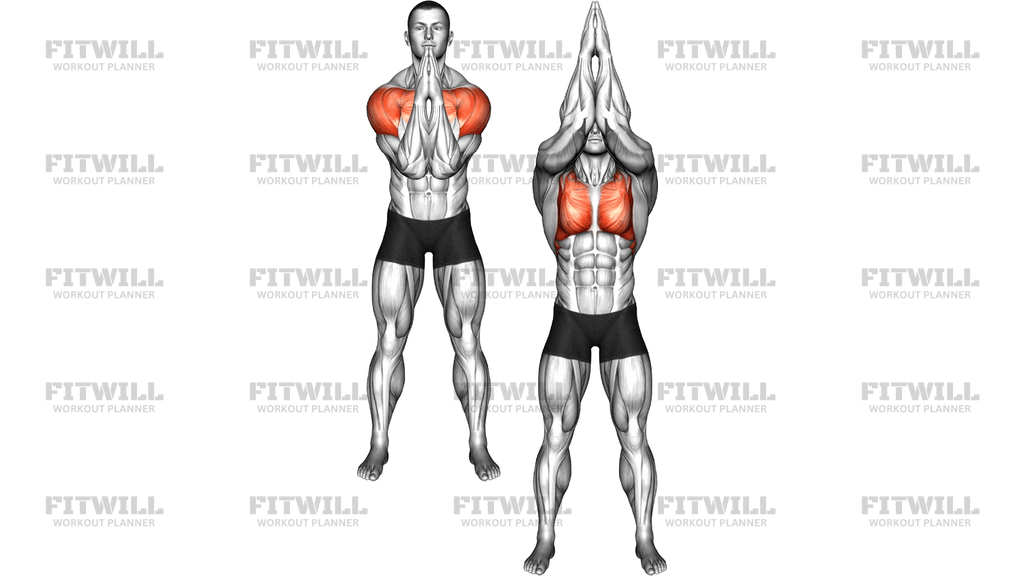
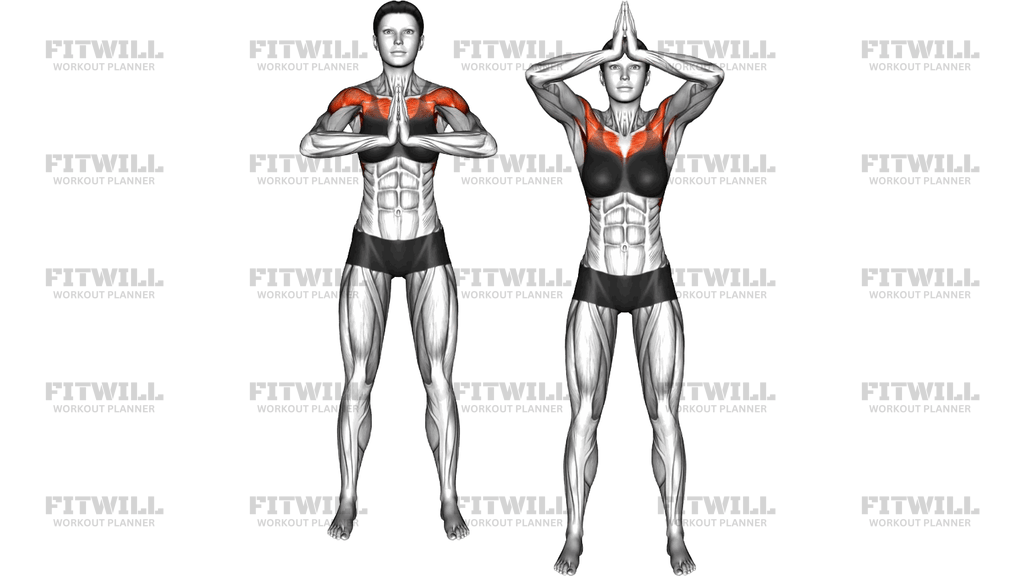
The Slight Bend Elbow Touch is a standing chest and shoulder opener that uses a soft hip hinge and a deliberate elbow path to lengthen the pectoral muscles. You stand with a slight bend in the knees and hips, place your hands lightly behind or beside your head, then open your elbows wide before drawing them forward until they touch or nearly touch in front of you. The movement cycles the chest between a stretched position and a shortened position, which makes it useful both as a warm-up primer and as a gentle static stretch when you pause at the open end.
This is a body weight drill, so it fits anywhere in your session. Before pressing work like push-ups, bench presses, or overhead pressing, a few controlled repetitions raise the temperature in the chest and front shoulders and restore some range after long periods of sitting. After training, holding the open position for twenty to thirty seconds per rep set helps the chest fibers return to a relaxed resting length. Because the load is essentially zero, it is also a safe entry point for beginners or anyone easing back into upper body training.
The setup matters more than it looks. The slight bend at the hips and knees is what allows the shoulder blades to move freely; if you stand bolt upright and force the elbows back, the lower back tends to arch and the stretch shifts away from the chest. A modest hinge, braced trunk, and ribs stacked over the pelvis keep the tension exactly where you want it, across the pectorals and the front of the shoulders.
To execute well, think of the elbows as the drivers and the hands as passengers. Your fingertips rest near your temples or the back of your head without pulling on your neck. Sweep the elbows back and up until you feel a broad, comfortable stretch across the chest, pause briefly, then bring them forward until they meet in front of your face. The path should be smooth and quiet, never forced into a bounce.
Common use cases include desk-worker mobility routines, warm-ups for bench and push-up days, cooldowns after boxing or swimming, and posture-focused programs that pair chest opening with upper back strengthening. If you feel pinching at the front of the shoulder rather than a stretch across the chest, reduce the range and keep the elbows slightly lower.
There are no heavy safety concerns, but a few points are worth respecting. Keep the neck long and avoid cranking the head forward with your hands. Move within a range that produces a stretch, not pain, and keep breathing steadily throughout. If you are recovering from a shoulder injury, clear the movement with a qualified professional first and start with a smaller elbow arc.
Fitwill
Log Workouts, Track Progress & Build Strength.
Achieve more with Fitwill: explore over 9600 exercises with images and videos, access built-in and custom workouts, perfect for both gym and home sessions, and see real results.
Start your journey. Download today!




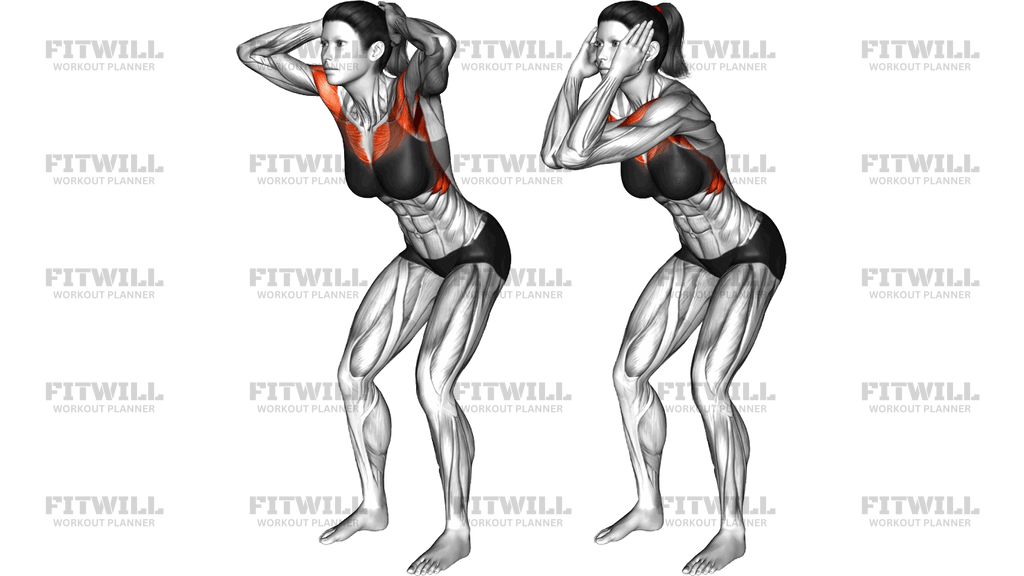
Instructions
- Stand with your feet roughly hip-width apart and soften both knees so the legs are not locked.
- Hinge forward slightly from the hips, keeping the chest tall and the ribs stacked over the pelvis; this slight bend is your working position for the whole set.
- Bend both elbows and place your fingertips lightly at your temples or just behind your ears, without pulling on your head or neck.
- Brace the trunk gently, as if preparing for a light push to the torso, and keep the shoulders relaxed away from the ears.
- Open the elbows out to the sides and slightly back until you feel a broad stretch across the chest and the front of the shoulders.
- Pause for a beat at the open position, then smoothly draw the elbows forward and inward until they touch or nearly touch in front of your face.
- Repeat the open-and-close path for the desired number of repetitions, keeping the hinge position constant so the chest does the work.
- Exhale as the elbows come forward and inhale as they open back into the stretch.
- On the final repetition, you can hold the open position for twenty to thirty seconds as a longer stretch before lowering the arms and standing tall.
- Reset between sets by rolling the shoulders once or twice and re-establishing the slight hip bend before the next set.
Tips & Tricks
- The most common mistake is straightening the hips as the elbows open, which turns a chest stretch into a lower back arch. Check your hinge before each set and hold it throughout.
- Do not lace your fingers behind your head and pull; the hands are there for light support only, and pulling forward strains the neck.
- If your shoulders shrug toward your ears as the elbows go back, deliberately relax the upper traps and think of sliding the shoulder blades down and together instead.
- A pinch at the front of the shoulder usually means the elbows are traveling too high. Lower the arc slightly so the elbows sit closer to shoulder height.
- Keep the tempo slow, roughly two seconds open and two seconds closed. Rushing turns it into a ballistic swing and reduces the stretch quality.
- To bias one side at a time, open the elbows and then gently rotate the torso a few degrees to the left or right while holding the stretch.
- Breathe out fully as the elbows come together; a full exhale lets the rib cage drop and often deepens the chest stretch on the next opening.
- Warm muscles stretch more comfortably, so use this as an active drill early in the session and reserve the longer held version for after training.
- If you cannot reach a comfortable open position, start with smaller elbow arcs and expand the range gradually over several sessions rather than forcing it.
Frequently Asked Questions
Which muscles does the Slight Bend Elbow Touch target?
It primarily lengthens the pectoral muscles of the chest, with the front shoulders working through the same arc. The muscles between the shoulder blades assist as the elbows draw back and together.
Why does the exercise use a slight bend in the hips and knees instead of standing straight?
The slight bend gives the shoulder blades room to move and prevents the lower back from arching to fake extra range. It keeps the stretch focused on the chest rather than the spine.
Is the Slight Bend Elbow Touch better as a warm-up or a cooldown?
It works well for both. Use flowing repetitions before pressing workouts to prime the chest and shoulders, and use longer held positions after training as a cooldown stretch.
How many repetitions should I do?
For a warm-up, eight to twelve smooth open-and-close cycles are usually enough. As a stretch, hold the open position for twenty to thirty seconds and repeat two to three times.
My neck feels strained when my hands are behind my head. What should I change?
Move your fingertips to your temples and stop pulling on your head entirely. The hands should only ride along with the elbows, and the neck should stay long and relaxed.
Can beginners do this movement safely?
Yes, it is a low-load body weight drill with a self-limiting range. Beginners should simply use a smaller elbow arc and prioritize the slight hip hinge over how far the elbows travel.
What can I use instead if standing is uncomfortable?
A seated version works: sit tall on a bench with the same hands-at-temples position and open and close the elbows. A doorway chest stretch is another reasonable substitute for the static hold.
I feel a pinch in the front of my shoulder rather than a chest stretch. Is that normal?
A pinch is a signal to reduce the range, not to push through it. Lower the elbow arc slightly and keep the movement within a comfortable stretch across the chest.
Does the Slight Bend Elbow Touch build strength or only improve flexibility?
Its main benefit is mobility and muscle readiness rather than strength, since there is no meaningful external load. The rear shoulders and upper back get light activation, but treat it as a preparatory or recovery drill.