Standing Top Backhand Tap And Backhand Prayer Push
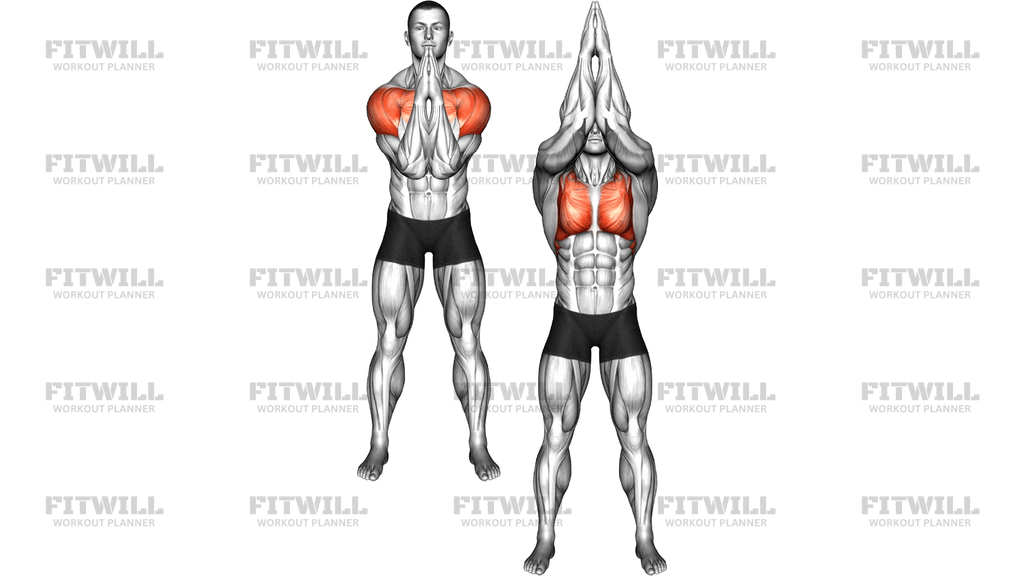
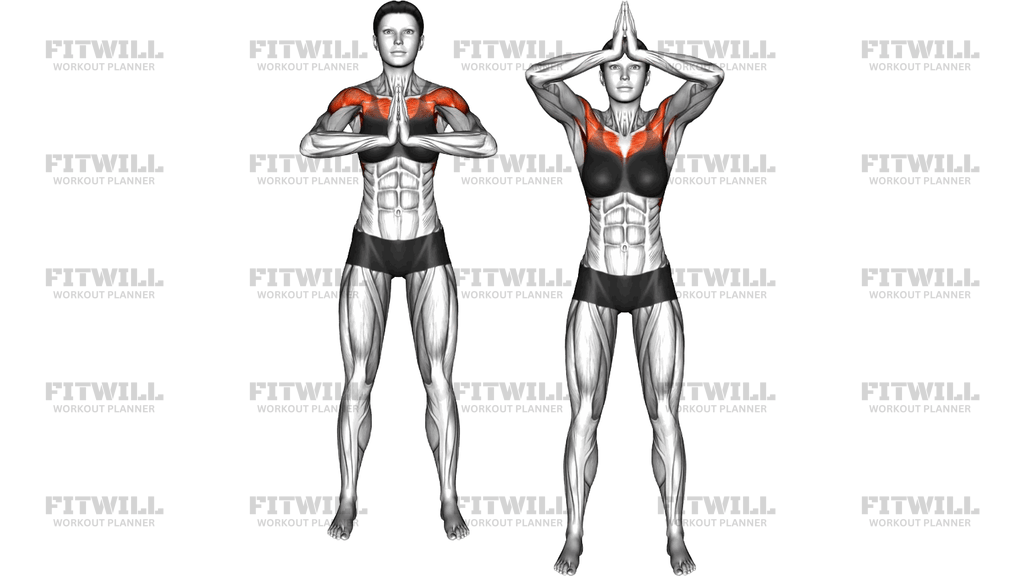
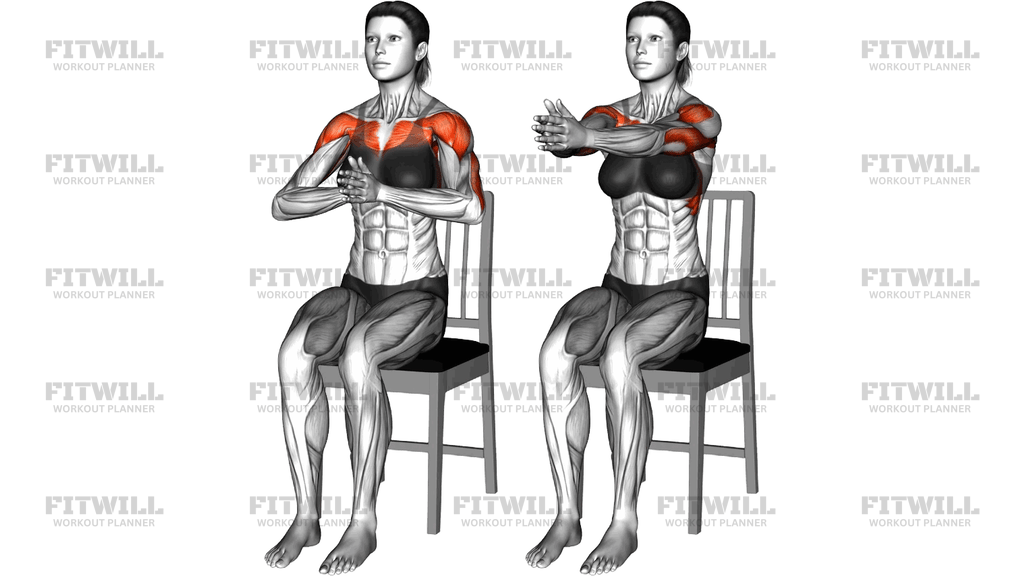
The Standing Top Backhand Tap And Backhand Prayer Push is a bodyweight movement that combines two arm actions at the top of your reach: a light tap of the backs of your hands overhead, followed by a wide sweep of the arms out to the sides, then a strong prayer-style press of the palms back together above your head. Because you are working against nothing but your own leverage and muscular tension, the quality of the squeeze matters far more than speed. Done standing with feet about hip-width apart, it trains the upper chest and front shoulders through horizontal adduction while the overhead position keeps the traps and upper back engaged throughout.
This exercise suits anyone who wants to work the chest and shoulders without equipment or a bench. It is a practical choice for home workouts, hotel-room sessions, warm-ups before pressing days, or as a finisher when the pressing muscles are already fatigued but you want one more controlled set. The isometric prayer push at the top creates a strong contraction through the pectorals, especially the clavicular head, which is hard to isolate with ordinary push-ups alone.
Setup matters more than it looks. Standing tall with a braced core and relaxed shoulders down away from your ears gives your arms a stable base to move from. If you shrug or lean back as your hands go overhead, the work drifts into the neck and lower back instead of the chest and shoulders. Keep ribs stacked over the pelvis and let the arms do the moving.
To execute it well, raise both arms overhead and gently tap the backs of your hands together at the top. From there, open the arms in a wide, controlled arc out to the sides until they are level with or slightly below shoulder height, feeling the chest lengthen. Reverse the arc and bring the palms together firmly overhead in a prayer position, pressing them against each other for a moment before repeating. The press inward is where most of the chest activation happens, so treat it as the highlight of every rep rather than an afterthought.
You will see this style of movement used in bodyweight circuits, shoulder prehab routines, and as a low-load introduction to chest training for people who cannot yet perform many push-ups with good form. It also serves well as an active recovery drill between heavier pressing sets, since it moves the shoulders through a large pain-free arc without external load.
A few practical points will keep it safe and effective. Move slowly enough that you could stop the arms at any point in the arc, and never force the overhead range if your shoulders feel pinched. If you feel discomfort at the top, lower your hands slightly and shorten the range rather than pushing through it. Keep the effort honest on the palm press: a firm, deliberate squeeze for one to two seconds per rep does more for the chest than twenty rushed taps.
Fitwill
Log Workouts, Track Progress & Build Strength.
Achieve more with Fitwill: explore over 9600 exercises with images and videos, access built-in and custom workouts, perfect for both gym and home sessions, and see real results.
Start your journey. Download today!




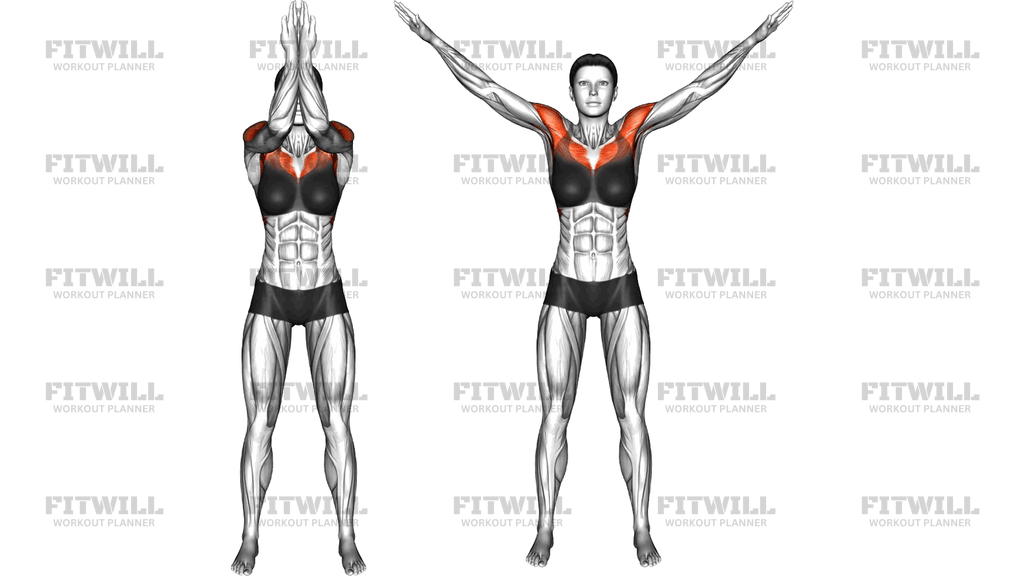
Instructions
- Stand with your feet about hip-width apart, weight spread evenly across both feet, and your arms hanging relaxed at your sides.
- Brace your core lightly, tuck the ribs down over your pelvis, and draw your shoulder blades down so your shoulders are not shrugged toward your ears.
- Raise both arms straight overhead, palms facing each other, until your elbows are fully extended and your biceps are close to your ears.
- At the top, gently tap the backs of your hands together overhead without shrugging or arching your lower back.
- From the tap, open both arms outward in a wide, controlled arc, lowering them until they are roughly level with your shoulders and you feel a stretch across the upper chest.
- Reverse the arc smoothly, sweeping the arms back up and inward until your palms meet overhead in a prayer position.
- Press your palms firmly against each other overhead for one to two seconds, squeezing the chest and front shoulders, then release the pressure and tap the backs of the hands again to begin the next rep.
- Breathe steadily throughout: inhale as the arms open wide, exhale as you sweep up and press the palms together.
- Keep your torso upright and still for the whole set; if you catch yourself leaning back or shrugging, reset your posture before continuing.
- Complete your target reps, then lower the arms to your sides with control and roll the shoulders once to reset before the next set.
Tips & Tricks
- The most common mistake is turning the palm press into a fast clap. Slow the closing phase down so the chest actually does the work of pulling the arms inward.
- If your shoulders shrug every time your hands go overhead, stop at the height where you can keep them down. Build range gradually instead of forcing the full overhead reach.
- Keep a slight softness in the elbows during the wide arc. Locking them out hard while sweeping down and back up strains the joint without adding chest work.
- Watch for the lower back arching as the arms rise. Squeeze the glutes lightly and keep the ribs down to protect the spine in the overhead position.
- The backhand tap at the top should be a light, precise touch, not a collision. If you hear a loud smack, your arms are moving too fast to control.
- To make the prayer push harder, press your palms together with more force or extend the hold to three to four seconds. Intensity comes from tension, not extra range.
- To make it easier, work the arc from shoulder height upward only, skipping the deepest part of the stretch until your shoulders warm up.
- If one arm tends to drift forward of the other during the sweep, do a few reps in front of a mirror to keep the arc symmetric.
- Use this movement as a warm-up before bench or overhead pressing, but keep the palm presses light in that context so you do not fatigue the chest before lifting.
- Stop the set when the squeeze gets noticeably weaker. Grinding out sloppy reps with a shrugging, arching body position teaches the wrong pattern.
Frequently Asked Questions
What muscles does the Standing Top Backhand Tap And Backhand Prayer Push work?
The main muscles are the chest, especially the upper portion near the clavicle, along with the front shoulders. The traps and upper back work to hold the arms stable overhead, and the core keeps your torso upright through the arc.
Why does the exercise use a backhand tap instead of bringing the palms together at the top?
Tapping the backs of the hands overhead sets a consistent starting point and forces a wide, deliberate arc before the palms press. This separation makes the inward prayer press a distinct, controlled contraction rather than a quick clap.
Is the Standing Top Backhand Tap And Backhand Prayer Push good for beginners?
Yes. Because there is no external load, beginners can learn to feel their chest working through adduction with very low joint stress. It is also a useful stepping stone toward push-ups and pressing movements.
Can this exercise replace push-ups for chest development?
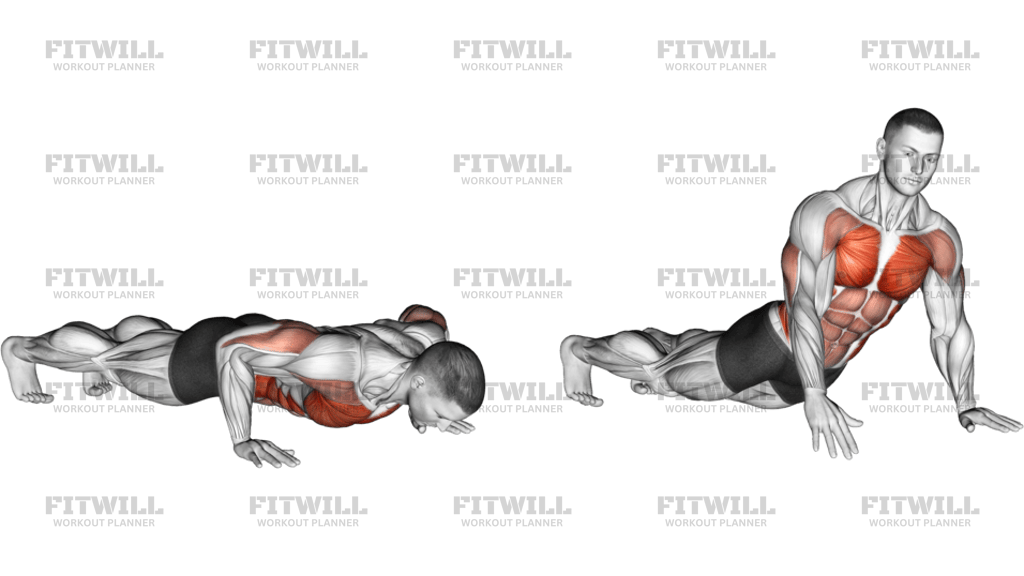
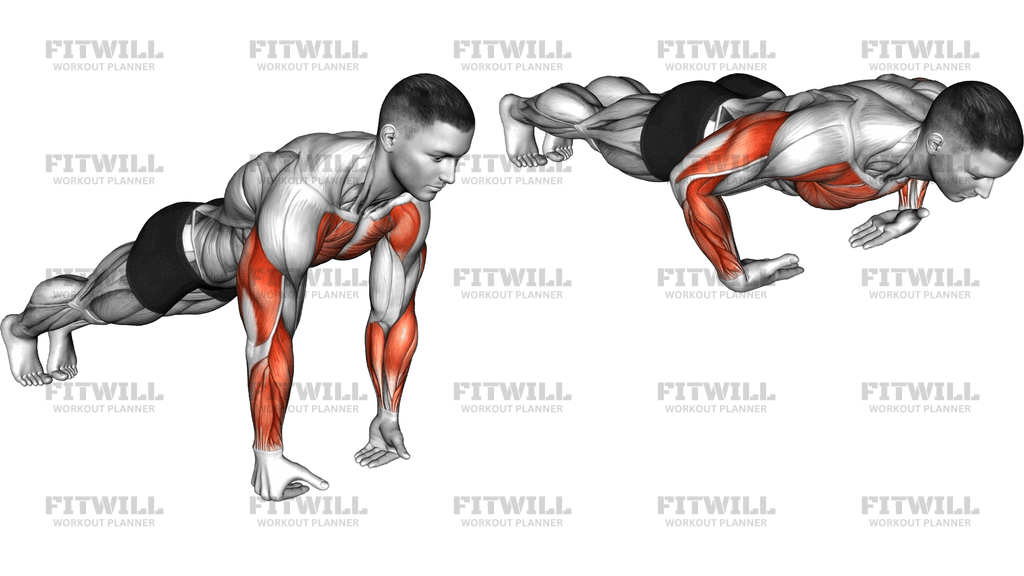
Not entirely. Push-ups load the chest with bodyweight resistance through a full range, while this movement relies on isometric squeezing and leverage. It works best alongside pressing exercises rather than as a full substitute.
How many reps should I do of the Standing Top Backhand Tap And Backhand Prayer Push?
For warm-ups, 10 to 15 slow reps work well. As a standalone set or finisher, aim for 15 to 25 reps with a firm one to two second palm press on each rep, stopping when the squeeze fades.
My shoulders pinch when my hands go fully overhead. What should I do?
Shorten the range by starting and ending the arc slightly below full overhead reach, and keep the tap gentle. If the pinching continues, skip the top position entirely and work the arc at shoulder height, or check with a qualified professional before continuing.
What is the most common mistake with this movement?
Rushing. Most people clap the hands together quickly and shrug at the top, which shifts work away from the chest and into the neck. Slow the sweep down, keep the shoulders drawn down, and make the palm press the deliberate part of each rep.
Can I do the Standing Top Backhand Tap And Backhand Prayer Push every day?
Generally yes, since the load is low and the movement is gentle on the joints. Keep the daily volume modest and use harder, longer-squeeze sets only a few times per week so the muscles have time to recover.
What can I use if I want more resistance than bodyweight alone?
A light resistance band looped around the wrists or a small medicine ball squeezed between the palms during the prayer press both add load to the squeezing action. Keep the added resistance light so the arc stays controlled.
Should my elbows stay straight or bend during the wide arc?
Keep them mostly extended with a slight softness, similar to a lateral raise. Bending the elbows deeply shortens the lever and reduces the stretch across the chest, which defeats the purpose of the wide sweep.